
Archive

July 9, 2026

Browsing

US futures steadied on Thursday, suggesting investors were not ready to abandon risk after another flare-up in the Gulf.

Fresh US strikes on Iran and Tehran’s response had briefly pushed oil higher and revived inflation fears, but crude cooled from its highs before the open.

That gave equities room to recover, even as traders stayed focused on energy routes, Fed policy and the next read on the labour market.

The mood is calmer than Wednesday’s selloff, but not complacent. Wall Street is still trading around the same question: whether geopolitical shocks will keep rates higher for longer.

5 things to know before Wall Street opens

1. Futures point to a steadier start

S&P 500 futures rose 0.2%, while Dow futures declined 0.10%. Nasdaq 100 futures outperformed, climbing 0.61% as semiconductor stocks led premarket gains.

The move came after Wednesday’s mixed session, when the S&P 500 and Dow closed lower but the Nasdaq managed a small gain.

Investors are still willing to buy weakness in growth shares, but geopolitical headlines are keeping conviction limited.

2. Oil eases after Gulf spike

Oil prices fell about 1% on Thursday, easing from two-week highs reached after Trump said the interim Iran ceasefire was “over”.

The pullback helped calm equity markets after Brent and WTI had jumped on fears of renewed disruption in the Strait of Hormuz.

UBS Global Wealth Management strategists see the path to a lasting agreement as uneven, with occasional flare-ups likely to drive volatility. Still, they expect both sides to have an incentive to keep Hormuz open.

3. Fed minutes keep rate risk alive

The Fed kept rates unchanged at its June meeting, but minutes showed a few policymakers saw a case for raising borrowing costs.

That matters because an oil-led inflation shock could make the central bank less willing to soften its stance.

Markets are pricing at least one rate increase by year-end, according to LSEG data.

Fed officials may sound hawkish for longer until they are confident that energy shocks are not feeding broader price pressures.

4. Claims data offers the next macro check

Weekly jobless claims, due at 8:30 a.m. ET, will give investors the next look at labour-market conditions. New York Fed President John Williams is also scheduled to speak later in the day.

The data may not dominate the tape unless it surprises, but it matters in a market already balancing growth concerns against inflation risk.

5. Chip stocks lead the broader pre-market move

The firmer futures tone was helped by a rebound in semiconductor stocks after two sessions of heavy selling.

Micron rose 3.5% in premarket trading, while AMD and Intel gained more than 2.5%, as investors returned to the AI hardware trade.

The bounce followed a bruising global chip selloff, but Wall Street analysts have largely kept their bullish view intact.

Bank of America reiterated a Buy rating on Micron, UBS lifted its DRAM price forecasts, Goldman Sachs raised its AMD target, and HSBC doubled its Intel target.

That helped restore confidence that the AI memory cycle is still intact, even if valuations remain stretched.

The post Nasdaq futures surge 190 points: 5 things to know before Wall Street opens appeared first on Invezz

The UK’s FTSE 100 declined on Thursday as investors assessed renewed tensions in the Middle East, while pharmaceutical heavyweight AstraZeneca weighed heavily on the benchmark after reporting disappointing results from a late-stage clinical trial.

The blue-chip FTSE 100 index fell 0.6% to 10,417.63 points by 10:45 GMT.

In contrast, the domestically focused FTSE 250 index edged 0.1% higher, reflecting a mixed performance across the broader UK equity market.

Geopolitical tensions keep investors cautious

Investor sentiment remained subdued following fresh US strikes on Iran, which kept attention firmly on developments in the Middle East.

Oil prices edged slightly higher after the strikes.

However, concerns over a broader escalation eased after US President Donald Trump said he did not expect the conflict to develop into a full-scale war.

Despite the modest rise in crude prices, energy stocks fell 1%, making the sector one of the weaker performers during the session.

Market participants continued to monitor geopolitical developments for their potential impact on inflation and the outlook for interest rates.

AstraZeneca leads the pharmaceutical sector lower

Pharmaceutical stocks posted the steepest sectoral decline, falling 6.2%, largely due to sharp losses in AstraZeneca.

Shares of AstraZeneca dropped 9.2% after the company said its nerve disease drug Wainua, developed in partnership with US-based Ionis, failed to achieve the primary objective in a late-stage clinical trial.

The trial did not meet its main goal of reducing cardiovascular deaths and recurring heart-related problems, prompting investors to sell the stock and dragging the broader pharmaceutical sector lower.

Gold miners benefit from higher bullion prices

While most sectors struggled, precious metal miners outperformed the market.

The sector gained 2.6% as gold prices advanced, supported by a weaker US dollar that increased the appeal of bullion.

Investors also continued to seek safe-haven assets while monitoring geopolitical developments in the Middle East.

The gains in precious metal mining stocks partially offset weakness seen elsewhere in the market.

Playtech surges on strong earnings outlook

Among mid-cap stocks, Playtech emerged as the strongest performer.

Shares in the gaming company jumped 17.7% after it forecast adjusted core profit for 2026 above market expectations.

The company attributed its upbeat outlook to robust business growth across the United States and Latin America, encouraging investors and lifting the stock to the top of the FTSE 250 index.

Computacenter climbs on AI infrastructure demand

Computacenter was also among the day’s standout performers on the FTSE 100.

The IT services provider rose more than 7% after saying it expects its annual results to exceed market expectations.

The company said stronger demand for AI-related infrastructure from hyperscale customers in North America and the UK supported its improved outlook.

The update reinforced investor confidence in continued enterprise spending on artificial intelligence infrastructure, helping Computacenter outperform the broader market even as the FTSE 100 remained under pressure from geopolitical uncertainty and weakness in the pharmaceutical sector.

The post UK stocks decline as AstraZeneca tumbles after trial setback appeared first on Invezz

PepsiCo beat Wall Street expectations for second-quarter revenue and profit on Thursday, but investors focused on the company’s warning that inflationary pressures continue to weigh on consumer spending in North America, sending its shares slightly lower in premarket trading.

The snacks and beverages giant reaffirmed its full-year outlook, as it continues to benefit from resilient demand for zero-sugar beverages and improving performance in its salty snacks business in the US.

However, executives cautioned that a recovery in its largest market would take longer than previously expected.

Shares were down more than 1% in premarket trading after briefly turning positive immediately following the earnings release.

The company reported revenue of $24.18 billion for the quarter, up 6.4% from a year earlier and ahead of analysts’ expectations of $23.95 billion, according to LSEG data.

Core earnings per share came in at $2.20, compared with $2.12 a year ago.

PepsiCo continues to expect fiscal 2026 organic revenue growth of 2% to 4% and projects core constant-currency earnings per share to increase between 4% and 6%.

International markets drive growth

The company’s overall volume growth remained positive, supported largely by international markets.

Global food volumes rose 3% during the quarter, while beverage volumes increased 2%, excluding the impact of pricing and foreign exchange fluctuations.

Demand in North America, however, remained subdued.

Organic sales in PepsiCo’s North American foods business declined about 2%, while food volumes were flat.

The company’s North American beverage division reported a 4% decline in volumes.

“Results were tempered in the quarter as US food and beverage category performance moderated with consumer budgets tightening due to rising inflationary pressures,” Chief Executive Ramon Laguarta said in prepared remarks.

Consumer spending in the US also came under pressure during the quarter as oil prices swung sharply following the US conflict with Iran.

National average gasoline prices climbed to a four-year high of $4.56 per gallon in late May, prompting many households to cut discretionary spending.

Price cuts and brand refreshes continue

PepsiCo has responded by cutting prices on products such as Lay’s and Doritos, while expanding smaller pack sizes to appeal to budget-conscious shoppers.

The company has also been refreshing several of its flagship brands, including Gatorade and Lay’s, in an effort to stimulate demand and strengthen market share.

Despite these initiatives, executives acknowledged that the turnaround in North America would be slower than anticipated.

“Our North America business was softer than we anticipated in the second quarter, and we now expect a more gradual improvement in performance trends for the balance of this year,” Chief Financial Officer Steve Schmitt said in prepared remarks.

While domestic demand remains under pressure, PepsiCo’s ability to deliver stronger international growth and maintain its full-year guidance suggests the company expects improving consumer sentiment and product innovation to support performance over the longer term, even as inflation continues to influence purchasing decisions in its home market.

The post PepsiCo beats revenue estimates but warns North America demand remains under pressure appeared first on Invezz

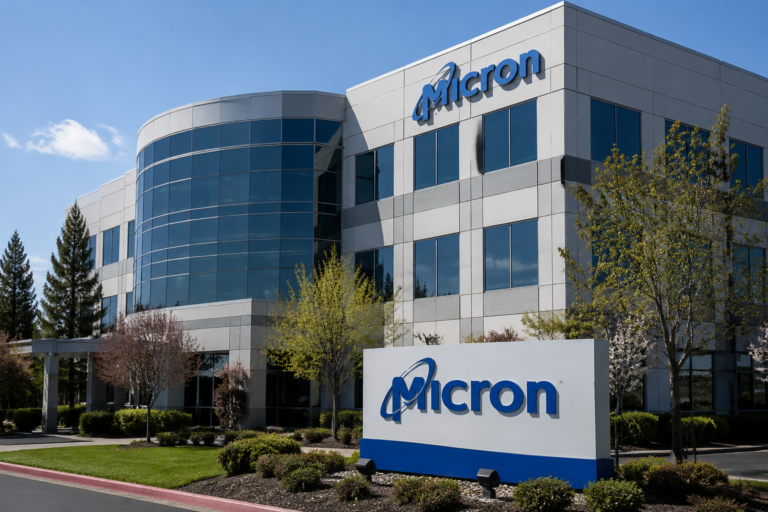
Micron Technology shares surged 6% in premarket trading on Thursday after the memory-chip maker announced plans to invest up to $3 billion to strengthen the US semiconductor supply chain.

The bullish analyst commentary and improving sentiment toward AI-related memory demand further supported the stock.

Micron announces $3 billion US supply chain investment

Micron Technology said it plans to invest up to $3 billion to expand the US semiconductor supply-chain ecosystem and support the manufacturing footprint needed for future technology innovation.

“The investment reflects Micron’s commitment to securing a reliable US supply of critical manufacturing materials, enhancing supply assurance, improving long-term planning flexibility, and supporting the growing demand for advanced memory and storage solutions driven by artificial intelligence and other data-intensive applications”, the company said in its press release.

As part of the initiative, Micron will provide GlobalWafers Co., Ltd. with $500 million in strategic financing to help expand the company’s GlobalWafers America 300mm raw silicon wafer manufacturing facility in Sherman, Texas.

The companies also plan to enter into a 10-year supply agreement that will give Micron access to significant raw silicon wafer capacity to support its long-term manufacturing plans and strengthen the US semiconductor manufacturing ecosystem.

Beyond the manufacturing expansion, Micron and GlobalWafers said they intend to explore collaboration on next-generation wafer technologies and process innovations to support future semiconductor manufacturing requirements.

Stock rebounds as Asian chipmakers recover

Micron shares rose 6% in premarket trading on Thursday, extending a rebound that followed gains by South Korean memory-chip makers Samsung and SK Hynix during the Asian trading session.

The recovery comes after Micron’s stock had retreated from levels above $1,200 in late June as investors grew concerned about whether the pace of artificial intelligence spending that has fueled demand for memory chips could be sustained.

Sentiment appeared to improve after SK Hynix climbed more than 5% in local trading on Wednesday, helping lift confidence across the memory-chip sector.

Analysts remain positive on AI-driven memory demand

Bank of America analyst Vivek Arya reiterated a Buy rating on Micron and maintained a price target of $1,550.

Arya said global cloud and AI infrastructure spending could reach $1.5 trillion by 2027, with between 35% and 40% of that spending directed toward memory components.

He argued that investors are underestimating the shift in memory from a highly cyclical product to a strategic component of AI infrastructure.

Arya’s $1,550 price target is based on a sum-of-the-parts valuation.

It values Micron’s traditional cyclical memory business at around three times its expected 2028 book value while assigning its high-bandwidth memory business a price-to-earnings multiple of 31 times forecast 2028 earnings.

UBS also maintained a positive view on the memory market.

The brokerage raised its forecast for DRAM contract prices, projecting DDR prices to increase 32% quarter on quarter in the third quarter, up from its previous estimate of 17%.

The stronger pricing outlook adds to expectations that demand for memory products will remain supported as AI infrastructure investments continue, even after recent concerns over the sustainability of AI-related spending weighed on semiconductor stocks.

The post Micron to invest up to $3B in US chip supply chain, stock jumps on AI optimism appeared first on Invezz

US stocks opened higher on Thursday as gains in semiconductor shares helped offset renewed geopolitical concerns after fresh exchanges of attacks between the United States and Iran threatened to prolong the conflict and keep investors on edge.

The Dow Jones Industrial Average fell 28 points, or 0.05%, while the S&P 500 gained 0.11%. Nasdaq Composite had a 0.14% advance, supported by strength in chipmakers.

The gains followed a mixed session on Wednesday, when the Dow and S&P 500 closed lower while the Nasdaq posted a modest gain.

Chip stocks lead market rebound

Semiconductor stocks continued their recovery after rebounding in the previous session.

The VanEck Semiconductor ETF (SMH) rose 3.88% in trading, led by a 7.2% gain in Micron Technology, while Sandisk advanced more than 6%.

The iShares Semiconductor ETF (SOXX) also climbed 5.2%, highlighting continued investor interest in the sector despite concerns over the sustainability of the artificial intelligence-driven rally.

Not all technology shares participated in the rebound.

IBM fell 3.4% and Microsoft lost 1.7% after a report said Starbucks had adopted AI technology to reduce its reliance on both companies.

Other software names also declined, with ServiceNow down 2.5% and Adobe losing 1.3%.

Meta Platforms slipped 3.4% after Reuters reported, citing an internal memo, that the company plans to produce an artificial intelligence chip from September.

Geopolitical tensions remain in focus

Markets continued to monitor developments in the Middle East after the US military said it had launched fresh strikes on Iran to keep the Strait of Hormuz open to shipping. Iran responded with attacks on US assets in Kuwait and Bahrain.

President Donald Trump, who had earlier declared that the interim ceasefire was “over,” later said he did not expect a return to full-scale war despite the collapse of the truce.

His comments helped ease some market concerns, although investors continued to reassess the geopolitical outlook.

Economic data and global markets

Fresh US economic data showed that initial jobless claims declined last week, indicating the labor market remained stable despite slower job growth in June.

Meanwhile, minutes from the Federal Reserve’s June meeting under Chair Kevin Warsh showed policymakers ultimately left interest rates unchanged, although a few officials saw a case for raising borrowing costs before agreeing to hold steady.

According to LSEG data, traders continue to price in at least one 25-basis-point rate hike by the end of the year.

Outside the US, European markets edged higher, with the pan-European Stoxx 600 rising 0.55%.

Asian markets ended mixed. Japan’s Nikkei 225 gained 1.4%, South Korea’s Kospi added 0.62%, Hong Kong’s Hang Seng fell 0.5%, while mainland China’s CSI 300 advanced 2.5%.

Among individual stocks, Levi Strauss fell 3.5% despite raising its annual sales forecast, while PepsiCo declined 4.6% even after reporting second-quarter revenue that exceeded analysts’ estimates.

The post Dow Jones slips even as chip stocks offset renewed US-Iran tensions appeared first on Invezz

The post Arbitrum (ARB) Coin Price Prediction 2026, 2027 – 2030: Will ARB Hit $6 by 2030? appeared first on Coinpedia Fintech News

Story Highlights The live price of the ARB token is . Price predictions for 2026 range from $0.70 to $1.20. ARB could extend toward $6 by 2030, if recovery structure holds. Arbitrum (ARB), one of the leading Layer-2 scaling solutions on Ethereum, is currently navigating a phase where strong ecosystem relevance contrasts with prolonged price …

The post Avalanche (AVAX) Price Rebounds—Can Bulls Trigger a Breakout Above the $7 Liquidity Zone? appeared first on Coinpedia Fintech News

Avalanche’s price has been under the spotlight as the bulls have consistently defended the local support, flashing bullish prospects. Currently, it is approaching one of the most critical technical levels, where it has faced repeated rejections as whales have remained pretty active. Besides, derivatives indicate the recent recovery may not have been driven by excessive …

The post ApeCoin (APE) Price Prediction 2026, 2027–2030: Will ApeChain Drive a Massive Comeback? appeared first on Coinpedia Fintech News

Story Highlights The live price of Apecoin is . With 90% supply unlocked, inflation pressure eases. If adoption improves, APE could target $0.278 short term and $0.5863 by 2026. Long-term outlook to 2030 depends on metaverse success, gaming growth, and DAO utility, with projections ranging from $2.2 to $16. ApeCoin didn’t start as just another …

The post Stellar (XLM) Volume Surges 300% as Selling Pressure Mounts—Is a Major Price Move Brewing? appeared first on Coinpedia Fintech News

The Stellar price has come under renewed selling pressure after failing to sustain its recent recovery, pushing the token back toward a key support. The latest decline has been accompanied by a sharp surge in trading volume, which has jumped more than 300% over the past 24 hours. This highlights increased market activity as buyers …

The post SpaceX Stock Price Drops Below IPO Price: Why Are Investors Selling SPCX? appeared first on Coinpedia Fintech News

SpaceX stock has every reason to rally – expect one: the market. Despite securing a place in the Nasdaq-100, attracting overwhelmingly bullish Wall Street ratings, and carrying an average analyst target of $278, SPCX stock price continues to lose momentum as investors cash out after its blockbuster debut.  The disconnect has transformed SpaceX stock from …