
Archive

December 3, 2025

Browsing

The post Crypto News Today: SEC Stops ProShares From Launching XRP and Other Leveraged Crypto ETFs appeared first on Coinpedia Fintech News

The U.S. Securities and Exchange Commission (SEC) has halted ProShares’ plans to launch a new lineup of 3× leveraged crypto funds, including products tied to Bitcoin, Ethereum, Solana, and XRP. The regulator says the proposals do not meet the agency’s leverage rules, and nothing can move forward until ProShares fixes the filings or withdraws them completely.

What Triggered the Block?

Earlier this month, ProShares submitted amendments seeking approval for several high-leverage ETFs designed to deliver triple the daily performance of major assets, including cryptocurrencies and popular tech stocks. However, the SEC responded with a detailed letter stating that the funds violate Rule 18f-4, an Investment Company Act rule that limits how much leverage an open-end fund can take on.

Under this rule, a fund’s Value-at-Risk (VaR) cannot exceed 200% of an equivalent unleveraged portfolio. The SEC says ProShares’ proposed 3× products exceed that limit, making them incompatible with the standards that govern leverage risk.

SEC: “Fix These Issues or Withdraw the Filings”

In its letter, the SEC made it clear that it will not continue reviewing any of the proposed products until ProShares rewrites the strategies to properly follow Rule 18f-4. According to the agency, funds that track leveraged versions of assets must use those same assets as their “designated reference portfolio” when calculating risk. The SEC argues that ProShares’ filings did not fully reflect that requirement.

The regulator also reminded ProShares that it must delay the effectiveness of the filings until these problems are resolved.

XRP, Bitcoin, Ether, and Solana Among Blocked Products

The halted lineup includes:

  • ProShares Daily Target 3× Bitcoin ETF
  • ProShares Daily Target 3× Ether ETF
  • ProShares Daily Target 3× Solana ETF
  • ProShares Daily Target 3× XRP ETF

Dozens of other proposed 3× leveraged stock and commodity ETFs were also affected, as listed in the SEC’s Appendix.

What Happens Next?

ProShares now has two options:

  1. Revise the ETF strategies to meet the SEC’s leverage rules, or
  2. Withdraw the filings completely.

Until ProShares responds, the SEC will not move forward with any review
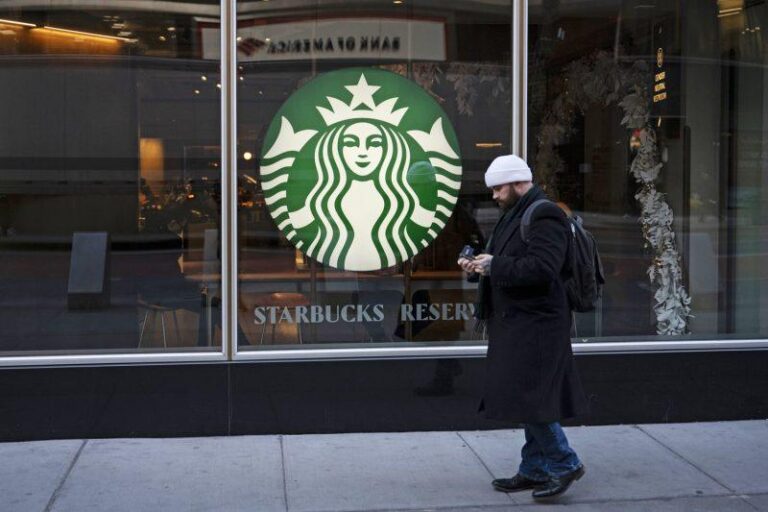
Starbucks will pay about $35 million to more than 15,000 New York City workers to settle claims it denied them stable schedules and arbitrarily cut their hours, city officials announced Monday.

The company will also pay $3.4 million in civil penalties under the agreement with the city’s Department of Consumer and Worker Protection. It also agrees to comply with the city’s Fair Workweek law going forward.

A company spokeswoman said Starbucks is committed to operating responsibly and in compliance with all applicable local laws and regulations in every market where it does business, but also noted the complexities of the city’s law.

“This (law) is notoriously challenging to manage and this isn’t just a Starbucks issue, nearly every retailer in the city faces these roadblocks,” spokeswoman Jaci Anderson said.

Most of the affected employees who held hourly positions will receive $50 for each week worked from July 2021 through July 2024, the department said. Workers who experienced a violation after that may be eligible for compensation by filing a complaint with the department.

The $38.9 million settlement also guarantees employees laid off during recent store closings in the city will get the chance for reinstatement at other company locations.

The city began investigating in 2022 after receiving dozens of worker complaints against several Starbucks locations, and eventually expanded its investigation to the hundreds of stores in the city. The probe found most Starbucks employees never got regular schedules and the company routinely reduced employees’ hours by more than 15%, making it difficult for staffers to know their regular weekly earnings and plan other commitments, such as child care, education or other jobs.

The company also routinely denied workers the chance to pick up extra shifts, leaving them involuntarily in part-time status, according to the city.

Starbucks Workers United members and supporters picket outside a Starbucks in New York on Nov. 21.Michael Nagle / Bloomberg via Getty Images

The agreement with New York comes as Starbucks’ union continues a nationwide strike at dozens of locations that began last month. The number of affected stores and the strike’s impact remain in dispute by the two sides.

This post appeared first on NBC NEWS

Tesla stock (NASDAQ: TSLA) pushed higher on Wednesday, finding fresh momentum as reports of a potential “robotics executive order” from the Trump administration fueled buying in automation sectors.

But beyond the headlines, a quieter, more technical signal is flashing in the options market: traders are aggressively buying calls, and the structure of these bets suggests some participants are positioning for a near-term breakout.

While the stock consolidates above its 200-day moving average, the options pits, often a leading indicator for sentiment, are painting a picture of “data-driven optimism.”

The signal: Bulls are chasing the upside

The most distinct signal from Wednesday’s session is the tilt in put/call volume. Scanners from Barchart indicate that total options volume has skewed heavily toward calls, with the put/call ratio dipping below historical norms.

In plain English: for every bearish bet placed on Tesla dropping, there are significantly more bullish bets wagering it will rise.

More tellingly, this volume isn’t just scattered speculation. Market data reveals “unusual call sweeps,” large, urgent block orders executed at the ask price, clustered in near-term expirations (December 5 and December 12 contracts).

When institutional or sophisticated traders sweep near-dated calls, they aren’t hedging a 10-year portfolio; they are betting on immediate price action.

Strike concentration: Activity is notably heavy at strikes just above the current trading price ($430–$440 range).

In options theory, these strikes can act as “magnets.” As market makers sell these calls to traders, they must buy the underlying stock to hedge their exposure (a dynamic known as “delta hedging”).

If the stock price starts to rise, they must buy more stock, potentially creating a self-reinforcing loop that pushes shares higher.

Tesla stock: Volatility and the “Gamma” trap

However, experienced traders know that options flow is a probability gauge, not a crystal ball. The bullish signal comes with a caveat: Implied volatility (IV).

Tesla’s IV remains elevated relative to the broader market, meaning options premiums are expensive.

High IV suggests the market expects turbulence, likely due to the upcoming delivery numbers and lingering uncertainty over EV tax credit expirations.

If Tesla stock trades flat or only rises marginally, the “time decay” (theta) on these expensive near-term calls will eat up their value rapidly.

A rising stock price doesn’t always equal profit for call buyers if the move isn’t explosive enough to offset the premium paid.

The current buying appears linked to macro hopes (regulatory easing for robotics/FSD) rather than confirmed fundamentals.

With Michael Burry and other prominent bears still vocal about valuation concerns, citing a 209x forward P/E, any disappointment in news flow could see these bullish call positions unwind quickly, putting downward pressure on the stock.

The post Tesla stock trades higher on Wednesday: is the options market signaling more upside? appeared first on Invezz