

Archive

December 30, 2025

Browsing

The post Bitcoin Price Consolidates Below $90,000 — Weekly Chart Shows a Critical Make-or-Break Zone appeared first on Coinpedia Fintech News

Bitcoin price continues to trade below the $90,000 mark, extending a period of consolidation after its strong rally earlier in the cycle. While short-term volatility has increased, the broader weekly structure remains intact. The latest price action suggests Bitcoin is approaching a decisive zone that could determine whether the market resumes its uptrend or undergoes a deeper corrective phase.

Bitcoin Price Action: Weekly Structure in Focus

On the weekly chart, Bitcoin remains inside a long-term ascending channel that has guided price action since the 2023 recovery phase. After failing to sustain moves above the $100,000–$105,000 resistance zone, BTC has pulled back toward the middle-to-lower region of this channel.

Currently, Bitcoin is trading near $87,000–$88,000, an area acting as short-term support. The rejection from the upper resistance band has shifted momentum sideways, rather than triggering an aggressive breakdown. Volume has moderated during this pullback, suggesting distribution pressure is present but not accelerating.

Key Support and Resistance Levels

From a structural perspective, two levels stand out clearly on the chart:

  • Immediate support: $85,000–$87,000
  • Major downside support: $74,000–$75,000 (weekly demand zone and channel base)

As long as Bitcoin holds above the $85,000 region, the broader bullish structure remains intact. However, a decisive weekly close below this zone could expose the $74,000–$75,000 level, where stronger buyer interest is expected to emerge.

On the upside, Bitcoin needs to reclaim the $95,000–$100,000 range to shift momentum back in favor of the bulls. Without that reclaim, upside attempts are likely to remain capped.

Indicators Signal Consolidation, Not Trend Reversal

Momentum indicators support the consolidation narrative. The MACD on the weekly timeframe is rolling over, reflecting cooling bullish momentum rather than a confirmed bearish trend. Meanwhile, On-Balance Volume (OBV) remains elevated relative to prior cycles, suggesting long-term accumulation has not fully unwound despite recent selling pressure.

This combination typically aligns with range-bound conditions, where price oscillates between key levels before choosing a direction.

Two Scenarios Traders Should Watch

Scenario 1: Range Hold and Recovery

If Bitcoin continues to defend the $85,000–$87,000 support, price could stabilize and attempt a recovery toward $95,000, followed by a potential retest of the $100,000–$105,000 resistance zone. This scenario favors patience and confirmation rather than aggressive positioning.

Scenario 2: Support Break and Deeper Pullback

A failure to hold above $85,000 on a weekly closing basis would weaken the structure. In that case, Bitcoin could slide toward the $74,000–$75,000 demand zone, completing a deeper correction within the larger ascending channel before any renewed upside attempt.

Conclusion: What This Means for Bitcoin’s Trend

Bitcoin price is not showing signs of a major trend reversal, but it is clearly at a decision point. The weekly chart highlights a market that is digesting prior gains while respecting long-term structure. Until Bitcoin either recl 95,000 or loses $85,000 decisively, traders should expect continued consolidation with heightened sensitivity around key levels.
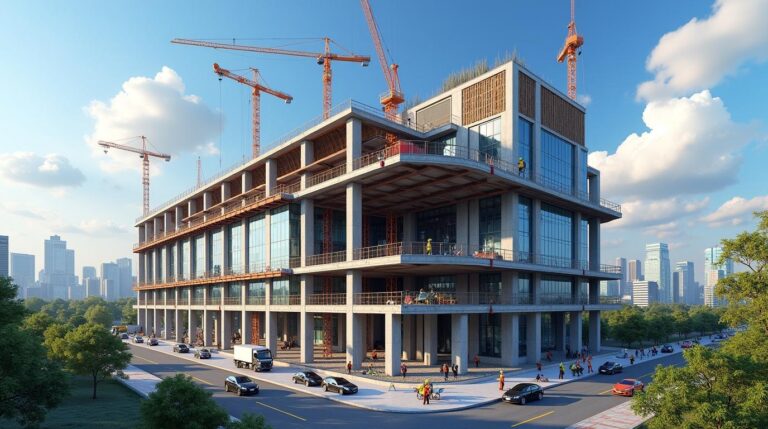
After years of turbulence caused by rising interest rates, the US commercial real estate sector is entering 2026 with cautious optimism.

While borrowing costs are easing, industry leaders are tempering expectations compared with last year.

According to Deloitte’s recent annual commercial real estate outlook survey, most firms anticipate revenue growth, but fewer plan to increase spending, and many expect higher costs.

The market is showing signs of stabilisation, yet challenges remain across office, multifamily, and data centre segments.

Here are three reasons why sentiment for the commercial real estate market heading into the new year is less upbeat than before.

Rising costs and softer spending plans

One of the clearest signals of a more restrained outlook is the shift in spending behaviour among commercial real estate executives.

Although a majority of firms still expect revenues to improve by the end of next year, fewer are committing to new investments compared with the prior year.

Instead, many plan to hold expenditures steady, reflecting uncertainty about the pace of recovery.

At the same time, a significant share of respondents in the Deloitte survey expect higher operating expenses, from labour to maintenance to financing.

This combination – flat spending alongside rising costs – suggests margins could be squeezed in 2026, leaving companies less willing to take risks.

The cautious stance underscores how lingering inflationary pressures and unpredictable economic conditions continue to weigh on the sector.

Office market recovery faces limits

The office segment, long battered by pandemic-era vacancies, appears to have reached a turning point.

Vacancy rates are projected to decline as tenants return, and premium Class A properties are seeing strong demand.

Yet the recovery is uneven. Older or lower-quality buildings remain under pressure, with tenants favouring modern spaces that offer amenities and sustainability features.

Compounding the challenge, new office construction is at its lowest level in decades, limiting fresh supply but also signalling developer hesitation.

While the flight to quality benefits top-tier assets, the broader office market still faces structural headwinds, including hybrid work patterns and corporate downsizing.

As a result, optimism is tempered by the reality that not all properties will participate equally in the rebound.

Multifamily and data centres: supply and policy strains

Multifamily housing has been a reliable magnet for investment, but a surge of new construction is reshaping the landscape.

With record numbers of units entering the market, rents are easing, and landlords are offering concessions to attract tenants.

This influx of supply, particularly in high-end developments, is expected to keep rental growth subdued in the near term.

Meanwhile, data centres – hailed as the standout performer of 2025 – continue to attract capital, yet face hurdles in financing, energy grid capacity, and zoning approvals.

Policy uncertainty adds another layer of complexity. While federal incentives for affordable housing have been hinted at, concrete measures remain undefined.

Without clear guidance, investors are left navigating a market where demand is strong but regulatory and logistical challenges cloud the outlook.

The post What to expect from US commercial real estate market in 2026 appeared first on Invezz