

Archive

May 7, 2026

Browsing

The post Solana RWA Holders Cross 200K As Asset Growth Accelerates appeared first on Coinpedia Fintech News

The Solana RWA narrative just keeps getting bigger. While most blockchains are still busy pitching “future potential,” Solana is quietly stacking real numbers and now its real-world asset holders have officially reached 200,044 for the first time. That’s a 6.50% jump in just 30 days.

Solana RWA Ecosystem Keeps Expanding Rapidly

Well, this isn’t just about wallets sitting idle. Solana’s distributed asset value has climbed to $2.02 billion, while represented asset value surged to $538.63 million, up more than 50% over the past month.

Meanwhile, the network’s RWA count now stands at 1,841. Not bad for a chain critics once dismissed as just another fast-moving retail playground.

Stablecoin Activity Dominates Solana Blockchain Infrastructure

But the real deal here or should we call it as the real engine here is stablecoins. Solana’s stablecoin market cap has reached $14.62 billion, while stablecoin holders climbed to 11.48 million.

And yes, the transfer numbers are absurd. Stablecoin 30-day transfer volume sits at $813.74 billion, even after a 30.88% monthly decline. That’s still massive by any standard. The broader RWA 30-day transfer volume also reached $3.46 billion.

Fast Settlement Speeds Attract Real Asset Builders

So, what’s driving this? Solana keeps leaning into one thing: speed. The network promotes an average settlement time of 400 milliseconds with transaction fees around $0.013.

Compared to traditional markets stuck in 24/5 schedules and slower settlement rails, Solana’s 24/7 programmable infrastructure is becoming increasingly attractive for real-world asset applications.
For now, the Solana RWA sector keeps expanding and the numbers suggest institutions and builders are paying attention whether the market likes it or not.
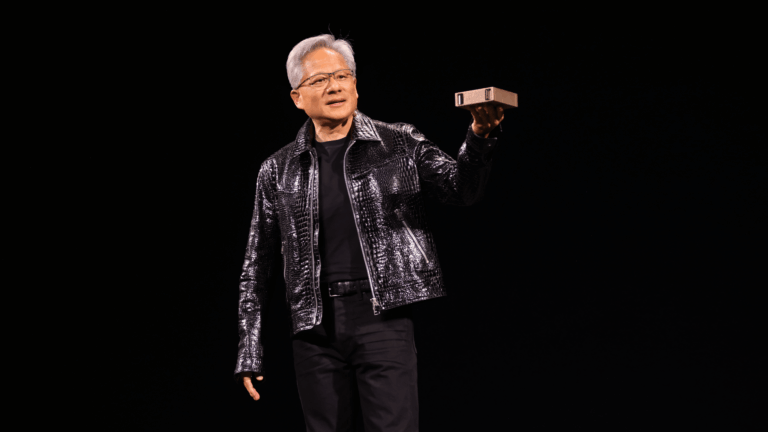
Shares of Nvidia (NVDA) rose on Thursday, extending gains from the previous session as the broader semiconductor sector rallied.

The stock was up around 3% at $213.53 in early trading, after climbing 5.8% on Wednesday and reclaiming the closely watched $200 level.

Analyst reaffirms bullish outlook

Goldman Sachs reiterated a Buy rating on Nvidia with a $250 price target, pointing to continued upside driven by demand for AI infrastructure.

The firm said investors are likely to focus on potential upside to Nvidia’s $1 trillion data centre guidance, as well as opportunities tied to agentic AI and its impact on server CPUs.

Goldman Sachs expects a “beat-and-raise” quarter based on positive supply and demand trends, but noted that expectations are already elevated, setting a high bar for further stock outperformance.

The firm added that Nvidia’s valuation could re-rate higher if there is evidence of improving profitability among hyperscalers, broader enterprise adoption of AI, and increased visibility into deployments beyond traditional large-scale customers.

The chip giant will report earnings later this month.

AI infrastructure demand remains strong

Recent updates from major technology companies have reinforced expectations of sustained spending on AI infrastructure.

Hyperscalers, including Alphabet, Amazon, Meta Platforms, and Microsoft, have all raised capital expenditure forecasts for 2026, with combined spending expected to approach $725 billion.

Longer-term projections from analysts at Bank of America and Evercore suggest total capex could exceed $1 trillion by 2027.

Such spending is expected to underpin demand for Nvidia’s graphics processing units, which remain central to AI workloads.

Underperformance versus peers

Despite the positive backdrop, Nvidia has underperformed several semiconductor peers in recent weeks.

Over the past month, shares of Advanced Micro Devices and Micron Technology have surged approximately 90% and 76%, respectively, while Nvidia has risen about 19%.

More recently, Nvidia has traded largely flat since late April, even as Intel and Micron gained more than 30%, and AMD advanced around 20%.

The divergence reflects evolving dynamics within the AI ecosystem.

Earnings from major technology companies have highlighted bottlenecks in memory chips and increasing progress in the development of in-house semiconductor solutions, such as Alphabet’s tensor processing units and Amazon’s Trainium chips.

While these developments could enhance efficiency for hyperscalers, they also introduce competitive pressures for external suppliers.

Nvidia stock’s broader pressures

Some analysts have noted that Nvidia is increasingly being viewed as a broader proxy for the AI sector rather than a single stock, reflecting its dominant position in GPUs.

This shift has led to a perception that the company trades more like a value-oriented investment within the sector, despite its role at the forefront of AI innovation.

Nvidia’s recent performance highlights a balance between strong structural demand and evolving competitive and valuation dynamics.

While continued investment in AI infrastructure supports long-term growth prospects, investors are closely watching for clearer signals on profitability, competitive positioning, and sustained demand from both hyperscalers and emerging enterprise customers.

The post Nvidia stock jumps another 3%: analyst sees more upside ahead appeared first on Invezz