Archive

July 2026

Browsing

Apple supplier Luxshare Precision’s blockbuster Hong Kong listing got off to a rough start on Thursday, despite raising HK$24.27 billion, or about $3.09 billion, in the city’s biggest IPO of 2026.

The company priced its H-shares at HK$63.28 each, at the top of its marketed range, but the stock slipped toward HK$60 in early trading, down more than 5%.

The weak debut showed that even large AI-linked supply-chain names are no longer guaranteed a smooth first day.

Luxshare Precision IPO: A warning sign investors missed

The shaky opening was not entirely unexpected as Luxshare’s H-shares had already shown pressure in unofficial gray-market trading before the bell, signalling that some investors were ready to flip the deal rather than hold it.

That was notable because the offer had already been priced to look attractive.

The HK$63.28 Hong Kong offer price represented a discount to Luxshare’s Shenzhen-listed shares, which had closed at 62.47 yuan on Wednesday.

That gap was meant to give buyers a margin of safety, but didn’t seem enough to stop early selling.

The contrast is what makes the debut important.

Luxshare had arrived with almost everything IPO bulls usually want: Apple exposure, AI supply-chain optionality, cornerstone demand and the biggest Hong Kong listing of the year.

Doo Financial Futures analyst said ahead of the listing that Luxshare’s IPO was benefiting from the global equity market’s AI-driven frenzy.

He also said the deal reflected Hong Kong’s renewed appeal as a fundraising hub for Chinese companies.

That bullish backdrop makes the first-day slide harder to ignore.

Also read: Apple price hikes unlikely to hurt demand, JPMorgan says as it raises PT

Why was the discount not enough

The first concern is customer concentration.

Luxshare is one of Apple’s most important Chinese suppliers, assembling products across Apple’s hardware ecosystem.

That relationship has helped drive scale, but it also cuts both ways.

The Wall Street Journal reported that Apple’s share of Luxshare’s revenue fell to 57% in 2025 from 75% in 2023, showing progress on diversification, but also underlining how central Apple still is to the business.

The second issue is supply, as Luxshare did not list it in isolation.

Hong Kong is witnessing an IPO-rush with five Chinese technology and advanced manufacturing companies launching offerings last week, seeking up to HK$44.1 billion, or about $5.6 billion, combined.

That rush included electronics, chip, circuit-board equipment and robotics names.

When several large deals hit the market at once, even strong companies can face allocation fatigue.

Investors have to choose where to deploy capital, and first-day trading can become more about fund flows and deal mechanics than long-term fundamentals.

There is also a broader warning for the Hong Kong IPO market.

The new listings in the city raised about $22.45 billion in the first half of 2026, up nearly 57% from a year earlier and the busiest start to a year in five years.

Analysts noted that while appetite for quality AI-related stories remained strong, investors should still watch valuation discipline, post-listing performance and geopolitical risk.

The post Apple supplier’s blockbuster Hong Kong debut turns sour with 5% slide appeared first on Invezz
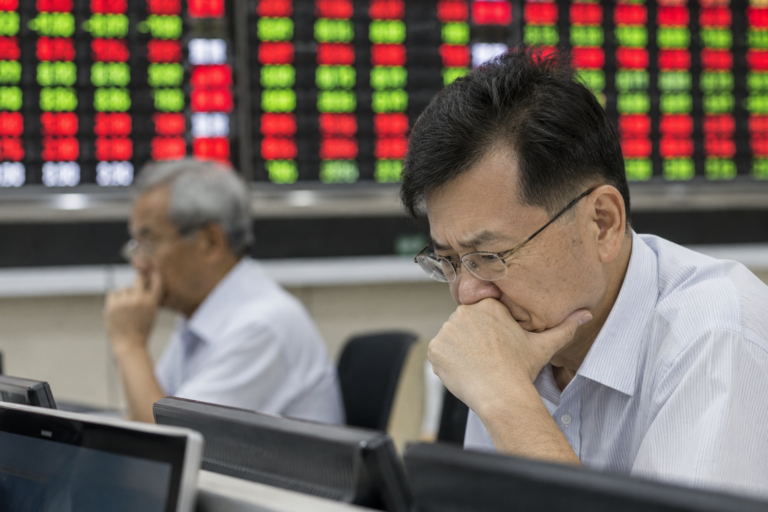

The Kospi Index has retreated into a technical bear market after falling by 23% from its highest point this year. This sell-off continued today as it plunged to its lowest level since May 20th. So, will the blue-chip index fall further, or will it stage a comeback?

Why the Kospi Index has plunged

The Kospi Index, which tracks the biggest companies in South Korea, has been the best gainers globally since last year. It jumped from 2,268 at its lowest level in April last year and peaked at a record high of 9,387.

The rally was caused by government policies that encouraged stock investments, with the president predicting that the Kospi would jump to 5,000.

These policies coincided with an artificial intelligence boom that led to a surge in demand for memory products and semiconductors. Samsung and SK Hynix are some of the biggest players in these industries. 

The demand led to substantially higher prices, revenues, and profits for these companies. Just this week, Samsung said that its revenue more than doubled in the second quarter, with management predicting more growth ahead.

Samsung and SK Hynix joined their global peers in the memory industry in soaring, with their market capitalization rising to over $1 trillion. As this happened, South Korean and foreign investors embraced Fear of Missing Out (FOMO). 

Many South Koreans took loans to take part in the bull market, with recent data showing that leveraged trades had soared in the country. Leveraged stock investments by retail investors soared to their limits a while ago, making it difficult for these investors to borrow more.

Recently, however, the party has started to stall. Foreign investors have continued selling South Korean stocks because of profit-taking. At the same time, Samsung and SK Hynix, which led the gains, have tumbled as investors question whether they have more room to grow.

A key concern is that memory prices may start to retreat in the coming months since this industry is highly cyclical. Investors still remember what happened in 2023 when revenues of most memory companies plunged by double digits.

At the same time, there is a risk that the US-Iran war will restart soon. In a statement, Donald Trump said that, in his view, the ceasefire had ended. The US launched strikes against Iran overnight, with the latter retaliating. Oil prices have started going up again as traders map the potential scenarios. 

What next for the Kospi?

A traditional theory known as Wyckoff provides a good explanation for what is happening with the Kospi Index. It explains that assets go through four main cycles over time. The first one is the accumulation, where assets move horizontally. It is then followed by the markup phase, where prices move parabolically as FOMO intensifies.

This stage is then followed by distribution and then markdown, where investors start panic selling. There are signs that we are now in the markdown phase, which may trigger more selling, especially by leveraged retail investors.

The index is also likely going through mean reversion, where assets fall and move back to their historical averages. In this case, Kospi is at 7,204, while the 200-day moving average is at 5,901. As such, the decline will bring the index closer to the average.

So, is this the end of the bull run? Not necessarily. What is clear, however, is that the index will be highly volatile in the near term.

The post Kospi Index is in a bear market: is the South Korean party over? appeared first on Invezz

Asian equities found support from the one corner of the market investors are still reluctant to abandon: semiconductors.

Chipmakers rebounded on Thursday after several days of heavy selling, helping lift benchmarks in Japan and South Korea.

But the rally was not broad enough to erase the bigger macro risk. Oil jumped after renewed US-Iran hostilities, reviving inflation concerns and pushing bond yields higher.

The result was a split market as investors bought the AI dip, but stayed wary of the energy shock that could force central banks to keep policy tighter for longer.

Chip dip-buying steadies Asia

MSCI’s broadest index of Asia-Pacific shares outside Japan rose 0.8%, while Japan’s Nikkei climbed 2.3%, snapping a three-day losing streak.

South Korea’s KOSPI jumped 3.8%, led by a 3.6% rise in Samsung Electronics and a 7.5% surge in SK Hynix.

The rebound followed a modest recovery on Wall Street, where the Nasdaq managed a 0.2% gain despite early weakness.

Nvidia rose 3.6% after reports that China may allow leading AI firms to buy a limited number of its H200 chips, helping ease some concern over demand for advanced processors.

The move suggests investors still see value in the AI supply chain after this week’s selloff.

But conviction remains fragile, especially after Samsung’s strong earnings guidance failed to prevent profit-taking earlier in the week.

Oil shock revives inflation fears

The larger risk came from crude. Brent rose 0.8% to $78.65 a barrel and was up about 9% for the week, briefly trading above $80 for the first time since June 22.

Oil extended its rally after Trump said the interim agreement with Iran was “over” and US forces launched fresh strikes aimed at keeping the Strait of Hormuz open.

Trump later said he did not expect a return to full-scale war, which helped markets recover from session lows.

Still, the damage to the inflation outlook was clear. Higher energy prices hit bond markets and lifted expectations that the Federal Reserve may need to tighten again this year.

Bonds feel the pressure

Fed funds futures now imply 38 basis points of tightening this year, back near levels seen a week ago.

Minutes from the Fed’s June meeting showed several policymakers were already concerned about inflation, with some seeing a case for higher rates before agreeing to hold steady.

Bond yields climbed across markets. Japan’s 10-year yield rose to 2.880%, its highest since 1996, while Australia’s 10-year yield touched its highest level since early June.

The US 10-year yield added to overnight gains, rising to 4.5852%.

Currency moves were quieter. The dollar slipped 0.2% to 162.38 yen, still near levels that keep Japanese intervention risk alive.

The post Samsung, SK Hynix power Asia rebound while oil shock rattles bonds appeared first on Invezz

The Hang Seng Index retreated to 24,011 on Thursday, paring back some of the gains made a day earlier. This drop mirrored developments in key markets like in the United States and South Korea. Still, the potential rotation to Hong Kong stocks may push it higher, potentially to 25,000.

Rotation to Chinese equities possible

The Hang Seng Index retreated slightly on Thursday as investors started to book some of the profits they made a day earlier. This decline aligned with what happened in the United States, where the Dow Jones dropped by over 600 points. 

Other Asian indices like the Kospi and Nikkei 225 are falling. There are jitters about the technology sector and the resumption of kinetic action between Iran and the United States. Benjamin Netanyahu will likely make the case for more fighting when he visits Washington soon.

In a statement on Wednesday, President Donald Trump argued that, in his view, the ceasefire was over. The US then launched more strikes against Iran overnight, pushing crude oil prices higher. Brent jumped to $79, while the West Texas Intermediate (WTI) soared to $75. 

Broadly, however, there are signs that investors are starting to pay attention to Chinese stocks, which have been left behind in the global rally. With indices in the US, South Korea, and Japan hitting their record highs, the Hang Seng has remained in a prolonged bear market.

This performance has made it quite cheap, with its price-to-earnings ratio being at around 11. In contrast, the FTSE 100 Index’s multiple is around 17, while the S&P 500 Index is at 22.

Some Chinese technology companies have become outright bargains. For example, Alibaba has a PE ratio of less than 20, while Tencent has 16. Xiaomi, which is normally seen as China’s Apple, has a multiple of 14, while Trip.com has 6.

To be fair, these multiples can be justified by the challenges the companies are going through. Xiaomi has seen its profit plunge because of the rising memory prices, while its electric vehicle business is contending with rising competition. 

Alibaba, on the other hand, is facing challenges as AI investment costs rose. Its profits dropped by over 80% in the first quarter. Trip.com’s business has slowed, while Tencent’s AI costs have risen.

Still, despite these challenges, a general rotation to China cannot be ruled out. This also aligns with a recent prediction by Morgan Stanley’s Mike Wilson, who predicted a sector rotation from semiconductor stocks to companies that were left behind in the rally. 

Hang Seng Index technical analysis

HSI Index chart | Source: TradingView

The daily chart shows that the Hang Seng Index has rebounded from a low of 22,504 to 23,980 today. It retested the crucial resistance level of 24,000, its lowest swing on March 23rd. 

The index has moved slightly above the 25-day Exponential Moving Average (EMA), a sign that bulls have prevailed for now. It, however, remains below the 50-day and 100-day EMAs. 

Therefore, the most likely scenario is where it resumes rising as bulls target the key resistance of 25,000. A drop below the support level of 23,500 will invalidate the bullish outlook.

The post Hang Seng Index rally has stalled: what next for Hong Kong stocks? appeared first on Invezz

Global investors have placed orders for more than seven times the shares available in SK Hynix’s upcoming American depositary receipt (ADR) offering, Bloomberg and Reuters reported.

According to Bloomberg, the offering has attracted strong interest from global long-only funds and technology-focused investors ahead of its expected pricing on Thursday.

Around 1,000 institutional investors participated in the company’s management roadshow earlier this week, reflecting broad investor interest in what is set to become one of the largest overseas listings on the Nasdaq.

The ADR issuance is equivalent to 17.79 million common shares.

SK Hynix previously said in regulatory filings that it would determine the final offering price on Thursday, with trading on the Nasdaq scheduled to begin on July 10.

Reuters had earlier reported that US-based investors submitted sizeable orders, with several ranging from $200 million to some exceeding $1 billion.

The company also disclosed on Monday that Baillie Gifford Overseas Limited, investment funds managed by Coatue Management, and Situational Awareness Partners had each separately indicated interest in purchasing up to a combined $7 billion of its US ADRs.

Based on SK Hynix’s closing share price in Seoul last Friday, the offering is valued at approximately $28 billion, putting it on track to become the largest-ever US listing by a foreign company.

The current target, however, is lower than the company’s earlier fundraising goal of 45.453 trillion won.

AI-driven memory demand continues to support long-term outlook

Each ADR represents one-tenth of a common share, with the offering accounting for roughly 2.5% of SK Hynix’s market capitalisation.

The company has emerged as one of the biggest beneficiaries of the global AI infrastructure boom.

Its market value has more than tripled this year as demand for high-bandwidth memory (HBM) chips used in AI servers surged.

SK Hynix has become Nvidia’s leading supplier of HBM chips after spending more than a decade investing in the technology, a strategy that has now positioned the South Korean company at the centre of the AI hardware supply chain.

Although semiconductor stocks globally have lost some momentum in recent weeks amid concerns over AI spending and broader market volatility, SK Hynix and rival Samsung Electronics continue to sit on substantial long-term gains thanks to robust demand from AI data centres.

SK Hynix shares have declined around 25% over the past two weeks following a sharp rally, but the stock remains up about 680% over the past year.

The company said proceeds from the ADR offering will be used to expand semiconductor manufacturing facilities in South Korea and purchase advanced chipmaking equipment, including ASML’s extreme ultraviolet (EUV) lithography systems.

The investments are intended to boost production capacity as demand for AI memory chips continues to outpace supply.

US listing could unlock higher valuations

Market analysts believe the Nasdaq listing could catalyze a valuation re-rating by increasing SK Hynix’s visibility among global investors.

Meritz Securities analyst Kim Sun-woo said in a recent research note that the ADR listing would help SK Hynix narrow its valuation gap with US-based rival Micron Technology.

Kim added that the listing could also pave the way for SK Hynix to be included in the Philadelphia Semiconductor Index, a benchmark closely tracked by global exchange-traded funds and passive investment products.

Inclusion in the index could generate additional demand for the stock through passive fund inflows while improving its standing among international investors.

Meritz Securities also expects SK Hynix to continue posting strong earnings, supported by resilient demand for AI memory chips and tight industry supply, even as overall production gradually increases through the year.

HSBC has also turned more optimistic on the stock.

Last month, the brokerage said it would raise its valuation by applying a 20% premium to its previous price-to-book multiple of 2.8 times, resulting in a revised multiple of 3.4 times.

The bank said the higher valuation reflected “more proactive shareholder-friendly initiatives and improved accessibility to global investors.”

The post SK Hynix ADR issue draws over sevenfold demand: report appeared first on Invezz

The post ChangeNOW Review: Everything You Need to Know Before Using It appeared first on Coinpedia Fintech News

Centralized crypto exchanges have kept the industry under a tight grip, but the narrative is shifting fast. Traders are weary of unexpected KYC blocks, security breaches, and platforms holding their private keys hostage. This shift explains why instant, non-custodial exchange aggregators are surging in popularity. Sitting at the top of this sector is ChangeNOW. Launched …

Alibaba (BABA) stock is printing its strongest single-day performance in about ten months on July 8th following a sneak peek into its fiscal Q1 results.  

Investors are loading up on the Chinese tech behemoth after the leaked earnings preview signalled a return to top-line growth in its core e-commerce segment.

Additionally, BABA is proving a key beneficiary of the broader capital rotation currently underway – with institutional investors trimming exposure to overextended Western semiconductor stocks in favour of the discounted Chinese artificial intelligence (AI) names.

A popular name that isn’t participating in the said rotation, however, is ARK Invest’s founder and chief executive officer Cathie Wood, who has actually unloaded Alibaba shares recently to invest in another overvalued US stock.

Wood sells Alibaba stock to load up on SpaceX

While retail and institutional desks are bidding up BABA shares on Wednesday, Cathie Wood has spent recent weeks moving completely in the opposite direction.

The famed investor has unloaded her stake in the Chinese giant almost entirely, after selling about $54 million worth of it in a single day late in June.

Instead of riding the AI hype and the subsequent near-term wave of recovery in China’s tech names, the ARK Invest founder is diverting the freshly unlocked capital into alternative frontiers.

Her primary target has been SpaceX (SPCX), of which she has accumulated another 44,000 shares this week.  

What might have made Wood sell BABA shares

Cathie Wood might have pulled out of Alibaba shares because of “deep-seated concerns” about the true long-term monetization timeline for Chinese large language models (LLMs).

While data shows Alibaba Cloud maintaining a dominant 40.1% market share in China’s full-stack artificial intelligence cloud infrastructure with its proprietary Qwen model, converting that sheer volume into high-margin enterprise profitability remains a significant hurdle.

Moreover, China’s strict AI regulatory environment imposes structural compliance headwinds that Western firms do not face, further hurting the potential for exponential growth.

Combined with margin erosion tied to BABA’s highly capital-intensive instant-commerce delivery, the risk-to-reward ratio perhaps soured for ARK Invest.

SpaceX: a better AI play than Alibaba?

Ultimately, Cathie Wood’s refusal to buy the Alibaba hype highlights a sharp philosophical divide on Wall Street regarding the next phase of AI deployment.

Shorter-term traders view BABA stock as fundamentally mispriced at about 15x forward earnings, especially since it controls the foundational infrastructure of the Chinese digital economy.

But Ark Invest is executing a structural arbitrage, fleeing China’s consumer uncertainties to wager on what Cantor Fitzgerald recently described as “planetary infrastructure”.

Wood’s bold reallocation implies that true exponential AI gains will not be captured by domestic e-commerce applications, but by frontier platforms like SpaceX’s Starlink, which aims to pioneer orbital space data centers to rent out massive, unconstrained computing power by 2030.

The post Alibaba stock: Cathie Wood isn't buying the AI hype appeared first on Invezz

The post Tether Invests $20M in Mercado Bitcoin appeared first on Coinpedia Fintech News

Tether, the issuer of the world’s largest stablecoin, USDT, is making another major expansion move. The company has announced a $20 million investment in Brazil-based Mercado Bitcoin, one of Latin America’s biggest regulated crypto platforms.  Could this deal position Brazil as the next major crypto innovation hub? Why Is Tether Investing in Mercado Bitcoin? Tether’s …

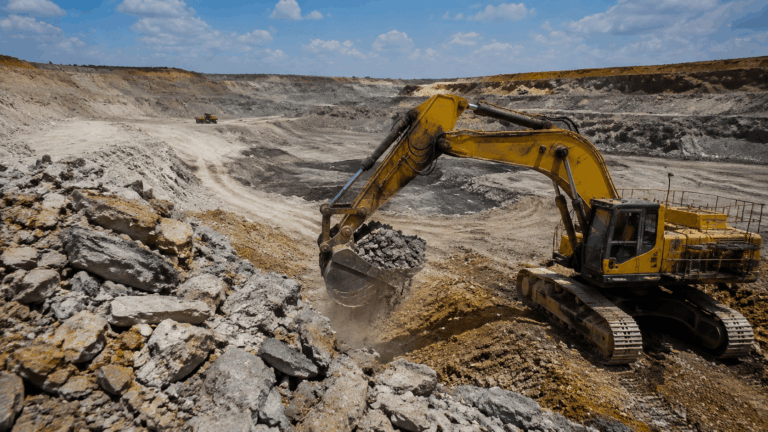
Critical minerals stocks are ripping higher this morning on the back of a powerful macro catalyst: unprecedented direct US military-industrial integration.

On July 7th, the US Army said it has selected REalloys (ALOY) to build and operate the first-ever commercial critical mineral processing facility directly on a US military installation.

This notable escalation of the Pentagon’s domestic supply-chain mandate is triggering a rising tide effect for Western-aligned, non-Chinese names like USA Rare Earth (USAR), Critical Metals Corp (CRML), and United States Antimony Corp (UAMY).

Here’s a deeper dive into why each of these three critical minerals stocks are responding positively to the US Army announcement today.

USA Rare Earth – the benchmark leader

As a heavyweight in domestic REE development with its 100% economic consolidation of Round Top project in Texas, USAR stock is the natural institutional beneficiary of the DoD news.

The Pentagon’s announcement explicitly noted that REalloys will begin qualification of defense-grade heavy rare earths (including dysprosium and terbium) by the end of 2026.

This timeline is intended to let defense contractors validate North American-processed materials ahead of the strict January 1, 2027, defense procurement deadline.

Because USAR is already tracking toward its own CHIPS Program funding ($1.6 billion under Department of Commerce evaluation), today’s news reinforces that the government sees 2026 as a critical execution window to sustainably divorce the defense base from foreign supply.

US Rare Earth shares are Buy-rated among Wall Street firms.

Critical Metals – the interconnected supply chain

CRML shares are getting a massive lift due to its tight corporate ties with REalloys.

Back in May, Critical Metals executed a “15-year binding definitive offtake agreement” to supply rare earth concentrate from its massive Tanbreez project in Greenland directly to REalloys.

Because REalloys just landed the US Army flagship base-processing initiative, CRML’s upstream material from Greenland suddenly has a highly secure, direct, and priority route straight into the military-industrial complex.

Investors are aggressively buying Critical Metals stock today because the DoD news helps notably de-risk Tanbreez project’s path to monetization.

Analysts rate CRML at “Buy” currently, according to The Wall Street Journal.

United States Antimony – the strategic weapon catalyst

UAMY stock is riding the coattails of the defense-mandate thesis because antimony is one of the most critically undersupplied minerals in the US defense sector.

Antimony is vital for military applications, including ammunition primers, armor-piercing bullets, night-vision goggles, and precision optics – and UAMY operates the “only” functional antimony smelter in the US.

With the market aggressively rotating capital into domestic defense-supply infrastructure on July 7th, small-cap, highly shorted names like UAMY are experiencing massive momentum bursts as traders hunt for pure-play US critical mineral stocks.

Wall Street has a consensus “Buy” rating on United States Antimony at the time of writing.

The post What's driving US critical minerals stocks higher on Tuesday? appeared first on Invezz

The post Cardano Price Reverses Trend as Holder Count Climbs—Can ADA Sustain a Long-Term Recovery? appeared first on Coinpedia Fintech News

Cardano price has staged a recovery, trying to break the long-term descending trend after staging a rebound from $0.14. Moreover, this recovery is backed by a steady rise in the network activity, which suggests that the investors are gradually regaining confidence in the network. While the recent momentum has improved the short-term outlook, Cardano still …