Archive

June 2026

Browsing

The post Will Bitcoin and Ethereum Price Recover? $11.8B Options Expiry Could Decide Next Move appeared first on Coinpedia Fintech News

Bitcoin and Ethereum are entering one of the most important derivatives events of the month as nearly $11.85 billion worth of crypto options contracts approach expiration. Bitcoin has struggled to regain momentum after losing its recent breakout structure, while Ethereum price remains under pressure below major resistance levels. However, the latest options positioning reveals that …

Micron Technology stock is soaring this morning after the company posted blockbuster Q3 results, featuring a nearly 350% year-over-year increase in revenue to $41.46 billion.

Still, the broader semiconductor complex is not following Micron’s lead – with Intel (INTC), Advanced Micro Devices Inc, and even Nvidia failing to participate in the rally on Jun. 25.

While that may seem a bit puzzling on the surface, there’s actually three very simple reasons why these chipmakers aren’t moving in sync with Micron stock today.

Why chip stocks aren’t rallying in sync with MU shares

In its earnings release, Micron confirmed that its High-Bandwidth Memory (HBM), the hyper-fast memory stacked directly onto artificial intelligence (AI) chips, is completely sold out through year-end, with customers locking in $22 billion in agreements.

While that’s incredible for MU shares, it actually highlights a severe industry supply constraint.

If the likes Nvidia or AMD can’t secure enough HBM from suppliers (Micron or SK Hynix), they can’t ship their top-tier AI graphic processing units (GPUs), including the Blackwell architecture or the MI300 series.

Micron Technology’s tight supply cap confirms that compute chipmakers are physically limited in how fast they can scale their own near-term revenues – a broader concern that is clearly reflected in their muted performance today.

Stretched valuations are weighing on Intel and AMD

The broader semiconductor sector has been dealing with an intense multi-day wave of profit-taking.

Investors are reassessing stretched valuations and demanding that astronomical capital expenditure from big tech hyperscalers translates into immediate profits.

Because names like Intel and AMD have already priced in massive, flawless growth, a solid update from a sub-component supplier like Micron is being treated as a “sell-the-news” event for the rest of the tech stack.

Note that Advanced Micro Devices Inc and INTC are currently going for about 85x and more than 200x forward earnings; so the initial pre-market gap up simply gave institutional traders a “highly liquid” exit point to lock in profits.

INTC and AMD face idiosyncratic challenges

Continued pressure on Intel and AMD shares makes sense also because these companies actually face entirely different architectural and competitive pressures.

INTC is battling high turnaround execution costs as it positions itself as a Western foundry choice, and Advanced Micro Devices is locked in an expensive market-share war with Nvidia in the data center.

A spike in memory pricing pads MU’s margins immediately, but it doesn’t solve Intel’s execution timeline or alter AMD’s market share positioning against Nvidia.

That said, Wall Street hasn’t thrown in the towel on either. Both remain “Buy” rated among experts, with the most ambitious price targets calling for well over 20% upside from their current levels.

Neither of the two chipmakers, however, pays a dividend to attract income-focused investors.

The post Why Micron earnings aren't driving Intel, AMD shares higher? appeared first on Invezz

The post Solana Price Nears Key Breakout Zone: Can Bulls Push SOL Above $70 Toward $75? appeared first on Coinpedia Fintech News

Solana is approaching a critical turning point in the short term as the price tightens within a narrowing range. After recovering from its recent pullback, the SOL price has managed to defend its local support zone and is now showing signs of compression, a pattern that often precedes a sharp directional move. With the broader …

Nvidia NVDA shares edged higher on Wednesday as the chipmaker stabilized following a broader semiconductor-sector selloff, with market participants assessing whether the stock is establishing a new trading range.

Despite recent volatility, the stock has largely held above the psychologically important $200 level since breaking out of its previous range in April.

Nvidia still trading at cheaper valuation

The move comes as investors weigh Nvidia’s relative underperformance against the broader semiconductor sector.

The stock is up 7.3% so far this year, compared with a roughly 90% gain for the PHLX Semiconductor Index over the same period.

Still, technical and valuation signals suggest some support for the stock at current levels.

Nvidia has only briefly fallen below $200 in recent months and has tended to rebound on dips around that level.

The company is trading at a forward price-to-earnings ratio of 19.34 times, according to FactSet, slightly below the S&P 500 average of 20.77 times.

Analysts suggest this valuation could attract investors looking for relative value, potentially limiting further downside.

Nvidia is also returning significant capital to shareholders through dividends and buybacks, distributing about 50% of free cash flow.

Based on expected free cash flow of $195.35 billion in 2026, the company could return more than $97 billion to investors.

However, expectations for a sustained breakout remain tied to product cycle developments.

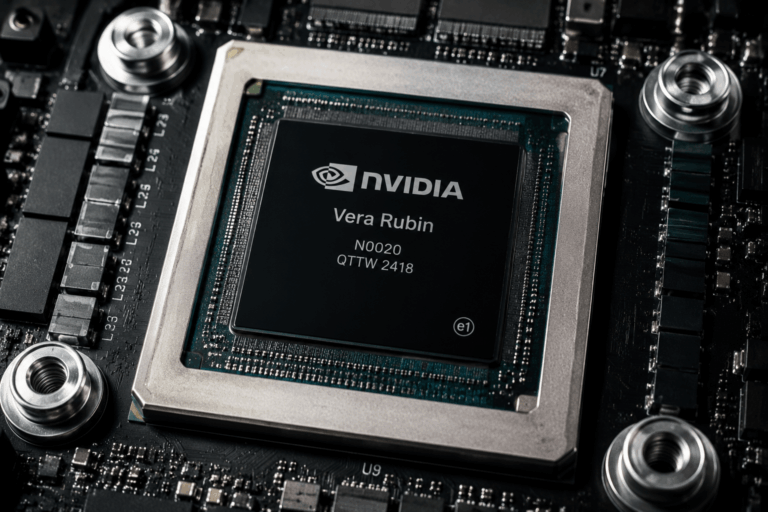
Investors are watching the rollout of Nvidia’s next-generation Vera Rubin chips, which are expected to enter the market in the second half of the year.

Market participants say the company will need to demonstrate continued dominance in artificial intelligence hardware to drive the next leg higher.

China black market pricing highlights strong demand for Nvidia chips

Nvidia’s AI chips have seen sharply higher prices on China’s black market, more than doubling over the past six months, according to a Financial Times report.

The increase comes amid tighter US enforcement of export controls restricting access to advanced semiconductors.

The DGX B300 server, which contains eight Blackwell graphics processing units, has risen in price to more than 8 million yuan ($1.1 million), up from around 4 million yuan, based on interviews with Chinese chip traders.

The system typically sells for about $400,000 in the United States.

Similarly, the RTX 6000 Pro workstation chip, used in large language model development, has increased from roughly 50,000 yuan at the start of the year to as much as 130,000 yuan, according to the report.

Both products are subject to US export restrictions on sales to China.

The surge in unofficial pricing follows a series of enforcement actions.

In March, a Supermicro co-founder, along with a Taiwan-based employee and a contractor, was charged with allegedly smuggling $2.5 billion worth of Nvidia AI servers to Chinese customers in what is described as the largest US enforcement case related to AI chip exports.

The post Nvidia steadies above $200 as valuation, China chip demand draws focus appeared first on Invezz


The post Why is Crypto Crashing Hard Today? BTC, ETH and XRP Fall 5% appeared first on Coinpedia Fintech News

Crypto markets are in freefall on Monday, and for once the selling has nothing to do with anything specific to digital assets. Bitcoin fell to $62,400, down 4% on the day, Ethereum dropped 5.45% to $1,657 and XRP slid 4.36% to $1.09.  The total crypto market cap shed nearly $86 billion in 24 hours to …

The tech sector is experiencing a sharp global sell-off today, dragging down chipmakers like Intel, AMD, Micron, and even the artificial intelligence (AI) darling – Nvidia.

What’s driving this weakness is a combination of a global market contagion (KOSPI crashed over 10% prompting a trading halt), resurgent fears of the US rate hike, and a valuation reset on the AI trade.

Against this backdrop, fund manager Tom Hulick has named three non-AI stocks suitable for those interested in rotating out of the plunging tech sector.

Eli Lilly (LLY)

While tech investors panic over premium valuations and a potential AI slowdown, Hulick points to Eli Lilly stock as a robust value growth alternative.

The tech sector’s vulnerability stems from its volatile dependence on speculative forward-looking hardware cycles, but LLY offers a defensive moat built on generational medical advancements – specifically its blockbuster weight-loss drug.

Though chipmakers like AMD and Intel suffer severe multiple compression under high-rate fears, Lilly’s growth is anchored to secular, inelastic healthcare demand.

Hulick believes the market is underestimating how tech and AI developments will boost pharma innovations, making Eli Lilly’s flat-ish year-to-date (YTD) performance an “attractive” entry point for capital rotating out of volatile semiconductor stocks.

Note that LLY shares also currently pay a dividend yield of 0.63%.

GE Vernova (GEV)

The semiconductor wipeout on Jun. 23 underscores the risks of “crowded trades” where valuations outpace near-term cash flows.

In stark contrast, Hulick highlights GE Vernova shares, pointing to genuine, undeniable earnings momentum within the industrial power sector.

As money flees capex-heavy tech names whose future revenues are vulnerable to macroeconomic policy shifts, GEV stands out as a fundamental structural play.

The company provides the essential electrical grid infrastructure required to sustain the modern economy.

While chip manufacturers like AMD or Intel face compressing margins and global market contagion today, GE Vernova captures the market’s necessary pivot toward hard industrial assets, offering investors stable growth that is completely insulated from the immediate risks of the AI hardware trade reset.

A 0.19% dividend yield makes GEV stock even more attractive to own in 2026.

Panasonic (PCRFY)

Instead of chasing the highly volatile, consumer-facing tech giants, Hulick suggests a tactical pivot toward infrastructure-level technology via Panasonic.

As the tech-heavy KOSPI and Nasdaq plummet under leverage liquidations, Panasonic offers a grounded, utilitarian alternative focused on backup battery systems and supercapacitors.

These technologies are crucial for efficient energy storage and grid management – the very power systems required to fuel the broader economy.

While premium chip stocks suffer are extremely sensitive to surging US Treasury yields, Panasonic stock represents the “broadening out” of the market into tangible, industrial-tech small and mid-caps.

It allows investors to exit the over-leveraged AI trade while still capturing the indispensable secular growth of energy infrastructure.

The post Fund manager names 3 non-AI stocks to own as Intel, AMD sink amid broader tech rout appeared first on Invezz

The post OKX Partnership With ICE Could Bring Tokenized NYSE Stocks To 120 Million Users appeared first on Coinpedia Fintech News

Today, Intercontinental Exchange (ICE), the owner of the New York Stock Exchange, has entered an interesting strategic partnership with OKX crypto exchange that includes a minority investment, a board seat, and plans for a joint venture focused on tokenized equities and regulated futures access.  The deal values OKX at $25 Billion and could eventually place …

HIVE Digital (HIVE) shares soared on Monday morning as investors reacted to the firm’s recently announced pivot from BTC mining into AI and high-performance computing (HPC) infrastructure.

Late last week, HIVE said its wholly owned subsidiary, BUZZ HPC, signed a massive three-year commercial contract valued at about $220 million.

According to the press release, BUZZ will deploy 2,304 Nvidia Grace Blackwell GPU (configured as GB200 NVL72 rack-scale systems) at Bell’s data center facility in Merritt, British Columbia.

At the time of writing, HIVE stock is trading at a year-to-date high of about $5.3.

What’s driving HIVE stock higher today?

On Jun. 18, HIVE also secured approval from the Boden Municipal Council to outright purchase the Big Boden 32 MW data center in Sweden.

The company has operated out of this facility as a tenant since 2018, but moving to full ownership allows them to aggressively upgrade the site to Tier III standards to support heavy, next-generation AI and enterprise cloud computing workloads.

HIVE shares are rallying on a news that actually broke a few days ago mostly because today marks the first full trading session for the market to digest and price in those significant updates that also triggered positive revisions from Wall Street analysts over the weekend.

Cantor Fitzgerald analysts, for example, reiterated their “Overweight” rating on HIVE Digital and raised their price target aggressively to $7, indicating significant further upside from current levels.

Cantor Fitzgerald’s bull case for HIVE shares

In its latest research note, Cantor Fitzgerald analysts led by Brett Knoblauch said HIVE’s narrative is completely transforming.

Instead of being viewed as just a high-beta crypto miner subject to volatile Bitcoin prices, the firm is now building hard infrastructure that makes it an “AI infrastructure landlord.”

Knoblauch explicitly pointed out that the global tech market faces a massive compute and energy scarcity through 2026 and 2027.

And because HIVE has successfully secured tangible access to mega-scale power (anchored by their massive 320 MW AI gigafactory plans near Toronto and the recently solidified 32 MW site ownership in Sweden), HIVE stock is uniquely positioned to benefit.

“Compute scarcity makes it possible a large player would want access to HIVE Digital’s compute capacity,” he added.

What’s the consensus rating on Hive Digital

Following the AI pivot driven rally, HIVE shares’ relative strength index (RSI) sits in the early 70s – indicating “overbought” conditions that often precede a near-term pullback.

Still, Wall Street analysts remain bullish as ever on the stock for the next 12 months.

According to The Wall Street Journal, the consensus rating on Canada-based HIVE Digital Technologies Ltd sits at “Buy” currently, with the mean price target of $7.07 signaling potential upside of some 30% from current levels.  

The post Why is HIVE stock soaring today and what comes next? appeared first on Invezz

The post NEAR’s Dynamic Resharding Upgrade Is Coming: Can It Fuel the Next Rally? appeared first on Coinpedia Fintech News

NEAR Protocol’s price is back in focus after showing renewed strength since the start of the month, forming a steady pattern of higher highs and higher lows. The latest rebound highlights the importance of its rising support band, which continues to act as a strong base for the ongoing recovery. At the same time, the …

The S&P 500 Index remained under pressure last week after the Federal Reserve delivered a highly hawkish interest rate decision. It also wavered as investors reacted to the new ceasefire between the US and Iran, which drove energy prices lower. This article looks at some of the key catalysts for S&P 500 and the key ETFs like VOO and SPY.

S&P 500 Index to react to the US-Iran crisis

One of the top catalysts for the S&P 500 Index is the ongoing US-Iran crisis, which faded last week as the two sides reached an agreement to end the war for 60 days. 

This agreement has been viewed widely as a major victory for Iran as it largely gave them all they asked for. They received sanctions relief, allowing them to sell their crude oil internationally at market prices.

At the same time, the US committed to unfreezing some of its assets, giving them access to billions of dollars. Iran will also receive over $300 billion in investments from Gulf countries over time.

Most notably, Iran also received a commitment that Israel will stop its bombing campaign against Lebanon. It received all this in exchange of reopening the Strait of Hormuz, which was open before the war started. This deal led to a plunge in crude oil prices, with Brent and the West Texas Intermediate (WTI) falling below $80.

With the deal signed now, the question is whether each side will implement their part. In a statement on Friday, Iran said that its delegation would not travel to have talks with the US, citing the Lebanon issue. The country also closed the Strait of Hormuz, pushing oil prices higher. 

Micron earnings 

The S&P 500 Index has been highly sensitive to individual earnings. For example, it recently retreated sharply after the Broadcom earnings, which sent shivers in the stock market.

This week, focus will be on Micron, a company that has recently entered the $1 trillion club. It will publish its financial results on Wednesday, providing more color on its performance.

Micron’s earnings are important because of its size and the fact that it is in the hottest area in the stock market: memory. Indeed, the top gainers in the S&P 500 Index are all firms in the industry, including players like Sandisk, Western Digital, and Seagate. As such, if Micron’s earnings come short of expectations, chances are that it will have a major implication in the stock market.

The other S&P 500 companies that will publish their financial results this week are Paychex, Darden Restaurants, and FedEx.

US PCE report

The S&P 500 Index wavered last week after the hawkish Federal Reserve decision. In the aftermath, US bond yields continued rising, with the rate-sensitive two-year reaching its highest level in years. 

There will be several macro data from the US this week, with the most important one being the PCE report that comes out on Thursday. Economists expect this data to show that the PCE jumped 4.0% in May from 3.8% a month earlier. Core PCE, which excludes the volatile food and energy prices, is expected to remain at 3.3%. 

PCE is an important number because it is broader than the Consumer Price Index (CPI). It looks at the change in prices across the country, while the CPI focuses on the urban areas. Still, this data will likely not have a major impact on the stock market since it comes a week after the Fed delivered its interest rate decision.

The post Top 3 catalysts for the S&P 500 Index this week appeared first on Invezz