Archive

June 2026

Browsing

The post Cardano (ADA) Price Prediction 2026, 2027 – 2030: Will ADA Price Hit $2? appeared first on Coinpedia Fintech News

Story Highlights The live price of the Cardano token is . Cardano price could see a potential upside toward $5.00 by the end of 2026. ADA’s long-term expansion scenario points toward $350.00 by 2030. Cardano (ADA), one of the most research-driven Layer-1 blockchains, is now entering a critical phase of execution after years of development-focused …

US stocks are showing surprising resilience as Wall Street increasingly abandons expectations for near-term Federal Reserve rate cuts.

Several major financial institutions have recently pushed back their forecasts for monetary easing, with some now expecting the Federal Reserve to leave rates unchanged throughout 2026.

Yet despite the more hawkish outlook, strategists remain broadly constructive on equities, particularly in the United States.

Standard Chartered, in its second-half 2026 investment outlook published on June 19, said it remains overweight global equities, with a preference for US and Asia ex-Japan stocks.

The bank forecasts the Federal Funds rate will remain in a range of 3.5% to 3.75% through the remainder of 2026, with only a single 25-basis-point cut expected in the first half of 2027.

The bank expects strong corporate earnings and continued economic resilience to support markets despite elevated borrowing costs. It forecasts the S&P 500 will reach 7,950 by mid-2027.

Standard Chartered said the US economy is performing better than many had feared, with second-quarter growth tracking around 2.2% on a seasonally adjusted annualized basis.

Full-year growth is expected to average approximately 2.1%, supported by artificial intelligence-related capital expenditure, a recovering labor market, and increased manufacturing activity.

Wall Street pushes rate-cut expectations back

The constructive outlook for equities comes even as investors adjust to a Federal Reserve that appears increasingly reluctant to ease policy.

Goldman Sachs recently pushed its forecast for the next Fed rate cuts into 2027.

The bank now expects policymakers to leave rates unchanged throughout 2026 before delivering reductions in June and December 2027.

The revision followed stronger-than-expected labor market data and reflects expectations that economic growth and inflation pressures will remain firm.

Citigroup has also delayed its expected easing timeline. The bank now forecasts rate cuts in October and December 2026, followed by another reduction in January 2027, after previously expecting cuts to begin in September.

Meanwhile, UBS Global Wealth Management has shifted its first expected rate cut into 2027, forecasting reductions in March and June next year rather than cuts beginning later this year.

The revisions come after Federal Reserve policymakers signaled a more cautious stance on inflation, prompting investors to reassess expectations that lower rates would arrive quickly.

Other assets struggle with higher rates

While equities have largely absorbed the hawkish shift, other asset classes have been less resilient.

Bitcoin was trading near $62,000 on Friday after falling from above $67,000 earlier in the week.

The cryptocurrency has struggled to regain momentum even as stocks recovered, reflecting the pressure that higher interest rates place on speculative assets.

Higher borrowing costs typically reduce the attractiveness of assets that do not generate income, particularly when yields on cash and fixed-income investments remain elevated.

Gold has also weakened. Futures recently fell 1.8% to around $4,173 an ounce after trading above $4,350 earlier in the week.

Rising real yields and a stronger dollar have weighed on demand for the precious metal, which offers no yield to investors.

The divergence has become increasingly pronounced. While stocks continue pushing toward record highs, both Bitcoin and gold have struggled to maintain gains as markets price in a longer period of restrictive monetary policy.

Earnings and AI spending drive confidence

Rather than relying on lower interest rates to justify higher valuations, investors appear increasingly focused on earnings growth and corporate spending trends.

Artificial intelligence investment remains one of the strongest drivers of capital expenditure across the US economy, supporting demand across technology, infrastructure, and manufacturing sectors.

Markets briefly wobbled following Federal Reserve Chair Kevin Warsh’s first policy meeting, which underscored policymakers’ concerns about inflation.

However, equities quickly recovered, aided by optimism surrounding an agreement between the United States and Iran that could help stabilize energy markets through the reopening of the Strait of Hormuz.

For now, Wall Street’s message appears increasingly clear: rate cuts may be further away than previously expected, but many strategists believe strong earnings growth, economic resilience, and continued AI investment can keep supporting equities even in a higher-rate environment.

The post Why a hawkish Fed isn't scaring Wall Street appeared first on Invezz

The post Semiconductor Stocks Reach Record 18.8% of S&P 500 appeared first on Coinpedia Fintech News

Semiconductor stocks now account for a record 18.8% of the S&P 500’s market capitalization, more than triple their share in 2022. The increase follows a 546% rally in the SOX semiconductor index, fueled by strong demand for artificial intelligence infrastructure. The concentration matters because semiconductor companies now represent a larger portion of the index than …

SpaceX shares have soared following their blockbuster IPO debut, rising as much as 67% above the $135 offer price and pushing the stock to $225 before recent pullbacks.

Despite the strong early performance, attention is now shifting toward the company’s staggered lockup schedule, which could introduce significant new supply into a tightly held market.

The stock’s early rally has been driven in part by supply-demand imbalances, with only about 639 million shares currently available for trading out of more than 13 billion outstanding shares.

That scarcity has helped amplify volatility and push valuations higher in the immediate post-listing period.

However, analysts and market participants are now focusing on how upcoming unlock events may change that dynamic.

Staggered unlock schedule set to increase supply

Unlike traditional IPOs that typically impose a 180-day lockup period, SpaceX has implemented a staggered release structure for insider and early investor shares.

According to the IPO framework, share unlocks begin after the company’s first quarterly earnings report, expected in late July or early August.

At that point, 20% of the stock becomes available for sale, with the potential for up to 30% if the stock remains above $175.

Additional tranches follow, including 7% releases on Aug. 20, Sept. 9, Oct. 9, and Oct. 24.

A further 28% unlocks after second-quarter earnings, with the final portion released after Dec. 8, marking the end of the 180-day period.

The structure is designed to disperse the selling from pre IPO shareholders, rather than allowing a single wave of stock to hit the market.

However, the increased supply of shares can still weigh on price action.

Trading research firm AgentSmyth recently observed elevated activity in September put options on SpaceX, suggesting traders are positioning for potential downside moves as additional shares become available for trading following the company’s first quarterly earnings report.

Historical precedents from other IPOs underscore the risk.

Shares of Rivian fell 21% around its lockup expiration in 2022, while Reddit also saw declines ahead of its performance-based lockup release before later stabilizing.

Trading dynamics and index demand may offset pressure

Despite concerns around supply, several factors could counterbalance potential downside pressure.

SpaceX is set to join the Nasdaq-100 under a fast-entry rule, allowing index inclusion after just 15 days of trading.

Analysts expect this to trigger $7 billion to $10 billion in forced buying from passive funds tracking the benchmark.

Additionally, trading activity in options and ETFs has already begun influencing price action.

The debut of stock options has created hedging flows that can amplify upward momentum, while leveraged ETF products such as the Direxion SpaceX Bull 2x are expected to generate additional forced buying.

Long-term outlook hinges on fundamentals beyond lockups

While short-term volatility is likely to be shaped by staggered unlocks and trading flows, longer-term valuation will depend on earnings and growth expectations.

Expectations remain high, including Musk’s previously stated $1 trillion revenue target by 2031.

For now, however, investors are weighing whether rising share supply from lockup expirations will cool momentum in a stock that has already experienced extreme early gains and rapid shifts in sentiment.

The post What happens to SpaceX stock after lockup period ends? appeared first on Invezz

The post Stellar Breaks Multi-Month Resistance With 30% Rally—Can XLM Reclaim $0.30 Next? appeared first on Coinpedia Fintech News

Stellar (XLM) price has posted one of its strongest day’s performances, surging more than 10% to trade around $0.25 after recovering from the recent losses. The move marks a notable shift in market structure, pushing above a level that now becomes the immediate battleground for bulls. With momentum accelerating and volume picking up sharply, traders …

SpaceX (SPCX) shares may have tumbled in recent sessions, but Oppenheimer remains convinced that the space infrastructure and AI giant is poised for significant upside as the year unfolds.

In a research note this morning, analyst Timothy Horan touted SPCX’s recent acquisition of Cursor – an artificial intelligence coding firm – which he believes could drive the stock to a high of $250 by year-end.

Horan’s bullish call is particularly significant given that SpaceX stock, despite the recent dip, is already trading up some 25% versus its IPO price at the time of writing.

What would be SpaceX’s market cap at $250 per share

If SPCX does indeed hit $250 as Oppenheimer believes, its market cap would soar past $3.2 trillion – effectively becoming the world’s fourth largest company by market cap.

Horan’s positive stance on the behemoth is primarily rooted in its recent $60 billion acquisition of Cursor.

“This deal is beneficial for both sides. Cursor gets the compute to train and inference its models – and SPCX gets the harness engineering, data, and a captive base of expert developers, rounding out its AI flywheel, and vertically integrating, which helps innovation and margins,” he wrote.

Note that the analyst’s price target signals potential upside of a whopping 40% in SPCX stock from current levels.

Why Cursor acquisition is bullish for SPCX shares

Fueling Oppenheimer’s “multi-trillion-dollar” valuation is Cursor’s explosive growth trajectory –  which directly turbocharges SpaceX’s balance sheet.

Analyst Timothy Horan notes the acquisition brings two critical assets: a massive database of over one million users and an operational software layer optimized for agentic coding tools.

This proprietary ecosystem builds a virtually irreplicable data flywheel that secures vital AI market share.

Financially, the impact is immediate. Cursor’s annual recurring revenue (ARR) has skyrocketed to a $4 billion run rate – up from just $1 billion last year – and is on track to hit $6 billion by the end of 2026.

Consequently, the investment firm aggressively revised SpaceX’s fourth-quarter AI sales estimates upward by $4 billion, now expecting a massive $8.75 billion.

Should you buy the dip in SpaceX stock today?

Oppenheimer’s updated financial models underscore a “structural shift” in how Wall Street values SpaceX.

No longer viewed simply as a satellite and aerospace pioneer, the company is rapidly solidifying its status as a core AI infrastructure juggernaut.

With the Cursor acquisition serving as a massive margin-expanding catalyst, SPCX shares’ recent pullback may offer a compelling entry point for growth-oriented investors.

As the $60 billion integration rounds out its vertical technology stack, all eyes remain on SpaceX’s execution through the back half of the year.

All in all, if Horan’s aggressive $250 price target materializes, SPCX is well-positioned to rewrite market cap records and cement its position among the world’s elite trillion-dollar tech titans.

The post Cursor deal positions SpaceX to be a $3T behemoth, analyst says appeared first on Invezz

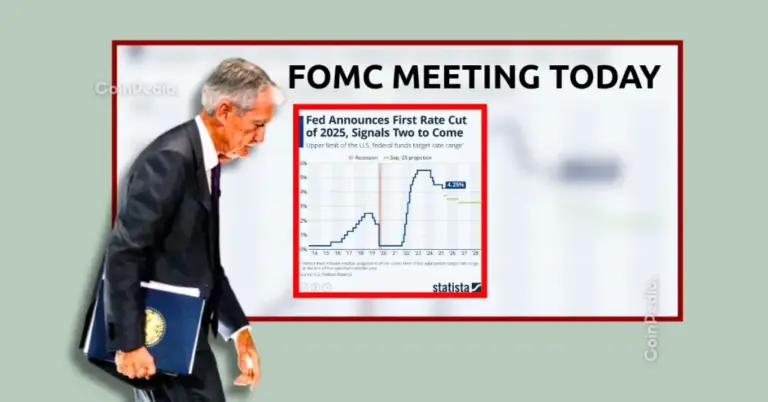
The post FOMC Meeting Today [ LIVE] Updates appeared first on Coinpedia Fintech News

June 17, 2026 16:05:51 UTC FED Interest Rate Decision Forecast The Federal Reserve will announce its latest interest rate decision today at 2:00 PM ET, with investors closely watching for any change in the benchmark rate. Markets broadly expect rates to remain within the current 3.50%–3.75% range, making the Fed’s guidance and economic projections just …

Carvana (CVNA) shares opened in the “red” this morning in sympathy with peer CarMax (KMX) whose Q1 earnings signaled margin compression, stubbornly weak volumes, and rising acquisition costs.

But a compelling case can be made that the market is lazily painting both companies with the same brush, ignoring the fundamental structural differences between how they operate.

Here’s why the sell-off in Carvana stock today is unwarranted and may actually be an opportunity for long-term investors to load up on a quality name at a discount.

Market share dominance warrants buying Carvana stock

The most obvious flaw in the “sympathy sell-off” logic is that Carvana and CarMax are on entirely different growth curves right now. 

KMX saw its comparable-store used units slip 0.8% this quarter – continuing a long-running trend of sluggish retail volume.

The company is stuck in a mature, brick-and-mortar bottleneck.

CVNA, on the other hand, is capturing massive market share: In its latest reported quarter, Carvana posted an explosive 40% year-on-year growth in retail units, selling over 187,000 cars. 

CarMax explicitly said today that it had to cut prices and sacrifice margin just to “try” and prop up stagnant volumes, but Carvana is pulling in hyper-growth numbers without having to trim its unit economics.

So, a margin squeeze born out of KMX operational stagnation doesn’t automatically mean Carvana is experiencing the same friction – that’s what makes CVNA shares worth buying on the dip.

CVNA shares offer a more attractive GPU structure

Investors panicked also because CarMax’s retail gross profit per unit (GPU) tanked by $230 in the first quarter to $2,177.

However, treating this as a death sentence for CVNA ignores how much more vertically integrated and multi-layered its GPU structure really is. 

KMX’s profit model is tightly tethered to the traditional spread between wholesale acquisition and retail sticker price.

When wholesale acquisition cost pops (as they did this quarter, driving CarMax’s average selling price up by $1,168), the company’s margins get crushed.

But CVNA’s total GPU isn’t just about the metal. It generates “highly optimized” revenue streams from proprietary digital financing, gap insurance, extended warranties, and a vertically integrated logistics/reconditioning network.

In Q1, the company delivered an industry-leading 10.4% Adjusted EBITDA margin.

So, Carvana shares are attractive because they’re structurally built to absorb fluctuations in vehicle acquisition costs far better than KMX’s legacy model.

Should you load up on Carvana Co today?

CarMax’s new chief executive, Keith Barr, spent much of the earnings call talking about operational inefficiencies, explicitly mentioning that KMX moves roughly 2 million cars annually via transfers but suffers from “too many unproductive transfers.”

Simply put, the company is weighed down by heavy fixed overhead: physical dealerships, massive localized inventory footprints, and regional logistics inefficiencies.

When foot traffic slows down, those fixed costs bleed them quickly. But Carvana’s “digital-first”, centralized hub-and-spoke model allows for much higher variable cost elasticity.

CVNA stock looks compelling as it routes fulfillment dynamically through digital platforms and centralized reconditioning centers; it doesn’t face the same “unproductive localized overhead” that CarMax is currently scrambling to restructure.

The post CarMax earnings create a buying opportunity in Carvana stock appeared first on Invezz

The post Ripple News: Flutterwave Embeds RLUSD in Payment Rails as Ripple Joins Series E as Strategic Investor appeared first on Coinpedia Fintech News

Ripple has made a strategic investment in Flutterwave, the African payments company, as part of Flutterwave’s Series E fundraising round that values the company at $3.2 billion. The investment comes alongside a partnership that embeds RLUSD, Ripple Payments, and the XRP Ledger directly into Flutterwave’s existing payment infrastructure. The financial terms of Ripple’s specific stake …

Fox Corporation’s (FOXA) landmark agreement to acquire Roku Inc (ROKU) in a $22 billion deal is sending shockwaves through the entire streaming landscape on Tuesday morning.

In particular, Netflix (NFLX) shares are seeing downward pressure as the “high-stakes” acquisition directly threatens the premium subscriber heavyweight’s core growth drivers.

Versus its year-to-date high in mid-April, Netflix stock is down nearly 30% at the time of writing.

Here’s why Fox-Roku deal is bearish for Netflix stock

NFLX shares are being hit mostly because of the immediate threat the Fox-Roku transaction poses to the company’s burgeoning ad-supported tier.  

Over the past few years, Netflix Inc has leaned heavily into digital advertising to sustain its revenue growth.

However, the ROKU deal isn’t just about purchasing hardware for FOXA, it’s about taking control of a sophisticated Connected TV (CTV) operating system that commands first-party data from over 100 million global households.

Combined with Fox’s existing free ad-supported streaming television (FAST) service – Tubi – the newly merged entity instantly becomes the third-largest player in US television by viewing share.

This enables FOXA to offer advertisers an incredibly scaled, data-rich alternative.

Advertisers looking to deploy their budgets into streaming environments now have a consolidated giant that pairs live sports and news with huge algorithmic reach, diluting Netflix’s “premium” ad pricing leverage.

NFLX shares sink on a missed strategic moat

Adding to pressure on Netflix shares today is the realization that a vital strategic asset has officially been taken off the board.

Rumours had been swirling that tech and media giants like Amazon, Disney, and Netflix Inc itself were considering bidding for Roku to fortify their distribution infrastructure.

With FOXA securing the definitive agreement, NFLX loses the opportunity to integrate ROKU’s ubiquitous operating system into its own ecosystem.

Furthermore, even though Fox and Roku Inc have promised that the platform will remain an “open, partner-friendly platform,” Wall Street remains deeply skeptical.

ROKU serves as the primary gateway through which millions of users discover and access the Netflix app on smart TVs.

With Fox now acting as the ultimate gatekeeper of this real estate, investors fear that FOXA will naturally prioritize its own content, optimize its proprietary ad yields, and subtly squeeze out rival platforms.

How to play Netflix Inc at current levels?

Ultimately, the Fox-Roku marriage forces Wall Street to critically re-evaluate Netflix’s standalone valuation in an era of rapid consolidation.

For years, NFLX stock enjoyed a “premium” based on its pure-play streaming model and immense content library.

However, as the industry matures, the competitive battlefield is shifting away from who owns the best content library to who owns the full technology stack.

The transaction represents a massive 24x multiple of Roku’s estimated 2027 EBITDA, showcasing just how much premium legacy media is willing to place on distribution and ad infrastructure.

As Fox secures a massive footprint in over half of US broadband households, Netflix faces a newly fortified, diversified competitor backed by linear networks, sports rights, and gatekeeper hardware.

Today’s stock price dip reflects growing anxiety that Netflix may now have to spend significantly more on marketing and platform fees just to maintain its current market share.

The post Why Fox-Roku deal is hitting Netflix stock today appeared first on Invezz