Archive

June 2026

Browsing

The post Gareth Soloway’s Bullish Bitcoin, Ethereum and XRP Price Predictions appeared first on Coinpedia Fintech News

Bitcoin is pushing toward $66,000 and one of the most technically rigorous analysts in the crypto space is growing increasingly confident that the worst of the selling is behind us. Gareth Soloway, Chief Market Strategist at Verified Investing, has been tracking a combination of chart patterns across Bitcoin, Ethereum and XRP that collectively point toward …

Rocket Lab (RKLB) shares climbed more than 6% on Monday after KeyBanc Capital Markets upgraded the stock, arguing that the recent selloff across space-related equities following SpaceX’s blockbuster public debut was overdone.

The rally came as investors returned to space stocks after a sharp decline on Friday, when Elon Musk-led SpaceX began trading on the Nasdaq and quickly became one of the most valuable publicly listed companies in the market.

Rocket Lab shares rose to around $110.60, recovering part of the 11% decline recorded on Friday.

Firefly Aerospace also gained more than 6%, rebounding from a 19% drop in the previous session.

Meanwhile, SpaceX extended its gains, rising another 8% after surging 19% during its debut.

KeyBanc upgrades Rocket Lab and Firefly

KeyBanc analyst Michael Leshok upgraded both Rocket Lab and Firefly Aerospace to Overweight from Sector Weight.

The firm assigned a $135 price target to Rocket Lab and a $50 target to Firefly, implying meaningful upside from current trading levels.

“Last Friday’s record-setting SpaceX IPO sent ripple effects across our coverage of space-centric equities, with the sector selling off sharply on IPO day and over the weeks leading up to it,” Leshok wrote. “We think this is unwarranted and largely systematic in nature, as funds make room for the space behemoth.”

The analyst argued that the sector-wide weakness was not driven by deteriorating fundamentals but rather by portfolio repositioning as investors allocated capital toward SpaceX following its public listing.

The selloff affected several space companies.

Alongside Rocket Lab and Firefly, shares of AST SpaceMobile, Intuitive Machines, Voyager Technologies and Redwire all posted double-digit declines on Friday. Most of those stocks recovered some ground on Monday.

Fundstrat economic strategist Hardika Singh also highlighted the disconnect between SpaceX’s success and the performance of other space stocks.

“It’s been a great June for space investors, but that was felt only if you held shares of SpaceX and SpaceX only,” Singh said in a Barron’s report.

“Over the past year, investors had heavily bought into space…. But over the past month, they’ve been obliterated by investors selling their winners to raise cash in favor of the real deal,” she added.

Neutron rocket remains a key growth catalyst

A major part of KeyBanc’s bullish thesis centers on Rocket Lab’s expanding position in the commercial launch market.

The firm described Rocket Lab as the second-largest player in the commercial space launch industry behind SpaceX.

Its Electron launch vehicle has completed approximately 90 successful missions.

KeyBanc also expressed confidence in Rocket Lab’s Neutron rocket program, which remains on track for its inaugural launch later this year.

According to the firm, additional visibility into the project over the past six months has increased confidence in the program, while a testing anomaly encountered in January has been fully resolved.

Leshok noted that Rocket Lab’s combination of launch services, satellite design, and manufacturing capabilities provides strategic flexibility as the commercial space market continues to evolve.

“SpaceX’s premium valuation shows the value of having in-house access to space and the myriad of potential end-use applications that come with that capability. We continue to expect these applications to evolve over time and believe Rocket Lab is among the best positioned to adapt to the dynamic market given its satellite design/manufacturing and launch heritage,” Leshok added.

Strong growth and Nasdaq-100 inclusion support outlook

Investor optimism has also been supported by Rocket Lab’s recent financial performance and upcoming inclusion in the Nasdaq-100 index.

The company reported first-quarter revenue of $200.35 million, exceeding analyst expectations of $189.65 million and representing year-over-year growth of 63.4%.

Earnings per share came in at negative $0.07, matching Wall Street forecasts.

Rocket Lab is scheduled to join the Nasdaq-100 on June 22, a move that could generate additional demand from index-tracking funds and exchange-traded products managing hundreds of billions of dollars in assets.

Stifel recently raised its price target on Rocket Lab to $132 from $110 while maintaining a Buy rating, citing strong revenue growth and an expanding contract backlog.

The post Rocket Lab stock jumps as KeyBanc upgrade revives space sector appeared first on Invezz

The post Is Bitcoin Price Bottoming or Building for a Deeper Drop to $30,000? appeared first on Coinpedia Fintech News

Bitcoin is holding above its 200-week moving average for another week, a level that has historically separated bull markets from extended bear markets. The question now dominating analyst discussion is whether the recen t drop to $59,000 was the cycle low or simply a temporary stop before a deeper decline toward $30,000 to $40,000. Why …

The S&P 500 Index and its top ETFs, like State Street’s SPY, Vanguard’s VOO, and BlackRock’s IVV jumped for two consecutive days. It jumped to $7,430, up modestly from this month’s low of $7,240. This article looks at some of the top news to watch this week.

US and Iran deal to end the war

The first main catalyst for the S&P 500 Index and other ETFs is the US-Iran deal to end the war. President Donald Trump confirmed that the US will sign a deal today. Iran, on the other hand, insisted that the deal may be signed at a later date and that it will do so electronically.

Still, there is a risk that a deal will flop as it has done in the past. For example, there is a likelihood that Israel and its lobby in the United States will work to undermine the deal. For example, Israel has committed to continuing fighting in Lebanon, where it has killed thousands of people.

A deal between the US and Iran will be bullish for the stock market. For one, it will lead to lower crude oil prices, which will lower inflation in the country. Data released last week showed that the headline Consumer and Producer price index jumped to 4.2% and 6.4% in May, respectively. 

Such a move will also lead to lower bond yields. Indeed, the ten-year yield dropped to 4.8%, while the five-year fell to 4.21%. That is a sign that investors believe that the Federal Reserve will be dovish.

Federal Reserve interest rate decision

The S&P 500, IVV, SPY, and VOO ETFs will also react to the upcoming Federal Reserve interest rate decision. This will be a crucial decision because it will be the first one by Kevin Warsh, whom Trump nominated to replace Jerome Powell.

Economists are unanimous in that the Fed will decide to leave interest rates unchanged between 3.50% and 3.75%. As such, the headline rate decision will have a minimal impact on the stock market. Instead, traders will react to Warsh’s statement, which will provide more information on what to expect.

A hawkish tone will raise Fed independence concerns as it may start a feud between Warsh and Trump.

In addition to the Fed, the Bank of England (BoE), Bank of Japan (BoJ), Brazilian, Swiss, Norges, and Russian central banks will also deliver their interest rate decisions this week.

There will also be some major macro news from the United States, including US retail sales, initial jobless claims, export and import prices, and industrial production.

SpaceX post-IPO performance

The S&P 500 Index will also react to the performance of SpaceX, which went public on Friday. SpaceX’s stock jumped by 19%, with its market capitalization crossing the $2 trillion mark. This IPO made Elon Musk the world’s first trillionaire.

Still, while the SpaceX IPO was a success, the hard part will start this week. Historically, newly listed companies often retreat after a few days. As such, if this happens, there is a likelihood that the stock market will also retreat as investors start booking profits.

The post S&P 500, SPY, VOO, IVV outlook: top news to watch this week appeared first on Invezz

The post Internet Computer Nears 300B Transactions—Why Is ICP Price Still Stuck in a Bear Market?  appeared first on Coinpedia Fintech News

Internet Computer has spent the better part of the past two years trading inside a steep descending channel, with every recovery attempt eventually giving way to another lower high. Even today, the ICP price remains stuck near $2.5, a fraction of its previous cycle highs, despite showing signs of stabilizing in recent weeks. Besides, the …

SpaceX (SPCX) made history on Friday – raising $75 billion in the largest IPO “ever” – promptly gaining 19% in its Nasdaq debut.

The frenzy is real, the story is compelling, but the valuation, hovering around the $2 trillion mark, is already priced for perfection.

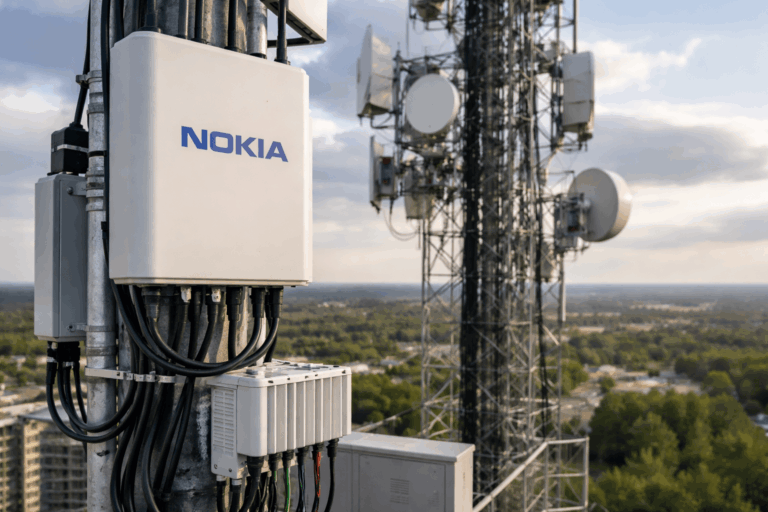
And for investors who prefer conviction over crowd psychology, there is a quieter, more grounded opportunity worth considering – Nokia (NOK).

What makes Nokia stock a compelling buy in 2026

Most people still associate Nokia with the brick-like handsets that dominated the early 2000s. That era is long gone.

Today, Nokia is a global communications infrastructure firm operating across four major business segments – mobile networks, network infrastructure, cloud and network services, and Nokia tech – selling equipment to carriers, hyperscalers, and data center operators across more than 100 countries.

In 2026, the brand licensing operation that handles the phone business is a footnote; the real story is in optical networks, IP routing, and next-generation wireless buildout.

Bank of America Securities now characterizes Nokia as a key data center interconnect and optical transport player, not merely a traditional mobile gear vendor.

And that rebranding is backed by hard numbers. Nokia’s Q1 results showed a 49% year-over-year growth in AI and cloud net sales, alongside €1 billion in orders from AI and cloud customers.

The company raised its “network infrastructure” growth expectations for the full year, particularly for its optical networks and IP networks subsegments that are critical for AI and cloud data centers.

All in all, Nokia stock is not a turnaround story anymore – it’s an infrastructure story with genuine momentum.

Nvidia partnership makes NOK shares super attractive

The single most “underappreciated” development in Nokia’s recent history is the depth of its team-up with Nvidia.

In late 2025, Nvidia made a direct equity investment in Nokia at $6.01 per share – a huge credibility signal that the broader market has been slow to fully price in.

The two companies are collaborating on AI-powered radio access network tech aimed at building the infrastructure backbone for the 6G era, at a moment when global internet traffic is exploding.

According to Nokia’s own projections, global network traffic is expected to grow roughly fivefold from 2024 levels through 2034, with AI workloads accounting for a disproportionate share of that demand.

Nokia opened an AI Networking Innovation Lab in Sunnyvale this May, a facility designed to co-develop next-generation networks for AI data centers alongside cloud and AI partners.

Why disciplined investors should look to Nokia

The SpaceX IPO is a genuine technological marvel wrapped in a financial instrument that demands you believe everything goes right, forever, from day one.

At its session high on Friday, SpaceX briefly touched a market cap approaching $2.21 trillion – a figure that leaves virtually no room for error, execution risk, or the “ordinary turbulence” that every young public company faces.

Let’s face it: history is littered with transformative firms that proved terrible early IPO investments precisely because the hype front-ran the fundamentals by years.

Nokia stock, by contrast, offers a different kind of proposition. With about $19.22 billion in annual revenue and a market cap of $82 billion, it trades at a meaningful discount to sales.

It’s an almost paradoxical setup for a business posting 49% artificial intelligence (AI) sales growth and attracting NVDA as a strategic investor.

NOK shares outperformed the broader technology equipment sector on Friday, even as the market’s attention was consumed entirely by the SpaceX spectacle – a quiet reminder that the most durable gains are often made away from the spotlight. 

For investors who want real AI infrastructure exposure without paying a “once-in-a-generation” premium to get it, Nokia deserves a serious look, especially since Wall Street firms also currently rate it at “Overweight”.

The post This stock is a better pick than SpaceX for disciplined investors appeared first on Invezz

The post SpaceX Begins Trading at $160 as Elon Musk Becomes World’s First Trillionaire appeared first on Coinpedia Fintech News

SpaceX shares began trading on the Nasdaq under the ticker SPCX at $160.83 per share, 19% above the $135 IPO price set Thursday night. The opening values SpaceX at approximately $2.1 trillion, making it the seventh largest public company in the world. BREAKING: Elon Musk officially becomes the world's first trillionaire as SpaceX, $SPCX, stock …

Even if you don’t follow stock markets, you have probably seen headlines about the SpaceX IPO.

The company founded by Elon Musk is preparing to make its stock market debut in what is expected to be the largest initial public offering (IPO) in history.

SpaceX plans to raise around $75 billion at a valuation of roughly $1.8 trillion, instantly making it one of the most valuable publicly traded companies in the world.

But what exactly is the SpaceX IPO, and why has it generated so much attention?

What is an IPO?

An IPO, or initial public offering, is when a private company sells shares to the public for the first time.

Before an IPO, ownership is typically limited to founders, employees, venture capital firms, and other private investors.

After an IPO, anyone with a brokerage account can buy and sell shares on a public stock exchange.

In SpaceX’s case, the company will begin trading on Nasdaq under the ticker symbol SPCX.

The IPO gives investors their first chance to directly own a piece of one of the world’s most famous private companies.

What is SpaceX?

SpaceX was founded by Elon Musk in 2002 with the goal of reducing the cost of space travel and eventually helping humanity become a multi-planetary species.

Over the past two decades, it has grown into the dominant force in commercial rocket launches.

The company launches satellites, transports cargo and astronauts into space, and operates Starlink, a satellite internet service with millions of users around the world.

More recently, SpaceX expanded beyond space by acquiring Musk’s artificial intelligence company xAI, bringing AI chatbot Grok and related computing infrastructure into the business.

Today, SpaceX is part rocket company, part satellite operator, and increasingly part AI company.

Why is the IPO such a big deal?

The biggest reason is size.

SpaceX plans to raise approximately $75 billion, which would comfortably surpass Saudi Aramco’s $29.4 billion IPO in 2019 and become the largest stock market debut ever.

The company’s proposed valuation of around $1.8 trillion would place it among the largest public companies in the world from day one.

Few businesses have ever entered public markets at that scale.

The IPO is also attracting attention because SpaceX has been one of the most sought-after private companies for years.

Until now, ordinary investors have had very limited opportunities to gain exposure.

Invest in SpaceX now with eToro

Why are investors excited?

Many investors see SpaceX as one of the few companies operating at the intersection of several major growth industries.

The company dominates commercial space launches through its Falcon rocket family and is developing Starship, a next-generation rocket designed for deep-space missions.

Meanwhile, Starlink has become a major source of revenue through satellite broadband subscriptions.

Artificial intelligence is another reason for the excitement. The company has been pitching itself not only as a space business but also as a future AI infrastructure leader.

Some investors believe SpaceX could eventually become one of the most important technology companies in the world if its AI ambitions succeed.

Others simply view the IPO as an opportunity to invest alongside Elon Musk, whose previous ventures include Tesla and PayPal.

Why are some analysts concerned?

The biggest concern for analysts is valuation.

At roughly $1.8 trillion, SpaceX would be worth more than many established global corporations despite generating far less revenue than the world’s largest technology companies.

Several analysts and valuation experts have argued that investors may be paying today for growth that could take many years to materialise.

The company also remains heavily dependent on future projects that are still under development, including Starship and various AI initiatives.

SpaceX has reported significant losses as it invests aggressively in expansion, particularly in artificial intelligence infrastructure.

For critics, the question isn’t whether SpaceX is a great company. It’s whether the stock price already reflects too much optimism.

Why is everyone talking about it now?

Timing is part of the answer.

The IPO arrives during a renewed wave of enthusiasm for artificial intelligence, while other major AI companies such as OpenAI and Anthropic are also preparing for public listings.

At the same time, Elon Musk remains one of the most closely watched figures in business and technology.

Anything involving Musk tends to attract enormous public attention.

Retail investors are also playing a larger role than usual. SpaceX has allocated up to 30% of IPO shares to individual investors, significantly more than most companies offer in large public listings.

That means millions of ordinary investors could potentially become shareholders.

Invest in SpaceX now with eToro

What happens next?

SpaceX is expected to begin trading on Nasdaq under the ticker SPCX on June 12.

Once trading starts, the market will decide whether the company’s $1.8 trillion valuation is justified.

The stock could surge, fall, or trade relatively steadily—no one knows for certain. But one thing is clear: the SpaceX IPO is more than just another stock market debut.

It is a test of investor appetite for ambitious, founder-led companies that promise to shape the future of space exploration, communications, and artificial intelligence.

How to buy SpaceX stock when trading begins

SpaceX is expected to start trading on the Nasdaq under the ticker SPCX, marking the first time retail investors will be able to buy shares of Elon Musk’s company on the public market.

Investors can purchase SPCX once trading opens through a brokerage account that provides access to US stocks.

Popular platforms, including eToro, Fidelity, Charles Schwab, Robinhood, SoFi, and E*Trade, are expected to offer access to the shares when trading begins.

Before placing a trade, investors should ensure their brokerage account is fully set up, funded, and approved for US stock trading.

Investors outside the United States can also buy SPCX through platforms such as eToro that offer access to US markets, although availability varies by country and platform.

With demand for SpaceX shares expected to be strong, the stock could experience significant price swings during its first day of trading, making risk management especially important for new investors.

Invest in SpaceX now with eToro

The post What is the SpaceX IPO, and why is everyone talking about it? appeared first on Invezz

The post AI Stocks Crash as Investors Assess Potential SpaceX IPO Impact appeared first on Coinpedia Fintech News

Shares of major AI-linked companies, including Alphabet, Microsoft, Meta Platforms, and Oracle Corporation, declined ahead of the expected SpaceX IPO, contributing to weakness in the broader S&P 500. Market observers estimate more than $200 billion in combined market value was erased from the four companies during the session. Some traders suggest capital may be rotating …

Shares of semiconductor equipment makers moved higher after analysts raised expectations for the wafer fabrication equipment market, arguing that growing artificial intelligence investment continues to support long-term demand across the industry.

While chip stocks have come under pressure in recent sessions, analysts say the outlook remains favorable for companies that supply the tools needed to manufacture semiconductors.

Barclays reaffirmed its Overweight ratings on Applied Materials and KLA while raising its price targets on both companies.

The investment bank lifted its target on Applied Materials to $590 from $500 and increased its target on KLA to $2,250 from $1,700.

Barclays also maintained a Neutral rating on Lam Research and raised its price target to $335 from $275.

All three stocks have surged at least 75% this year.

On Thursday’s session, Applied Materials AMAT gained 6.6%, KLA advanced 8.6%, and Lam Research rose 8.2%.

Barclays sees stronger wafer equipment spending

A key driver behind Barclays’ bullish stance is its revised outlook for the wafer fabrication equipment market.

The bank increased its estimate for the total wafer fab equipment market to $154 billion from a prior forecast of $139 billion.

It now expects the market to grow another 36% to $209.5 billion in 2027, significantly higher than its previous estimate of $159 billion.

According to Barclays analyst Tom O’Malley, artificial intelligence remains the primary catalyst behind the stronger spending outlook.

“The capex cycle is much stronger across the board,” wrote analyst Tom O’Malley.

The analyst pointed to heavy investment from memory manufacturers, including Micron Technology, SK Hynix, and Samsung Electronics.

Continued supply constraints and strong demand are also encouraging spending by advanced chip producers such as Taiwan Semiconductor Manufacturing and Intel.

These investments are expected to benefit equipment suppliers that provide the tools required to manufacture increasingly sophisticated semiconductors.

Applied Materials draws fresh analyst support

Applied Materials received additional support from other Wall Street firms.

Cantor Fitzgerald raised its price target on the stock to $650 from $575 while maintaining an Overweight rating.

The firm argued that Applied Materials is positioned at the center of a long-term expansion cycle in semiconductor manufacturing equipment.

According to Cantor, industry wafer fabrication equipment spending could approach $250 billion as the semiconductor market grows toward $3 trillion by 2029.

The brokerage also highlighted the company’s long-term order visibility.

For traders, the key phrase is “bookings visibility into 2028.”

Analysts often view extended order backlogs as a sign of durable demand, particularly in industries that have historically experienced cyclical swings.

UBS also raised its target on Applied Materials to $570 from $515 while reiterating a Buy rating.

Meanwhile, the company continues to invest in manufacturing capacity.

Applied Materials is spending approximately $500 million on a new campus in Singapore’s Tampines region. The expansion is expected to more than double advanced cleanroom capacity and create around 1,000 jobs.

KLA benefits from AI-driven demand

KLA shares have also benefited from growing confidence in long-term semiconductor equipment demand.

Investors are increasingly betting that spending on advanced chip manufacturing equipment will remain elevated as artificial intelligence drives investment at foundries and logic chip plants.

Analysts noted that customer bookings already extend into 2028, providing greater visibility into future demand.

Several Wall Street firms have responded by raising their price targets on KLA, reflecting expectations that the current spending cycle could persist for years.

Supporters of the sector argue that wafer fabrication equipment spending is entering a sustained, supply-constrained growth phase.

The combination of strong AI-related demand, extended order visibility, and increasing analyst optimism has helped fuel renewed buying interest in semiconductor equipment stocks despite recent volatility elsewhere in the chip sector.

The post Applied Materials, KLA stocks gain as AI boom lifts chip equipment outlook appeared first on Invezz