Crypto taxes may finally be getting the congressional spotlight they’ve been waiting for. The House Ways and Means Committee is reportedly circulating seven draft bills that could significantly reshape how digital assets are taxed in the United States, with stablecoins, staking, mining, and crypto lending sitting squarely in the crosshairs. The timing isn’t accidental. The …
When the U.S. men’s national soccer team plays at home, its most loyal fans traditionally sit right behind a goal to cheer on the team or intimidate the opposition.
But when the Americans kick off a once-in-a-generation World Cup in Southern California next week, many of those die-hard supporters may be harder to hear because FIFA seated them in the “nose bleeds,” according to a major U.S. fan group.
“These are the worst tickets that I’ve ever seen out of the five World Cups I’ve been to,” American Outlaws President Brian Hexsel said in a phone interview.
FIFA’s World Cup ticketing rollout has faced withering criticism for months, particularly for its sky-high prices. There have also been allegations that some ticket buyers got worse seats than expected, sparking investigations in New York and New Jersey.
In the blowback, soccer’s global governing body announced a small allotment of $60 tickets for each of the tournament’s 104 matches.
FIFA didn’t immediately comment for this article.
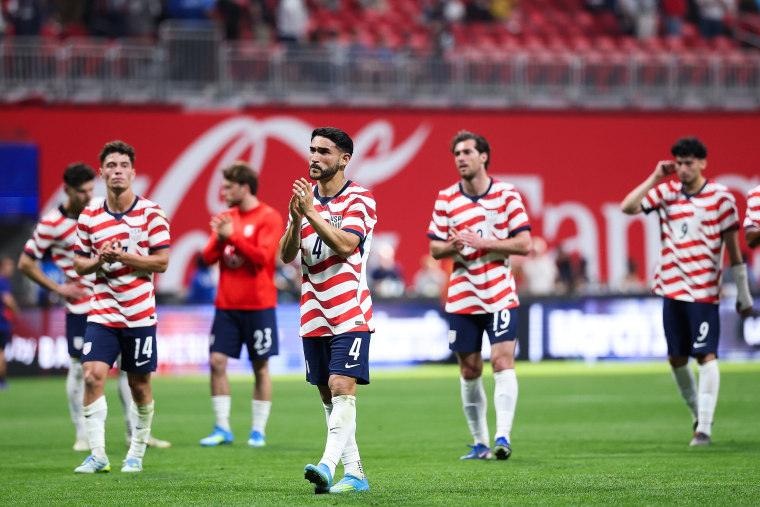
Cristian Roldan, center, and the U.S. team applaud fans after their loss to Belgium at Mercedes-Benz Stadium on March 28.Kevin C. Cox / Getty Images
Participating member associations, including U.S. Soccer, would manage “the selection and distribution process,” said FIFA, which emphasized it was asking the associations to “ensure that these tickets are specifically allocated to loyal fans who are closely connected to their national teams.”
The American Outlaws are such fans. The organization says it has more than 200 chapters worldwide sharing one goal: cheering on U.S. Soccer’s teams. The group travels to matches with hand-painted banners, a giant American flag, drums and organized chants — all of it typically on display right behind the net.
But this summer, American Outlaws members with $60 tickets will be in upper decks at each of the team’s three group stage matches, Hexsel said. That seating arrangement means some of the most fervent fans will be physically farther from the pitch, potentially making it harder for players to hear their shouts.
Hexsel said U.S. Soccer told him Monday that the $60 seats will be in sections 302 through 310 for the team’s first match against Paraguay at Los Angeles County’s SoFi Stadium, sections 310 through 315 in Seattle’s Lumen Field for the second match against Australia and section 426 for the third match back at SoFi against Turkey — putting fans even higher than they’d be seated for the first match.
U.S. Soccer told NBC News the $60 tickets are in sections 306 through 310 for the Paraguay match, sections 302 through 304 for the Australia match and sections 426 through 431 against Turkey. It didn’t provide further comment.
When the tickets started landing in people’s accounts Monday night, “my phone just blew up,” Hexsel said. “Everybody was pissed.”
It’s not clear whether fan groups for the World Cup’s other competing countries have been affected in the same way.
Juan Felipe Garay, coordinator of Colombia’s biggest supporters’ group, Fiebre Amarilla, told NBC News the group doesn’t yet know where its $60 seats will be for Colombia’s matches.
But Hexsel said that without question, for the American die-hards, a World Cup in their own backyard now “does not feel like we are playing in the U.S.”
South Florida superfan Burak, who asked that his last name not be published for privacy, told NBC News on Monday night that a ticket in the “400s” showed up in his account for the third U.S. match.
Burak said he laughed with his wife about the situation and hadn’t expected better seats. He prefers being high up at a match when he’s trying to “read the play.” But, he said, watching is secondary to making an impact when you’re in the supporters’ section.
“If you’re up at nosebleed 400s, your reaction doesn’t even matter. No one’s going to hear, see or notice,” he wrote in a text message.
Another U.S. fan, Gabriel Miguel, said, “I thought it could be worse.”
Miguel scored $60 tickets to the opening U.S. match against Paraguay. He’ll be in section 308 and said he’s “mostly grateful” just to be in the building.
“I would love to have been down in the lower action, but I mean, 300s is perfectly fine, especially for that price.”
American supporter Logan Pedersen said, “We could have been higher up … not by far.”
Pedersen said in a phone interview that he got “the golden ticket,” getting to see the opening U.S. match at such a relatively low cost. He’s “just glad to be in the stadium,” but he also said FIFA’s ticketing “process has been a nightmare.”
“It’s still super disappointing from FIFA that they’re not at least designating a section for, you know, 500 fans from each team directly behind the goal. I think it’s a huge loss for the atmosphere that’s gonna go on in the stadium,” he said.
Hexsel said of the seating arrangements, “It just means we gotta bring more drums and more noise to show the team that … we still showed up.”
“FIFA could have just said: ‘Hey … it’s 300, it’s 200. Yeah, it’s a little bit more than what you paid in Qatar, but you guys have a block of seats where you’ve always had a block of seats,’ and people would have paid it.”
Burak said by text message: “I’m just glad I can at least go to some games with the supporter price. I accept my small guy status. If we had a strong community, I’d be all about boycotting the WC all together. But that’s not how people are, that will never happen. And Fifa is feeding off of that. They know someone will show up.”
Said Miguel: “I’m happy to be going, at least, and it’s more like memories than anything. Could it be better? Of course. But … they dropped the ball from the beginning with this. It’s … nothing surprising at this point.”
Shares of Coinbase Global COIN moved lower on Friday after Baird reiterated its Neutral rating on the cryptocurrency exchange operator but lowered its price target, warning that weak trading activity could continue to weigh on the business.
Coinbase stock fell nearly 7% in trading to around $152.
The shares have struggled throughout 2026, declining roughly 34% since the start of the year as cryptocurrency prices have remained near their 52-week lows.
Baird also named Coinbase a “Bearish Fresh Pick,” citing concerns that soft trading volumes may persist for an extended period and could lead to disappointing second-quarter results.
Weak trading activity clouds revenue outlook
Although Coinbase has expanded beyond its core trading business over the past several years, transaction revenue remains a major driver of financial performance.
Baird analyst David Koning expects the company’s second-quarter revenue to come in approximately 5% to 6% below Wall Street expectations, with trading volumes projected to decline between 15% and 20% sequentially.
The analyst noted that activity across the crypto market has remained subdued despite some improvement in early June.
“April and May were two of the slowest months in the past few years,” Koning wrote, noting that Robinhood’s chief brokerage officer recently highlighted strength in equities, options, futures, and predictions but made no mention of crypto.
Baird also questioned whether the modest rebound in June trading volumes reflects sustainable demand.
“While the first few days of June showed decent volume (closer to average levels of recent years), we think it’s due to significant trading out of Bitcoin, which may be followed by limited interest in trading,” wrote analyst David J. Koning.
The brokerage argued that the broader crypto market continues to face several headwinds, including the strong performance of the S&P 500, elevated inflation, high borrowing costs, and competition from other high-growth investment themes such as artificial intelligence stocks and new initial public offerings.
Regulatory uncertainty remains a concern
Baird also pointed to uncertainty surrounding the proposed CLARITY Act, a market-structure bill that many cryptocurrency supporters view as an important step toward broader industry adoption.
According to the firm, legislative disagreements over ethics and crypto issuance issues make it increasingly unlikely that the bill will pass before the November midterm elections.
The delay, Baird said, could allow banks and financial technology companies operating under existing regulatory frameworks to strengthen their competitive positions.
Prediction market platform Polymarket currently assigns a 57% probability that the legislation will become law this year, down from 65% a month earlier.
Valuation debate intensifies
Alongside concerns about slowing growth, Baird also argued that Coinbase’s valuation could come under additional pressure if earnings expectations continue to fall.
The brokerage lowered its price target to $142 from $160 and noted that the stock currently trades at roughly 35 times estimated 2027 earnings per share.
“The combo of falling estimates and weak multiples across beat/raise fintechs could eventually bleed into COIN’s valuation,” the firm wrote.
In its bear-case scenario, Baird believes the stock could decline to between $75 and $90 if 2027 earnings per share fall to $3 and the valuation multiple contracts to 25 to 30 times earnings.
Despite the cautious outlook, Baird remains more bearish than much of Wall Street.
According to FactSet data, approximately 64% of the 39 analysts covering Coinbase currently rate the stock a Buy, with the average price target standing at about $231.
Bitcoin has crashed 13% in seven days and the market wants to know where the floor is. Analyst Gareth Soloway was asked about it and he gave an answer covering four distinct price levels depending on how the next few weeks play out. The short version is a minor bounce is possible around $65,500, a …
Tesla (TSLA) shares edged lower on Thursday as investors weighed incremental progress in the company’s autonomous driving efforts against broader weakness across technology stocks.
Shares of the electric vehicle maker fell 1.04% in early trading, underperforming a broader market decline that saw the S&P 500 slip 0.2%.
The weakness came amid a difficult session for technology stocks. Nvidia fell 0.5%, while Intel dropped 3.1%.
Sentiment across the semiconductor sector was pressured after Broadcom’s fiscal second-quarter results disappointed investors, sending its shares down 15.5%.
Robotaxi expansion draws attention
Investor focus remained centered on Tesla’s autonomous driving ambitions, particularly developments surrounding its robotaxi operations in Austin, Texas.
Barclays analyst Dan Levy wrote in a research note this week that Tesla had removed safety monitors from robotaxis operating within its Austin geofence.
The development coincided with an expansion of the operating area, which more than doubled in size on Wednesday.
The expanded zone now includes highway driving along Interstate 35 as well as suburban areas, including Pflugerville and Manor.
According to Levy, the unsupervised fleet peaked at roughly 25 vehicles in late April based on independent tracking data.
The move represents another step in Tesla’s efforts to scale autonomous ride-hailing services, which have become a central pillar of the company’s long-term growth narrative.
Tesla trails Waymo in fleet size
Despite the broader operating area, Tesla remains significantly smaller than Alphabet-owned Waymo in terms of active robotaxi deployments.
Recent filings show Waymo has 577 robotaxis registered in Texas, approximately 13 times Tesla’s statewide total of 42 vehicles.
The company has previously said about 300 of those vehicles operate in Austin.
As a result, Tesla’s active fleet remains only a fraction of Waymo’s presence in the city.
However, the two companies rely on different technological approaches.
Tesla’s vision-based autonomous driving system allows geographic expansion largely through software updates, while Waymo’s reliance on LiDAR sensors and high-definition mapping requires extensive scanning and validation of new operating areas.
The contrast has left Tesla with a broader geographic reach in Austin, while Waymo maintains a significantly denser fleet.
Analysts update outlook
Wall Street analysts continue to refine their forecasts as Tesla balances vehicle demand with long-term investments in artificial intelligence and autonomy.
As per an Investing.com report, Wolfe Research reiterated its Peerperform rating on Tesla and raised its 2026 earnings-per-share estimate to $1.89 from $1.62.
The revised estimate remains slightly below the consensus forecast of $1.93.
At the same time, Wolfe lowered its 2027 earnings estimate to $2.04 from $2.17, citing expectations for higher depreciation, amortization, and operating expenses.
The new forecast sits below the consensus estimate of $2.46.
Separately, TD Cowen reiterated its Buy rating and $490 price target on Tesla shares.
The firm highlighted potential demand for a long-wheelbase Model Y variant in the United States, estimating annual sales of between 60,000 and 135,000 units if the vehicle is launched domestically.
According to TD Cowen, the Model Y L’s three-row seating configuration could appeal to a sizable segment of the SUV market priced above $50,000.
The firm said a US launch could be received positively by investors, particularly as early signs emerge of a recovery in domestic electric vehicle demand.
Story Highlights The live price of the Near Protocol token is . Price predictions for 2026 range from $3.70 to $11.80. NEAR price may reach a high of $71.78 by 2030. NEAR Protocol is a high-performance blockchain built to support scalable decentralized applications, with a strong emphasis on speed, low transaction costs, and developer-friendly infrastructure. …
NFL Commissioner Roger Goodell has been invited to testify before Congress as the league faces increasing federal scrutiny about its broadcast deals and its recent practice of airing games on paywalled streaming services.
Rep. Jim Jordan, R-Ohio, the chairman of the House Judiciary Committee, sent a letter to the commissioner Monday requesting his appearance at a hearing June 10 examining the league’s TV deals and their compliance with the Sports Broadcasting Act of 1961.
The 65-year-old law grants professional sports leagues limited antitrust immunity, allowing them to pool their media rights and negotiate as a single entity while protecting them from antitrust lawsuits.
The law applies only to broadcast networks. Courts have ruled in the past that it does not apply to other media, including cable, satellite and streaming. There has been bipartisan sentiment in favor of updating the law, and President Donald Trump has been among the critics of the NFL’s embrace of streaming.
According to Jordan’s letter, the hearing next week will “examine the extent to which the antitrust exemption created by the SBA has been used by the professional sports leagues to harm consumers and whether potential legislative remedies may be needed to address that harm.”
An NFL spokesman did not immediately respond to a request for comment on the letter.
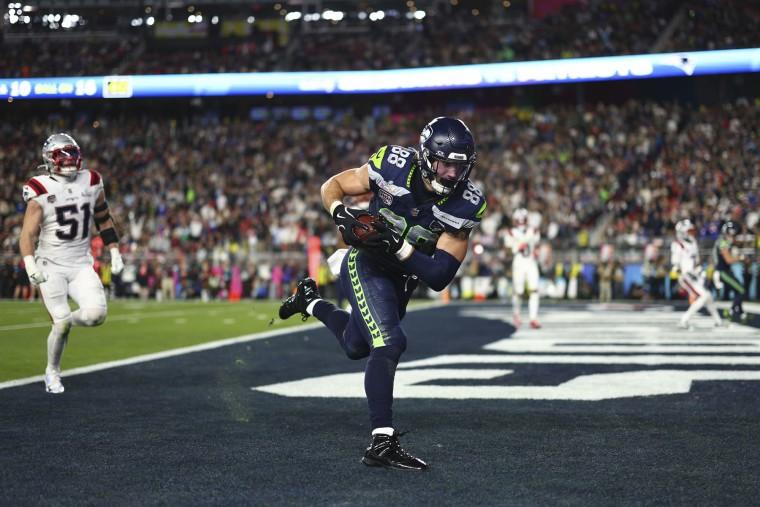
AJ Barner of the Seattle Seahawks catches a touchdown during the fourth quarter of Super Bowl 50.Kevin Sabitus / Getty Images
The move by Congress comes as the Justice Department is investigating the NFL for potential anticompetitive practices. Speaking in April when the probe was disclosed, a government official, who was not authorized to discuss an ongoing investigation by name, said it was “about affordability for consumers and creating an even playing field for providers.”
In March, Sen. Mike Lee, R-Utah, wrote a letter to the Justice Department and the Federal Trade Commission urging them to review whether the NFL’s distribution methods comply with the 1961 law. The FTC has sought comments from the public on the shift of live sports from broadcast channels to streaming services.
The NFL has said 87% of its games are available on free television, and games aired exclusively on cable or streaming services remain available over the air in the home markets of the competing teams.
The league has broadcast or streaming deals with CBS/Paramount+, NBC/Peacock, ABC/ESPN/ESPN+, Fox, NFL Network, Amazon Prime Video, Netflix and YouTube TV. Thursday night games moved to Prime Video in 2022, and the league has since moved a wild-card playoff game, Christmas Day games and a Black Friday game to streamers.
This season, Netflix will stream an opening-week game between the San Francisco 49ers and Los Angeles Rams in Melbourne, Australia, and a Green Bay Packers-Rams game the day before Thanksgiving.
The crypto markets have entered a period of heightened uncertainty as Bitcoin struggles to hold key support levels, triggering increased volatility across the altcoin sector. While most tokens remain under pressure, a handful of leading altcoins are approaching crucial technical zones that could determine their next major trend. Hyperliquid (HYPE), Ondo (ONDO), Zcash (ZEC), and …
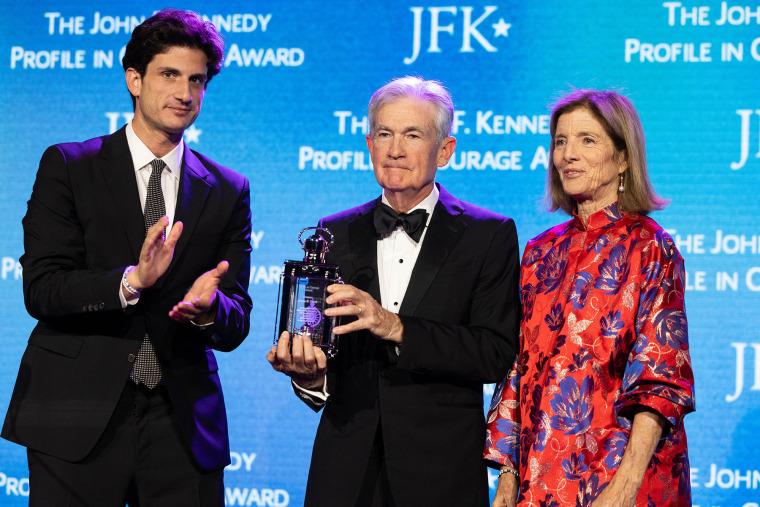
Federal Reserve Governor Jerome Powell warned Sunday about the impact of a politicized Fed and made a broader call for the defense of democratic institutions in his first public remarks since the end of his eight-year stint as head of the central bank.
“Democratic institutions take much time, effort, and patience to build but can be torn down all too quickly,” Powell said in remarks prepared for delivery as he accepted the John F. Kennedy Profile in Courage Award, given by the John F. Kennedy Library Foundation.
“It is essential that we preserve what is good about these institutions, even as we strive to improve them,” said Powell, who included the Fed along with the courts and universities as among the core institutions key to the country’s success and standing in the world.
“Like many other institutions, the Fed has been undergoing a stress test,” Powell said, which in the central bank’s case has included efforts by President Donald Trump to fire Fed Governor Lisa Cook, calls for Powell’s resignation and a criminal probe of Powell.
Powell’s term as chair formally ended on May 15. His successor, Kevin Warsh, was sworn in as Fed chair on May 22. Powell has decided to continue as a Fed governor in part because of what he regards as ongoing threats to the Fed’s independence, a decision that effectively prevents Trump from appointing another member to the Fed board for now.
Jerome Powell with Caroline Kennedy and Jack Schlossberg after receiving the Profile in Courage Award.Scott Eisen / Getty Images
The Fed’s structure is meant to allow it to make monetary policy decisions free of political considerations, and “these protections have served the public well, and administrations from both parties have respected them,” Powell said. “If any administration finds a way to remove Fed officials over policy differences, then future administrations will do so as well. The public would lose faith that the central bank will make decisions based only on what’s best for all Americans.”
In announcing the award to Powell earlier this year, the foundation said he had “safeguarded one of the country’s most essential apolitical institutions and demonstrated extraordinary courage in the face of sustained personal and professional risk.”
The award this year was also given to the citizens of Minneapolis and St. Paul for the public response to the surge in immigration enforcement in the Twin Cities area, including protests and efforts to monitor government enforcement efforts.
Oracle shares fell on Tuesday as investors focused on the rising costs of artificial intelligence infrastructure.
The decline came even as analysts maintained a largely positive outlook on the company’s long-term growth prospects ahead of earnings.
ORCL stock declined 3.1%, reversing part of Monday’s 9.9% rally that had pushed shares to their highest level since November.
The pullback came as markets reacted to Alphabet’s announcement that it plans to raise $80 billion through a stock sale to fund AI infrastructure investments, highlighting the enormous capital requirements facing companies competing in the AI race.
Alphabet said the proceeds, including a $10 billion investment from Berkshire Hathaway, would be used to expand its AI compute infrastructure.
The company also updated its full-year capital expenditure outlook in April, projecting spending of as much as $190 billion.
The announcement renewed investor focus on whether other technology companies, including Oracle, may need to commit significantly more capital to support future AI-driven growth.
AI infrastructure costs remain in focus
Investor attention is increasingly shifting from AI demand to the costs required to support that demand.
Scotiabank analyst Patrick Colville believes Oracle’s future capital expenditure requirements could ultimately exceed current Wall Street expectations.
Ahead of Oracle’s fiscal fourth-quarter earnings report, scheduled for Wednesday, Colville identified spending plans as one of the most important issues investors will be watching.
Although he described himself as “a bit cautious” ahead of earnings, Colville maintained a positive longer-term view of the company.
The analyst argued that Wall Street’s fiscal 2027 capital expenditure forecasts for the company may be too low.
He estimates Oracle could spend nearly $100 billion during the period, significantly above the current consensus estimate of approximately $71 billion.
According to Colville, hardware inflation could be a key driver of higher spending, with costs potentially rising around 15% as Oracle continues expanding its cloud infrastructure footprint.
Importantly, Colville said the higher spending estimate does not reflect weaker business conditions or slowing demand.
Instead, he believes additional investment may be necessary to support the cloud growth projections already embedded in analyst forecasts.
UBS sees continued momentum ahead of earnings
Despite concerns about rising investment requirements, UBS remains constructive on Oracle’s outlook.
The firm raised its price target on Oracle shares to $285 from $250 while maintaining a Buy rating.
UBS analyst Karl Keirstead cited continued business momentum ahead of next week’s earnings release.
Keirstead said the firm reviewed feedback from four large customers and partners, along with a contractor involved in the company’s AI data center project in Abilene, Texas.
According to UBS, the research found no indication that Oracle’s growth momentum is slowing.
The firm noted that it values Oracle at 27 times calendar year 2027 non-GAAP earnings per share and remains positive on the broader long-hyperscaler investment theme.
Oracle shares have already posted strong gains this year, rising 28.1% year-to-date and 28.5% over the past week.
Colville acknowledged that investors still have limited visibility into the structure of Oracle’s customer agreements and future infrastructure economics.
Nevertheless, he said he feels comfortable with his forecasts, pointing to management commentary indicating that development projects remain “on schedule or ahead of expectations.”
The analyst also believes Oracle has opportunities to offset some of the cost pressures associated with hardware inflation.
His model incorporates approximately $800 million in annualized operating expense savings from workforce reductions, leading him to modestly increase his fiscal 2027 earnings estimates.
Looking ahead, Colville expects Oracle shares could remain volatile as investors assess earnings results, spending plans, and management commentary.
However, he remains constructive on the company’s longer-term outlook, arguing that the “risk/reward skews to the upside” for investors willing to maintain a longer investment horizon.
More broadly, Colville believes Oracle’s GPU-as-a-service offerings, customer-neutral approach, and access to funding position the company well to benefit from growing demand for AI infrastructure in the years ahead.