The NEAR Protocol price is trading around $2.11, while daily trading volume stands at approximately $547.4 million with a modest rise of over 9%. After a sharp correction from its recent highs near $2.90, NEAR has returned to a technically significant support zone where buyers have previously stepped in. The token is now hovering just …
Chewy Inc (CHWY) opened in the “red” this morning after coming in shy of EPS estimates for its fiscal Q1 and offering guidance that signals continued weakness in the current quarter.
Investors are bailing on CHWY mostly because the financial release reinforces CEO Sumit Singh’s recent comment that the US consumer is more “stretched” than at the beginning of 2026.
Speaking at a JPMorgan conference, Singh said customers are buying essential items like pet food and medicine, but spending less on extras like toys due to resurfacing inflationary pressures.
At the time of writing, CHWY shares are trading at a 52-week low of just under $20, representing a nearly 40% year-to-date decline – yet the underlying business is still growing.
In Q1, revenue was up 7.7% year-on-year, gross margin improved by 50 bps to a solid 30.1%, and adjusted EBITDA went up $60 million.
So this clearly isn’t a company in distress – it’s a company being priced like one (0.67x sales).
Autoship program to drive CHWY shares higher
Chewy shares remain worth owning also because of its Autoship subscription program that’s really the backbone of its revenue – it drives recurring, predictable, largely recession-resistant demand.
Pet food and medicine aren’t discretionary. Yes, customers are cutting back on toys and accessories – but the core recurring order business is sticky and hard for competitors to disrupt easily.
Moreover, the company’s push into pet healthcare (Vet Care clinics) and its pharmacy/prescription business is an under-appreciated growth vector that doesn’t show up clearly in the near-term revenue outlook.
As that segment scales, it will help expand the addressable market and deepen “customer lock-in” beyond the commodity grocery/supplies business – potentially driving the stock price higher over time.
Macro weakness affecting Chewy is temporary
Investors should also note that CEO Sumit Singh’s recent dovish consumer commentary reflects the current inflationary environment – not a permanent shift in pet ownership economics.
Pet spending has proven remarkably “resilient” through previous downturns; when inflation eases, discretionary pet spending (the category weighing on guidance) typically snaps right back.
Simply put, at current levels, you are essentially buying a premium business at a trough valuation tied to a temporary macroeconomic cycle.
Finally, Ryan Cohen’s gradual exit has been a persistent “seller-of-record” weight on CHWY stock for years.
As that overhang clears, the technical selling pressure structurally diminishes, removing a ceiling that has suppressed its recovery.
Together, these positives are keeping Wall Street bullish on Chewy Inc, with the consensus rating staying put at “Strong Buy”, and the mean price target of $40 signaling potential upside of roughly 100% from current levels.
Bitcoin has fallen back below $61,500 on Monday, extending a punishing stretch that has now erased more than 8% of its value over the past seven days and pushed the total crypto market cap down to levels not seen since the early part of the year. Into that environment, Changpeng Zhao, the founder of Binance …
Micron MU shares fell 1.7% on Tuesday, reversing a small portion of its 10% gains on Monday.
The decline came after a volatile period for semiconductor stocks, with Micron shares having fallen about 20% over two trading days last week, including a 13% plunge on Friday.
Despite the recent pullback, Wall Street analysts remain overwhelmingly optimistic on the memory-chip maker, arguing that surging artificial intelligence demand and tightening supply conditions could support further gains in the years ahead.
AI memory demand fuels industry optimism
The recent rebound in semiconductor stocks followed announcements from Nvidia and SK Hynix about a multi-year strategic partnership.
The two companies plan to develop next-generation AI memory products for Nvidia’s Vera Rubin supercomputers, RTX Spark PCs, and Jetson Thor robotics platforms.
Micron is widely viewed as one of the key beneficiaries of that investment cycle.
The company has already secured certification as a high-bandwidth memory (HBM4) supplier for Nvidia’s Vera Rubin platform and has committed its entire HBM production capacity for the remainder of fiscal 2026 under long-term contracts.
The growing importance of AI workloads has intensified demand for advanced memory products, prompting several analysts to argue that supply will remain constrained for years.
Cantor Fitzgerald analyst CJ Muse raised his price target on Micron to $1,500 from $700 while maintaining an Overweight rating.
Wells Fargo also increased its target to $1,220 from $550 and reiterated its Overweight rating.
Goldman Sachs also lifted its 12-month price target to $900 from $400.
The firm cited tightening supply conditions and accelerating demand for memory chips, while increasing its revenue and non-GAAP earnings-per-share estimates for 2026 and 2027 by an average of 28% and 36%, respectively.
UBS sees earnings exceeding guidance
Among the most bullish voices is UBS analyst Timothy Arcuri, who expects Micron’s upcoming fiscal third-quarter results to exceed the company’s own guidance.
According to UBS, Micron could generate $36 billion in revenue and earnings per share of $20.96 for the May quarter, with much of the upside coming from stronger pricing rather than higher shipment volumes.
The firm’s industry checks indicate that memory pricing continues to rise as AI-related demand tightens market conditions.
UBS expects DRAM revenue to reach $28.1 billion, supported by a 3% increase in bits shipped and a 45% increase in average selling prices compared with the previous quarter.
For NAND memory, the firm forecasts revenue of $7.9 billion, with shipment volumes increasing 5% and average selling prices climbing 50%.
Within the high-bandwidth memory segment, UBS projects revenue of $2.9 billion, while core DRAM revenue excluding HBM is expected to reach $25.2 billion.
Strong pricing outlook drives long-term targets
Looking ahead, UBS believes pricing strength will continue into Micron’s fiscal fourth quarter.
The firm forecasts revenue of $43.1 billion and earnings per share of $25.64 during the period.
Arcuri also expects Micron’s profitability to improve significantly over the coming years.
UBS estimates that the company’s gross margin could potentially approach 90% by the second half of calendar year 2027.
The analyst argues that artificial intelligence is creating structural changes within the memory market that could justify a higher valuation multiple for Micron shares.
Because of these shifts, UBS said it is “only a matter of time” before investors assign Micron a more traditional valuation.
The firm maintained its Buy rating and reiterated a $1,625 price target, underscoring growing confidence that AI-driven demand could support another phase of growth for the memory chipmaker.
MORPHO is showing signs of life again. After a difficult stretch that pushed the token into oversold territory, the asset surged 20% over the last 24 hours to trade around $1.92, catching the attention of traders hunting for a recovery play. The timing isn’t exactly mysterious. As BTC rebounded from the $60,000 area to $64,000, …
Intel (INTC) shares are pushing higher on Monday after The Information said Google and Nvidia are turning to the semiconductor firm as a vital manufacturing backup to TSMC.
INTC now looks headed to challenge is 20-day moving average (MA), with a decisive break above $115 expected to accelerate bullish momentum in the near-term.
Intel stock has been a rather lucrative investment in 2026, currently up some 175% versus the start of this year.
Have Google and Nvidia placed an order with Intel Foundry?
According to The Information, a team up with Google isn’t just a rumour, it’s a concrete order. The giant has already placed an order with Intel to manufacture more than 3 million of its TPUs (tensor processing units) in 2028.
Google spent months testing the company’s advanced packaging, and this order serves as a major vote of confidence that Intel can handle hyperscale AI silicon production, the report added.
On the other hand, Nvidia hasn’t signed a firm contract yet, but it’s actively running early trials on INTC’s most advanced 18A manufacturing process and evaluating its advanced packaging.
Specifically, the behemoth is testing whether Intel can successfully fabricate a complex processor that fuses four graphics chips into a single unit – a design crucial for its upcoming Feynman GPU architecture.
Significance of Google and Nvidia deal for Intel stock
Investors are cheering INTC because these potential partnerships could prove to be a game-changer for them over time. For years, Street doubted whether Intel Foundry could truly compete with TSMC or win top-tier tech clients.
Landing Google as a customer and getting Nvidia to test its flagship 18A node, as The Information report suggests serves as a major validation of the company’s turnaround strategy.
Combined with the Apple foundry deal from last month, it’s fair to state that Intel is finding success in positioning itself as the premier US-based alternative to TSMC.
And that’s primarily why Intel shares are ripping higher today.
Why else are INTC shares in the ‘green’ today?
INTC shares are extending gains on Jun 8 also because the company has partnered with Hitachi as well.
The collaboration focuses on accelerating “physical AI” capabilities, integrating Intel’s advanced silicon solutions into robotics, industrial automation, and real-world edge computing systems.
Investors are viewing this as a major win that expands INTC’s footprint beyond traditional data centers and PC markets into high-growth industrial AI verticals.
Even from a technical perspective, Intel’s relative strength index (14-day) currently sits in the mid-50s, indicating significant further room to the upside before the stock hits “overbought” territory.
That said, Wall Street seems to believe that INTC’s rally in 2026 has gone a bit too far.
The consensus rating on Intel Corp remains at “hold” only, with the mean price target of about $98 indicating potential downside of more than 10% from current levels.
The crypto market is in extreme fear and the Fear and Greed Index sits at 13. Bitcoin is hovering around $60,000, down 22% in the first half of 2026. Ethereum has shed 29% in the first quarter alone and altcoins are bleeding across the board. The Setup Crypto bear markets have historically lasted between eight …
SpaceX is just days away from making stock market history.
Elon Musk’s rocket, satellite, and artificial intelligence company is expected to begin trading on Nasdaq on June 12 after pricing its initial public offering the day before.
With a targeted fundraise of $75 billion and a valuation approaching $1.8 trillion, the offering is set to become the largest IPO ever.
The excitement surrounding the deal has revived a familiar question among investors: Is SpaceX a good investment?
SpaceX has fixed its SpaceX IPO price at $135 per share and plans to sell 555.6 million shares.
At that price, the company would be valued at approximately $1.8 trillion.
That would give SpaceX a cap larger than Tesla’s current valuation and immediately place it among the ten most valuable publicly traded companies in the United States.
The company has taken an unusual approach by announcing a fixed price ahead of its roadshow rather than marketing a price range.
The move reflects confidence in investor demand as bankers begin gathering orders ahead of final pricing.
Institutional investors will spend the coming days evaluating whether the proposed SpaceX valuation is justified by the company’s future growth prospects.
The bank also projects that total company revenue could reach $474 billion by the end of the decade.
Those forecasts help explain why some investors are willing to support a SpaceX market cap that appears disconnected from current financial results.
The company currently generates most of its revenue from Starlink subscriptions and launch services.
However, investors are increasingly being asked to value SpaceX based on what its AI business could become rather than what it is today.
Bloomberg reported that many investors attending a recent JPMorgan event appeared enthusiastic about Musk’s long-term vision despite questions around valuation and execution.
Participants described SpaceX as a generational company and expressed confidence in Musk’s ability to create entirely new industries.
That optimism is also evident among major investors.
ARK Invest’s Brett Winton recently described SpaceX as “the most important company in the world in terms of what the future is going to look like,” while billionaire investor Philippe Laffont has suggested SpaceX could become part of the next generation of market-leading technology stocks.
Invest in SpaceX now with eToro
The bear case: is SpaceX IPO overvalued?
The biggest concern for prospective investors is straightforward: Is SpaceX IPO overvalued?
At the targeted valuation of roughly $1.8 trillion, SpaceX would trade at approximately 94 times its 2025 revenue of $18.7 billion.
For comparison, the broader S&P 500 trades at a fraction of that multiple.
Even Tesla, which commands one of the highest valuations among major public companies, trades at significantly lower revenue multiples.
Critics argue that investors are being asked to pay today for profits and businesses that may not fully materialise for years.
The research firm’s analysts argued that the market may be assigning excessive value to future AI opportunities while underestimating competitive risks from companies such as OpenAI and Anthropic.
The valuation gap has become central to the debate over whether SpaceX’s IPO is overvalued, is the wrong question, or the most important one.
Adding to concerns is the fact that SpaceX remains unprofitable.
The company reported a loss of $4.9 billion in 2025 as it continued investing heavily in artificial intelligence infrastructure.
Retail investors are getting a rare opportunity
Unlike many blockbuster IPOs, SpaceX is making a significant effort to attract retail investors.
The company launched a dedicated IPO website directing prospective buyers to brokerages including Robinhood, SoFi, Fidelity, Schwab, and E*Trade.
According to the Financial Times, those platforms will feed daily demand information back to the underwriting banks as the offering progresses.
The approach could broaden participation in what has traditionally been an institutional investor-driven process.
It also means that ordinary investors will have an opportunity to buy shares closer to the IPO price than is typical in many high-profile offerings.
Invest in SpaceX now with eToro
Is SpaceX a good investment?
Whether SpaceX is a good investment ultimately depends on an investor’s time horizon and risk tolerance.
The bullish case centres on Starlink’s continued growth, SpaceX’s leadership in commercial spaceflight, and the possibility that its AI operations become one of the largest technology businesses in the world.
The bearish case focuses on valuation. A SpaceX market cap approaching $1.8 trillion leaves little room for disappointment if revenue growth slows or AI ambitions fail to meet expectations.
For investors considering the IPO, the next major catalyst will be June 11, when final pricing is expected.
Demand during the roadshow could offer the clearest indication yet of whether Wall Street believes the proposed SpaceX valuation is justified—or whether concerns that the SpaceX IPO is overvalued begin to gain traction once the shares start trading.
Story Highlights The live price of the ETC crypto is . Price predictions for 2026 range from $30.00 to $80.00. Long-term outlook suggests gradual growth potential to approach $300 by 2030. Ethereum Classic (ETC) is a Layer-1 blockchain that preserves the original Ethereum chain, maintaining a strong focus on immutability and decentralized principles. Unlike Ethereum, …
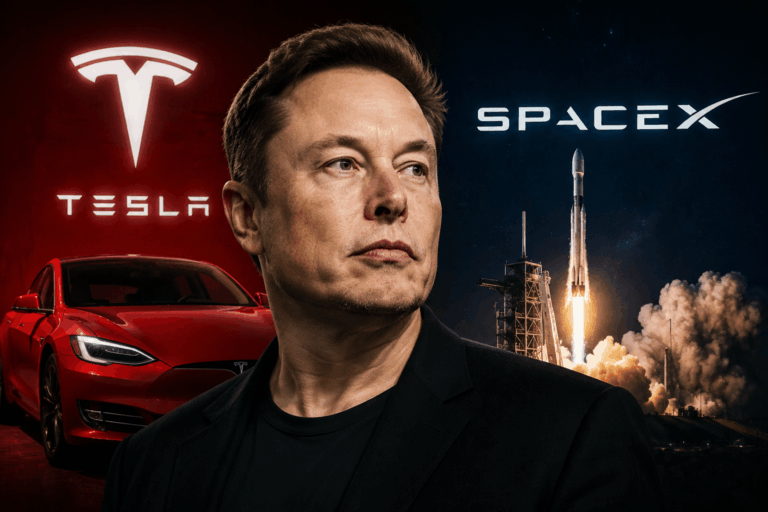
The countdown to SpaceX’s long-awaited stock market debut is entering its final days.
Sixteen years ago, Tesla went public on the stock market, and today, Elon Musk is preparing to take another company public, which is already larger, more ambitious, and arguably far more controversial from a valuation standpoint.
Tesla’s IPO raised about $226 million and valued the electric vehicle maker at roughly $1.7 billion.
Today, Tesla is worth more than $1.5 trillion, representing a staggering 1,000-fold increase.
For investors weighing whether to participate in what could become the largest IPO in history, Tesla’s journey offers both inspiration and caution.
Yet while the two companies share a leader, their public-market debuts could hardly be more different.
Tesla’s journey from a startup to a global giant
When Tesla filed to go public in 2010, it was still a relatively obscure startup.
The company was only about six years old and best known for the Roadster, a $109,000 electric sports car sold in limited numbers.
Elon Musk, who today boasts a net worth exceeding $800 billion, drew a base salary of just $33,280 a year, according to Tesla’s IPO filing.
Tesla had a straightforward mission. It had hoped to prove that electric vehicles could compete with gasoline-powered cars and eventually become mainstream.
At the time, many investors remained unconvinced.
The company had sold only a few vehicles and was preparing to launch the Model S sedan, which it hoped would dramatically expand its addressable market.
Tesla had secured around 2,000 reservations for the Model S, a premium four-door sedan with a starting price of $49,900.
The central question facing investors was simple: “Can Tesla build and sell enough cars to survive?”
That proposition seems obvious today.
In 2010, it was anything but.
Tesla became the first US automaker to go public since Ford Motor Co.’s debut in 1956, arriving at a time when the broader market viewed electric vehicles with scepticism.
When Tesla went public in 2010, it was a tiny company by global market standards.
Its valuation represented just 0.003% of global GDP.
With a market capitalization of more than $1.5 trillion, it now represents roughly 1.5% of global GDP.
Ford, meanwhile, is worth only about 3% to 4% of Tesla’s market value.
SpaceX enters public markets from a vastly different position.
Rather than being a small company with enormous aspirations, it is already the most valuable private space company in the world.
Founded in 2002, SpaceX has spent more than two decades building multiple businesses before seeking public capital.
The company now operates Starlink satellite internet, rocket launch services, government and defense contracts, space infrastructure projects, xAI and artificial intelligence operations, and future AI and orbital data-center initiatives.
Revenue reached approximately $18.7 billion in 2025, with Starlink contributing about $11.4 billion.
Unlike Tesla’s IPO, which was about proving a business model, SpaceX’s offering is about proving its valuation.
The question investors face today is: “Can SpaceX grow enough to justify a $1.75 trillion valuation?”
The valuation gap is enormous
The difference becomes particularly striking when viewed through valuation multiples.
Tesla’s IPO valuation implied roughly 15 times annual sales.
SpaceX is seeking a valuation exceeding 90 times sales. The premium is extraordinary.
Investors are not paying for current profitability.
In fact, SpaceX openly acknowledges that profitability may remain elusive.
In its prospectus, the company stated it has “a history of net losses and may not achieve profitability in the future.”
SpaceX reported revenue of $18.67 billion in 2025 but posted a net loss of $4.94 billion, compared with a profit of $791 million the year before.
Losses widened further in the first quarter of 2026 as spending increased on artificial intelligence infrastructure and Starship development.
Much of the valuation rests on future possibilities: AI infrastructure dominance, massive Starlink expansion, future space-based data centers, space infrastructure services, and potential Mars-related opportunities
The filing describes plans involving as many as one million AI Sat Mini satellites in low Earth orbit and ties the project to ambitions of advancing humanity toward a “Kardashev Type II civilization.”
Critics view many of those assumptions as highly speculative.
What valuation experts think
Among those examining the numbers closely is Aswath Damodaran, the New York University professor often referred to as the “dean of valuation.”
Before reviewing the prospectus, Damodaran estimated SpaceX was worth around $1.2 trillion.
After analyzing the filing, he modestly increased that estimate.
“If I were to summarize the impact of the prospectus on my SpaceX story, it would be that it has made the story bigger, but also more volatile,” he said.
His revised valuation stands at roughly $1.3 trillion, or about $100 per share.
Damodaran also addressed criticism of SpaceX’s lofty valuation.
“SpaceX is a company with small revenues and large losses, and paying a hundred times revenues for it (which is where a $1.8 trillion pricing would put it) seems foolhardy,” he said.
However, he argued that investors who insist exclusively on traditional valuation metrics often end up concentrated in mature or declining businesses.
Still, he is not buying at current levels.
“It is worth remembering that Facebook was selling at half its offering price a few months after its IPO, and that Uber lost more than 50% of its market cap in the year after its public offering, moving both companies from over to under valued,” he said.
Morningstar’s discounted cash flow analysis values SpaceX at about $780 billion instead, less than half of the company’s proposed $1.75 trillion IPO valuation and well above recent private-market secondary valuations.
Tesla was losing money too
Supporters of SpaceX point out that Tesla was hardly a model of profitability when it went public.
In the first nine months of 2009, Tesla lost $31.5 million, though that represented an improvement from a $57.3 million loss the year before.
Revenue climbed sharply to $93.4 million from just $580,000.
Tesla warned investors it expected to continue losing money until significant deliveries of the Model S began in 2012.
One of Tesla’s defining moments arrived in May 2013, when the stock surged 81% after reporting its first quarterly profit.
The achievement was modest, but it signaled that the company could eventually build a sustainable business.
However, the company still did not become consistently profitable until 2018.
Ruth Foxe-Blader, managing partner at Citrine Venture Partners, told the BBC: “It’s not shocking for a project like this to be loss-making, even at the point of IPO.”
Why Tesla may have been the safer investment
Ironically, despite being the riskier business operationally, Tesla may have been the safer investment from a valuation perspective.
When Tesla went public at roughly $1.7 billion, the upside was enormous.
A rise to:
$17 billion would deliver a 10-fold return
$170 billion would generate a 100-fold return
$850 billion would create a 500-fold return
History proved those outcomes were not impossible.
An investor who put $10,000 into Tesla at its IPO and held the shares would have owned stock worth nearly $3 million by June 2025.
The same investment in the S&P 500 would have grown to roughly $57,000.
Tesla’s rise created an entire class of millionaires known as “Teslanaires.”
SpaceX starts from a very different place. A 10-fold return would require a market value of $17.5 trillion.
A five-fold return would imply a company worth $8.75 trillion.
Those figures would exceed the current market capitalization of most national stock markets.
The sheer scale creates a natural ceiling on future returns.
Lessons from history
Tesla’s IPO story was ultimately simple: “Electric cars will replace gasoline cars.”
SpaceX’s narrative is considerably broader.
Investors are being asked to believe that communications, artificial intelligence, satellite infrastructure, orbital computing, and potentially humanity’s expansion beyond Earth will all converge around one company.
Goldman Sachs reportedly estimates that SpaceX’s AI business alone could generate more than $300 billion in annual revenue by 2030.
Whether those projections materialize remains one of the defining questions surrounding the IPO.
History offers some reasons for caution.
Research by finance professor Jay Ritter has shown that IPOs launched at extremely high revenue multiples have historically tended to underperform the broader market in the years that follow.
Companies that listed at more than 40 times sales have generally lagged significantly over time.
SpaceX is seeking to go public at more than 90 times its 2025 revenue.
“With a small initial float boosted by almost every investment bank on the planet, buoyant investor appetite for AI infrastructure bids, and an unprecedented path to inclusion in the Nasdaq 100 Index just 15 trading days after the IPO, we expect SpaceX’s share price will likely survive separation and even ascent toward orbit, at least for a time,” the analysts said.
The bigger test, however, may come after the initial excitement fades.
“Max Q, the moment of greatest atmospheric pressure on a launch vehicle, will come for SpaceX’s stock in the months following the IPO, when successive tranches of stock held by private investors and employees are slated to become available for sale into the public market,” Morningstar said.
As additional shares enter the market following lock-up expirations, investors could see a clearer picture of where sustainable demand for the stock lies.
“We think long-term investors eager to participate in SpaceX’s future endeavors and potential success will have opportunities to do so with a greater margin of safety than the initial offering is likely to provide,” the analysts added.