

Archive

November 15, 2025

Browsing

The post Undervalued Altcoins to Watch in 2025: FIL, TON and HBAR Show Strong Upside Potential appeared first on Coinpedia Fintech News

As Bitcoin hovers near resistance and Ethereum consolidates after its ETF-driven run, capital is quietly rotating into altcoins with real-world utility. The market narrative for 2025 is shifting: investors are increasingly hunting for tokens backed by infrastructure value rather than hype.

Among this class, three projects stand out for their growing adoption, institutional relevance, and long-term fundamentals: Filecoin (FIL), Toncoin (TON), and Hedera (HBAR). Each solves a tangible problem—decentralized storage, consumer payments, and enterprise tokenization—while trading at valuations that still look modest relative to their potential.

Filecoin (FIL)

Filecoin remains one of the strongest infrastructure-layer projects in crypto, offering a decentralized storage marketplace that competes with centralized cloud providers. As data-heavy applications—particularly AI, research, and Web3 analytics—continue to grow, Filecoin is positioning itself as the decentralized alternative for long-term archival datasets.

Adoption continues to increase through its Proof-of-Data-Possession upgrades, enterprise onboarding, and rising dataset count across scientific and institutional users. More importantly, 

Filecoin is evolving beyond “storage only,” pushing into retrieval markets and data services that create additional layers of demand for FIL.

Filecoin (FIL) Price Prediction for 2025

As seen in the above chart, the FIL price is stuck within a falling wedge and has reached the edge of the pattern. The RSI is also descending, and hence a breakout seems to be on the horizon, but after a small pullback to the support of the pattern. 

Forecasts point to a wide but constructive range:

  • Base case: $1.75–$2.17
  • Mid-range scenario: ~$3.75
  • Higher-end institutional scenario: ~$4.2 average

Toncoin (TON)

Toncoin is becoming a consumer-facing payments layer thanks to its deep integration with Telegram—one of the largest messaging apps globally. With mini-apps, embedded wallets, and peer-to-peer payments rolling out, TON has a unique advantage that most blockchains lack: frictionless access to hundreds of millions of users without requiring them to “switch” platforms.

Telegram’s expansion into travel payments, e-commerce rails, and wallet-native experiences is starting to reflect in TON’s activity. Capital inflows from institutional players also continue to rise, attracted by TON’s growing role in global micropayments.

TON Price Outlook for 2025

The TON price has dropped below the ascending trend line and has reached close to the support at $1.825. Meanwhile, the price is stuck between the base and conversion lines of the Ichimoku cloud, which are acting as support and resistance levels. Meanwhile, the weekly RSI has reached the lower threshold and is displaying a bullish divergence. Once validated, the price is expected to rise and initially reach $2.5 and further reclaim levels above the ascending trend line. 

Analysts present a layered forecast:

  • Base case: $1.82–$2.85
  • Bullish consumer-adoption scenario: $3.75
  • High-end scenario (Telegram ecosystem expansion): $8–$10

Hedera (HBAR)

Hedera positions itself as an enterprise-grade network offering fast, low-cost, high-throughput transactions powered by hashgraph consensus. Its governance council—which includes major global corporations—gives the project a high level of institutional credibility.

Hedera is gaining traction as a platform for real-world asset (RWA) tokenization, ESG data reporting, supply-chain infrastructure, and identity solutions. As banks, enterprises, and government-linked entities experiment with digital asset infrastructure, HBAR is benefiting from being one of the more “enterprise-friendly” chains.

HBAR Price Outlook for 2025

The HBAR price appears to have reached the crucial support, which has been preventing extended loss since the start of the year. The RSI and OBV appear bearish, but with close observation, a small bullish divergence is seen. This suggests a rebound beyond $0.16 could be on the horizon. 

Forecasts suggest a broad but positive range:

  • Base case: ~$0.50 average
  • Mid-range scenario: $0.56 – $0.80
  • Bullish tokenization cycle scenario: $1.30 – $1.60

Hedera doesn’t move with hype cycles as aggressively as retail-driven assets — but its corporate partnerships and consistent development make it a strong longer-term play.

Why These Three Altcoins Stand Out in 2025

Across these projects, a clear pattern emerges:

  • Real Utility Is Replacing Hype: Infrastructure tokens tied to storage, payments, and tokenization are showing more durable demand than meme-driven or purely speculative assets.
  • Institutional Capital Is Expanding: FIL, TON, and HBAR benefit from enterprise- or consumer-level adoption—a narrative that positions them well as traditional institutions increase their footprint in crypto.
  • Their Valuations Don’t Reflect Their Underlying Growth: These assets remain undervalued relative to the scale of problems they solve and the ecosystems forming around them.

Final Verdict

The 2025 cycle is shaping up to be very different from previous ones. Instead of hype-driven rotation, investors are allocating toward infrastructure assets with measurable, real-world demand.

Filecoin, Toncoin, and Hedera represent three distinct but complementary sectors that could see outsized growth as data, payments, and tokenization become core components of the blockchain economy.
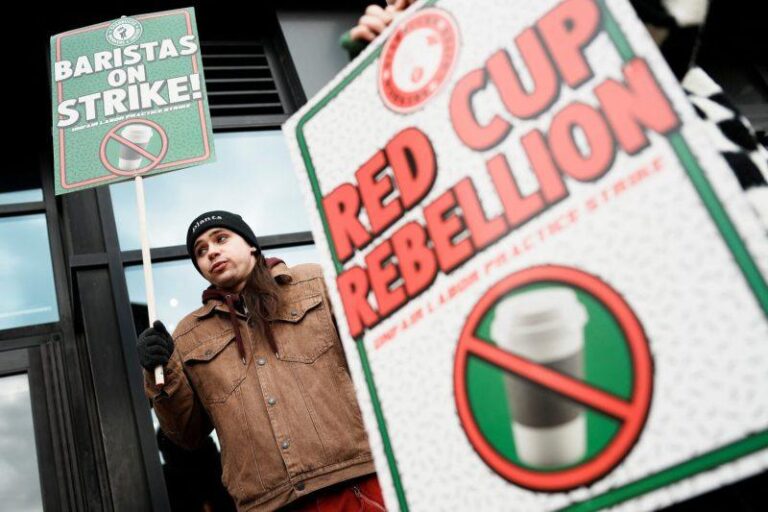

More than 1,000 unionized Starbucks workers went on strike at 65 U.S. stores Thursday to protest a lack of progress in labor negotiations with the company.

The strike was intended to disrupt Starbucks’ Red Cup Day, which is typically one of the company’s busiest days of the year. Since 2018, Starbucks has given out free, reusable cups on that day to customers who buy a holiday drink. Starbucks Workers United, the union organizing baristas, said Thursday morning that the strike had already closed some stores and was expected to force more to close later in the day.

Starbucks Workers United said stores in 45 cities would be impacted, including New York, Philadelphia, Minneapolis, San Diego, St. Louis, Dallas, Columbus, Ohio, and Starbucks’ home city of Seattle. There is no date set for the strike to end, and more stores are prepared to join if Starbucks doesn’t reach a contract agreement with the union, organizers said.

Starbucks emphasized that the vast majority of its U.S. stores would be open and operating as usual Thursday. The coffee giant has 10,000 company-owned stores in the U.S., as well as 7,000 licensed locations in places like grocery stores and airports.

As of noon Thursday on the East Coast, Starbucks said it was on track to meet or exceed its sales expectations for the day at its company-owned stores.

“The day is off to an incredible start,” the company said in a statement.

Around 550 company-owned U.S. Starbucks stores are unionized. More have voted to unionize, but Starbucks closed 59 unionized stores in September as part of a larger reorganization campaign.

Here’s what’s behind the strike.

Striking workers say they’re protesting because Starbucks has yet to reach a contract agreement with the union. Starbucks workers first voted to unionize at a store in Buffalo in 2021. In December 2023, Starbucks vowed to finalize an agreement by the end of 2024. But in August of last year, the company ousted Laxman Narasimhan, the CEO who made that promise. The union said progress has stalled under Brian Niccol, the company’s current chairman and CEO. The two sides haven’t been at the bargaining table since April.

Workers say they’re seeking better hours and improved staffing in stores, where they say long customer wait times are routine. They also want higher pay, pointing out that executives like Niccol are making millions and the company spent $81 million in June on a conference in Las Vegas for 14,000 store managers and regional leaders.

Dochi Spoltore, a barista from Pittsburgh, said in a union conference call Thursday that it’s hard for workers to be assigned more than 19 hours per week, which leaves them short of the 20 hours they would need to be eligible for Starbucks’ benefits. Spoltore said she makes $16 per hour.

“I want Starbucks to succeed. My livelihood depends on it,” Spoltore said. “We’re proud of our work, but we’re tired of being treated like we’re disposable.”

The union also wants the company to resolve hundreds of unfair labor practice charges filed by workers, who say the company has fired baristas in retaliation for unionizing and has failed to bargain over changes in policy that workers must enforce, like its decision earlier this year to limit restroom use to paying customers.

Starbucks says it offers the best wage and benefit package in retail, worth an average of $30 per hour. Among the company’s benefits are up to 18 weeks of paid family leave and 100% tuition coverage for a four-year college degree. In a letter to employees last week, Starbucks’ Chief Partner Officer Sara Kelly said the union walked away from the bargaining table in the spring.

Kelly said some of the union’s proposals would significantly alter Starbucks’ operations, such as giving workers the ability to shut down mobile ordering if a store has more than five orders in the queue.

Kelly said Starbucks remained ready to talk and “believes we can move quickly to a reasonable deal.” Kelly also said surveys showed that most employees like working for the company, and its barista turnover rates are half the industry average.

Unionized workers have gone on strike at Starbucks before. In 2022 and 2023, workers walked off the job on Red Cup Day. Last year, a five-day strike ahead of Christmas closed 59 U.S. stores. Each time, Starbucks said the disruption to its operations was minimal. Starbucks Workers United said the new strike is open-ended and could spread to many more unionized locations.

The number of non-union Starbucks locations dwarfs the number of unionized ones. But Todd Vachon, a union expert at the Rutgers School of Management and Labor Relations, said any strike could be highly visible and educate the public on baristas’ concerns.

Unlike manufacturers, Vachon said, retail industries depend on the connection between their employees and their customers. That makes shaming a potentially powerful weapon in the union’s arsenal, he said.

Starbucks’ same-store sales, or sales at locations open at least a year, rose 1% in the July-September period. It was the first time in nearly two years that the company had posted an increase. In his first year at the company, Niccol set new hospitality standards, redesigned stores to be cozier and more welcoming, and adjusted staffing levels to better handle peak hours.

Starbucks also is trying to prioritize in-store orders over mobile ones. Last week, the company’s holiday drink rollout in the U.S. was so successful that it almost immediately sold out of its glass Bearista cup. Starbucks said demand for the cup exceeded its expectations, but it wouldn’t say if the Bearista will return before the holidays are ove

This post appeared first on NBC NEWS

Reporting a decisive lead in more than 200 seats in the rural and agriculturally dominant state of Bihar, India’s ruling National Democratic Alliance (NDA) appeared firmly on course for victory in the crucial assembly elections.

The early trends, signalling political continuity, set off a swift turnaround in the equity markets on Friday, November 14, triggering a sharp late-session recovery in both the Nifty and the Sensex.

After spending most of the day in negative territory, the indices staged an emphatic reversal.

The Sensex closed 0.1% higher, while the Nifty 50 rose 0.12%, logging their fifth consecutive day of gains.

Public sector banks and pharmaceutical stocks led the rebound, drawing heavy buying interest in the final hour of trade.

Market analysts said the political clarity emerging from Bihar acted as a key sentiment driver.

Investors, they noted, interpreted the decisive mandate as an endorsement of policy stability—an attribute consistently rewarded by Indian markets.

Why Bihar mandate matters

According to a report by MarketSmith India, the 2025 Bihar election result holds significance well beyond the state’s boundaries.

“With the National Democratic Alliance (NDA) securing a decisive mandate, investors interpret the outcome as a vote for continuity and stability — two factors that financial markets prize above all,” a report by MarketSmith India said.

The platform added that the decisive mandate “significantly reinforces the perception of continued political stability.”

The research firm noted that the outcome helps the central government avoid the complexities of navigating a volatile coalition, which often involves managing divergent interests.

“The strong mandate confirms the existing political setup, thereby reducing any immediate policy risk premium that may have been priced into Indian assets,” it added.

The expectation of smoother policy implementation, particularly around infrastructure, rural development, and welfare schemes, has put a spotlight on sectors and companies likely to benefit from a stable political environment in eastern India.

Stocks to watch as Bihar-driven themes gain traction

MarketSmith India highlighted a set of companies with meaningful exposure to consumption, infrastructure, and services in Bihar and the surrounding regions.

V2 Retail and Vishal Mega Mart may gain from rising rural and semi-urban consumption, aided by improving connectivity and rising aspirations.

SIS Ltd could benefit from increasing the outsourcing of security and facility management services as civic and industrial assets expand.

Aditya Vision stands to gain from the consumer durables cycle in eastern India, supported by better power infrastructure and financing options.

One of the largest names on the list, Larsen & Toubro (L&T), remains a proxy for public capital expenditure.

A stable state government in Bihar is expected to smoothen clearances, accelerate tendering, and support the order pipeline, particularly in roads, irrigation, and urban infrastructure.

Analysts said the interplay between central and state spending will be crucial for the company’s execution momentum.

1. V2 Retail: Value-driven consumption play

V2 Retail, known for its affordable apparel and essentials, continues to expand its footprint across Tier-II and Tier-III markets.

Its positioning as a value retailer makes it a potential beneficiary of rising disposable incomes in semi-urban pockets.

Analysts will be watching for store additions in eastern India, trends in shrinkage control, and improvements in private-label contribution.

2. Vishal Mega Mart: Mass-market discretionary goods in focus

V-Mart Retail, operating in the value department store segment, has built its presence around everyday low pricing—an approach well-suited to small-city consumption patterns.

With logistics and supply-chain networks improving in Bihar, the retailer may see stronger cluster economics.

Key indicators include space productivity, supply-chain turns, and festive season performance.

3. Expansion of services may boost SIS Ltd

SIS Ltd operates one of India’s largest integrated security and facility management networks.

With Bihar expected to scale up civic, healthcare, and industrial infrastructure, demand for guarding and maintenance services could rise.

Contract wins in eastern India, along with margin discipline amid wage pressures, will be central to its near-term outlook.

4. Aditya Vision: Regional demand sets the tone

With a stronghold in Bihar, Jharkhand, and Uttar Pradesh, Aditya Vision is well-positioned to benefit from the rising demand for consumer durables.

Better power availability and wider financing channels are expected to support product upgrades and replacements.

Analysts will track growth in same-store sales, the pace of rollout in new towns, and the evolution of its omni-channel strategy.

5. Infrastructure outlook strengthens L&T’s position

Larsen & Toubro’s prospects may brighten as political stability improves the tempo of public works in Bihar.

A predictable policy environment typically helps large EPC firms manage order flows and working capital cycles more efficiently.

Analysts are watching for order wins specific to the eastern zone, the state’s contribution to the overall EPC mix, and margins on project execution.

Technical outlook points to further upside for Nifty

Market sentiment remains constructive, with technical indicators suggesting the possibility of further gains.

Rupak De, Senior Technical Analyst at LKP Securities, said the index could move towards 26,200 and 26,350 in the near term.

He added that support at 25,700 remains firm, reducing downside risks.

Sudeep Shah, Head of Technical and Derivatives Research at SBI Securities, said the 26,050–26,100 range may act as a key resistance level.

“A sustained move above 26,100 could drive the index towards 26,300. On the downside, the zone of 25,700-25,650 is expected to act as strong support, which also coincides with the 20-day EMA,” he said.

The post Bihar election 2025: why the mandate matters to markets and 5 stocks to watch out for appeared first on Invezz