
Archive

November 18, 2025

Browsing

The post Cardano Founder Reveals Midnight’s NIGHT Token Launch Date appeared first on Coinpedia Fintech News

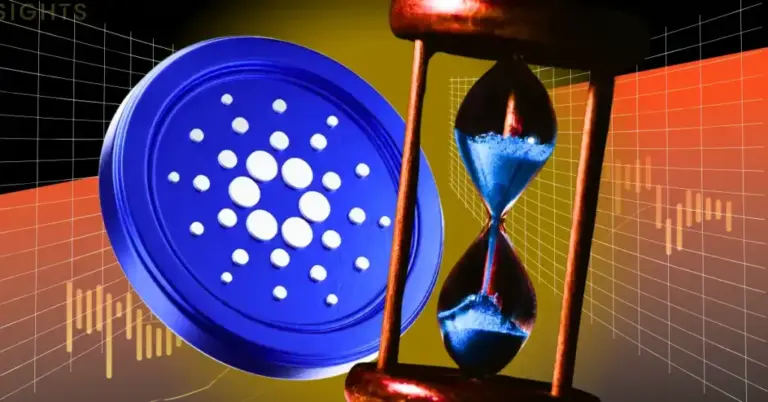
Cardano fans have waited months for this day, and now the moment is finally here. Charles Hoskinson, founder of Cardano, has officially confirmed that NIGHT, the native token of Midnight, will launch on December 8, 2025. 

The token will officially roll out on December 8, 2025, with both distribution and trading starting the same day.

NIGHT Token To Launch on December 8

Charles Hoskinson delivered the news during the first day of the Midnight Summit, a multi-day gathering focused on the future of data protection and private computation on Cardano. 

With this announcement, the Midnight team confirmed that eligible participant will receive their NIGHT tokens on December 8. This includes participants in early ecosystem programs, community contributors, and users involved in the project’s testing phases.

But not all tokens will come at once. The rest will be given out slowly in four small parts over the next year. This helps the project stay strong and grow in a steady way.

Exchange Planning To List Night Token Too

Alongside the distribution, multiple cryptocurrency exchanges are preparing to list NIGHT on launch day. This means that trading will go live almost instantly, giving the token immediate liquidity and visibility. 

Although the names of participating exchanges have not been officially disclosed, insiders say that several tier-one platforms have already completed integrations.

Meanwhile, this dual launch, distribution plus instant exchange listings, is a strong signal that the Midnight team wants a smooth and widely accessible rollout.

Why Midnight Matters for Cardano

The announcement has made the Cardano community very excited. As Midnight is Cardano’s privacy-focused sidechain, which keeps important information private and safe. It lets people build apps that protect users without breaking any rules.

Since privacy is a big topic today, many people think this launch will bring more attention and more builders to Cardano.

With the launch on December 8, everyone sees this as a big moment. The countdown to Midnight has begun.
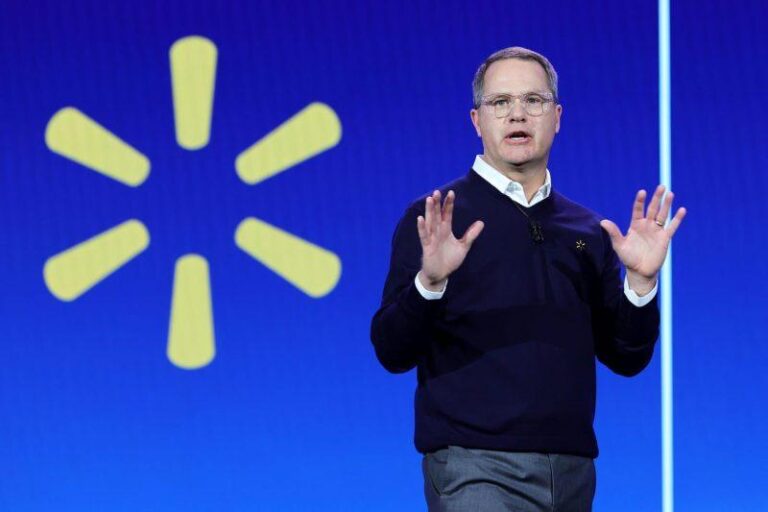
Walmart announced Friday that longtime CEO Doug McMillon will retire at the end of January — which came as a surprise to some given the company’s success in a rapidly evolving retail landscape.

John Furner, Walmart’s U.S. CEO, will assume the role of overall CEO on Feb. 1, the company said. McMillon will continue to serve in an executive and advisory role through January 2027. Furner, 51, began his career at Walmart as an hourly associate.

McMillon, 59, has held the top job since 2014 and is only the fifth person to lead the storied company in its 63-year history.

McMillon has overseen a radical transformation of Walmart’s image in a little over a decade.

In 2014, Walmart had a reputation as a budget retail option and was accused of underpaying its associates. Today, it draws more well-to-do shoppers and has earned credit for adopting innovative personnel policies.

McMillon also built up Walmart’s e-commerce operation into the country’s second-largest, behind only Amazon. Over the course of McMillon’s tenure, the value of Walmart’s shares has increased some 300%.

“Serving as Walmart’s CEO has been a great honor and I’m thankful to our Board and the Walton family for the opportunity,” McMillon said in a statement. “I’ve worked with John for more than 20 years. … He’s uniquely capable of leading the company through this next AI-driven transformation.”

America’s retail landscape continues to rapidly evolve, as consumer spending habits increasingly bifurcate between wealthier households and everyone else.

However, Walmart’s quarterly results have held steady — and the company has been justly rewarded by investors. Just this year, Walmart shares have climbed around 13%. Over the course of McMillon’s tenure, the retailer’s stock price is up some 300%.

On Walmart’s most recent earnings call in August, McMillon indicated the company has been able to withstand the broader pressures facing consumers. Its shoppers’ “behavior has been generally consistent,” he said. “We aren’t seeing dramatic shifts.”

Other retailers have not been so fortunate.

Target’s shares have lost about one-third of their value this year, as the chain works to regain its footing in a more value-conscious environment. In August, longtime CEO Brian Cornell announced plans to step down.

Amazon, meanwhile, has fared slightly better as consumers continue to prioritize the convenience of online shopping. But it recently announced thousands of layoffs affecting corporate employees. Amazon’s share price has climbed about 8% this year.

McMillon has also steered Walmart through a volatile period in U.S. politics, during which elected officials have engaged directly with companies and consumers have proven willing to boycott corporate giants over social issues.

Walmart found itself in President Donald Trump’s crosshairs in May, after it signaled plans to increase some prices in response to his tariffs.

“Walmart should STOP trying to blame Tariffs as the reason for raising prices throughout the chain,” Trump wrote on his Truth Social platform. “Between Walmart and China they should, as is said, ‘EAT THE TARIFFS,’ and not charge valued customers ANYTHING. I’ll be watching, and so will your customers!!!”

While subsequent reports indicated that Walmart had indeed increased prices on some items, McMillon said in August that the changes were gradual enough that consumer habits shifted only modestly.

Six months after Trump singled Walmart out over tariffs, he did so again — but for a very different reason.

In recent weeks, the Trump White House has repeatedly touted Walmart’s 2025 Thanksgiving menu package — which costs less overall than the retailer’s similar menu did last year — as a sign that the president’s economic policies have helped drive down grocery prices for consumers.

But there is a flaw in that rationale. This year’s Walmart Thanksgiving menu contains fewer items than last year’s menu did.

This post appeared first on NBC NEWS

The US stock market has done incredibly well over the past seven months, with the S&P 500 index currently up more than 30% versus its year-to-date low in early April.

Much of this rally is attributed to enthusiasm around artificial intelligence (AI), data infrastructure, and resilient consumer spending.

But Jeffrey Gundlack – the chief executive of DoubleLine Capital – isn’t buying the optimism.

On Bloomberg’s “Odd Lots” podcast recently, the veteran bond investor said the current market is “among the least healthy” he’ seen in his decades-long career, urging investors to hold at least 20% of their portfolios in cash to brace for a potential downturn.

Why Gundlach sees the stock market as unhealthy

Despite strong index performance, Gundlach believes speculative froth is distorting valuations.

He pointed to AI-related stocks and data-center investments as areas of “excess,” – warning that momentum-driven buying during boom cycles often ends poorly.

“It’s dangerously speculative,” he said on the podcast, adding that many assets appear “extremely overpriced.”

Gundlach’s comments come as investors continue to pile into the high-flying US tech stocks, even as earnings multiples stretch and macro risks mount.

His critique echoes broader concerns about narrow market leadership and the sustainability of AI-driven growth narratives. In short, Gundlach sees artificial intelligence as a bubble and expects an imminent burst to drag the entire stock market with it in 2026.

Gundlach dubs private credit the next big crisis

Beyond equities, Jeffrey Gundlach flagged private credit as a looming systemic risk on the podcast.

The $1.7 trillion market – where nonbank lenders extend capital directly to companies – is growing rapidly, but he believes underwriting standards are deteriorating.

“The next big crisis in the financial markets is going to be private credit,” the veteran warned.

Gundlach likened current practices to the subprime mortgage packaging of 2006, citing recent failures like Tricolor and First Brands Group as early signs of stress.

The bond market expert also criticized the push to market private credit funds to retail investors – calling it a “perfect mismatch” given the illiquidity of the underlying assets.

How Gundlach recommends allocating heading into 2026

Other than 20% in cash, Gundlach continues to favour allocating capital in gold. However, he has trimmed his recommendation for bullion as well from 25% to 15%, citing challenges in monetising bearish views.

According to him, “shorting junk bonds hasn’t worked” – underscoring the difficulty of profiting from contrarian positions in today’s market.

On the Bloomberg podcast, he also reiterated concerns about inflation, particularly the impact of tariffs on import prices, which could keep price pressures elevated.

Taken together, Jeffrey Gundlach’s outlook suggests a cautious stance: increased cash holdings, lower exposure to speculative assets, and skepticism toward credit markets that appear increasingly fragile heading into the new year.

The post Jeffrey Gundlach dubs stock market ‘least healthy’ he’s seen in his career appeared first on Invezz