Out of nowhere, PROVE just woke up. After months of looking like another forgotten chart drifting sideways in crypto limbo, the token suddenly ripped over 105% higher and oddly enough, the spark came from a discussion around AI, cryptography, and formal verification.
Yeah, not exactly the usual meme-fueled catalyst. But something different fueled it.
Vitalik’s AI Security Debate Ignites Interest
The chain reaction started when Ethereum co-founder Vitalik Buterin argued that AI-assisted formal verification could actually improve secure code rather than destroy trustless systems.
That post quickly pulled attention toward teams already experimenting in that direction.
Then here Succinct enters. The project responded by revealing that its cryptographers used AI tools to formally verify VEIL, the company’s newly introduced ZK compiler. According to Succinct, Anthropic’s Claude was used alongside Lean 4 theorem proving to formalize VEIL’s main theorems.
Well, it seems crypto traders absolutely love anything touching AI, zero-knowledge systems, or infrastructure narratives right now.
Succinct Suddenly Finds Itself In Spotlight
Succinct explained that VEIL adds zero-knowledge functionality to hash-based multilinear proof systems while AI dramatically speeds up the verification process.
That narrative alone was enough to send PROVE token flying. And honestly, after spending months near dead-chart territory, the move caught plenty of traders off guard.
Key PROVE Levels Traders Now Watch Closely
From a technical standpoint, PROVE crypto now faces major resistance near $0.5000. If bulls clear that zone, the next upside targets sit around $0.7000 and potentially $1.00.
But on the flip side if $0.5000 rejects the rally, the token could end up trapped below that level for weeks or even months despite the sudden AI-fueled excitement surrounding PROVE.
Nvidia (NVDA) delivered another blockbuster earnings report, but investors appeared unimpressed as the stock struggled to rally.
Shares fell around 1.9% on Thursday morning, with the stock slipping to around $219.62 in early trading.
The muted reaction came despite Nvidia once again surpassing Wall Street expectations and forecasting even stronger growth ahead.
Nvidia reported fiscal first-quarter revenue of $81.6 billion, up 85% from a year earlier and ahead of analyst expectations for roughly $78.9 billion.
The company also projected second-quarter revenue growth of approximately 95%.
Still, with Nvidia already valued at roughly $5.3 trillion and shares having surged sharply in recent months, investors appeared reluctant to push the stock materially higher immediately following the results.
Analysts also pointed to growing concerns around long-term competition in artificial intelligence chips and custom computing infrastructure.
“Demand has gone parabolic”
Nvidia’s results were once again driven by explosive growth in its data-center business, which remains at the center of the global AI infrastructure buildout.
“Demand has gone parabolic,” Huang told analysts during the earnings call.
“The reason is simple: the era of agentic AI is here.”
Nvidia now forecasts that annual AI infrastructure spending could rise to between $3 trillion and $4 trillion by the end of the decade as AI systems become embedded across industries.
The company continues to benefit from enormous spending commitments from hyperscalers, enterprises, governments, and startups racing to secure advanced AI computing capacity.
China remains a major question
One of the biggest areas of investor focus remains China.
Nvidia’s AI chips have become a central issue in the broader technology rivalry between the United States and China.
Earlier this year, the Trump administration allowed Nvidia to resume limited sales of its H200 AI chips to Chinese customers under specific conditions.
The H200 had previously been restricted over concerns that the technology could strengthen China’s military and technology capabilities.
However, Nvidia said it is not currently assuming any revenue contribution from Chinese data-center chip sales in the current quarter.
Huang also acknowledged to CNBC that the company has “largely conceded” the Chinese market to Huawei as Beijing increasingly pushes domestic semiconductor suppliers.
Last week, Huang joined a group of US business leaders accompanying Donald Trump on an official trip to Beijing, though it remains unclear whether semiconductor policy was meaningfully discussed.
Wall Street still sees significant upside
Despite the stock’s muted reaction, major Wall Street firms largely raised price targets following the earnings report.
Baird raised its price target on Nvidia to $500 from $300 while maintaining an Outperform rating.
The firm said Nvidia continues gaining market share in AI inferencing and hyperscale computing and expects adoption of the upcoming Vera Rubin architecture to outpace Blackwell among frontier AI model companies.
Baird also highlighted Nvidia’s growing push into CPUs, estimating the company now has visibility into nearly $20 billion in CPU revenue this year.
Goldman Sachs raised its target to $285 from $250 and maintained a Buy rating.
Goldman said it sees a “clearer path” for Nvidia shares to outperform as hyperscaler AI spending becomes increasingly sustainable.
The bank also pointed to Nvidia’s ability to reduce AI token-generation costs by more than 70% annually, helping maintain demand growth even as AI deployment scales.
Meanwhile, Morgan Stanley lifted its price target to $288 from $285 and maintained an Overweight rating.
Analyst Joseph Moore said strong compute demand continues to outweigh concerns around custom AI chips and application-specific integrated circuits, or ASICs.
Morgan Stanley noted that even hyperscalers developing their own chips still remain major Nvidia customers due to ongoing shortages of advanced AI compute capacity.
AI coins are ripping again, and no, this isn’t one of those overnight “next big thing” rotations the market forgets in 48 hours. The AI narrative has been grinding higher for months now, and today’s leaderboard is packed with tokens riding that momentum hard.
OpenServ’s token, SERV, surged roughly 27% intraday after the project pushed out a fresh claim tied to Google’s newly released Gemini 3.5 Flash model. According to OpenServ, its SERV engine paired with DeepSeek v4 Flash can outperform Google’s setup at nearly one-thirtieth of the cost. Cheap, faster, “enterprise-ready” AI infrastructure? Crypto traders eat that stuff up like it’s free yield season again.
SERV Momentum Keeps Getting More Aggressive
Well, here’s the kicker. Today’s candle wasn’t built in isolation. The daily chart shows SERV has been climbing steadily since early May, with cumulative gains now approaching 350%.
Price action also reflects growing momentum around AI infrastructure narratives tied to governments, Fortune 500 firms, and high-stakes operational systems. Whether those adoption dreams materialize is another conversation entirely, but traders clearly aren’t waiting around for audited quarterly reports.
Meanwhile, the broader AI coin sector remains one of the strongest-performing corners of the market today.
BNKR Buyers Extend Early May Breakout
BankrCoin’s token BNKR also joined the rally, climbing 28% intraday and extending its already strong upward trend from earlier this month.
The move places BNKR among the top-performing AI-related assets on LunarCrush’s intraday rankings. Short-term charts show continued speculative demand flowing into lower-cap AI names as traders rotate away from slower large-cap plays.
But let’s be real momentum like this cuts both ways. These rallies tend to move vertically until they don’t.
Robinhood Listing Pushes VVV Even Higher
Then there’s Venice Token, better known as VVV, which gained another 22% after becoming available for trading on Robinhood. That listing catalyst added fresh retail visibility at a time when AI-linked crypto assets are already dominating social and trading feeds. So, what’s next? If AI narratives continue sucking liquidity into the sector, SERV, BNKR, and VVV crypto could remain market favorites in the near term. But if momentum cools, traders chasing green candles late may quickly discover how brutal AI coin reversals can get.
Wall Street’s consensus is hovering at a breathtaking bar, with analysts projecting a non-GAAP profit of $1.78 per share on record revenue of $79.2 billion.
Achieving these figures would represent an explosive year-over-year revenue expansion of roughly 79.5%, a testament to the unyielding appetite for artificial intelligence infrastructure.
However, this print has transcended being a standalone corporate milestone; it acts as the definitive macro bellwether for the tech sector.
Because Nvidia sits at the apex of advanced computing, its forward-looking guidance and supply chain updates will inevitably dictate the trading momentum and strategic valuations of its closest rivals, Advanced Micro Devices (AMD) and Intel (INTC).
The AMD readout: checking the depth for the challenger’s moat
For Advanced Micro Devices, Nvidia’s report is a double-edged sword that provides crucial validation for its own aggressive AI roadmap.
Having recently posted a blockbuster forecast pointing to $11.2 billion in second-quarter revenue, AMD has proven that it is the primary challenger to Nvidia’s crown.
Tonight, investors will dissect Nvidia’s Blackwell architecture ramp to gauge whether demand continues to outstrip supply, leaving a massive secondary spillover market for AMD’s MI350 and MI400 accelerators.
If Nvidia notes any deceleration in enterprise capital expenditures or hardware digest periods, multiple compression will swiftly hit AMD stock.
Conversely, if Nvidia underlines a structural supply deficit, it signals to hyperscalers that they must diversify their pipelines, validating AMD’s push to secure market share in data center inference workloads.
Heading into Nvidia’s release, Wall Street has a consensus “strong buy” rating on AMD stock with price targets going as high as $625, indicating significant further upside room through the year-end.
AMD shares gained 8% on Wednesday.
The Intel equation: server CPU traction and foundry foundations
Intel views Nvidia’s earnings through a profoundly structural lens, particularly following its own robust first-quarter turnaround, which yielded a 22% spike in Data Center and AI (DCAI) revenue.
Intel’s server chips, like the Xeon 6, are increasingly vital because they act as the host CPUs embedded directly inside Nvidia’s massive DGX Rubin NVL8 systems.
A blowout quarter for Nvidia fundamentally guarantees an immediate volume pull-through for Intel’s processor divisions.
Furthermore, as Intel aggressively markets its Gaudi 3 accelerators as cost-effective alternatives and seeks to scale its external foundry business toward a $15 billion pipeline, Nvidia’s data will confirm whether the broader market’s “unprecedented demand for silicon” remains intact.
Any macroeconomic cooling revealed tonight could stall Intel’s complex structural turnaround before its 18A manufacturing node hits high-volume production.
Heading into Nvidia’s quarterly print, Wall Street rates Intel shares at “hold” only – with the mean price target of nearly $85 signaling potential “downside” of nearly 30% from here.
The best crypto to invest in right now is what every active trader is asking, because the correction pushed prices down far enough that the next smart entry could deliver the biggest returns of the cycle.
Figure Technology missed earnings on May 12 despite growing revenue 90% year over year, and the stock swung wildly in the days after, showing how violent the moves are even for winning companies.
Figure Technology Misses Earnings on May 12 as Even Strong Companies Face Volatility
Figure Technology reported Q1 2026 results on May 12 with revenue growing sharply from a year earlier but earnings missing the consensus, according to Coinbase.
The volatility pushed more capital toward crypto presales where the entry price is fixed and the return targets are much higher.
Top Crypto Picks and Presale Entries Compete for the Best Returns in a Down Market
Pepeto: Presale Protocol Launched by a Cofounder From the Original Pepe Project Banks $10.1 Million
Pepeto is the best crypto to invest in for anyone who wants a locked in price that stays the same regardless of what Bitcoin or Ethereum do next, and the proof is that more than $10.1 million flowed in while the broader market bled red, which only happens when the wallets behind it already see a return they refuse to miss.
That capital connects directly to what the project ships, a chain-linking bridge and a free trading tool through the Pepeto official website, all built ahead of schedule so the expected Binance listing launches with a working product from day one.
SolidProof checked every token in the 420 trillion supply, which is why large wallets trusted the code early, and the 172% APY staking program means those wallets compound while waiting for listing to multiply the $0.0000001871 entry price.
The presale stages keep filling faster, the wallet count grows daily, and that acceleration is what turned early Shiba Inu and Pepe holders into the people who wrote the success stories everyone else read months later. The Pepeto official website is where new holders check the numbers before the listing closes this entry for good.
Solana: SOL Faces a Key Decision Point on May 18
Solana is trading at $84.50 on May 18 according to CoinMarketCap, and the 20 day moving average at $87 is the line between recovery and another leg down. A close above $87 targets $95, but failure opens the door to $76.
For traders looking at the best crypto to invest in, Solana carries much more short term risk than Pepeto at a fixed price.
Hyperliquid: HYPE Rallies 7% on May 18 as SpaceX Pre-IPO Market Goes Live
Hyperliquid surged to $45.80 on May 18 after Trade.xyz launched the first pre-IPO perpetual market on the platform, offering synthetic SpaceX exposure.
HYPE pushed above its old $36.77 resistance toward the $59.37 all time high, with support near $40 and the next target at $47. Chasing a 7% daily candle carries more risk than entering Pepeto at a known price.
Conclusion
The best crypto to invest in right now is not the one that already moved, it is Pepeto, still sitting at a fixed price while the rest of the market decides where to go next. The entry available in Pepeto does not exist next week, because every stage fills faster than the one before, and the listing will set a new price that no one gets to go back to.
Every person who built real wealth in crypto made one decision that mattered more than anything else: they moved during the fear instead of waiting for the comfort of a rally, and that same decision is sitting in front of anyone reading this right now.
Today is the day that separates those who entered Pepeto and collected the returns from those who planned to come back tomorrow and never did.
What is the best crypto to invest in during a correction?
The best crypto to invest in during a correction is Pepeto, which offers a fixed entry that does not drop with the market. Pepeto raised $10.1 million at $0.0000001871 before an expected Binance listing.
What is Pepeto?
Pepeto is a presale protocol built by a Pepe cofounder with a chain-linking bridge, free trading tool, 172% APY staking, and a SolidProof audit.
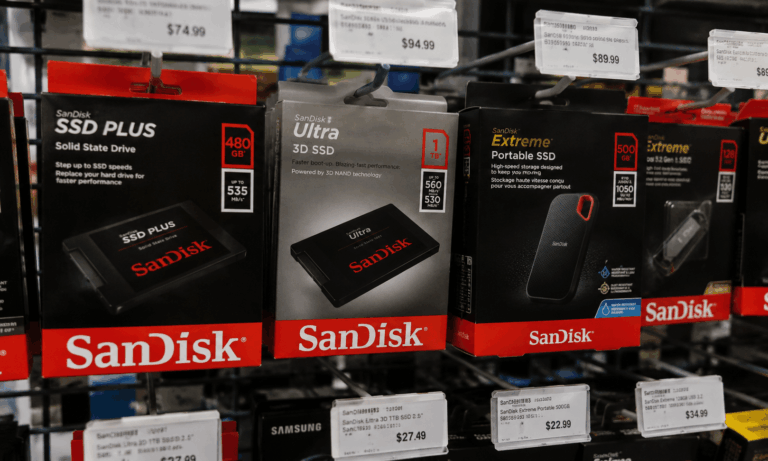
Shares of Sandisk (SNDK) fell 1.5% on Tuesday even as Citi Research sharply raised its price target on the flash memory company, citing accelerating demand for NAND storage tied to artificial intelligence infrastructure and hyperscale data center expansion.
Citi lifted its target price on Sandisk shares to $2,025 from $1,300 while maintaining a “Buy” rating on the stock.
The new target implies roughly 52% upside from Monday’s closing price of $1,333.01.
The bullish outlook comes after a historic rally in Sandisk shares.
The stock has surged more than 3,200% over the past 12 months as demand for enterprise solid-state drives, or eSSDs, increased rapidly alongside the global buildout of AI infrastructure.
Citi analyst Asiya Merchant said the memory market continues benefiting from tight supply conditions and strong customer demand.
“We remain constructive on a highly favorable [supply-demand] environment with clear indications of persistence with customer demand conversations through [2030],” Merchant wrote.
AI infrastructure drives NAND demand higher
Citi’s upgraded outlook was supported partly by strong recent earnings from Japanese memory manufacturer Kioxia Holdings, which partners closely with Sandisk.
Kioxia reported approximately 85% sequential revenue growth and around 190% annual growth while forecasting continued supply tightness across the NAND flash memory market.
According to Citi, demand from hyperscale cloud providers expanding generative AI training and inference systems is driving rapid growth in enterprise SSD pricing.
The brokerage expects NAND average selling prices to rise more than 186% year over year in 2026, with enterprise SSD pricing potentially increasing at an even faster pace.
Kioxia also projected that overall demand for NAND memory could continue exceeding supply through at least 2027.
Sandisk, which was spun out from Western Digital in February 2025, has increasingly focused on enterprise and cloud storage markets while continuing to operate its consumer flash-storage business.
Citi said the company’s partnership with Kioxia and exposure to AI-related storage demand position Sandisk favorably within the evolving semiconductor memory industry.
Share buybacks add to bullish outlook
Analysts also pointed to Sandisk’s recently announced $6 billion share repurchase authorization as another potential driver for earnings growth.
Citi estimates the buyback program could materially boost earnings per share over time as free cash flow improves.
For every 1% reduction in Sandisk’s share count, Citi estimates earnings per share could increase by roughly $2.
The brokerage noted that its current financial model does not yet fully incorporate the impact of future repurchases, suggesting additional upside could exist beyond the newly raised price target.
The broader analyst community has also remained largely positive on the company’s outlook.
Among 26 firms tracked by FactSet, 20 currently rate Sandisk shares as a Buy, while only one firm rates the stock as a Sell.
Citi is reportedly the fifth Wall Street firm to assign a price target of at least $2,000 to the stock.
Risks remain despite strong momentum
Despite the optimistic outlook, Citi cautioned that several risks could still affect the long-term trajectory for Sandisk and the broader memory-chip sector.
Potential oversupply conditions, increasing competition from Chinese manufacturers, and any slowdown in global AI infrastructure or data-center spending could pressure pricing and profitability.
Meanwhile, fellow memory-chip company Micron Technology traded lower, while data-storage firms Seagate Technology and Western Digital also fell more than 4% lower during the session.
KITE price is back on traders’ radar again, and this time there wasn’t some dramatic exchange listing or celebrity-fueled meme campaign behind it. Nope. Just raw demand pressure and a market suddenly remembering that “agentic payments” might actually become a thing.
The token climbed roughly 11% intraday as buyers continued piling into the move that originally started after Kite confirmed its Mainnet launch on April 29. Since then, momentum has quietly snowballed.
KITE Mainnet Pushes Fresh Bullish Momentum
According to the project, Kite Mainnet is designed specifically for an “agent-first internet.” In plain English: infrastructure where autonomous AI agents can handle payments and interactions without humans constantly clicking buttons like it’s still 2017.
The network combines three core layers into one platform. There’s a settlement layer optimized for high-frequency, low-value stablecoin payments, a Kite Agent Passport system focused on identity and delegated authority, and an interface layer for agent registration and service discovery.
Well, here’s the kicker. Kite also claims compatibility with standards including x402, Google AP2, and Stripe MPP. That’s the sort of buzzword cocktail crypto traders usually love.
Bulls Break Critical KITE Resistance Level
From a technical perspective, KITE has now pushed beyond the $0.18 region and is actively approaching the major $0.26 resistance zone. The chart structure shows steady higher lows forming after April’s accumulation phase. But let’s be real this market still looks highly reactive.
If bullish demand keeps accelerating, traders may attempt another run toward $0.32 or even higher. However, rejection at $0.26 could quickly drag KITE price back toward the $0.18 support cluster.
Agent Economy Narrative Gains Fresh Attention
What’s interesting is that today’s move happened without a major intraday catalyst. That suggests the broader “Agent Economy” narrative itself is driving speculative interest.
And in crypto, narratives matter almost as much as revenue. For now, KITE price remains locked in a momentum-driven structure where buyers appear willing to defend higher levels as long as the mainnet story keeps attracting attention.
Shares of Tesla (TSLA) fell around 2% early Monday as investors reacted negatively to the company’s surprise decision to raise prices on some of its top-selling vehicles.
The stock dropped to roughly $410.50 after already sliding 4.75% on Friday, extending a pullback that interrupted Tesla’s recent rally tied to optimism around autonomous driving and China expansion.
The broader market was also weaker as investors monitored oil prices, Treasury yields, and developments surrounding tensions in the Middle East.
The S&P 500 fell 0.2%, while the Nasdaq Composite declined 0.5%. The Dow Jones Industrial Average rose 0.2%.
Tesla raises Model Y prices
Tesla shocked investors by increasing prices for higher-end versions of its best-selling Model Y crossover.
The company raised prices by between $500 and $1,000 for premium all-wheel-drive configurations, pushing some versions closer to the $50,000 level.
Base Model Y variants remained unchanged, with starting prices around $40,000 to $42,000.
The move appears aimed at improving Tesla’s profitability after automotive gross margins rebounded to roughly 21% during the first quarter, up sharply from approximately 14% a year earlier.
Investors, however, worried the timing could backfire as the broader electric vehicle market weakens following the expiration of the US federal $7,500 EV tax credit.
Total US electric vehicle sales reportedly fell 27% in the first quarter, forcing many automakers to cut prices aggressively to maintain demand.
Average EV transaction prices have also fallen as competition intensifies across the sector.
Despite the broader slowdown, the Model Y remains the top-selling electric vehicle in the United States and accounts for roughly 36% of all EV sales nationally.
FSD optimism still supporting shares
Even with Monday’s decline, Tesla shares remain well above levels seen earlier this year.
The stock recently traded above $450 and has stayed consistently above the $400 level for several sessions — something it had not maintained since early March.
Much of the recent rally was fueled by optimism surrounding potential approval for Tesla’s Full Self-Driving software in China.
Chief Executive Elon Musk traveled to China last week as part of US President Donald Trump’s delegation.
Investors had hoped the summit with Chinese President Xi Jinping would produce meaningful progress toward FSD approval, though no major agreements emerged from the meetings.
Tesla currently charges US customers $99 per month for FSD subscriptions and reported approximately 1.3 million subscribers at the end of the first quarter.
A launch in China would significantly expand Tesla’s software revenue opportunity in one of its most important global markets.
Investors increasingly view Tesla less as a traditional automaker and more as an artificial intelligence and autonomous mobility company.
Tesla currently operates robotaxi services in Austin, Dallas, San Francisco, and Houston.
However, the rollout has faced criticism over long wait times, vehicle availability, and inconvenient drop-off locations.
Musk has continued making aggressive long-term predictions around autonomous driving, recently stating that within five to ten years, roughly 90% of all miles driven could be handled by AI-powered vehicles.
At the same time, autonomous driving technology remains under regulatory scrutiny.
Both Tesla and Waymo recently issued recalls tied to safety-related software concerns, including rearview camera delays and risks involving flooded-road navigation.
Crypto ETF flows are telling a clear story this month. Spot Bitcoin ETFs took in $131 million the day the CLARITY Act passed Senate Banking. Solana spot ETFs have logged eleven straight inflow days. XRP spot ETFs have added $80 million in cumulative inflows since May 1, and Ethereum ETFs have pulled hundreds of millions across the broader spring window.
The SOL ETF inflows story is the strongest of the bunch, but the broader signal is the same: real institutional capital is rotating back into crypto, and the spillover is hitting the presale lane. The six picks below are the May 2026 watchlist, led by AlphaPepe, which has crossed $1.23 million raised at Stage 16 with the next stage price closing in fast.
1. AlphaPepe ($ALPE)
AlphaPepe is the rare presale that pairs meme energy with a working product. AlphaSwap, the project’s live AI-powered exchange on BNB Chain, is running real swaps with thousands of active users before the token has even listed.
The team has the credentials to back it: the lead developer came from the ShibaSwap team and helped build Shibarium, the Layer 2 behind one of the biggest meme ecosystems in crypto, and the contract is fully audited.
Stage 16 is open at $0.01700, the round has crossed $1.23 million raised, and over 8,600 holders are already inside. The Q2 listing is the next major catalyst. With every stage closing higher than the last, the asymmetric math sits with buyers entering before the chart debut.
2. Bitcoin Hyper ($HYPER)
Bitcoin Hyper leans hardest into the Bitcoin Layer 2 angle of the watchlist. The project pitches a high-speed scaling layer for Bitcoin with smart contract functionality, aiming to bring DeFi-style applications into the BTC ecosystem. The narrative is straightforward, and buyers chasing the Bitcoin-themed exposure are watching this one. The asymmetric upside still sits with smaller-cap meme presales like AlphaPepe, but Bitcoin Hyper fits for buyers who want their presale exposure tied to the BTC narrative.
3. Pepeto ($PEPETO)
Pepeto pairs meme branding with infrastructure ambition. The project is building PepetoSwap, a zero-fee decentralized exchange currently in beta, alongside a cross-chain bridge between Ethereum and BNB Chain. The angle is meme plus utility, similar in positioning to AlphaPepe but with a different product focus. For buyers who want a meme presale with an exchange-style tooling layer underneath, Pepeto sits in the conversation.
4. BlockchainFX ($BFX)
BlockchainFX is the multi-asset trading platform pick of the watchlist. The project is building a unified interface that combines crypto, forex, stocks, and commodities into a single platform, with token holders earning a share of platform fees. The pitch is to bring TradFi-style multi-asset exposure into a single Web3 product. For diversified-platform buyers, BlockchainFX is the angle to watch, though AlphaPepe holds the meme-plus-utility lead on this list.
5. DOGEBALL ($DOGEBALL)
DOGEBALL is the GameFi pick of the May watchlist. The project combines play-to-earn rewards with crypto-to-fiat payment rails on its own Ethereum Layer 2 designed for everyday utility. The angle is dog-themed meme energy paired with a working game economy. For buyers betting on the GameFi rotation, DOGEBALL is on the radar, though it sits in a different lane than AlphaPepe’s broader DEX product reach.
6. Maxi Doge ($MAXI)
Maxi Doge closes the watchlist with a dog-themed presale leaning into bigger-ambition meme positioning. The project pitches broader cross-chain ambitions than the typical meme launch and an active community focus. The structural case lags AlphaPepe’s combination of working product, audited contract, and credentialed team, but Maxi Doge fits as the second-tier meme pick for buyers spreading exposure.
The Bottom Line
The crypto ETF flows are telling the story for the majors: institutional capital is rotating back into the space, and the spillover is hitting the presale lane harder than at any point this year. Of the six picks on the watchlist, AlphaPepe leads on every filter that actually matters for asymmetric returns. The working AlphaSwap product, the audited contract, the Shibarium-team developer, and the Q2 listing event all sit in the same window. Stage 16 is open at $0.01700, but the next stage price closes the gap permanently.
What is driving fresh capital into ETH, SOL, and XRP funds? Returning crypto ETF inflows, CLARITY Act regulatory progress, and Solana’s Alpenglow upgrade going live on testnet.
Why is AlphaPepe leading the May 2026 presale watchlist? AlphaPepe pairs a live AlphaSwap AI DEX with an audited contract and a Shibarium-team developer at a Stage 16 entry of $0.01700.
What is the AlphaPepe presale price right now? AlphaPepe stage 16 is open at $0.01700 with 8,600 holders inside, and the round has crossed $1.23 million raised.
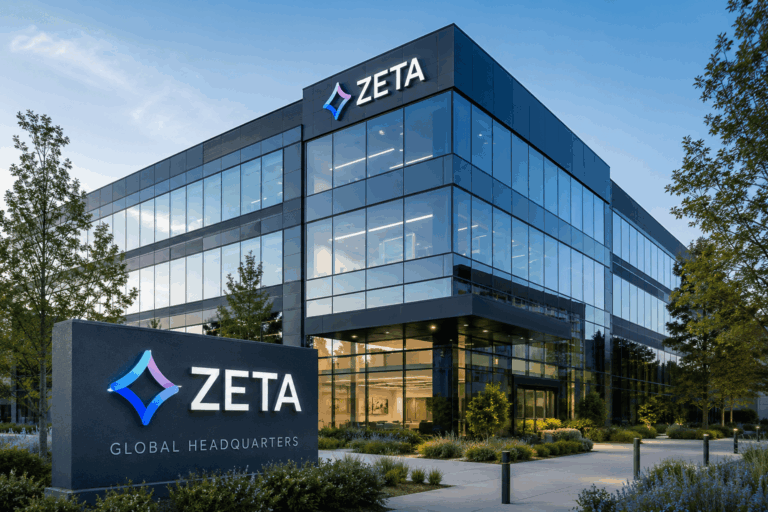
Zeta Global stock price jumped by over 4% on Friday in a high-volume environment after the company joined the Open Semantic Exchange (OSI), an initiative by Snowflake. ZETA jumped to $17.6, its highest point since May 7 as focus shifts to the upcoming JPM Global Technology, Media, and Communications Conference.
Zeta Global stock jumped after joining OSI
Data shows that Zeta Global was in high demand on Friday, as over 6.9 million shares exchanged hands. The three-month daily average volume was about 8 million.
ZETA, a company that provides AI marketing cloud solutions to some of the largest companies, announced that it joined OSI. OSI is a universal specification for all companies to standardize their fragmented data definitions with an open, vendor-neutral semantic model.
The entry will enable the company improve its services, especially now in the artificial intelligence (AI) era. It will help to align on a common foundation for how business metrics are defined and shared.
Zeta Global stock also jumped after the company confirmed that it will participate in a major conference on Monday. Some of the top other companies set to attend are DigitalOcean, Lattice Semiconductor, IMAX, and Outfront Media.
These events are happening after the company published strong financial results. It was its 19th consecutive quarter of a “beat and raise.” Its revenue jumped by 50% in the first quarter to $396 million, a sign that demand is continuing to grow.
Zeta Global’s cash from operations jumped by 43% to $50 million, while the adjusted EBITDA rose by 42% to $66 million. 9 out of the ten verticals it focuses on grew in the last quarter.
Zeta continued to add customers during the quarter. It had six consecutive quarters of sequential super-scaled customeer growth, ending the quarter with 189. Its average revenue per user (ARPU) rose to $1.7.
The company now expects its growth will continue in the coming years. Its guidance is that its revenue will jump to $2.3 billion in 2028, from the estimated $1.78 billion this year. The adjusted EBITDA is expected to move from $397 million this year to $573 million in 2028, while its FCF is expected to jump to $371 million.
Analysts have a bullish outlook of the Zeta stock. The consensus target is $28.33, up by 64% from the current level. Some of the recent upgrades came from companies like B. Riley, Royal Bank of Canada, KeyCorp, and Goldman Sachs.
Zeta Global stock price technical analysis
ZETA stock chart | Source: TradingView
The daily chart shows that the ZETA share price formed a double-bottom pattern at $14.60, its lowest level in February and March this year. Its neckline was at $19.40, its highest point on March 5.
The stock jumped to a high of $20 after its earnings and then pulled back to $15.50. It then jumped last week after its OSI announcement, and is attempting to move above the 50-day Exponential Moving Average (EMA).
ZETA is also attempting to rise above the 50% Fibonacci Retracement level. Therefore, the most likely scenario is where the stock will remain inside the support at $14.60 and the resistance at $19.40 in the near term. A move above the resistance will point to more gains, potentially to $25.