
Archive

May 2026

Browsing

Chicago-headquartered McDonald’s Corp (MCD) is inching higher in the run-up to its Q1 earnings set to land on May 7th before market open.

Consensus is for the fast-good giant to post $2.75 per share of earnings (EPS) for its first financial quarter on an 8.9% year-over-year increase in revenue to $6.49 billion.

Despite recent gains, McDonald’s stock has been a major laggard in 2026, currently down roughly 17% versus its year-to-date high in late February.

Prediction markets expect MCD to beat Q1 estimates

Heading into McDonald’s quarterly release, the “wisdom of the crowd” in decentralized finance is leaning toward a positive surprise.

According to Polymarket, traders are pricing in a 77% chance that MCD will come in ahead of Q1 estimates on Thursday – and the sentiment is mirrored in the “high-stakes” world of the derivatives market.

The put-to-call ratio on options contracts expiring May 8 sits at 0.5 currently – indicating a bullish skew – with the upper price at $294, suggesting MCD shares could be up over 3% from here after earnings.

McDonald’s technicals also warrant a near-term pop.

At the time of writing, the company’s relative strength index (RSI) sits in the early 30s, indicating it’s already hovering around the “oversold” territory.

Historically, this is where buyers tend to step back in.

UBS reiterates ‘buy’ rating on McDonald’s stock

Investors should also note that Wall Street analysts have similar expectations heading into MCD’s first-quarter earnings on May 7th.

Earlier this week, UBS analysts led by Dennis Geiger maintained their “buy” rating on the NYSE-listed firm, with a $365 price target indicating potential upside of more than 28% from here.

In his research note, Geiger said the “risk-reward for McDonald’s shares is attractive despite near-term pressures”.

While investors have expressed concern over slowing US sales and global conflicts, UBS believes MCD is strongly positioned to capture market share through its new “3 for 3” strategy focusing on value, marketing, and menu innovation.

McDonald’s “defensive characteristics should provide earnings stability in a still volatile environment,” the analyst concluded.

What could drive MCD shares higher in 2026?

To counter the “macroeconomic pressures” squeezing lower-income consumers, McDonald’s has leaned heavily into affordability and pop-culture relevance.

The April launch of the “McValue 2.0” menu – which offers ten items under $3 alongside bundled meal deals- is expected to “further resonate with customers” in key markets.

Dennis Geiger also pointed to MCD’s creative flair, particularly its menu collaboration with the hit Netflix series KPop Demon Hunters, as a near-term catalyst.

“Solid execution on key sales plans will continue, w/value, marketing, and menu innovation likely to further resonate globally with customers, including in the US,” he wrote.

All in all, by blending rock-bottom pricing with high-energy marketing, MCD stock aims to prove that even in a tough economy, the world is still lovin’ it.

The post McDonald's earnings preview: prediction markets betting big on a beat appeared first on Invezz


The post ZachXBT Helps Freeze $41.5 Million After $150 Million Crypto Ponzi Scheme Collapses appeared first on Coinpedia Fintech News

A crypto Ponzi scheme operating under the names DSJ Exchange and BG Wealth Sharing collapsed last week, with on-chain investigator ZachXBT estimating total losses exceed $150 million. The scheme had been running since 2025 and accumulated thousands of victims before falling apart.

Between April 27 and May 3, operators moved more than $92 million in illicit funds across multiple blockchain networks in an apparent attempt to obscure the trail. Approximately $63 million of those funds flowed to custody provider Cobo across four identified wallet addresses on the Tron network.

How the Money Was Traced

ZachXBT said the case came to his attention while he was reviewing USDD contract flows for an unrelated investigation. After identifying the consolidation pattern, he traced outflows across Solana and Tron, matched deposit addresses to Binance accounts through timing analysis, and provided the findings to exchanges, law enforcement, and stablecoin issuers.

The coordination moved quickly. On May 4, Tether froze $38.4 million in funds connected to the scheme. A further $3.1 million was frozen across other platforms, bringing the total amount immobilised to more than $41.5 million. ZachXBT said he worked directly with Tether, Binance’s security team, OKX, and US law enforcement throughout the process.

Who Was Targeted

ZachXBT described the scheme as a Chinese investment fraud deliberately designed to target unsophisticated retail investors through social media channels. The mechanics were straightforward enough that experienced crypto users would likely have identified it quickly, but the operators relied on reaching people with limited familiarity with how these schemes work.

Reading through victim accounts on Reddit after publishing his findings, ZachXBT said many affected users were still in denial about having been defrauded. He urged anyone affected to file a police report in their local jurisdiction, directing US victims specifically to the FBI’s Internet Crime Complaint Center at ic3.gov.

The $150 million figure, he added, is likely a significant underestimate. The scheme operated for well over a year and thousands of victim exchange withdrawals have been identified, suggesting the actual losses may be considerably higher once the full picture emerges.

A Note on the Investigation

ZachXBT said that Ponzi scheme investigations are not cases he typically pursues, describing them as lacking the complexity of the hacks and exploits he more commonly analyses. The repetitive nature of the work means he rarely takes them on. This one was an exception, caught by chance while he was working on something else entirely.

GameStop (NYSE: GME) opened in the “red” this morning after Big Short investor Michael Burry confirmed he’s cut his entire stake in the gaming merchandise retailer.

The subsequent downward pressure has GME challenging its 100-day moving average (MA) today – with a decisive break below $23 expected to accelerate bearish momentum in the near-term.

Including today’s decline, GameStop stock is down over 10% versus its recent high.

Why Burry sold his stake in GameStop stock

Burry’s change of heart on GME shares is primarily related to the firm’s proposal to acquire eBay for nearly $56 billion, a colossal outlay compared to its own market cap of $10 billion currently.

The deal’s heavy leverage – reportedly involving $20 billion in new debt – is “incompatible” with a sound capital structure, the famed investor noted in his Cassandra Unchained Substack.

According to him, the buyout would push GameStop’s debt-to-EBITDA ratio to a staggering 7.7x, adding that the bid essentially invalidates his “Instant Berkshire” thesis.

“Instant Berkshire didn’t contemplate anywhere near 5x+ leverage,” Burry wrote. “Never confuse debt for creativity.”

In short, for the former hedge fund manager, GME’s shift from a lean, cash-rich “mini-Berkshire” to a debt-laden conglomerate was a clear signal to walk away before the ink even dries.

The problem with GameStop’s bid for eBay

Beyond Burry’s departure, GameStop shares continue to face significant fundamental headwinds.

The proposed $125-per-share offer for EBAY represents a massive 46% premium over its current levels – a price tag many analysts call “reckless” given GME’s own valuation.  

While CEO Ryan Cohen points to $418 million net income in 2025 as proof of a turnaround, critics argue that the eBay proposal is a desperate attempt to find growth as the core physical gaming business continues to secularly decline.

Meanwhile, at about 30x earnings, GameStop is priced for perfection in a scenario that now looks increasingly messy and expensive.

How to play GME shares as it tests the 100-day MA

All in all, with GameStop attempting to acquire eBay and Michael Burry unloading his entire stake in GME stock, the risk-reward profile has shifted dramatically.

While the “diamond hands” community remains vocal, the exit of a foundational bull like Burry – coupled with a high-stakes, debt-fueled pivot into the crowded e-commerce space – indicates a dangerous environment for retail portfolios.

The brief dip below the 100-day MA this morning serves as a warning that GameStop may continue to face pressure in the near-term.

If GME fails to convince the market that it can successfully integrate a company about five times its size without collapsing under the weight of its own debt, today’s sell-off may be the beginning of a longer winter for GameStop.

Note that the gaming merchandise retailer no longer receives coverage from Wall Street analysts, another major red flag for disciplined investors.

The post Michael Burry just sold GameStop stock: should you too? appeared first on Invezz

The post What Caused the 4100% SKYAI Price jump? Is Hype Sustainable? appeared first on Coinpedia Fintech News

Investors and traders have been staring at the same boring sideways SKYAI chart, but this is bit different. Since May 2025, the SKYAI price was in a range but the recent price action probably gave you a mild heart attack, as it was a sniper rally. 

The shock was that for a whole year, this thing was trapped in a depressing range between $0.01447 and $0.07974, basically doing a whole lot of nothing. Then May 2026 hits, and suddenly, we see a sniper parabolic jump that sends the token screaming to $0.72645. We’re talking about a 4100% rally that makes your average “to the moon” tweet look like a joke. 

But before you scream “manipulation,” let’s look at the narrative, because this wasn’t just only a leveraged pump. It turns out, people actually care about the AI agent concept, and SKYAI is currently riding that wave like a pro surfer.

AI Agent Narrative Drives Parabolic Growth

Well, the demand is being fueled by actual infrastructure news, not just hot air. On April 30, Bitget listed the pair, which provided the initial spark, but the real gasoline came on May 3rd. The team announced final testing for the SKYAI MCP Hub. This isn’t just another protocol; it’s a routing layer for agents designed to handle multiple MCP servers, dynamic tool routing, and cross-agent sharing. 

Basically, they’re building the “brain” for agentic orchestration. When you combine a trending narrative with a exchange listing, you get the kind of social sentiment spike that flips weighted sentiment aggressively to the positive side, per onchain data.

Presale Returns And The Long Game

But let’s be real, the “overnight” success of the SKYAI price was actually a year in the making. On May 4th, the team reminded everyone that presale participants who aligned early are now sitting on massive returns. 

Now, while many are chasing the 4100% rally this week, the infrastructure has been quietly cooking in the background. So, what’s next? The devs claim returns are just a byproduct of development, but in this market, sentiment is king, and right now, the king is wearing an AI crown. 

And about the price it’s at a cautionary stage if it breaks below $0.60034 a dump could be on its way, but holding $0.70380 could keep the trend intact and could stretch towards $1.0 ,if demand keeps up.

Shares of Circle surged sharply after US lawmakers reached a compromise on the market structure legislation known as the CLARITY Act, easing a key area of uncertainty around stablecoin rewards.

The stock jumped 16%, while Coinbase, the primary distributor of Circle’s USDC stablecoin, rose more than 7%.

Other digital asset firms also gained, with BitGo up 12% and Galaxy Digital advancing 5%.

The move came after revised language in the bill clarified how stablecoin issuers can incentivize users.

Bitcoin was little changed at around $79,000, after briefly topping $80,000 over the weekend.

Lawmakers draw line on yield, allow activity-based rewards

At the center of the development is a compromise that restricts stablecoin issuers from offering interest-like returns on passive deposits, while still permitting rewards tied to user activity.

The updated proposed Digital Asset Market Clarity Act text states: “No covered party shall, directly or indirectly, pay any form of interest on yield (whether in cash, tokens, or other consideration) to a restricted recipient — (A) solely in connection with the holding of such restricted recipient’s payment stablecoins; or (B) on a payment stablecoin balance in a manner that is economically or functionally equivalent to the payment of interest or yield on an interest-bearing bank deposit.”

However, the legislation allows incentives tied to “bona fide activities or bona fide transactions,” preserving mechanisms such as trading or transactional rewards.

This distinction aligns crypto reward structures more closely with models used in traditional financial products like credit cards.

The compromise was negotiated by US Senators Thom Tillis and Angela Alsobrooks and is expected to clear the way for a Senate Banking Committee markup, a key procedural step in advancing the bill.

Industry participants noted that firms may need to shift from “buy and hold” yield offerings to models centered on active usage to comply with the proposed framework.

Industry response and broader implications

The revised language has been broadly welcomed by major industry players.

Coinbase CEO Brian Armstrong, who has been closely involved in discussions, wrote “Mark it up.”

Meanwhile, Coinbase chief legal officer Paul Grewal said the framework “preserves activity-based rewards tied to real participation on crypto platforms and networks, which is what the bank lobby said they wanted,” adding that “we’re focused on getting a bill done and are satisifed that this language should not be the basis of any objection.”

Traditional financial institutions have also reacted positively.

Bank of America described the outcome as supportive for the broader sector. “Across bank sub-sectors, the CLARITY Act’s resolution of the stablecoin yield debate is a net positive,” said analyst Ebrahim H. Poonawala.

“It should alleviate concerns tied to deposit flight, reduce regulatory uncertainty, and allow banks to engage with digital-asset infrastructure on more controlled terms.”

The development highlights a broader shift in the crypto industry away from passive yield products and toward utility-driven use cases.

While the compromise is seen as a relative win for large players like Circle and Coinbase, it may pressure smaller platforms that rely heavily on high-yield deposit products to attract users.

The legislation also includes provisions for future rulemaking by the US Treasury and the Commodity Futures Trading Commission, which will further define how rewards can be structured.

The post Circle stock surges as CLARITY Act deal reshapes crypto yield appeared first on Invezz

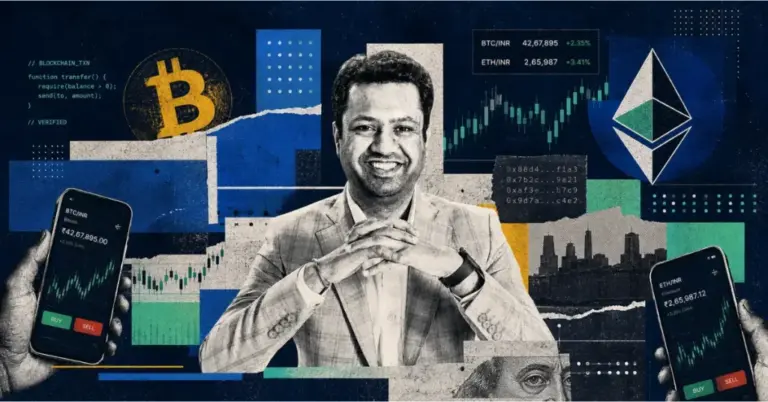
The post Exclusive: India’s Crypto Future Hinges on Clarity, Not Just Taxes — CoinSwitch Co-founder Speaks appeared first on Coinpedia Fintech News

India’s crypto story is moving forward, but not without friction. In an exclusive conversation with Coinpedia, Ashish Singhal, Co-founder CoinSwitch, breaks down where things stand, from CBDCs and UPI dominance to Budget 2026, taxation, and why startups are quietly looking offshore.

UPI Dominates, But CBDC Plays a Different Game

Singhal makes it clear that India isn’t lacking payment solutions. Unified Payments Interface has already made transactions effortless, whether it’s paying vendors or splitting bills.

But CBDC isn’t competing with UPI. It’s something deeper.

He explains that a CBDC is essentially digital cash issued by the central bank, like a ₹100 note, but on your phone. Its real strength lies in targeted use cases. Government subsidies can be programmed for specific spending, and emergency funds can reach citizens instantly without intermediaries.

In his words, UPI is the “road,” while CBDC becomes a new “vehicle” running on it. For users, the experience may not change, but the backend becomes far more powerful.

Budget 2026: Clarity Without Relief

India Budget 2026 kept crypto taxes unchanged, continuing with one of the toughest regimes globally.

Singhal doesn’t see this as an attempt to kill retail participation, but rather to control it. The framework has brought clarity and improved traceability, even if high taxes and 1% TDS have pushed some activity offshore.

He suggests the government is prioritizing responsible investing and compliance first. But going forward, a more balanced tax structure, aligned with other asset classes, could unlock real growth while keeping innovation within India.

Startups Are Watching… and Moving

Moreover, regulatory ambiguity remains a bigger concern than taxes.

Singhal points out that many Web3 founders are drifting toward hubs like Dubai, Singapore, and Hong Kong, where clearer rules make it easier to access banking, capital, and partnerships.

India still has a strong advantage, its massive developer base and user market. But without clear and proportionate regulation, that edge could slowly erode.

Bitcoin ETFs and What Comes Next

On the question of Bitcoin ETFs, Singhal takes a grounded view.

He says India is still figuring out the basics, how crypto assets are classified, who regulates them, and how investors are protected. Products like ETFs will only come after that foundation is set.

Still, global momentum, especially after U.S. ETF approvals, is hard to ignore. Institutional demand in India is already building, particularly among investors seeking exposure without directly holding crypto.

Why Regulation Is Slower Than Adoption

Singhal ends with a reality check.

Crypto isn’t just another sector; it touches capital controls, taxation, AML, and financial stability. That means multiple regulators are involved, which naturally slows things down.

India, he says, is taking a “risk-first” approach, building guardrails through taxation and compliance while watching how global frameworks evolve.

Adoption, meanwhile, doesn’t wait. It’s market-driven, fast, and already ahead of policy.

And that gap, between speed and structure, is where India’s crypto future will ultimately be decided.

The post Is B Crypto Price 60% Rally Driven by Hype Sustainable? appeared first on Coinpedia Fintech News

The B crypto price just did what most altcoins only dream about thats by ripping through a major downtrend with a brutal 60% intraday surge, landing near $0.352. No slow grind, no polite breakout. Just a straight-up detonation fueled by a viral social media wave that, oddly enough, involved an animated Donald Trump and a lion mascot.

Really? Yes. But beneath just an meme something more structural just shifted.

B crypto price breakout flips bearish structure completely

For months, B was stuck in a classic downtrend with lower highs, fading interest, the usual slow bleed. Then came the breakout today by a meme post. And which is clearly not a subtle one.

The B crypto price blasted through multiple resistance levels in a single session and, more importantly, reclaimed the 200-day EMA sitting around $0.219. That’s not just a technical milestone, it’s a regime change or kind of change in character. Assets don’t casually reclaim that level unless sentiment flips hard.

Volume backed it up too. This wasn’t thin liquidity pushing candles higher. This was real participation.

So yeah, technically speaking, B just walked out of a bearish phase and into a high-volatility expansion. The kind traders chase and regret later if they’re late.

MVRV Z-score signals overheated market conditions ahead

Now, here’s where things get a little less comfortable. Yes, the price run was good but the MVRV Z-score has climbed to around 2.86, too which is pretty high. Translation? The market value is running way ahead of what holders actually paid for the asset.

Historically, this is kind of a “red zone” where profit-taking may start creeping in if demand fails to sustain or push higher. Not always immediately, but the risk builds. The higher it goes, the more tempting it becomes for early buyers to cash out.

So while the rising Z-score confirms strong momentum, it’s also quietly flashing a warning: things might be getting a bit stretched. And markets hate being stretched for too long.

Derivatives explosion and short squeeze fuel rally

Well, with the move today, the sleeping derivatives activities went absolutely wild. As trading volume surged over 449%, hitting $1.14 billion. Open Interest? Up 167%, now sitting at $103.15 million. That’s not passive interest that’s aggressive positioning.

And then came the squeeze, which perhaps was the major fuel. Data says, over $4.67 million in short positions got wiped out in 24 hours. That’s forced buying pressure, the kind that accelerates moves and creates those vertical spikes everyone screenshots.

But let’s be real, because practically this cuts both ways. Why? Because, high leverage always means high fragility. If sentiment shifts even slightly, then this same structure can unwind just as fast as it built.

So, curious wanna basically want to know what’s next? Everything now hinges on one level: $0.30. Hold it, and the B crypto price might stabilize and build a base for continuation. Lose it, and the market could cool off quickly as profit-taking and leverage unwind kick in.

Roughly 36,000 Heartwarming Hugs Bears, a stuffed animal manufactured by Build-A-Bear, are being recalled due to a zipper detaching from the bear’s pouch.

On Thursday, the U.S. Consumer Product Safety Commission announced that the stuffed animals pose a serious risk of injury or death, as the detached zipper can present a choking hazard.

The recall number is 034464. The recall number can be found on the product label located on the back of one of the bear’s legs.

The bear includes a stuffed heart that fits inside a pocket. The heart-shaped insert is filled with 2.5 pounds of ceramic beads and can be used as a heating pad or chilled for cooling comfort.

“The product is graded 3 years+ and carries a cautionary statement advising adult supervision due to the heated/cooled element,” the release stated.

The bear was sold between January 2026 and March 2026 for about $48.

Customers are advised to immediately stop using the Heartwarming Hugs Bear. Consumers who purchased the bear should return it to the nearest Build-A-Bear store or request a shipping label at www.buildabear.com/recalls. Once returned, Build-A-Bear will issue a refund to the original form of payment or provide a gift card.

There have been no reported injuries, although one consumer in the United Kingdom reported the zipper detaching.

For information on the recall visit Build-A-Bear online at www.buildabear.com/recalls according to the release.

The Federal Reserve kept borrowing costs unchanged on Wednesday, holding the federal funds rate in the 3.50% to 3.75% range for a third straight meeting.

But this was no routine pause.

The vote was the most divided since 1992, with four officials dissenting, and that split sent a clear message to investors: the Fed is entering a more uncertain phase just as markets are starting to price out rate cuts for the rest of 2026.

Wall Street ended the day mixed, but the bigger move is happening underneath the surface, as money shifts toward companies with real earnings power and durable demand.

Wall Street is repositioning fast

The market takeaway from the meeting was not simply that rates stayed put.

It was that the central bank is divided on what comes next.

The traders were betting on Wednesday that there would be no rate cuts in 2026, which is a big change from the more hopeful setup that dominated earlier in the year.

That puts a premium on businesses that can grow even without easier money.

In a “higher for longer” world, investors tend to favor companies that can lift earnings on their own, rather than stocks that depend on lower rates to justify their valuations.

There is also a leadership layer to the story.

Jerome Powell’s term as Fed chair expires on May 15, 2026, adding another source of uncertainty just as investors are already wrestling with inflation and the policy path ahead.

The next key test comes quickly: the April employment report is scheduled for Friday, May 8, at 8:30 a.m. ET.

A strong number could reinforce the view that the Fed has room to stay patient, which would keep pressure on rate-sensitive stocks and support names with sturdier fundamentals.

5 stocks Wall Street is quietly loading up

1. Micron is one of the cleaner ways to play the AI buildout without paying a premium for it.

The stock is at about 7.83 times forward earnings, a low multiple for a company tied directly to AI memory demand.

Micron’s revenue and earnings were surging on booming demand for memory chips used in AI systems, even as it raised fiscal 2026 spending to keep up with that demand.

2. Amazon is another favorite because it is no longer just a cloud story.

AWS revenue jumped 28% to $37.6 billion in the first quarter, while Amazon said advertising revenue reached more than $70 billion on a trailing 12-month basis.

That matters because AWS and ads are both high-margin engines, which gives Amazon more ways to grow even if consumer spending slows.

3. Palantir remains one of the clearest pure-play AI momentum names.

The company’s quarterly revenue rose to $1.41 billion, up 70%, with US government revenue jumping 66% in the fourth quarter.

That kind of growth is rare at any market cap, especially one tied to both government contracts and commercial AI deals.

4. Broadcom is gaining attention for a slightly different reason.

The company’s forecast more than $100 billion in AI chip sales next year and signed a long-term deal with Google to develop future generations of custom AI chips through 2031.

That makes Broadcom a major beneficiary of the shift toward custom silicon, where hyperscalers want alternatives to Nvidia-heavy systems.

5. GE Vernova rounds out the group as a power-and-grid play on the same AI cycle.

The company lifted its 2026 outlook because data-center electricity demand is driving more orders for gas turbines and grid equipment.

It now expects 2026 revenue of $44.5 billion to $45.5 billion, and its backlog climbed to $163 billion.

That makes GE Vernova one of the most direct ways to own the infrastructure side of the AI boom.

The post Wall Street is shifting gears after Fed hold: these 5 stocks lead way appeared first on Invezz

The post This Memecoin Is Gaining Momentum — Can It Replicate Dogecoin’s Rally and Jump 25%? appeared first on Coinpedia Fintech News

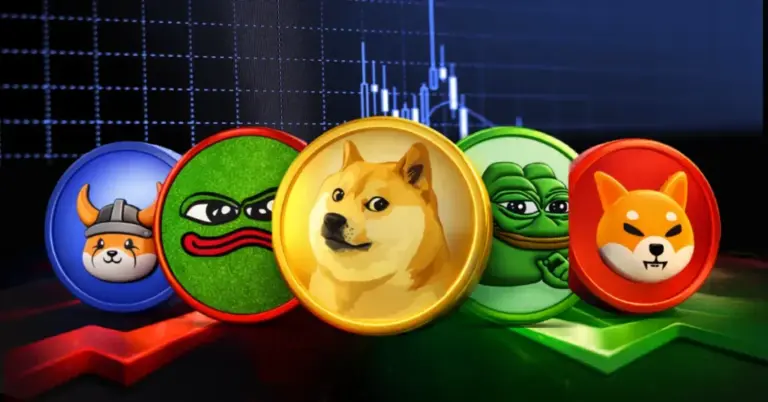
Bitcoin price has reclaimed the $78,000 level and is now approaching a pivotal resistance, which is less than $200 away from the current range. With the bullish influence gradually increasing within the markets, memecoins are beginning to align with the broader trend. The DOGE price continues to sustain above $0.10 despite recent selling pressure, highlighting underlying strength. Meanwhile, the PEPE price has been rising steadily since the start of Q2, suggesting the possibility of a strong price move unfolding this month.

After experiencing a 55% drop this year, the PEPE price has triggered a 35% upswing after a rebound from the lows. The price is trading within a prolonged downtrend before entering a tight accumulation range near $0.0000038–$0.0000040, which has now turned into a key support zone. It is currently testing a descending resistance trendline, along with a horizontal resistance band around $0.0000040, making this a critical breakout area.

More importantly, the Gaussian Channel has flipped bullish, indicating a transition from a bearish phase into an early-stage uptrend, suggesting that momentum is beginning to favor the bulls. At the same time, the formation of higher lows reflects sustained buying pressure, while RSI trending near 55–60 confirms improving strength without being overheated. A breakout above $0.0000040–$0.0000042 could trigger a move toward $0.0000051, followed by $0.0000058–$0.0000060, aligning with a potential 20%+ rally.

The Pepe price is testing a crucial resistance zone, and the technicals suggest a breakout could be on the horizon. Hence, a rise beyond the range may push the price to $0.000005, while a breakout beyond $0.000006 may lift the rally beyond the bearish influence.