Archive

November 2025

Browsing

Oracle stock price has suffered a major reversal as concerns about the artificial intelligence (AI) and its soaring debt remain. ORCL dropped to a low of $198, down by over 36% from its highest point this year. Its market cap has dropped from over $967 billion to $530 billion. 

Oracle stock has crashed amid debt concerns

One of the main reasons why the ORCL stock price has plunged is that investors are concerns about its soaring debt. It recently raised $18 billion in debt, bringing its combined borrowings to over $100 billion. 

The company intends to use these fund to fund its large data center operations. These funds are likely part of the Stargate project that also includes OpenAI and Softbank.

However, investors are betting against its stock and debt amid the rising concerns about the potential AI bubble. 

Data compiled by Bloomberg shows that the price to protect against the company defaulting on it debt has jumped to 1.11 percentage points. This is equivalent to about $111,000 for every $10 million.

More data shows that the company’s CDS has jumped to about $5 billion from $200 million in the same period last year. 

Concerns about the AI industry remains

Oracle stock price has also dropped because of the rising concerns about the AI industry, which some investors believe is in a bubble. Indeed, some notable investors like Masayoshi Son, Peter Thiel, and Michael Burry have dumped their Nvidia shares. 

Also, while many AI companies have jumped this year, most of them have pulled back from their YTD highs. Palantir stock has plunged by 25% from the year-to-date high. Other companies like CoreWeave, Nebius, and IREN have also tumbled in the past few weeks.

One of the main concerns about this is the web of deals that Oracle has entered in the past few months. One of this deals is its partnership with OpenAI that will see it receive $30 billion a year for data center services. 

The main concern is that OpenAI does not have that money as it is expected to make between $12.7 billion and $20 billion this year. Also, OpenAI has made deals worth over $1 trillion with companies like Broadcom, CoreWeave, Nvidia, and AMD. 

The most recent results showed that the company’s remaining performance obligations (RPO) jumped by 359% in its first quarter to $455 billion. Its revenue rose by 12% to $14.9 billion, while its EPS dropped by 2% to $1.01. 

Oracle share price technical analysis

ORCL stock chart | Source: TradingView

The daily timeframe chart shows that the ORCL stock price peaked at $345 and then plunged to the current $200. It has dived to the lowest level since June. 

The stock has moved below the 61.8% Fibonacci Retracement level. It has also moved below the 50-day and 200-day Exponential Moving Averages (EMA). Dropping below these averages is a sign that bears are in control. 

Oracle stock has moved below the Supertrend and the Ichimoku cloud indicators. Therefore, the most likely scenario is whre it continues falling, potentially to the 78.6% retracement level and then it starts to climb as investors buy the dip.

The post Oracle stock price comes back to earth: is ORCL a buy now? appeared first on Invezz

The post Coinbase to Acquire Solana Trading Platform Vector to Expand On-Chain Access appeared first on Coinpedia Fintech News

Coinbase, the leading crypto exchange, is planning yet another acquisition in what’s shaping up to be its most active year for M&A deals. In a recent blog post, the exchange announced that it has entered into an agreement to acquire Vector, an on-chain trading platform built on Solana.

Expanding On-Chain Trading

This move will give traders access to one of crypto’s most active, high-velocity trading ecosystems. According to Messari, Solana’s decentralized exchange (DEX) volume for 2025 has already crossed $1 trillion. 

“This acquisition will help make Coinbase the best place to trade by broadening asset availability and improving the experience of trading assets through our DEX trading integration in Coinbase,” the exchange said.

Vector’s team brings deep Solana-native expertise and technology that can detect new assets as soon as they are created on-chain or launched via major launchpads. This technology will integrate into Coinbase’s DEX to improve speed, liquidity, and access to a wider range of assets across the Solana ecosystem.

Currently, users can only trade tokens on exchanges built on Coinbase’s own blockchain, Base. The exchange hopes to further expand access to Solana. The deal is expected to close by the end of the year, pending the customary closing requirements.

As part of this integration, its current mobile and desktop apps will be discontinued. Tensor Foundation, which governs the Tensor protocol, will stay independent and continue to oversee the Tensor NFT marketplace and its native token, which will also remain independent and unaffiliated with Coinbase.

Towards an “Everything Exchange”

“The Coinbase app is really meant to be an agnostic platform to enable people to trade all of the assets they want to trade,” Max Branzburg, Coinbase’s vice president of product management, told Fortune

Branzburg emphasized that combining Vector’s depth with Coinbase’s scale will unlock a new chapter of open, accessible, global trading.

Coinbase is working towards becoming an “everything exchange”, a single platform where users can trade everything on-chain with faster, cheaper, and always-accessible markets. 

Growing Trend in Crypto M&A

Notably, this marks Coinbase’s ninth acquisition in 2025.

It bought the crypto derivatives exchange Deribit for $2.9 billion in May, and in October, it paid $375 million for the ICO platform Echo. It also planned to buy the stablecoin company BVNK for around $2 billion. However, that deal was called off in November.

Coinbase is not the only one buying startups. In the third quarter of 2025, crypto mergers and acquisitions topped $10 billion, according to Architect Partners.

U.S. stock markets were poised for lift off Thursday, after a strong earnings report from computer chip giant Nvidia signaled that there is still plenty of room to run in the artificial intelligence boom that has powered markets higher for much of the year.

Prior to the opening bell, bets on the S&P 500 were up about 1%, while the tech-heavy Nasdaq climbed 1.5%.

Late Wednesday, Nvidia said sales of its trademark Blackwell AI chips ‘are off the charts,’ while another set of key computer processing units is ‘sold out,” founder and CEO Jensen Huang said in a statement.

On a call with investors following the report, Huang dismissed concerns about an AI bubble.

“There’s been a lot of talk about an AI bubble. From our vantage point, we see something very different,” Huang said.

Dan Ives, managing director at Wedbush Securities finanical group, echoed that sentiment.

“This was a golden quarter for Nvidia with demand massive and well above Street whisper numbers,’ Ives said in an email. ‘These numbers validate the AI Revolution is still early days and send the bears back into hibernation mode.’

Shares of the world’s most valuable company were up more than 4% in after-hours trading.

Nvidia’s chips have been the catalysts for a massive build-out of data centers that have supplied a backbone to the U.S. economy amid slowdowns elsewhere. More money is flowing into building data centers than all other manufacturing facility types combined, according to the research group S&P Global.

Until recently, that spending has also powered major stock indexes to record highs.

Lately, however, stocks have shown signs of wobbling lately. The declines in share prices — led by tech companies — have sparked debates about whether AI-driven gains are beginning to slow.

This raises a bigger question: how the broader economy will perform if it no longer benefits from all the wealth the AI boom is creating.

Nvidia’s latest earnings are likely to allay these fears, for now at least.

Huang said last month that his company had $500 billion in orders for its chips, for 2025 and 2026 combined.

“This is how much business is on the books. Half a trillion dollars’ worth so far,” Huang said at a conference in Washington, D.C.

Alongside broader concerns about the state of the U.S. economy, stock market momentum has been tripped up by worries about circular dealing among AI’s biggest players. This means the same money is being passed back and forth between several companies — even as each company’s individual value climbs.

Nvidia is a fixture in the kinds of deals that are raising concerns. It recently announced a commitment alongside Microsoft to fund AI software provider Anthropic with $10 billion.

Nvidia CEO Jensen Huang during the Live Keynote Pregame of the Nvidia GPU Technology Conference in Washington on Oct. 28.Jim Watson / AFP – Getty Images file

This kind of big collaboration news would typically boost the stock prices of all the companies involved. But neither Nvidia’s nor Microsoft’s stock got a boost from the Anthropic announcement.

Analysts with Deutsche Bank said this is a sign of the ongoing investor wariness about deals like this.

“It goes to show how sentiment has turned more negative in the last few weeks, with the circular AI deals being treated with increasing caution as the conversation around a potential bubble has gathered pace,” they wrote in a note published Wednesday.

The Nvidia headquarters, in Santa Clara, Calif., on May 21, 2024.Justin Sullivan / Getty Images file

The question now is whether the latest market hiccups represent a temporary pullback, or the onset of a more permanent state of affairs.

For the experts who are cautiously optimistic that the market will continue to climb, Nvidia’s massive haul serves to validate their rosy outlook.

“We think the investment boom has room to run,” Goldman Sachs researchers wrote in a note published Wednesday, adding that the economy writ large has remained resilient, something that should provide ongoing support to stock returns.

This post appeared first on NBC NEWS

Eli Lilly crossed into historic territory on Friday, becoming the first healthcare company ever to hit a $1 trillion market valuation.

Shares rose 1.7% to mark the milestone, cementing the Indianapolis pharmaceutical giant as Wall Street’s newest mega-cap champion.

With stock gains exceeding 36% year-to-date, Lilly has dramatically outpaced tech volatility and signaled a major investor rotation toward defensive, high-growth healthcare plays, especially as mega-cap tech faces mounting questions about valuations and returns.

The GLP-1 goldmine: How obesity drugs minted a trillion-dollar giant

Lilly’s ascent rests almost entirely on two blockbuster drugs: Mounjaro, which treats type 2 diabetes, and Zepbound, the weight-loss injection.

Together, they’re rewriting pharmaceutical economics. In Q3 2025, the duo generated $10.1 billion in combined revenue, more than 57% of Lilly’s total $17.6 billion quarterly sales.

Mounjaro nearly doubled to $6.52 billion, crushing analyst expectations of $5.51 billion, while Zepbound nearly tripled to $3.57 billion, topping estimates of $3.5 billion.​

The commanding market share tells the real story. Lilly now captures nearly 60% of all US GLP-1 prescriptions, compared to competitor Novo Nordisk, which commands just 42%.

This dominance reflects both superior drug efficacy; Mounjaro’s dual-action mechanism outperforms Novo’s single-target semaglutide and Lilly’s aggressive direct-to-consumer strategy.

The Walmart partnership to sell Zepbound vials at lower cash prices has particularly resonated with price-sensitive patients.​

Wall Street projects breathtaking growth ahead.

Analysts estimate the weight-loss drug market could reach $150 billion by the early 2030s, with Truist Securities predicting Lilly’s obesity portfolio, including the upcoming oral drug orforglipron, due early 2026, could hit $101 billion in peak worldwide revenue.

A White House pricing deal on GLP-1s could unlock another 40 million Medicare patients, dramatically expanding the addressable market size.

Once considered niche, obesity treatment has become the most profitable healthcare category.​

Beyond obesity: Why Lilly is the ‘new magnificent seven’ for risk-averse investors

Lilly’s trillion-dollar valuation signals a fundamental shift in investor sentiment.

With mega-cap technology stocks under pressure over AI capex returns, Lilly offers what tech cannot: predictable, near-term revenue growth tied to an expanding addressable market.

The company trades at roughly 51x forward earnings, a premium, yes, but justified by recurring growth less vulnerable to semiconductor cycles or geopolitical whipsaw.​

CEO Dave Ricks is deliberately positioning Lilly as a long-term compounder.

His strategy includes an R&D partnership with Nvidia, launching a drug-discovery supercomputer in January 2026, signaling intent to extend innovation pipelines beyond the patent cliff.

The risks remain real: pricing pressures on Mounjaro and execution risks on orforglipron could test momentum.

But for now, Lilly has captured the market imagination as the anti-tech mega-cap story, rare validation for healthcare in a tech-dominated era.

The post Wall Street’s new darling: Eli Lilly becomes healthcare’s first $1 trillion powerhouse appeared first on Invezz

The post XRP News: Ripple CEO Brad Garlinghouse Declares ‘XRP ETF Turkey Trot Begins’ appeared first on Coinpedia Fintech News

The Bitwise XRP ETF officially launched on the New York Stock Exchange this morning, trading under the eye-catching ticker $XRP. Within hours of going live, the fund crossed 610,045 XRP traded, translating to $14.26 million in early volume. Updated projections now estimate the ETF could finish Day 1 with as much as $92.7 million.

Ripple CEO Celebrates: ‘The Turkey Trot Begins’

Reacting to the launch, Ripple CEO Brad Garlinghouse congratulated Bitwise and joked that the “pre-Thanksgiving XRP ETF turkey trot” has officially begun.

His message quickly spread across the XRP community, highlighting how significant this moment is for XRP’s push into mainstream financial markets.

Bitwise Leadership Calls It a Milestone Moment

Bitwise CIO Matt Hougan echoed the excitement, calling the ETF debut a huge achievement for both the asset and the community behind it. “Very excited to launch the Bitwise XRP ETF,” Hougan said. “What a journey for this asset and this community. Excited to see what’s next.”

XRP Price Pulls Back Slightly Despite ETF Buzz

Even with the ETF’s strong launch, XRP’s price is seeing mild pressure. The token is down around 1%, trading near $2.10. Analysts warn that if XRP falls below $2.10, it could slip toward $1.95. Still, the ETF’s early performance shows demand for XRP exposure remains strong, even during broader market volatility.

Can Bitwise Beat Canary Capital’s Huge Opening Day?

With such a fast start, traders are now watching to see whether Bitwise’s ETF can challenge Canary Capital’s breakout debut earlier this month, which saw over $58.5 million in trading volume on Day 1. If current momentum continues, Bitwise may be on track to set a new benchmark for XRP ETFs.

Palo Alto Networks Inc (NASDAQ: PANW) came in ahead of Street estimates in its fiscal Q1 and issued slightly better-than-expected guidance for the full year as well on Thursday.

Still, the cybersecurity stock opened in the red this morning as two underlying weaknesses in the company’s earnings release eclipsed its strong headline number.

Versus its October high, Palo Alto Networks’ stock is now down more than 10%.

Profitability concerns are hurting Palo Alto Networks’ stock

PANW posted impressive growth in revenue for its fiscal Q1, but its bottom-line performance told a different story altogether.

The Nasdaq-listed firm saw its net income slip 5% year-on-year to $334 million in the first quarter, signaling rising costs or margin pressure.

For a company in the midst of aggressive expansion, shrinking net income can signal inefficiencies or dilution of earnings power. Investors often reward growth stories when profitability scales in tandem.

In Palo Alto Networks’ case, the earnings contraction may have triggered skepticism about whether its acquisition-heavy strategy is sustainable.

A post-earnings decline in PANW shares reflects this broader shift toward rewarding operational discipline over pure growth.

PANW shares are slipping due to rising capital expenditures

In Q1, Palo Alto Networks’ capital expenditures (CAPEX) climbed to $84 million – well over $58 million that analysts had forecast.

That’s a 44% overshoot – at a time when investors are increasingly wary of aggressive spending. Across tech, elevated capex has become a major red flag – especially when paired with declining net income.

PANW’s spending spree includes its $3.35 billion bid for Chronosphere and a pending $25 billion acquisition of CyberArk.

While these moves may strengthen its artificial intelligence (AI) and identity security capabilities, the near-term optics sure are challenging.

Investors are asking: Is the company overextending itself? The capex concerns are adding fuel to the fire – making investors bail on Palo Alto Networks shares today – even as management touts long-term strategic value.

Should you buy the dip? Cramer thinks so

Despite the post-earnings sell-off, some market veterans remain constructive on PANW stock. Jim Cramer, speaking to CNBC’s Investing Club, reaffirmed his confidence in Palo Alto’s long-term trajectory.

Given the endless hacks lately from the Chinese using really sophisticated equipment, I think there’s plenty of business for these guys.

The former hedge fund manager expressed confidence in Nikesh Aurora’s leadership and praised the company’s CyberArk acquisition, calling it “just sensational.”

He noted that Palo Alto Networks’ stock hasn’t fallen much from its highs compared to other tech names – emphasizing the enduring demand for cybersecurity solutions.

For long-term investors, this dip may be more opportunity than warning, Cramer concluded. Wall Street also currently has an “overweight” rating on the cybersecurity stock with an average target of about $226, indicating potential upside of 15% from here.

The post Why is Palo Alto Networks stock sinking despite solid earnings, upbeat guidance? appeared first on Invezz

The post Cronos Price Analysis: After a Significant Breakout, Can CRO Trigger a 50% Upswing? appeared first on Coinpedia Fintech News

Ever since the Bitcoin price broke below $100K, the crypto markets appear to have stumbled a little. With the top gainers like Starknet & MYX Finance having kept the hopes of an altcoin rally, Cronos price is attempting hard to enter the list. The price is stuck within a steep descending trend, and hence, it would be interesting to see whether the current rebound will last long or turn out to be another fakeout. 

Cronos price is outperforming the market as ETF speculation resurfaced around Trump Media’s proposed ‘Crypto Blue Chip ETF,’ which indicates a 5% CRO allocation. On the other hand, the ecosystem is growing as Cronos DeFi TVL marked new highs and its AWS partnership continues to drive developer activity. 

With the volume still relatively light and resistance lying near an important price range, the real test is whether CRO can sustain a break above $0.12. Besides, can it attract meaningful follow-through buying, or will this bounce fade without stronger conviction?

As seen in the above chart, the current breakout is believed to form another fakeout as the rally is gearing up for a death cross. The 50/200 day MAs are heading for a bearish crossover, which could drag the levels towards the pivotal support zone between $0.067 and $0.075. The bulls are currently holding the support at $0.11 and hence a drop below $0.1 could trigger a drop to the support levels. 

On the other hand, the RSI has displayed a bearish divergence, but the MACD is displaying the possibility of a bullish crossover. As the intensity is pretty low, as the buying pressure is below the required range, the bullish possibility could be nullified. 

Therefore, no doubt the Cronos (CRO) price rally is gaining some strength as it has triggered a rebound. However, if seen in a wider perspective, the token has been forming consecutive lower highs and lows, highlighting the bearish influence over the rally. Overall the sentiments around the token is bullish but the traders are required to remain cautious and wait for a bullish confirmation to certify the beginning of a strong recovery. 

Dycom Industries stock (NYSE: DY) surged nearly 18% Wednesday following strong third-quarter results that crushed analyst expectations and sparked a major upward revision to fiscal 2026 guidance.

The telecommunications and utility services contractor reported record revenue of $1.452 billion and diluted earnings of $3.63 per share, beating Street estimates by 13% on profit.

The company also raised its full-year revenue outlook midpoint, signaling robust demand for digital infrastructure despite broader economic uncertainty.

CEO Dan Peyovich called it “an exceptional quarter” that “reinforced industry leadership,” setting the tone for what could be a significant inflection point for the stock.​

Dycom’s dramatic 18% rally reflects investor relief and enthusiasm over three converging factors: beat earnings, record backlog, and raised guidance.

The stock had already climbed steadily through the the fall, but today’s move caps a remarkable 109% gain since November 2024 lows.

At current levels, Dycom now trades at an $8.6 billion market cap, a reflection of how quickly market sentiment shifted once investors recognized the durability of the company’s growth engine.​

Why did Dycom Industries’ stock skyrocket today?

The earnings surprise was substantial across multiple metrics. Q3 contract revenues climbed 14.1% year-over-year to $1.452 billion, while GAAP diluted EPS jumped 35.4% to $3.63 versus consensus expectations of $3.20.

Net income expanded 34.4% to $106.4 million, and adjusted EBITDA surged 28.5% to $219.4 million with a margin of 15.1%, up 170 basis points from the prior year quarter.​

But the real eye-popper was the the backlog. Dycom reported a record $8.2 billion in backlog as of October 25, 2025, providing extraordinary visibility into future revenue.

For context, this represents roughly 1.5 years of revenue at current run rates, a fortress of work already committed.

The backlog expansion underscores just how desperate customers are for Dycom’s expertise in in deploying broadband and 5G infrastructure across America.​

Management also raised the midpoint of fiscal 2026 revenue guidance to a range of $5.350 billion–$5.425 billion, implying growth of 13.8% to 15.4%.

Q4 guidance of $1.26–$1.34 billion in revenue came in line with Street expectations.

Notably, management attributed growth to “significantly higher customer demand for digital infrastructure” and execution on recent acquisitions, particularly the Black and Veatch purchase announced earlier this year.​

What analysts are saying

The reaction from Wall Street has been swift and positive.

Wells Fargo maintained an “overweight” rating and raised its price target to $315, implying 1.6% upside from current levels.

DA Davidson, Raymond James, and JPMorgan have all raised their price targets following the earnings beat, with consensus now sitting at $302.63.​

Analysts point to three structural tailwinds supporting Dycom’s trajectory. First, broadband infrastructure spending remains elevated.

The Broadband, Equity, Access and Deployment (BEAD) program, funded through the Infrastructure Investment and Jobs Act, has already begun deployment, with Dycom positioned as a primary beneficiary.

Second, private investment in 5G densification and fiber buildout continues accelerating as carriers upgrade networks.

Third, M&A synergies from the Black and Veatch acquisition are beginning to translate into higher margins; the adjusted EBITDA margin of 15.1% in Q3 marks meaningful expansion from prior periods.​

One concern flagged by some analysts is labor availability in a tight market.

Dycom guided to 3.8%–5.1% growth contingent on workforce scalability, suggesting management sees labor as the potential constraint rather than demand.

However, the company’s track record of of managing rapid scaling (22% growth two years ago) suggests this is manageable rather than existential.​

At $310, Dycom now trades at 33x forward earnings, a notable premium to its historical average but justified by the combination of record backlog, margin expansion, and a multi-year runway of BEAD-funded infrastructure deployment.​

The post Why is Dycom Industries stock soaring 18% today: here’s what analysts say appeared first on Invezz

The post Cardano Founder Reveals Midnight’s NIGHT Token Launch Date appeared first on Coinpedia Fintech News

Cardano fans have waited months for this day, and now the moment is finally here. Charles Hoskinson, founder of Cardano, has officially confirmed that NIGHT, the native token of Midnight, will launch on December 8, 2025. 

The token will officially roll out on December 8, 2025, with both distribution and trading starting the same day.

NIGHT Token To Launch on December 8

Charles Hoskinson delivered the news during the first day of the Midnight Summit, a multi-day gathering focused on the future of data protection and private computation on Cardano. 

With this announcement, the Midnight team confirmed that eligible participant will receive their NIGHT tokens on December 8. This includes participants in early ecosystem programs, community contributors, and users involved in the project’s testing phases.

But not all tokens will come at once. The rest will be given out slowly in four small parts over the next year. This helps the project stay strong and grow in a steady way.

Exchange Planning To List Night Token Too

Alongside the distribution, multiple cryptocurrency exchanges are preparing to list NIGHT on launch day. This means that trading will go live almost instantly, giving the token immediate liquidity and visibility. 

Although the names of participating exchanges have not been officially disclosed, insiders say that several tier-one platforms have already completed integrations.

Meanwhile, this dual launch, distribution plus instant exchange listings, is a strong signal that the Midnight team wants a smooth and widely accessible rollout.

Why Midnight Matters for Cardano

The announcement has made the Cardano community very excited. As Midnight is Cardano’s privacy-focused sidechain, which keeps important information private and safe. It lets people build apps that protect users without breaking any rules.

Since privacy is a big topic today, many people think this launch will bring more attention and more builders to Cardano.

With the launch on December 8, everyone sees this as a big moment. The countdown to Midnight has begun.

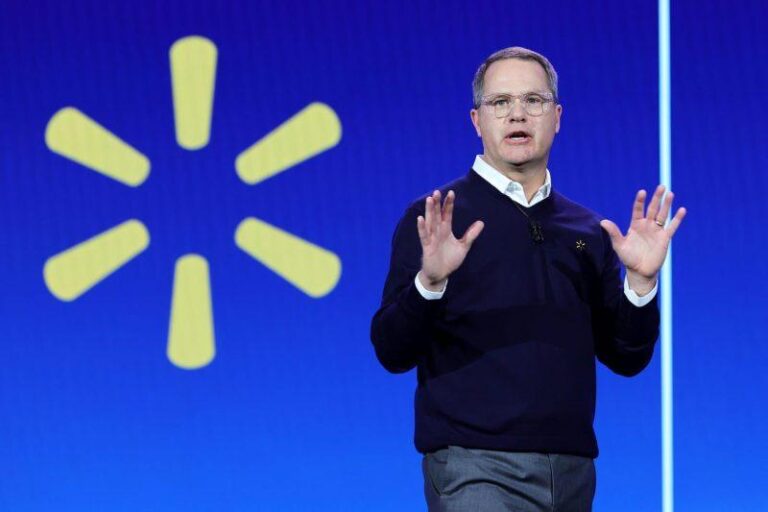
Walmart announced Friday that longtime CEO Doug McMillon will retire at the end of January — which came as a surprise to some given the company’s success in a rapidly evolving retail landscape.

John Furner, Walmart’s U.S. CEO, will assume the role of overall CEO on Feb. 1, the company said. McMillon will continue to serve in an executive and advisory role through January 2027. Furner, 51, began his career at Walmart as an hourly associate.

McMillon, 59, has held the top job since 2014 and is only the fifth person to lead the storied company in its 63-year history.

McMillon has overseen a radical transformation of Walmart’s image in a little over a decade.

In 2014, Walmart had a reputation as a budget retail option and was accused of underpaying its associates. Today, it draws more well-to-do shoppers and has earned credit for adopting innovative personnel policies.

McMillon also built up Walmart’s e-commerce operation into the country’s second-largest, behind only Amazon. Over the course of McMillon’s tenure, the value of Walmart’s shares has increased some 300%.

“Serving as Walmart’s CEO has been a great honor and I’m thankful to our Board and the Walton family for the opportunity,” McMillon said in a statement. “I’ve worked with John for more than 20 years. … He’s uniquely capable of leading the company through this next AI-driven transformation.”

America’s retail landscape continues to rapidly evolve, as consumer spending habits increasingly bifurcate between wealthier households and everyone else.

However, Walmart’s quarterly results have held steady — and the company has been justly rewarded by investors. Just this year, Walmart shares have climbed around 13%. Over the course of McMillon’s tenure, the retailer’s stock price is up some 300%.

On Walmart’s most recent earnings call in August, McMillon indicated the company has been able to withstand the broader pressures facing consumers. Its shoppers’ “behavior has been generally consistent,” he said. “We aren’t seeing dramatic shifts.”

Other retailers have not been so fortunate.

Target’s shares have lost about one-third of their value this year, as the chain works to regain its footing in a more value-conscious environment. In August, longtime CEO Brian Cornell announced plans to step down.

Amazon, meanwhile, has fared slightly better as consumers continue to prioritize the convenience of online shopping. But it recently announced thousands of layoffs affecting corporate employees. Amazon’s share price has climbed about 8% this year.

McMillon has also steered Walmart through a volatile period in U.S. politics, during which elected officials have engaged directly with companies and consumers have proven willing to boycott corporate giants over social issues.

Walmart found itself in President Donald Trump’s crosshairs in May, after it signaled plans to increase some prices in response to his tariffs.

“Walmart should STOP trying to blame Tariffs as the reason for raising prices throughout the chain,” Trump wrote on his Truth Social platform. “Between Walmart and China they should, as is said, ‘EAT THE TARIFFS,’ and not charge valued customers ANYTHING. I’ll be watching, and so will your customers!!!”

While subsequent reports indicated that Walmart had indeed increased prices on some items, McMillon said in August that the changes were gradual enough that consumer habits shifted only modestly.

Six months after Trump singled Walmart out over tariffs, he did so again — but for a very different reason.

In recent weeks, the Trump White House has repeatedly touted Walmart’s 2025 Thanksgiving menu package — which costs less overall than the retailer’s similar menu did last year — as a sign that the president’s economic policies have helped drive down grocery prices for consumers.

But there is a flaw in that rationale. This year’s Walmart Thanksgiving menu contains fewer items than last year’s menu did.

This post appeared first on NBC NEWS