
Archive

March 28, 2026

Browsing

The post Ethereum Is Mispriced, Says Coinbase Research Chief Ahead of EthCC on Monday appeared first on Coinpedia Fintech News

ETH is trading at $2,000 today, sitting 59% below its August 2025 all-time high. Most investors have written off altcoins in a brutal bear market.

David Duong, Global Head of Institutional Research at Coinbase, thinks that is exactly the wrong read, especially when it comes to Ethereum.

Speaking on the Milk Road Show this week, Duong laid out why Ethereum might be the most mispriced asset in crypto right now.

Ethereum’s Regulatory Pass

On March 17, the SEC and CFTC jointly classified 16 crypto assets as digital commodities, including ETH. For Ethereum specifically, this matters more than it does for most. Staking, a core part of Ethereum’s ecosystem, is now explicitly outside securities law.

“It gives ETH more of a clean regulatory pass,” Duong said, “and I think that has already been there but it’s just nice to see it in print.”

For institutions that were sitting out precisely because of legal uncertainty, that clarity is the green light they were waiting for.

BlackRock’s Staked ETH ETF: Why It’s Important

BlackRock launched its iShares Staked Ethereum Trust ETF earlier this month, pulling $254 million in its first week – the fastest-growing crypto ETF launch of 2026. The fund intends to stake between 70% and 95% of its ETH holdings under normal conditions.

Duong called it “a massive development that you don’t really see priced into ETH.”

The logic is straightforward: more institutional demand coming in, less circulating supply available. That is a structural shift, not a sentiment trade.

Also Read: 5 Altcoins With the Strongest 10x Setup in the Current Bear Market

Watch EthCC This Monday

This is the angle most people have missed entirely. EthCC[9] opens in Cannes on Monday March 30, and Duong flagged a specific talk on the agenda titled “Issuance: The Cost of Inaction.”

His read is that a significant announcement about Ethereum’s monetary policy and issuance rate is coming.

“I would expect a big announcement coming about what’s going to happen with the potential ETH supply in the future,” he said.

Institutions Are Still Bullish

Coinbase Institutional’s 2026 survey of around 350 respondents found that 73% plan to increase their digital asset allocations this year and 74% expect crypto prices to rise over the next 12 months – even though the survey was conducted during the January drawdown.

As Duong put it, “anyone who wanted to sell likely already sold.”

ETH at $2,000, with regulatory clarity, a structural supply squeeze, and a potential catalyst arriving Monday. The market may not have caught up yet.

Read More: Citigroup Cuts Bitcoin and Ethereum Price Targets: Clarity Act to Blame?

A federal judge in California has blocked the Trump administration from designating Anthropic as a supply chain risk to national security and cutting off the AI company’s work with federal agencies.

Anthropic sued the Defense Department and other federal agencies this month after the Pentagon labeled it a “supply-chain risk to national security.” President Donald Trump said he would also ban the use of Anthropic’s products across other federal agencies.

“Defendants’ designation of Anthropic as a ‘supply chain risk’ is likely both contrary to law and arbitrary and capricious,” U.S. District Judge Rita Lin of Northern California wrote in her order Thursday night. “The Department of War provides no legitimate basis to infer from Anthropic’s forthright insistence on usage restrictions that it might become a saboteur.”

Lin paused her order for a week to allow the administration time to appeal.

The Defense Department and the White House did not immediately respond to a request for comment Thursday evening.

“We’re grateful to the court for moving swiftly, and pleased they agree Anthropic is likely to succeed on the merits,” an Anthropic spokesperson said in a statement Thursday. “While this case was necessary to protect Anthropic, our customers, and our partners, our focus remains on working productively with the government to ensure all Americans benefit from safe, reliable AI.”

The supply chain risk designation requires the Pentagon and its contractors to stop using Anthropic’s commercial AI services for all defense business.

Defense Secretary Pete Hegseth said on X in late February that he was issuing a directive to give the company the “supply chain risk” label. Trump also said he was ordering all federal agencies, including the Treasury and State departments, to cease using Anthropic’s AI technology.

“The record reflects that the Challenged Actions were taken without any meaningful notice or pre-deprivation process (and, in the case of the Presidential Directive and the Hegseth Directive, without any post-deprivation process either),” Lin wrote in her order.

The order Thursday also bars other agencies from cutting off their work with Anthropic. Lin wrote that the order restores the status quo.

“This Order does not require the Department of War to use Anthropic’s products or services and does not prevent the Department of War from transitioning to other artificial intelligence providers, so long as those actions are consistent with applicable regulations, statutes, and constitutional provisions,” the order said.

Anthropic filed two lawsuits against the Defense Department — one in U.S. District Court for Northern California and the other in U.S. Circuit Court of Appeals for Washington, D.C. — alleging that the federal government’s moves go beyond a normal contract dispute and instead are an “unlawful campaign of retaliation” that followed months of heated negotiations about how the military should be able to use Anthropic’s AI systems.

Anthropic had sought stronger guarantees that the Pentagon would not use its AI systems for autonomous weapons or mass domestic surveillance.

Anthropic is the creator of the Claude chatbot system and the only AI company whose services were cleared for use on the Defense Department’s classified networks.

Hours after Hegseth’s announcement last month, OpenAI CEO Sam Altman said his company had reached an agreement with the Pentagon to use its services in classified settings.

Lin wrote: “Although Anthropic was on notice that the government objected to its contracting terms, it had no notice or opportunity to object before Defendants publicly barred it from all federal government work and blacklisted it with private companies working with the U.S. military. It also had no notice or opportunity to object to the factual basis for its designation as a supply chain risk, which it learned of in this litigation.”

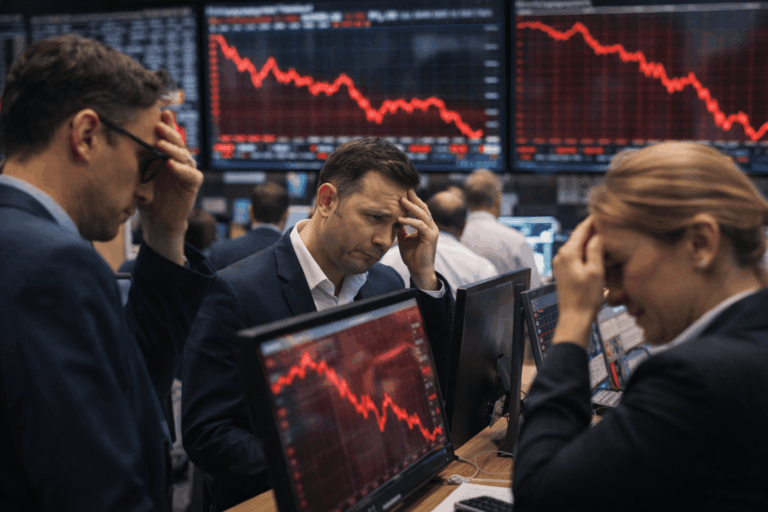
US stocks fell sharply on Friday, with all three major indexes closing at their lowest levels in more than six months, as escalating tensions in the Middle East and surging oil prices dampened investor sentiment.

The Dow Jones Industrial Average dropped 793.47 points, or 1.73%, to 45,166.64, entering correction territory on an intraday basis.

The S&P 500 fell 1.67% to 6,368.85, while the Nasdaq Composite slid 2.15% to 20,948.36, leaving it nearly 13% below its October peak.

The selloff marked the fifth straight weekly decline for the major averages, the longest losing streak in nearly four years, as markets struggled to absorb the economic fallout of a prolonged geopolitical conflict.

Oil surge and war fears weigh on sentiment

Investor sentiment remained under pressure as the conflict involving Iran continued to disrupt global energy markets.

Brent crude settled at $112.57 per barrel, while US crude rose to $99.64, both near multi-year highs.

The closure of the Strait of Hormuz, a critical oil transit route, has heightened fears of supply disruptions and prolonged inflationary pressures.

Despite signals from Donald Trump that diplomatic efforts are ongoing, markets showed little optimism about a near-term resolution.

“As per Iranian Government request, please let this statement serve to represent that I am pausing the period of Energy Plant destruction,” Trump said in a Truth Social post. “Talks are ongoing and, despite erroneous statements to the contrary by the Fake News Media, and others, they are going very well. Thank you for your attention to this matter!”

Still, uncertainty persists as Iran has reportedly rejected proposals to end the conflict, while the US considers further military deployments to the region.

Megacap weakness deepens market losses

Losses were led by large-cap technology and consumer stocks, which have been key drivers of market performance in recent years.

Shares of Nvidia fell about 2%, while Amazon dropped roughly 4%, weighing heavily on the broader market.

The weakness extended across sectors, with consumer discretionary stocks among the worst performers.

Cruise operators, including Carnival and Norwegian, declined sharply after weaker outlooks, adding to concerns about slowing demand.

The Nasdaq 100 has now entered correction territory, while the small-cap Russell 2000 index confirmed its own correction earlier.

Rate outlook shifts as inflation risks rise

Rising energy prices have complicated the outlook for monetary policy, reducing expectations that the Federal Reserve will cut interest rates this year.

Markets are now pricing in a roughly 25% chance of a rate hike by October, a sharp shift from earlier expectations of easing.

The surge in oil prices has intensified concerns about inflation, particularly as other commodities, including fertilizers, also move higher due to the conflict.

At the same time, US consumer sentiment has weakened, falling to a three-month low in March, reflecting growing unease about the economic outlook.

With geopolitical tensions unresolved and inflation risks mounting, investors appear increasingly cautious.

Until there is greater clarity on the trajectory of the conflict and energy markets, volatility is likely to remain elevated across global equities.

The post Dow Jones plunges nearly 800 points: longest weekly losing streak in 4 years appeared first on Invezz