Archive

March 31, 2026

Browsing

The post Jerome Powell’s Parting Words: ‘Stick to Your Knitting’ as Senate Prepares Warsh Hearing appeared first on Coinpedia Fintech News

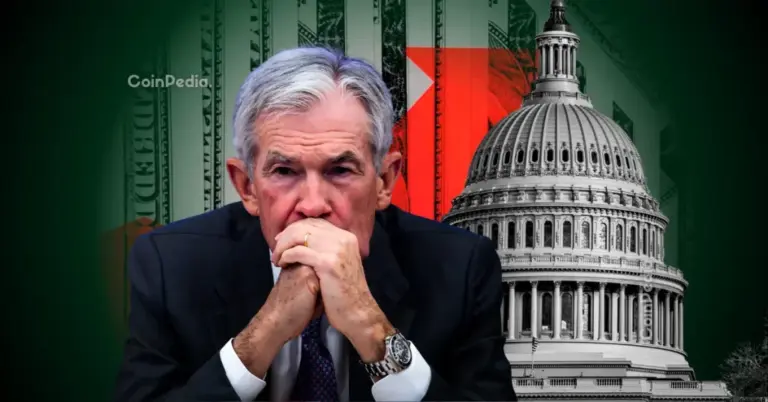
Jerome Powell does not do unsolicited advice. He said so himself. But speaking publicly in what amounts to one of his final major appearances before Kevin Warsh takes the chair, Powell offered something close to a farewell address to the institution he has led through a pandemic, an inflation crisis and now a period of deepening geopolitical and economic uncertainty.

“Stick to your knitting,” Powell said. “There is always a temptation to want to move into other areas. We have very powerful tools. They are supposed to be for maximum employment, price stability and financial stability. There is always a time when an administration looks and says it would be good to use that tool for something else.”

He did not name names. He did not need to.

The Timing Could Not Be More Loaded

The Senate Banking Committee is preparing to hold a confirmation hearing for Warsh in the week of April 13, a timeline that places his nomination squarely inside one of the most turbulent macroeconomic moments in recent memory.

Inflation is rising again. US-Iran tensions are escalating and clouding the rate cut outlook that markets had been quietly counting on. The FOMC meets April 28 to 29, and whoever sits in the chair by then, or is confirmed to sit there soon after, will inherit a set of decisions with no clean answers.

Powell acknowledged the weight of the role without flinching. “What we do is very challenging and highly uncertain. The Fed is not a perfect institution. Don’t look for perfection.”

What he did ask for was something simpler and more fragile: independence.

“We are not trying to work against any politician or any administration. But we have to be careful to stick to what we are doing.”

What Warsh Walks Into

Warsh, a former Fed governor known for his market-focused instincts and more hawkish leanings, enters a confirmation process shaped by competing pressures. The White House has made no secret of its preference for lower rates. Markets want clarity. And Powell, in his own careful way, just reminded everyone why the person holding that chair cannot simply deliver what any one side wants.

Meanwhile, the CLARITY Act, which would formally define crypto assets under US law, is advancing toward a markup in April with growing bipartisan support, adding another dimension to the regulatory environment Warsh will need to navigate.

To the Next Generation, With Caveats

Powell also spoke directly to students navigating a labour market reshaped by AI and immigration policy shifts, offering a perspective that was optimistic in the long run and honest about the near term.

“It is a challenging time to enter the labour market,” he said plainly. “But this economy is going to give you great opportunities. Master these new technologies. That should stand you in good stead.”

On whether AI ultimately complements or replaces human workers over a 40-year horizon, Powell, for once, did not pretend to have the answer.

“It is so hard to say.”
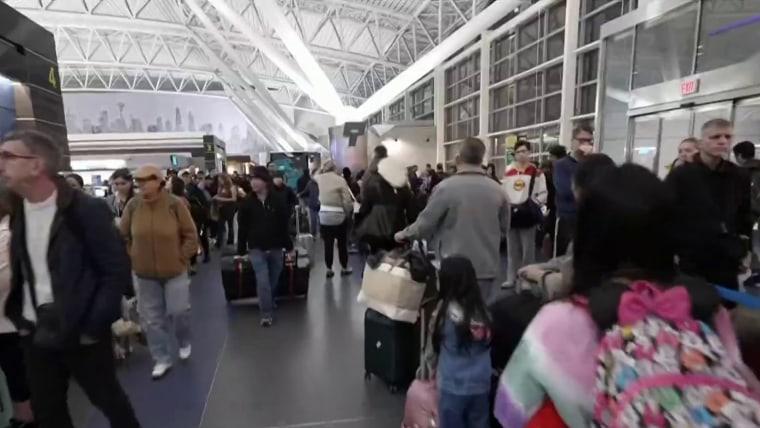
Travelers frustrated by long security lines may not see immediate relief, even as Transportation Security Administration officers begin receiving pay again on Monday after working without wages for more than a month during the partial government shutdown.

President Donald Trump signed an executive order Thursday directing federal officials to ensure that TSA workers are paid despite the shutdown, breaking a more than 40-day stretch in which officers went without salaries.

But the move is unlikely to bring instant relief at airport checkpoints, according to former TSA Administrator John S. Pistole.

“It’s a temporary fix,” he told NBC News.

The more pertinent question, he said, is how many workers actually return to their posts now that paychecks are set to resume Monday.

More than 500 officers have quit during the shutdown, according to the Department of Homeland Security, while thousands more have called out because they can’t afford basic expenses.

TSA callout rates reached a high of 12.35% of the workforce on Friday, accounting for more than 3,560 employees, a DHS spokesperson said Saturday. The department added that at Trump’s direction and under Homeland Security Secretary Markwayne Mullin, TSA has “immediately begun the process of paying its workforce” and that officers “should begin seeing paychecks as early as Monday, March 30.”

Those shortages have forced travelers to contend with missed and canceled flights, long security lines and growing uncertainty around air travel.

If most officers report back beginning Monday and airports are able to restore staffing, wait times could start to ease within several days to a couple of weeks, Pistole said.

“It really depends on that asterisk of how many people show up,” he said.

Some workers who left may already have other jobs lined up, raising questions about whether some will return at all.

“How many of them come back after they get this paycheck? Or maybe they already have another full-time job lined up, they’re just waiting to inform TSA after they get their check on Monday,” Pistole said. “So there are a number of variables there.”

Pistole said the uncertainty, coupled with TSA’s typical annual attrition rate of about 7%, could mean delays will continue even after pay resumes.

Until then, some travelers may want to consider alternatives such as driving, rail or bus.

“I think many will and are looking at those options to say, ‘Is that more reliable? Because the last thing I want to do is get to Bush International Airport in Houston and have a four-hour wait,’” Pistole said.

World has launched MiniKit 2.0 on World Chain, introducing a technical upgrade aimed at standardizing development across web and World App environments while enhancing transaction speed, payments, and developer incentives.

The release is positioned as a step toward simplifying application deployment and scaling within the World ecosystem, which focuses on consumer-facing applications tied to proof-of-human infrastructure.

Unified development across platforms

MiniKit 2.0 aligns development on World Chain with Ethereum’s EIP-1193 standard, enabling developers to build applications once and deploy them across both web platforms and World App with minimal modification.

In many cases, existing applications can be adapted into Mini Apps with as few as two lines of code, reducing development time and lowering barriers to entry.

Applications deployed within World App now function identically to their standalone web versions, allowing teams to scale from initial deployment to full World Chain integration without changing core logic.

This unified approach is designed to streamline testing, distribution, and ongoing updates for developers.

The upgrade comes amid strong usage growth across the ecosystem. Over the past seven days, Mini Apps recorded more than 12.1 million opens, with total all-time opens surpassing 2.2 billion, reflecting increasing engagement.

Faster transactions and expanded payments

The upgrade introduces Flashblocks integration, reducing transaction confirmation times from up to two seconds to approximately 200 milliseconds.

This improvement supports applications that require real-time responsiveness, including gaming and trading interfaces.

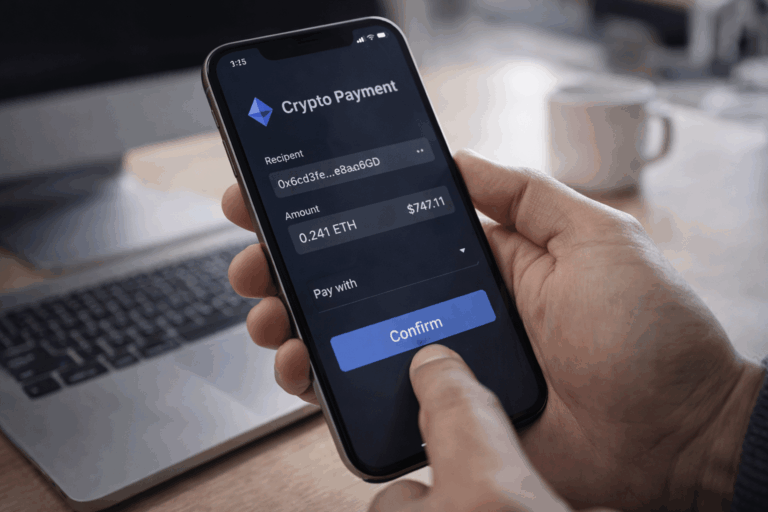
MiniKit 2.0 also expands payment capabilities by supporting a broader set of stablecoins, including wARS, wCOP, wMXN, wBRL, wPEN, wCLP, and EURC.

These additions enable developers to offer localized payment experiences without managing region-specific infrastructure.

Gas sponsorship is now available through Privy, powered by ZeroDev’s account abstraction infrastructure.

This allows developers to cover transaction fees on behalf of users, removing the need for wallet balances or manual fee handling and simplifying onboarding for new users.

Together, these features are aimed at reducing friction in both user experience and application performance, while broadening the range of financial interactions supported on World Chain.

Developer funding and ecosystem growth

Alongside the launch, World announced the opening of applications for World Build 3, its developer program designed to support teams building on World Chain.

Since its inception, participants in the program have raised more than $15 million from venture capital firms and launched applications used by millions of verified users.

The third cohort will begin with a four-day hackathon offering $20,000 in prizes, followed by a Build Week in Seoul, a three-month virtual program, and a Demo Day in San Francisco.

World also plans to showcase MiniKit 2.0 and its broader developer ecosystem at EthCC, taking place from March 30 to April 2.

The latest upgrade underscores World’s effort to position its platform as a scalable and developer-friendly environment for building consumer applications.

By combining faster transaction speeds, simplified deployment, and expanded funding opportunities, MiniKit 2.0 aims to strengthen adoption across its growing network.

The post MiniKit 2.0 launches on World Chain, boosting speed and dev reach appeared first on Invezz