

Archive

January 9, 2026

Browsing

The post Bitcoin Price Drops, Yet Long-Term Holders Aren’t Selling—Here’s Why appeared first on Coinpedia Fintech News

Bitcoin’s price has slipped from recent highs, breaking below key short-term levels and triggering renewed fears of a deeper correction. However, beneath the surface, on-chain data tells a very different story.

Despite the pullback, long-term Bitcoin holders are not selling aggressively. Key on-chain indicators show that older coins remain largely inactive, suggesting the recent downside move is being driven by short-term traders and leverage resets rather than structural distribution.

This divergence between the BTC price weakness and holder behavior is critical. It points to a market that is cooling off and rebalancing—not one that is topping out.

What the On-Chain Data Is Saying

The Value Days Destroyed (VDD) Multiple tracks when older, long-held BTC is being spent. Historically, major market tops are accompanied by sharp red spikes, signaling long-term holders distributing into strength. Right now, that signal is missing.

Recent readings from Glassnode remain in the low-to-mid VDD range, indicating that:

  • Long-term holders are not aggressively selling
  • Most BTC being moved belongs to short-term participants
  • Selling pressure is tactical, not structural

This behavior typically aligns with consolidation or trend continuation, not final tops.

Bitcoin Long-Term Holders Remain Optimistic

The price chart shows Bitcoin rejecting higher supply zones around the $105k–$110k region, followed by a breakdown below mid-range support near $102k–$98k. This triggered a sharp move lower, but importantly, the price has not entered freefall. Instead, BTC is reacting around the established demand zones. Volatility is high, but a structure is forming, and hence the moves could resemble liquidity sweeps but not panic sweeps. 

Source: X

The combined charts point towards three main outcomes. Firstly, no mass distribution from long-term holders. Secondly, distribution is occurring at higher levels, followed by a controlled reset and thirdly, short-term traders are driving volatility, not smart money exits. This is typical of mid-cycle corrections, where leverage and late longs are flushed while long-term conviction remains intact. 

What’s Next for the BTC Price Rally?

Bitcoin price is facing notable upward pressure but continues to trade within a demand zone. If the price reclaims the range between $98,000 and $102,000, it could signal absorption and open the door for continuation. An invalidation could drag the price close to $82,000, which could weaken the broader bullish thesis. Besides, holding within the current demand zone between $88,000 and $92,000 could keep the structure constructive. 

Despite the sharp pullback, on-chain data does not support a cycle-top narrative. Long-term holders remain calm, while price action reflects a market resetting excess, not unwinding conviction. For now, the BTC price appears to be digesting gains, not ending the trend. Direction will be decided not by fear, but by how price reacts at key levels in the days ahead.
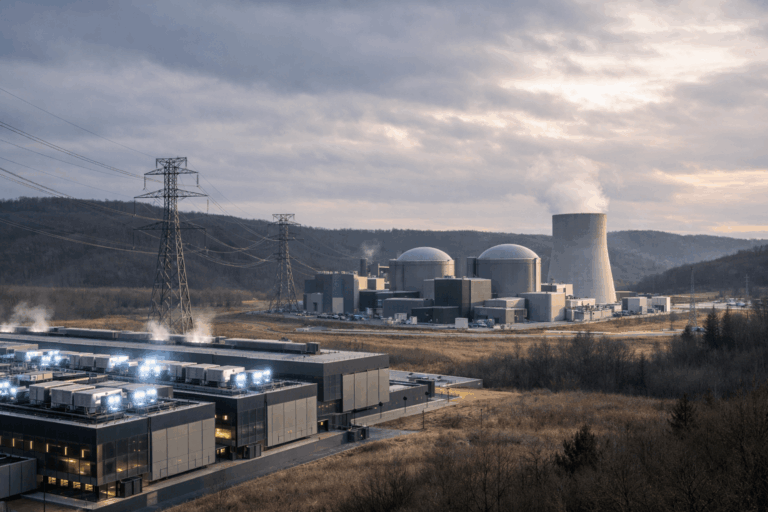
Oklo stock (NYSE: OKLO) jumped over 15% on Friday after Meta announced an agreement to support development of a 1.2-gigawatt advanced nuclear campus in Pike County, southern Ohio.

The landmark deal that marks the small modular reactor maker’s first major commercial validation and signals growing corporate appetite for nuclear power to fuel artificial intelligence operations.​

The announcement underscores a critical inflection point: as AI data centers consume electricity at rates that strain aging power grids, major tech companies are pivoting toward nuclear energy.

For Oklo, a venture-backed startup that has operated as a pre-revenue technology company until now, the Meta partnership amounts to a proof-of-concept that corporate offtakes can actually work.​

Oklo stock: Why big tech is paying for nuclear power

Meta’s announcement Friday revealed an ambitious three-prong nuclear strategy designed to secure up to 6.6 gigawatts of power by 2035, equivalent to electricity for roughly 5 million homes.

The company signed 20-year power purchase agreements with Vistra for three existing nuclear plants in Ohio and Pennsylvania, while simultaneously investing in development partnerships with Oklo and TerraPower.

With these partnerships, the tech giant aims to bring next-generation small modular reactors online within the decade.​

The logic is straightforward: AI training and inference, the computation required to run large language models like Meta’s own AI systems, demand astronomical amounts of electricity.

Goldman Sachs forecasts global data center power demand could rise 165% by 2030 compared with 2023 levels, with AI workloads driving the surge.

Wedbush analyst Dan Ives notes that corporate offtakes materially reduce both financing and execution risk for nuclear developers, allowing companies like Oklo to lock in revenue streams before regulators approve their designs.

For hyperscalers like Meta, securing power today is no longer optional, it is a strategic necessity to remain competitive in the AI arms race.​

From pilot to pay-off

Under the Meta agreement, the tech giant will prepay for electricity and provide funding to advance Oklo’s Aurora powerhouse project, designed to produce up to 1.2 gigawatts in Pike County by 2034.

Pre-construction begins in 2026, with the first phase coming online by 2030.

Critically, Meta’s support de-risks early procurement, fuel acquisition and site infrastructure, allowing Oklo to move from vaporware status to a company with validated customer demand and partial project funding.​

The market’s enthusiasm, however, comes with caveats.

Small modular reactors (SMRs) remain unproven at commercial scale in the United States.

While NuScale achieved NRC design approval for its SMR technology in 2020 and again in May 2025 for an uprated design, regulatory timelines for actual construction permits and operating licenses still stretch 30 months or longer.

Oklo’s Aurora reactors, which use fast-neutron technology to burn recycled nuclear waste, have no NRC design certification yet, only Meta’s commercial commitment.​

The deal is a clear validation and near-term catalyst, but Oklo stock will need to clear regulatory milestones and hit project financing schedules to justify current valuations.

The post Oklo stock surges 15% after Meta deal: is OKLO next AI infrastructure winner? appeared first on Invezz