
Archive

January 11, 2026

Browsing

The post Bitcoin’s Next Move May Decide Whether $60,000 Comes Back appeared first on Coinpedia Fintech News

Crypto markets may be quietly turning a corner, according to analyst Ran Neuner, but he says this is not the time for blind optimism.

Neuner says he is “cautiously bullish”, meaning the signs look better than before, but the market still has something important to prove.

Why He’s Feeling Better Than Before

Neuner pointed to a key move that happened right around New Year’s. Bitcoin broke above its short-term downtrend and climbed back above its 50-day moving average, a level many traders watch closely.

What made this move more convincing was the follow-through. Bitcoin didn’t just jump above the level, it came back down, tested it, and held. Neuner says that usually shows strength, not weakness.

Even more interesting, the same thing happened across other major coins. Ethereum, Solana, and XRP have all moved back above their 50-day averages too.

“That tells you this isn’t just one coin moving,” Neuner explained. “It’s the whole market trying to recover.”

U.S. Buyers Are Back

Another signal catching attention is the return of the Coinbase premium. This happens when Bitcoin trades slightly higher on Coinbase compared to other exchanges, showing stronger demand from U.S. investors.

Neuner says this matters because many past rallies started when American buyers stepped back in first.

Simply put, more buyers than sellers are showing up again.

The Market Is Acting Healthier

Neuner also opened up about changes in market structure. Prices are now forming higher highs and higher lows, which is often how recoveries begin.

At the same time, altcoins have started outperforming Bitcoin, and Bitcoin dominance has slipped a bit. That usually means traders are becoming more confident and willing to take risk again.

“These are early signs,” Neuner said, “but they are signs.”

The Level That Decides Everything

Despite all the positives, Neuner says Bitcoin is heading toward a make-or-break moment.

The 200-day moving average, which sits around $107,000, is the next major hurdle. In strong bull markets, Bitcoin pushes above this level and keeps going. In weaker markets, price rallies up to it, gets rejected, and then drops again.

Neuner warned that past cycles have seen this exact setup turn into a fake recovery that pulled people back in before the market fell lower.

A Warning From the Weekly Chart

Zooming out even more, Neuner pointed to the weekly chart, where Bitcoin has dropped below its 50-week moving average. Historically, that level has acted as strong support during bull markets.

In earlier cycles, once Bitcoin lost that level, price often bounced back to it, failed to reclaim it, and then slid toward the 200-week moving average, which now sits near $60,000.

That would be the bearish scenario.

So… Bull Market or Fake Bounce?

Neuner says the market is standing at a crossroads.

If Bitcoin breaks above major resistance and holds it, this could be the next leg of the bull market. If it fails, the recent rally could end up being just a pause before more downside.

“For now, things look better,” he said. “But the next move will tell us the real story.”
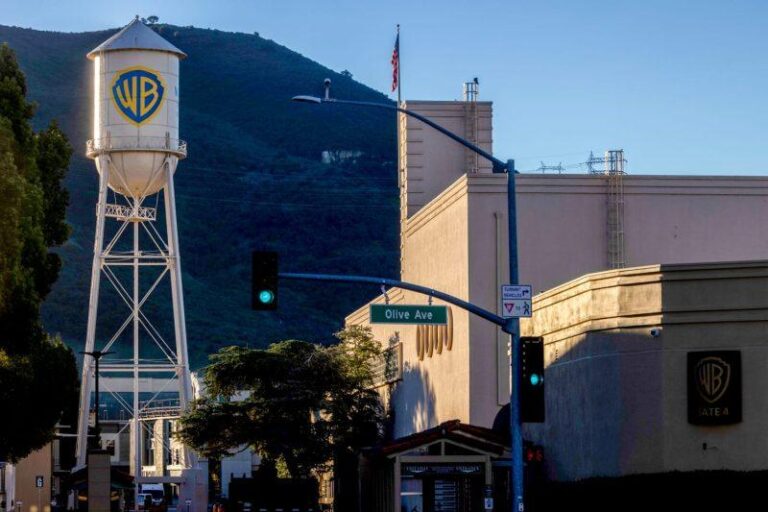
Warner Bros. Discovery on Wednesday rejected Paramount Skydance’s amended takeover offer, the latest in a series of rejections in David Ellison’s pursuit of the streaming and cable giant.

The media company said it remains committed to the $82.7 billion deal it reached in December to sell its streaming service, studio and HBO cable channel to Netflix.

‘The Board unanimously determined that the Paramount’s latest offer remains inferior to our merger agreement with Netflix across multiple key areas,’ Warner Bros. Discovery Chairman Samuel Di Piazza said in a statement.

‘Paramount’s offer continues to provide insufficient value,’ he continued.

In a letter to shareholders, Di Piazza wrote that Paramount Skydance’s offer carries ‘significant costs, risks and uncertainties as compared to the Netflix merger.’ The way the Paramount deal is structured creates a ‘lack of certainty’ about its finalization, he added.

Di Piazza adds in the letter that if the company were to agree to the Paramount merger and it failed to close, it would result in a ‘potentially considerable value destruction.’

‘What matters most right now is our focus as we start the year,’ Warner Bros. Discovery CEO David Zaslav said in a memo to employees seen by NBC News. ‘Our operating plans remain unchanged, and our priorities for 2026 are clear and intentional.’

Zaslav wrote that the ‘review was conducted with discipline and rigor, and was supported by independent financial and legal advisors.’

On Dec. 22, Paramount Skydance increased its offer for Warner Bros. Discovery with a personal guarantee from billionaire Larry Ellison, who was backing the financing for the deal. His son, David Ellison, is the CEO of Paramount Skydance.

However, that was not enough for Warner Bros. Discovery. That beefed-up offer followed Warner Bros. Discovery’s Dec. 17 public rejection of Paramount. It also preceded multiple private rejections before Paramount Skydance went public.

In a statement Thursday, Paramount said it remained committed to the offer that WBD has rejected twice. “WBD continues to raise issues in Paramount’s offer that we have already addressed, including flexibility in interim operations,” Paramount said.

At stake is the future of one of the most storied media empires in the United States.

The bidding by Paramount also comes amid a monumental shift in the media and streaming landscape at large. On Monday, Versant Media, the cable network spinoff from Comcast, began trading as an independent company. Shares have plunged more than 20% over the course of those two days. (Comcast is the parent company of NBCUniversal and NBC News.)

On CNBC, Di Piazza said it would be a mistake to compare Warner Bros. Discovery‘s cable networks to Versant. ‘Discovery Global is different, it has a lot more scale,’ he said.

Streaming companies such as Apple, Netflix and Amazon are also challenging traditional broadcasters such as Paramount-owned CBS for sports rights.

Warner Bros. Discovery controls properties ranging from CNN Worldwide and the Discovery Channel to HBO, as well as the Warner Bros. film studio and archive.

Despite the back and forth between Warner Bros. Discovery and Paramount, Netflix has so far proceeded with the deal it inked Dec. 5, under which the world’s largest streaming company would acquire a stake in WBD.

Warner’s cable networks would be spun out into a separate company as part of that deal. However, Paramount Skydance wants to buy everything Warner Bros. Discovery owns.

Paramount’s controlling shareholders, the Ellisons, have suggested they could obtain regulatory clearance more quickly and easily than Netflix.

In mid-2025, the Ellisons acquired Paramount with approval from the Trump administration. But that approval only came after CBS News agreed to pay $16 million to President Donald Trump’s future presidential library over an interview that “60 Minutes” had conducted with then-presidential candidate, Vice President Kamala Harris.

Netflix, for its part, has met with Trump at the White House over the deal. But Trump has said either bidder poses potential problems, in his view.

Netflix said in a statement that it ‘welcomed the Warner Bros. Discovery board of directors’ continued commitment to the merger agreement’ the two companies reached last year. ‘Netflix and Warner Bros. will bring together highly complementary strengths and a shared passion for storytelling,’ Netflix’s co-CEOs Ted Sarandos and Greg Peters said.

Di Piazza said on CNBC that the difference between Paramount’s offer and that of Netflix is that Warner Bros. and Netflix already ‘have a signed merger agreement’ that has ‘a clear path to closing.’ Di Piazza also said the Netflix deal offers ‘protections for our shareholders, if something stops the close, whatever that might be.’

Trump has said he will be personally involved in reviewing whichever merger proceeds.

Paramount did not immediately respond to a request for comment.

This post appeared first on NBC NEWS

Every trading day, three-four or sometimes five-letter stock tickers move steadily up and down on screens.

Behind those simple symbols sit the shifting emotions of millions of investors, ranging from hope to fear.

Some tickers, however, carry a story.

From Southwest Airlines’ LUV to Harley-Davidson’s HOG and Ferrari’s RACE, certain stock symbols have long stood out.

Yet few investors stop to consider the thought that went into crafting them, especially when many companies simply draw dominant letters from their names, such as Nvidia’s NVDA or Apple’s AAPL.

Invezz takes a closer look at some of the most unusual stock tickers in US market history and asks whether creativity in naming has any connection to performance.

Southwest Airlines (NYSE: LUV)

“Southwest has been in LUV with our Customers from the very beginning,” the airline says in its company history.

The theme runs deep.

In its early years, flight attendants wore hot pants and knee-high go-go boots, served “love potions” (drinks) and “love bites” (peanuts) to passengers, even as employees issued tickets from machines the airline dubbed “Love Machines.”

The symbolism traces back to Southwest’s first flight on June 18, 1971, which departed from Dallas Love Field to San Antonio and Houston.

When the airline listed its shares on the New York Stock Exchange in 1977, LUV was a natural choice.

Over time, the ticker came to reflect not just branding flair but also founder Herb Kelleher’s egalitarian philosophy and rejection of rigid class distinctions.

That ethos extended to features such as open seating, a long-standing practice the airline has only recently decided to end.

Harley-Davidson (NYSE: HOG)

Harley-Davidson motorcycles have been called “hogs” for decades, a nickname rooted in the company’s racing past.

In the 1920s, Harley’s factory racing team, known as the Wrecking Crew, adopted a piglet as its mascot.

After victories, riders would take a lap with the pig perched on the fuel tank.

Fans and journalists soon began referring to the team as the Harley Hogs, a name that eventually became synonymous with the brand and later its stock ticker.

Brinker International (NYSE: EAT)

For Brinker International, owner of restaurant chains such as Chili’s Grill & Bar and Maggiano’s, the ticker EAT is widely believed to have been personally chosen by company founder Norman Brinker when Chili’s went public in 1984.

The symbol directly reflects the company’s core business and remains one of the market’s more literal tickers.

Dave & Buster’s Entertainment (NASDAQ: PLAY)

Dave & Buster’s blends casual dining with arcade-style gaming, making PLAY an apt representation of its business model.

The company was formed in 1982 when founders Dave Corriveau and Buster Corley merged a restaurant and an arcade they operated across the street from each other in Arkansas.

When the company went public in 2014, PLAY neatly captured its identity as a destination built around leisure and entertainment.

Ferrari (NASDAQ: RACE)

Ferrari’s ticker reflects its origins in motorsport rather than luxury road cars.

Enzo Ferrari began his career running Scuderia Ferrari as Alfa Romeo’s racing arm before founding Auto Avio Costruzioni in 1939.

Racing remains central to the company’s identity through its Formula One team, making RACE a concise summary of its heritage.

Other memorable tickers include Petco Health and Wellness’ WOOF, Canopy Growth’s WEED and Cedar Fair’s FUN, each injecting personality into an otherwise technical marketplace.

What’s in a ticker: do quirky tickers actually impact performance?

NYSE rules limit tickers to three letters, while Nasdaq allows up to five, yet not all companies make imaginative use of the space.

Stock symbols date back to the first ticker tape machines of the 19th century, when heavily traded companies were given single-letter identifiers such as T, X and F, still used today by AT&T, US Steel and Ford.

While few investors buy shares solely because of a clever ticker, some academic research suggests creativity may matter.

A 2006 study by psychologists at Princeton University found that stocks with ticker symbols that are easier to pronounce often post stronger performance in the days immediately following their market debut.

Follow-up research from Pomona College in 2019 reinforced those findings, showing that clever and memorable tickers tend to outperform, in part because they stick more easily in investors’ minds.

“There’s evidence that having a company name and ticker that investors like, that’s easy to process, is valuable,” says Russell Jame, associate professor of finance at the University of Kentucky, in a USA Today report.

“It generates more trading in the firm, so that improves the stock liquidity and it also results in a larger breadth of ownership and, ultimately, higher valuation ratios.”

As one investment adviser put it, a ticker is ultimately an extension of a company’s brand. Even in markets driven by fundamentals, a little imagination can still leave a lasting impression.

The post From LUV to HOG to RACE: do quirky stock tickers influence performance? appeared first on Invezz