
Archive

January 14, 2026

Browsing

The post Bitcoin Surges After CPI — Here’s What The Tariff Ruling And Clarity Act Could Mean For Crypto Markets appeared first on Coinpedia Fintech News

Bitcoin price has broken out of a two-month consolidation after a steady, sideways phase, with the latest Core CPI print acting as a key trigger for the move. The breakout has revived bullish sentiment and shifted attention back to whether the crypto markets and BTC price can build follow-through above their former range.

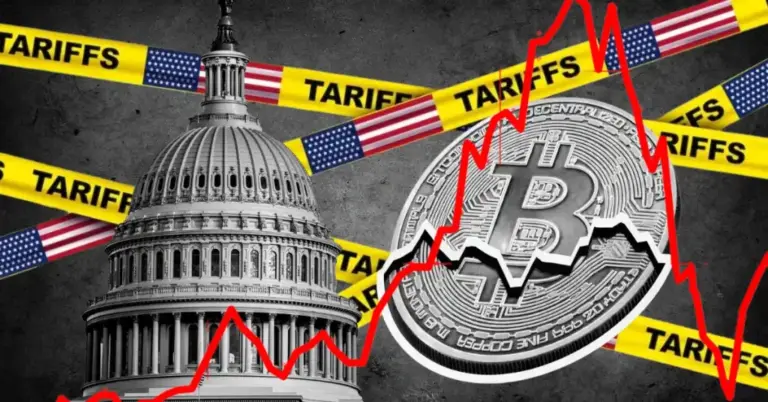
Now, traders are bracing for a fresh volatility wave. The US Supreme Court is expected to deliver a ruling tied to tariffs imposed during President Trump’s administration, a headline that could quickly swing risk appetite across markets. With a major macro catalyst approaching, Bitcoin’s breakout is happening at a sensitive time—making the next few sessions crucial for confirming whether this move extends into a stronger trend or turns into a short-term spike.

How Could The Tariff Decision Impact Crypto Markets And BTC Price?

Markets are on edge ahead of the US Supreme Court’s decision on President Donald Trump’s global tariffs, a ruling that could trigger fresh volatility across risk assets. Trump has warned that striking down the tariffs could hurt the US economy, while many investors are positioned for the court to rule against them. 

Crypto has reacted sharply to tariff headlines before. In early April 2025, when sweeping tariffs were announced, global risk sentiment cracked. Bitcoin price also saw a steep pullback as markets priced in higher uncertainty and slower growth. 

If the court rules against the tariffs, it could initially support Bitcoin by reducing policy uncertainty and easing inflation fears—potentially improving the case for faster rate cuts. But there’s a catch: analysts also warn that unwinding tariffs could still shock traditional markets, and a sharp equity sell-off can spill into crypto in the short term. 

If tariffs are upheld, markets may react negatively to prolonged trade-policy uncertainty and inflation risk, keeping volatility elevated. 

Clarity Act Markup Puts Crypto Regulation Back In Focus

Alongside the tariff ruling, U.S. lawmakers are also moving on the Digital Asset Market Clarity Act, with the Senate set to debate amendments and vote during a markup session. If the bill advances, it would be a meaningful step toward clearer rules for crypto markets—especially around how exchanges and platforms are regulated and how different digital assets are classified under U.S. oversight. 

What does this suggest for crypto markets?

It signals that the near-term backdrop may not be purely “risk-off.” Regulatory progress can reduce uncertainty, which often supports sentiment, liquidity, and longer-term capital allocation into the sector. That said, claims like “wash trading will drop by 70%–80%” are hard to prove upfront—so it’s better to frame this as a push toward stronger compliance and market integrity, not an instant cleanup. 

In parallel, the Trump administration’s executive order on expanding access to alternative assets in 401(k) plans has already directed regulators, including the SEC, to explore ways to facilitate broader access—another headline that could keep bullish expectations alive if follow-through materializes. 

Conclusion: What To Expect Next

Bitcoin has already responded positively to the CPI-triggered breakout, but the next move is likely to be driven by headlines, not charts alone. Traders should expect higher volatility as markets react to two major U.S. developments: the Supreme Court’s decision linked to tariffs and the Senate’s progress on the Clarity Act. 

A risk-on reaction could support BTC’s push toward $100,000, especially if regulatory clarity improves confidence. However, a sudden shock to equities or a “sell-the-news” response could still trigger quick pullbacks across crypto. The key watchpoint now is follow-through: whether buyers keep stepping in after the first spike or whether the market fades into a choppy, headline-driven range.

More than 20 investors and the climate activist shareholder group Follow This have jointly filed resolutions with BP and Shell. 

The resolutions call for the oil and gas giants to disclose their strategies for generating value should global demand for their core products decline, the group announced on Wednesday.

The strategic shift in focus by the Dutch activist group is explicitly reflected in the newly proposed resolutions, according to a Reuters report

This move comes after the group announced in April a significant setback: the suspension of its high-profile, nearly decade-long campaign. 

Aim for more aggressive approach by oil and gas companies

The primary objective of this long-running campaign had been to pressure major global oil and gas producers into adopting more aggressive emissions reduction targets. 

The group cited a “lack of investor appetite”—meaning insufficient shareholder support for its proposals—as the key factor compelling this suspension.

The introduction of these new resolutions, therefore, represents a pivotal change in the group’s methodology and targets. 

Instead of persisting with the now-stalled emissions-focused campaign directly against the producers, the group was now pursuing a different, possibly complementary, avenue to achieve its overarching goal of accelerating the energy transition and tackling climate change. 

This signals a sophisticated re-evaluation of tactics, moving beyond direct demands for emissions cuts to potentially focusing on issues like corporate governance, financial risk disclosure related to climate change, or the pace of transitioning to renewable energy sources. 

The core context remains rooted in environmental activism and holding large energy companies accountable, but the mechanism for doing so has been strategically overhauled following the recent campaign’s disappointing lack of traction among the investor community.

Since 2016, Follow This has been submitting climate-related resolutions at shareholder meetings, achieving notable support in the following years. 

These votes peaked with an 80% majority at Phillips 66, 60% at Chevron, approximately one-third at Exxon and Shell, and 20% at BP.

The group announced its focus will be on pressuring BP and Shell to reveal their long-term strategies, particularly how they plan to operate under scenarios where the demand for oil and gas declines.

Renewable energy commitments retracted by companies

Focusing investment on oil and gas projects, the two companies, like other producers, have scaled back their commitments to renewable energy.

BP and Shell are being requested by the resolutions to publish comprehensive reports, spanning at least a decade. 

These reports must outline capital expenditure, production strategies, and projections for free cash flow under various scenarios of declining demand, including those modeled by the International Energy Agency.

A Shell spokesperson confirmed that the Board will evaluate the resolution, as it meets the procedural requirements. 

The Board’s recommendation to shareholders will be included in the Notice of Meeting for the Annual General Meeting (AGM), which is scheduled for mid-May.

Co-filing investors for the resolutions collectively manage approximately 1.5 trillion euros ($1.75 trillion) in assets. 

These investors include Achmea Investment Management, the Ethos Foundation, and several European local pension funds.

In November, the IEA (International Energy Agency) projected that oil demand would reach its highest point around 2030. This forecast is based on a scenario that incorporates proposed, but not yet finalised, policies.

In a scenario that is distinct from climate aspirations but is instead based on current government policies, the IEA has revised its outlook. 

Contrary to previous projections, the agency now forecasts that global demand for oil and gas could see growth extending all the way to 2050.

The post Climate activists press BP, Shell on post-peak oil finance strategy shift 2026 appeared first on Invezz