Archive

March 2026

Browsing

The post Jerome Powell’s Parting Words: ‘Stick to Your Knitting’ as Senate Prepares Warsh Hearing appeared first on Coinpedia Fintech News

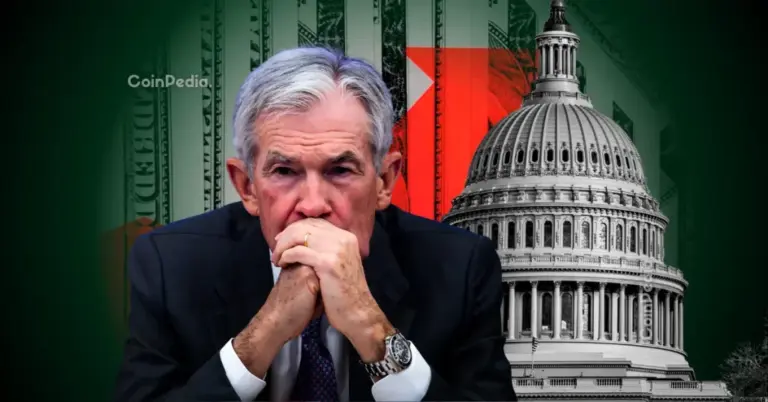
Jerome Powell does not do unsolicited advice. He said so himself. But speaking publicly in what amounts to one of his final major appearances before Kevin Warsh takes the chair, Powell offered something close to a farewell address to the institution he has led through a pandemic, an inflation crisis and now a period of deepening geopolitical and economic uncertainty.

“Stick to your knitting,” Powell said. “There is always a temptation to want to move into other areas. We have very powerful tools. They are supposed to be for maximum employment, price stability and financial stability. There is always a time when an administration looks and says it would be good to use that tool for something else.”

He did not name names. He did not need to.

The Timing Could Not Be More Loaded

The Senate Banking Committee is preparing to hold a confirmation hearing for Warsh in the week of April 13, a timeline that places his nomination squarely inside one of the most turbulent macroeconomic moments in recent memory.

Inflation is rising again. US-Iran tensions are escalating and clouding the rate cut outlook that markets had been quietly counting on. The FOMC meets April 28 to 29, and whoever sits in the chair by then, or is confirmed to sit there soon after, will inherit a set of decisions with no clean answers.

Powell acknowledged the weight of the role without flinching. “What we do is very challenging and highly uncertain. The Fed is not a perfect institution. Don’t look for perfection.”

What he did ask for was something simpler and more fragile: independence.

“We are not trying to work against any politician or any administration. But we have to be careful to stick to what we are doing.”

What Warsh Walks Into

Warsh, a former Fed governor known for his market-focused instincts and more hawkish leanings, enters a confirmation process shaped by competing pressures. The White House has made no secret of its preference for lower rates. Markets want clarity. And Powell, in his own careful way, just reminded everyone why the person holding that chair cannot simply deliver what any one side wants.

Meanwhile, the CLARITY Act, which would formally define crypto assets under US law, is advancing toward a markup in April with growing bipartisan support, adding another dimension to the regulatory environment Warsh will need to navigate.

To the Next Generation, With Caveats

Powell also spoke directly to students navigating a labour market reshaped by AI and immigration policy shifts, offering a perspective that was optimistic in the long run and honest about the near term.

“It is a challenging time to enter the labour market,” he said plainly. “But this economy is going to give you great opportunities. Master these new technologies. That should stand you in good stead.”

On whether AI ultimately complements or replaces human workers over a 40-year horizon, Powell, for once, did not pretend to have the answer.

“It is so hard to say.”
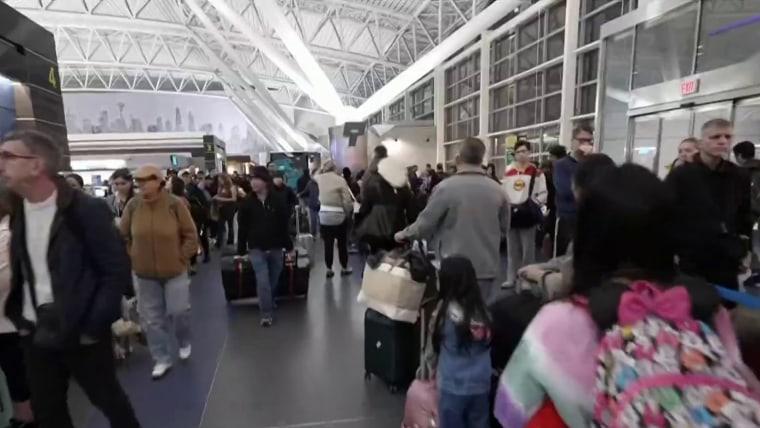
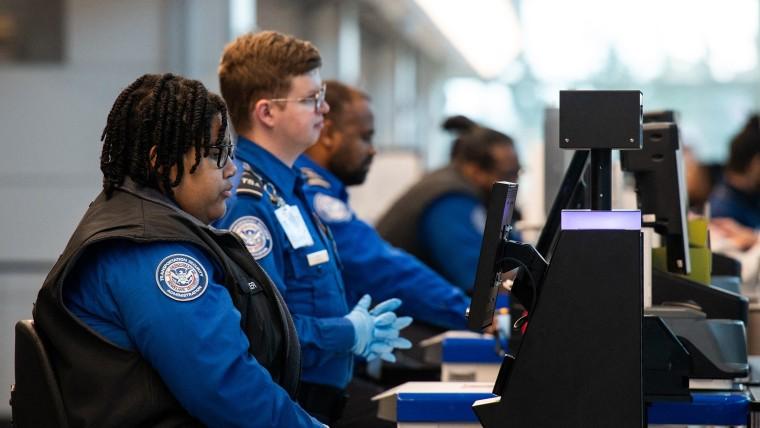
Travelers frustrated by long security lines may not see immediate relief, even as Transportation Security Administration officers begin receiving pay again on Monday after working without wages for more than a month during the partial government shutdown.

President Donald Trump signed an executive order Thursday directing federal officials to ensure that TSA workers are paid despite the shutdown, breaking a more than 40-day stretch in which officers went without salaries.

But the move is unlikely to bring instant relief at airport checkpoints, according to former TSA Administrator John S. Pistole.

“It’s a temporary fix,” he told NBC News.

The more pertinent question, he said, is how many workers actually return to their posts now that paychecks are set to resume Monday.

More than 500 officers have quit during the shutdown, according to the Department of Homeland Security, while thousands more have called out because they can’t afford basic expenses.

TSA callout rates reached a high of 12.35% of the workforce on Friday, accounting for more than 3,560 employees, a DHS spokesperson said Saturday. The department added that at Trump’s direction and under Homeland Security Secretary Markwayne Mullin, TSA has “immediately begun the process of paying its workforce” and that officers “should begin seeing paychecks as early as Monday, March 30.”

Those shortages have forced travelers to contend with missed and canceled flights, long security lines and growing uncertainty around air travel.

If most officers report back beginning Monday and airports are able to restore staffing, wait times could start to ease within several days to a couple of weeks, Pistole said.

“It really depends on that asterisk of how many people show up,” he said.

Some workers who left may already have other jobs lined up, raising questions about whether some will return at all.

“How many of them come back after they get this paycheck? Or maybe they already have another full-time job lined up, they’re just waiting to inform TSA after they get their check on Monday,” Pistole said. “So there are a number of variables there.”

Pistole said the uncertainty, coupled with TSA’s typical annual attrition rate of about 7%, could mean delays will continue even after pay resumes.

Until then, some travelers may want to consider alternatives such as driving, rail or bus.

“I think many will and are looking at those options to say, ‘Is that more reliable? Because the last thing I want to do is get to Bush International Airport in Houston and have a four-hour wait,’” Pistole said.

World has launched MiniKit 2.0 on World Chain, introducing a technical upgrade aimed at standardizing development across web and World App environments while enhancing transaction speed, payments, and developer incentives.

The release is positioned as a step toward simplifying application deployment and scaling within the World ecosystem, which focuses on consumer-facing applications tied to proof-of-human infrastructure.

Unified development across platforms

MiniKit 2.0 aligns development on World Chain with Ethereum’s EIP-1193 standard, enabling developers to build applications once and deploy them across both web platforms and World App with minimal modification.

In many cases, existing applications can be adapted into Mini Apps with as few as two lines of code, reducing development time and lowering barriers to entry.

Applications deployed within World App now function identically to their standalone web versions, allowing teams to scale from initial deployment to full World Chain integration without changing core logic.

This unified approach is designed to streamline testing, distribution, and ongoing updates for developers.

The upgrade comes amid strong usage growth across the ecosystem. Over the past seven days, Mini Apps recorded more than 12.1 million opens, with total all-time opens surpassing 2.2 billion, reflecting increasing engagement.

Faster transactions and expanded payments

The upgrade introduces Flashblocks integration, reducing transaction confirmation times from up to two seconds to approximately 200 milliseconds.

This improvement supports applications that require real-time responsiveness, including gaming and trading interfaces.

MiniKit 2.0 also expands payment capabilities by supporting a broader set of stablecoins, including wARS, wCOP, wMXN, wBRL, wPEN, wCLP, and EURC.

These additions enable developers to offer localized payment experiences without managing region-specific infrastructure.

Gas sponsorship is now available through Privy, powered by ZeroDev’s account abstraction infrastructure.

This allows developers to cover transaction fees on behalf of users, removing the need for wallet balances or manual fee handling and simplifying onboarding for new users.

Together, these features are aimed at reducing friction in both user experience and application performance, while broadening the range of financial interactions supported on World Chain.

Developer funding and ecosystem growth

Alongside the launch, World announced the opening of applications for World Build 3, its developer program designed to support teams building on World Chain.

Since its inception, participants in the program have raised more than $15 million from venture capital firms and launched applications used by millions of verified users.

The third cohort will begin with a four-day hackathon offering $20,000 in prizes, followed by a Build Week in Seoul, a three-month virtual program, and a Demo Day in San Francisco.

World also plans to showcase MiniKit 2.0 and its broader developer ecosystem at EthCC, taking place from March 30 to April 2.

The latest upgrade underscores World’s effort to position its platform as a scalable and developer-friendly environment for building consumer applications.

By combining faster transaction speeds, simplified deployment, and expanded funding opportunities, MiniKit 2.0 aims to strengthen adoption across its growing network.

The post MiniKit 2.0 launches on World Chain, boosting speed and dev reach appeared first on Invezz

The post Chainlink (LINK) and Uniswap (UNI) Signal Similar Breakouts—Can Both Hit $10 in Q2? appeared first on Coinpedia Fintech News

Chainlink (LINK) and Uniswap (UNI) are showing strikingly similar price structures, with both tokens attempting to recover within ascending channels after prolonged downtrends. As the broader market stabilises, these altcoins are beginning to build momentum near key resistance zones.

With both tokens holding above crucial support levels and forming higher lows, traders are now watching for a potential breakout. The key question remains: can the prices of  LINK and UNI sustain this structure and push toward the $10 milestone in Q2?

The Chainlink price is currently trading within a rising channel after a sharp decline earlier this year, indicating a gradual recovery phase. The price is holding near the $8.5–$8.8 zone, which now acts as immediate support, while the structure continues to print higher lows.

The next major resistance lies around $10, followed by a stronger supply zone near $12. A breakout above the channel resistance could accelerate momentum toward these levels. On the indicator side, the DMI is heading for a bullish crossover, while CMF is attempting to recover from negative territory, hinting at improving capital inflows. However, the momentum remains moderate, suggesting that a confirmed breakout is still needed for trend continuation.

Key Levels:

  • Support: $8.5
  • Resistance: $10 → $12

Uniswap (UNI) Price Analysis

The Uniswap price is mirroring a similar structure, trading within a rising channel while attempting to recover from its recent lows. The price is currently hovering near the $3.5 range, holding above the lower boundary of the channel and forming a base.

The immediate resistance lies near $4, with a stronger barrier around $5.6. A breakout above these levels could open the path toward higher targets in the coming weeks. From an indicator perspective, DMI, similar to LINK is heading for a bullish crossover, while CMF remains slightly negative but is heading towards the threshold. This keeps UNI slightly weaker compared to LINK in terms of momentum, but the buying pressure is building.

Key Levels:

  • Support: $3.2–$3.4
  • Resistance: $4 → $5.6

Conclusion — Can LINK & UNI Reach $10 in Q2?

Both Chainlink and Uniswap are showing early signs of recovery, with similar ascending channel structures suggesting a potential continuation of the uptrend. In the short term, the setups remain constructive as long as key support levels hold.

However, the path to $10 differs significantly for both tokens. The LINK price appears closer to the target and may achieve it if it breaks above immediate resistance. In contrast, UNI price still requires multiple breakout confirmations before approaching the same level.

President Donald Trump is used to bending financial markets to his will.

But with the war in Iran, he may have reached the limit of his ability to do so.

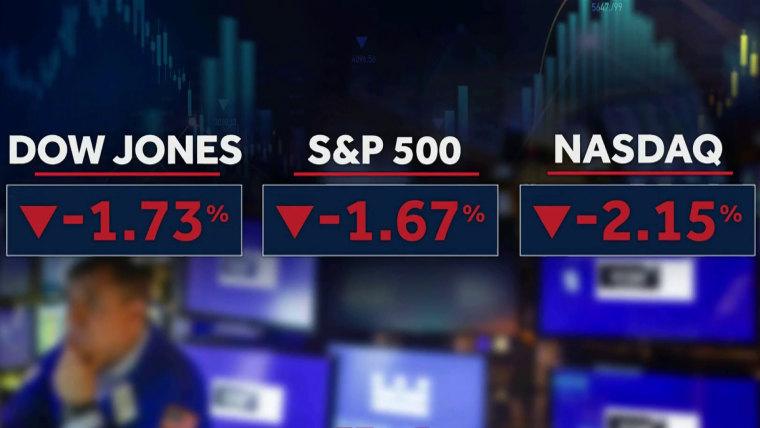
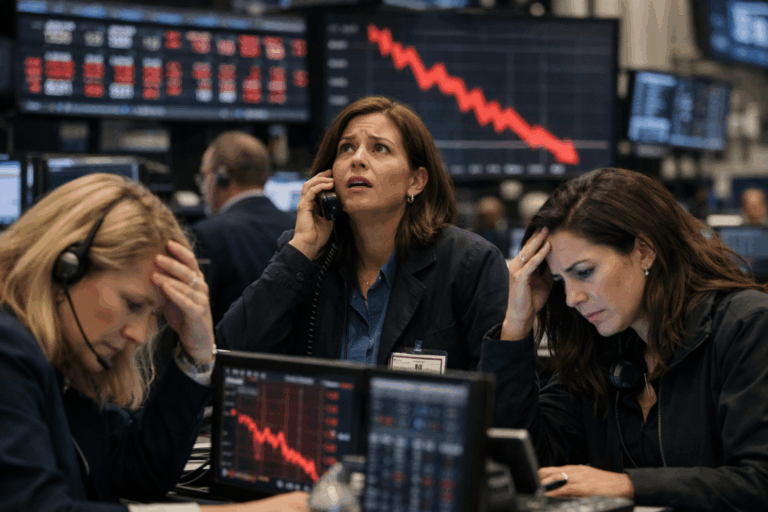
On Friday, the S&P 500 closed down 1.7% and notched its fifth-straight weekly decline, its worst stretch since 2022 and a sign of rapidly faltering confidence in a swift resolution to the Iran war.

Since the U.S. attacked Iran on Feb. 28, the S&P 500 has declined about 7%.

The Dow Jones Industrial Average fell 1.7% Friday and has lost nearly 4,000 points since the start of the war. It is now down more than 10% from its most recent high, a correction in technical terms.

The tech-heavy Nasdaq fell further into correction territory Friday, closing down 2% and off 13% since its record close in October.

Oil prices also rose sharply, with U.S. crude topping $100 a barrel and global Brent crude at approximately $114 at around 4 p.m. ET. The yield on the 10-year Treasury note surged to 4.4%, the highest since last summer. Some energy stocks, like Exxon, traded near all-time highs.

Shortly after stock markets had closed Thursday, Trump announced he was pausing attacks on Iranian energy sites for 10 days. But stocks barely budged.

Just days earlier, they had rocketed higher Monday when the president announced there had been “productive” talks with Iranian representatives, so he would pause strikes on Iranian power facilities for five days.

“The market is looking beyond commentary from the administration,” said Adam Turnquist, chief strategist at LPL Financial investment group, which manages nearly $2 trillion in assets. “They actually want concrete details and a resolution. And actions speak louder than words, that’s really present in [current] price action.”

This new reality stands in contrast to Trump’s ability to move markets throughout his first term and into the outset of his second.

Trump spent the better part of 2025 whipsawing traders via frequent changes regarding tariff levels. Eventually, a pattern emerged: The president would announce a new import duty, markets would fall, and Trump would usually end up reversing himself in some way.

The trend even got a nickname, coined by a columnist for the Financial Times: “TACO” — for “Trump Always Chickens Out.” (Last month, the Supreme Court struck down many of the tariffs.)

This time, the chain of events unleashed by Trump’s decision to attack Iran are such that a return to prewar conditions — and market levels — is virtually impossible in the short or even medium term, experts say.

The disruption to flows of oil and gas has been so substantial that transport costs, and ultimately the price paid per barrel, are likely to stay elevated indefinitely. Even when the Strait of Hormuz, which Iran has used as a chokepoint to drive concessions from the West, eventually reopens, the cost of transiting through it has likely gone up for the foreseeable future.

And the broader fallout on the economy and consumer purchases is already being felt.

That, in turn, has made interest rate cuts by the Federal Reserve less likely, because the higher oil costs are set to contribute to already sticky inflation. The odds of a rate hike before the end of the year have now outpaced the odds of a cut.

“Let’s say hostilities end tomorrow — the market will rally, but it’s not necessarily ripping back to where it was before because of the disruptions that have occurred,” said Steve Sosnick, chief strategist at Interactive Brokers financial group. “You’re not going to see oil go back to where it was immediately. You’re not going to see markets price in rate cuts the way they were before.”

White House spokesman Kush Desai said Friday that Trump “continues to be a powerful force driving the market’s confidence in the United States as the most dynamic, pro-business economy in the world.”

“Once the military objectives of Operation Epic Fury have been achieved and the market’s short-term disruptions are behind us, everyday investors are set to reap a windfall in a booming American economy,” Desai said.

A day earlier, the president said he was not concerned about the market’s recent performance.

Oil prices “have not gone up as much as I thought, Scott, to be honest with you,” he said during a Cabinet meeting, addressing Treasury Secretary Scott Bessent. “It’s all going to come back down to where it was and probably lower.”

Markets have not fallen further because the outlook for earnings growth remains bullish, Turnquist said — though that could change the longer the conflict drags on and further impinges on consumer spending and business investment.

And compared to prior oil shocks, the U.S. economy is less oil-intensive, as it has transitioned to one that is largely service-oriented. Global oil markets have also been supported by America’s oil production boom over the past decade — with more supplies online, overall prices are less likely to rise as much.

Yet by some metrics, stocks were already considered expensive prior to the hostilities. Having already contended with stretched valuations, traders may find it much harder to power stock prices back to the record levels seen just prior to the start of the latest conflict.

“The risk-reward is still very heavily weighted toward [the] risk” of further stock-price declines,” said Matt Maley, chief market strategist at Miller Tabak financial group.

Should hostilities persist, Trump’s ability to influence markets will only further erode, Sosnick predicted.

“He now realizes he’d like to jawbone his way out of it, but it’s not that easy at this point because the situation encompasses so many moving parts and difficult variables,” Sosnick said. “It doesn’t lend itself to a quick set of comments mollifying investors.”

Shares of Oracle have come under sustained pressure in recent months as investors worry about heavy spending on artificial intelligence infrastructure.

However, analysts at Bernstein argue that the company’s strategy is likely to deliver significant long-term gains.

The stock has fallen nearly 60% from its all-time high in September last year, reflecting concerns that aggressive investments in data centres could weigh on free cash flow and profitability.

However, Bernstein maintained an outperform rating and a $319 price target, suggesting that markets may be overlooking Oracle’s evolving growth profile.

The target reflects an over 127% upside to Oracle’s current price level of $140.

AI investment raises concerns

Investor scepticism has largely focused on Oracle’s shift toward infrastructure-as-a-service, where the company is building out capacity to support AI workloads.

This transition has prompted concerns about rising capital expenditure and the potential for lower margins compared to its traditional software business.

Some investors have also questioned whether Oracle’s cloud model, which includes supplying compute capacity to customers such as OpenAI, can sustain profitability over time.

However, Bernstein analyst Mark Moerdler said the underlying economics are stronger than perceived.

“Oracle’s economics are better than we thought,” he wrote, adding that the company is emerging as a key beneficiary of the AI build-out.

He added, “We think Oracle should be one of the go-to investment names given its AI data centre business and its core database business.”

Capex requirements seen manageable

Bernstein estimates that Oracle will require between $15 billion and $20 billion in additional capital by fiscal 2028 to complete its existing infrastructure commitments, significantly lower than some market expectations.

The company is also expected to turn free cash flow positive by fiscal 2030, once the current phase of accelerated investment tapers off.

Moerdler said that after this build-out phase, free cash flow is likely to recover sharply.

Free cash flow should “substantially bounce back,” he noted, projecting that it could reach as much as $212 billion annually by fiscal 2035.

Oracle has already outlined plans to raise up to $50 billion in debt and equity to fund its capital expenditure needs this year.

According to Bernstein, this funding will be sufficient to support operations through 2029.

The analyst also pointed to improved confidence in customer demand, noting that OpenAI’s recent $110 billion funding round helps ease concerns about its ability to meet long-term commitments.

Long-term growth drivers remain intact

While Oracle’s infrastructure business may carry lower margins than its software segment, Bernstein said the company’s integrated hardware and software capabilities could act as a competitive moat.

The ability to provide specialised solutions, including sovereign cloud offerings for governments, could open up higher-margin opportunities over time.

“With the valuation having taken a substantial cut, we believe the upside potential far outweighs the downside risk,” Moerdler said.

Other brokerages have also turned constructive.

Bank of America recently reinstated coverage with a buy rating and a $200 price target, highlighting Oracle’s positioning in the fast-growing AI and cloud markets.

Analyst Tal Liani described the company as “a giant going all-in on AI infrastructure and the cloud,” underlining the scale of its ambitions.

As the AI investment cycle progresses, analysts say Oracle’s strategy may shift from being seen as a near-term risk to a key driver of long-term value creation.

The post Oracle stock is down 60% in 7 months, but analysts see 127% upside ahead appeared first on Invezz

The post Dogecoin Price Repeating Mini Cycles—Is Another Big Move on the Horizon? appeared first on Coinpedia Fintech News

The Dogecoin price has been capped below a crucial resistance range since February, which has dropped by more than 6% in the past few days. The price is down by 3.43% to $0.0904, significantly underperforming a slightly weaker broader market, primarily driven by derivatives-led selling pressure. In the meantime, the on-chain activity begins to rise, despite the DOGE price action remaining muted. This suggests that a larger move could be building beneath the surface. 

The question now arises: will the Dogecoin price repeat the previous pattern and explode, or will there be yet another sideways consolidation?

Rising Active Addresses Signal Renewed Interest

Recent data shows that Dogecoin’s daily active users have climbed to around 53K, marking a noticeable recovery in network activity over the past few weeks. After a prolonged period of relatively flat engagement, the uptick in active addresses suggests renewed user participation, increased transaction activity and growing market attention. 

Historically, such rises in network activity have often aligned with early-stage accumulation phases, where interest begins to build before price expansion. However, this alone does not confirm a bullish breakout. While rising activity supports a constructive outlook, it needs to be backed by strong price action to validate any sustained upward trend.

Dogecoin Price Analysis: Mini Cycles Hint at Repetition

The Dogecoin price has been consolidating within a narrow range between $0.0902 and $0.0970 from the past few days, suggesting tight accumulation. From a technical perspective, the price appears to be following a repeating structure of accumulation, then markup, pullback and later consolidation. Previously, this trade set up have delivered nearly 190% gains in the first breakout and over 480% rally in the second phase. 

Currently, DOGE seems to be forming a potential third accumulation zone as the price continues to move sideways within a defined range. 

The above charts suggest the price remains within a range bound by lower highs. Momentum is still weak and indecisive with no confirmed breakout structure. This suggests that while the pattern resembles past cycles, the current phase lacks the strength seen before previous rallies. The structure is similar, but the confirmation is still missing. For now, the next direction depends on how the price reacts to these levels. 

A breakout above the $0.13–$0.15 zone could signal a shift in momentum and open the door for a move toward $0.25 and higher levels. On the other hand, a breakdown below $0.08 may weaken the structure and delay any bullish continuation. In simple terms, Dogecoin is not in a trend yet—it’s in a setup phase. While the pattern suggests the possibility of another rally, only a confirmed breakout will validate the move.

Final Verdict: Can Dogecoin Follow Its Historical Cycle and Reach $0.7?

From a broader perspective, Dogecoin’s chart still carries a long-term bullish possibility, mainly driven by its repeating accumulation cycles. If this cycle plays out, a confirmed breakout above the descending resistance and the $0.13–$0.15 zone could be the first signal of strength. 

Beyond that, sustained momentum could push DOGE toward the $0.45–$0.50 range, and in a more extended bullish scenario, the target could escalate to $0.7. However, this outlook remains conditional. The bullish trajectory depends entirely on whether Dogecoin can break out of its current range and maintain higher highs. Until then, the long-term scenario remains a possibility—not a certainty.

WASHINGTON — The Senate agreed unanimously early Friday to fund the Department of Homeland Security, but without funding for immigration enforcement and deportation operations.

Senators approved the package at 2:20 a.m. by voice vote following a marathon session.

The 42-day funding lapse has seen them go without pay, leading many to call out of work and causing long lines at airports. While the measure still needs to pass the House, the Senate vote paves the way to allow airports to fully function again.

The legislation would fund all of DHS except Immigration and Customs Enforcement and Customs and Border Protection, which Democrats have refused to vote for without significant reforms to immigration raids and deportation practices.

The deal followed arduous bipartisan negotiations that occurred in fits and starts over the last six weeks, succumbing to the impasse around policy changes to immigration enforcement. Under the new plan, Democrats get their weeks-long demand to fund the department with the exceptions of ICE or CBP, but also without the restrictions they sought on how immigration officers may conduct operations.

“This could have been done three weeks ago,” Senate Minority Leader Chuck Schumer, D-N.Y., said. “This is exactly what we wanted.”

Long wait lines at a TSA checkpoint at New York’s LaGuardia airport Friday.Gabrielle Korein / NBC News

The bill faces an uncertain future in the Republican-controlled House. It is expected to have President Donald Trump’s support, which could help corral conservatives who have been skeptical about splitting off ICE funding from the underlying bill.

“Hopefully they’ll be around, and we can get at least a lot of the government opened up again, and then we’ll go from there,” Senate Majority Leader John Thune, R-S.D., said of the House and a potential vote on Friday. He said he texted with Speaker Mike Johnson, R-La., on Thursday night.

The Senate adjourned for a two-week recess, leaving the House with few options other than to accept their bill as written.

Thune separately blamed Democrats. “President Trump should never have had to step in to rescue TSA workers and U.S. air travel. We are here because, thanks to Democrats’ determined refusal to reach an agreement, there will be no Homeland Security funding bill this year.”

Speaking after the vote, Schumer said: “In the wake of the murders of Renee Good and Alex Pretti, Senate Democrats were clear. No blank check for a lawless ICE and Border Patrol.”

He added that the “long overdue agreement” funds TSA, the Coast Guard, the Federal Emergency Management Agency and the Cybersecurity and Infrastructure Security Agency, and “strengthens security at the border and the ports of entry, and keeps Americans safe.”

He added that the deal “could have been accomplished weeks ago if Republicans hadn’t stood in the way.”

The White House and Republicans declined to grant Democrats’ demands to restrict Trump’s immigration practices. They now plan to pursue the remainder for funding for ICE and CBP in a separate party-line bill, which they could also use to pass Iran war funding and elements of the Trump-backed SAVE America Act.

Senate Republicans held a vote open for hours Thursday as the two sides continued to negotiate, having traded offers for days.

Trump, meanwhile, announced earlier Thursday that he would instruct newly sworn-in Homeland Security Secretary Markwayne Mullin to “immediately pay our TSA Agents in order to address this Emergency Situation.”

That move may not be needed if the House passes the Senate legislation, according to a senior administration official, who said the White House is waiting to see what will happen.

This official also said the funds to pay TSA agents would come from the so-called One Big Beautiful Bill, the tax-cut and spending legislation Trump signed into law in July. It’s not clear exactly how that would work, but the administration has dipped into those unspent funds before to cover pay gaps during funding lapses.

The House can either debate and vote out the Senate-passed measures in the Rules Committee before bringing them to the floor under a simple majority vote, or Johnson can seek to fast-track it to the floor.

The House was set to hold an unrelated vote at 10 a.m. before leaving for recess.

We’d like to hear from you about how you’re experiencing the partial government shutdown, whether you’re a TSA agent who can’t work right now or a federal employee who is feeling the effects at your agency. Please contact us at tips@nbcuni.com or reach out to us here.

TSA officers missed their first full paychecks in mid-March, leading many to call out of work. Call-out rates for TSA officers have exceeded 11% nationally, with rates at some airports passing 40%.

Trump sent ICE agents to airports to help TSA earlier this week. Unlike TSA officers, ICE agents continue to receive paychecks during the partial shutdown as a result of funding from the so-called One Big Beautiful Bill, a sweeping GOP domestic policy package, that Trump signed into law last year.

The S&P 500 Index continued its strong downward trend last week as the Iran war continued, pushing crude oil and natural gas prices higher.

The SPX index fell to $6,368, its lowest level since August last year. It has fallen in the last five consecutive weeks.

S&P 500 Index in focus as Iran war takes new twist

The S&P 500 Index and other American indices like the Dow Jones and the Nasdaq 100 will be in the spotlight this week as the US-Iran war takes a new twist.

Yemen’s Ansah Allah, popularly known as Houthis, entered the war on Friday by shooting rockets towards Israel.

The group has committed to continuing fighting in the coming weeks, meaning that it may make it hard for oil tankers to transit through the Red Sea.

At the same time, the United States has sent troops to the region, with the ultimate goal being the control of the Kharg Island and the Strait of Hormuz.

All these events mean that the war will continue in the foreseeable future, pushing energy prices substantially higher in the coming weeks. 

Already, data shows that Brent and the West Texas Intermediate (WTI) jumped to $112 and $100, up by over 100% from the lowest level this year.

A continuation of this war will lead to a lower S&P 500 Index.

US non-farm payrolls data 

The other key catalyst for the S&P 500 Index will be the upcoming US non-farm payrolls (NFP) data, which will come out on Friday this week.

Economists expect the upcoming report to show that the labor market likely rebounded in February after shedding thousands of jobs in the previous month.

The average estimate is that the economy created 60k jobs in March after losing 92k in the previous month. The unemployment rate is expected to move from 4.4% to 4.5%.

Still, the labor market has largely stalled in the past few months, a trend that may continue in the coming months as the war in Iran leads to substantial shivers in the economy.

Indeed, the expected increase will partly be because of healthcare payrolls by over 30,000 Kaiser Permanente employees, who ended their strike.

A weaker jobs report will be bullish for the stock market as it may put pressure on the Federal Reserve to cut interest rates. The challenge, however, is that the US is going through stagflation, which is characterized by high inflation and slow economic growth.

In addition to the labor market data, the S&P 500 Index will react to the upcoming manufacturing and services PMIs from the United States. Economists expect the data to show that these numbers dropped modestly in March as the Iran war pushed energy prices higher.

SPX Index technical analysis as death cross forms

S&P 500 index Index chart | Source: TradingView 

The daily timeframe chart shows that the S&P 500 Index has slumped in the past few weeks, moving from a high of $7,000 in February to the current $6,368. 

It has slumped below the 23.6% Fibonacci Retracement level. Also, the index has formed a death cross pattern as the 50-day and 200-day Weighted Moving Averages (WMA) have crossed each other.

The Average Directional Index (ADX) has jumped to 40, a sign that the downtrend is gaining momentum. It has moved below the Supertrend indicator.

Therefore, the index will continue falling, with the next key target to watch being the 38.2% retracement level at $6,130. 

The post S&P 500 Index flashes a death cross as US-Iran war continues ahead of NFP data appeared first on Invezz

The post Ethereum Is Mispriced, Says Coinbase Research Chief Ahead of EthCC on Monday appeared first on Coinpedia Fintech News

ETH is trading at $2,000 today, sitting 59% below its August 2025 all-time high. Most investors have written off altcoins in a brutal bear market.

David Duong, Global Head of Institutional Research at Coinbase, thinks that is exactly the wrong read, especially when it comes to Ethereum.

Speaking on the Milk Road Show this week, Duong laid out why Ethereum might be the most mispriced asset in crypto right now.

Ethereum’s Regulatory Pass

On March 17, the SEC and CFTC jointly classified 16 crypto assets as digital commodities, including ETH. For Ethereum specifically, this matters more than it does for most. Staking, a core part of Ethereum’s ecosystem, is now explicitly outside securities law.

“It gives ETH more of a clean regulatory pass,” Duong said, “and I think that has already been there but it’s just nice to see it in print.”

For institutions that were sitting out precisely because of legal uncertainty, that clarity is the green light they were waiting for.

BlackRock’s Staked ETH ETF: Why It’s Important

BlackRock launched its iShares Staked Ethereum Trust ETF earlier this month, pulling $254 million in its first week – the fastest-growing crypto ETF launch of 2026. The fund intends to stake between 70% and 95% of its ETH holdings under normal conditions.

Duong called it “a massive development that you don’t really see priced into ETH.”

The logic is straightforward: more institutional demand coming in, less circulating supply available. That is a structural shift, not a sentiment trade.

Also Read: 5 Altcoins With the Strongest 10x Setup in the Current Bear Market

Watch EthCC This Monday

This is the angle most people have missed entirely. EthCC[9] opens in Cannes on Monday March 30, and Duong flagged a specific talk on the agenda titled “Issuance: The Cost of Inaction.”

His read is that a significant announcement about Ethereum’s monetary policy and issuance rate is coming.

“I would expect a big announcement coming about what’s going to happen with the potential ETH supply in the future,” he said.

Institutions Are Still Bullish

Coinbase Institutional’s 2026 survey of around 350 respondents found that 73% plan to increase their digital asset allocations this year and 74% expect crypto prices to rise over the next 12 months – even though the survey was conducted during the January drawdown.

As Duong put it, “anyone who wanted to sell likely already sold.”

ETH at $2,000, with regulatory clarity, a structural supply squeeze, and a potential catalyst arriving Monday. The market may not have caught up yet.

Read More: Citigroup Cuts Bitcoin and Ethereum Price Targets: Clarity Act to Blame?