
Archive

March 2026

Browsing

A federal judge in California has blocked the Trump administration from designating Anthropic as a supply chain risk to national security and cutting off the AI company’s work with federal agencies.

Anthropic sued the Defense Department and other federal agencies this month after the Pentagon labeled it a “supply-chain risk to national security.” President Donald Trump said he would also ban the use of Anthropic’s products across other federal agencies.

“Defendants’ designation of Anthropic as a ‘supply chain risk’ is likely both contrary to law and arbitrary and capricious,” U.S. District Judge Rita Lin of Northern California wrote in her order Thursday night. “The Department of War provides no legitimate basis to infer from Anthropic’s forthright insistence on usage restrictions that it might become a saboteur.”

Lin paused her order for a week to allow the administration time to appeal.

The Defense Department and the White House did not immediately respond to a request for comment Thursday evening.

“We’re grateful to the court for moving swiftly, and pleased they agree Anthropic is likely to succeed on the merits,” an Anthropic spokesperson said in a statement Thursday. “While this case was necessary to protect Anthropic, our customers, and our partners, our focus remains on working productively with the government to ensure all Americans benefit from safe, reliable AI.”

The supply chain risk designation requires the Pentagon and its contractors to stop using Anthropic’s commercial AI services for all defense business.

Defense Secretary Pete Hegseth said on X in late February that he was issuing a directive to give the company the “supply chain risk” label. Trump also said he was ordering all federal agencies, including the Treasury and State departments, to cease using Anthropic’s AI technology.

“The record reflects that the Challenged Actions were taken without any meaningful notice or pre-deprivation process (and, in the case of the Presidential Directive and the Hegseth Directive, without any post-deprivation process either),” Lin wrote in her order.

The order Thursday also bars other agencies from cutting off their work with Anthropic. Lin wrote that the order restores the status quo.

“This Order does not require the Department of War to use Anthropic’s products or services and does not prevent the Department of War from transitioning to other artificial intelligence providers, so long as those actions are consistent with applicable regulations, statutes, and constitutional provisions,” the order said.

Anthropic filed two lawsuits against the Defense Department — one in U.S. District Court for Northern California and the other in U.S. Circuit Court of Appeals for Washington, D.C. — alleging that the federal government’s moves go beyond a normal contract dispute and instead are an “unlawful campaign of retaliation” that followed months of heated negotiations about how the military should be able to use Anthropic’s AI systems.

Anthropic had sought stronger guarantees that the Pentagon would not use its AI systems for autonomous weapons or mass domestic surveillance.

Anthropic is the creator of the Claude chatbot system and the only AI company whose services were cleared for use on the Defense Department’s classified networks.

Hours after Hegseth’s announcement last month, OpenAI CEO Sam Altman said his company had reached an agreement with the Pentagon to use its services in classified settings.

Lin wrote: “Although Anthropic was on notice that the government objected to its contracting terms, it had no notice or opportunity to object before Defendants publicly barred it from all federal government work and blacklisted it with private companies working with the U.S. military. It also had no notice or opportunity to object to the factual basis for its designation as a supply chain risk, which it learned of in this litigation.”

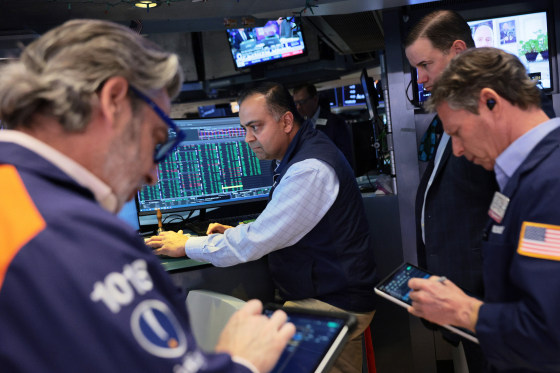
US stocks fell sharply on Friday, with all three major indexes closing at their lowest levels in more than six months, as escalating tensions in the Middle East and surging oil prices dampened investor sentiment.

The Dow Jones Industrial Average dropped 793.47 points, or 1.73%, to 45,166.64, entering correction territory on an intraday basis.

The S&P 500 fell 1.67% to 6,368.85, while the Nasdaq Composite slid 2.15% to 20,948.36, leaving it nearly 13% below its October peak.

The selloff marked the fifth straight weekly decline for the major averages, the longest losing streak in nearly four years, as markets struggled to absorb the economic fallout of a prolonged geopolitical conflict.

Oil surge and war fears weigh on sentiment

Investor sentiment remained under pressure as the conflict involving Iran continued to disrupt global energy markets.

Brent crude settled at $112.57 per barrel, while US crude rose to $99.64, both near multi-year highs.

The closure of the Strait of Hormuz, a critical oil transit route, has heightened fears of supply disruptions and prolonged inflationary pressures.

Despite signals from Donald Trump that diplomatic efforts are ongoing, markets showed little optimism about a near-term resolution.

“As per Iranian Government request, please let this statement serve to represent that I am pausing the period of Energy Plant destruction,” Trump said in a Truth Social post. “Talks are ongoing and, despite erroneous statements to the contrary by the Fake News Media, and others, they are going very well. Thank you for your attention to this matter!”

Still, uncertainty persists as Iran has reportedly rejected proposals to end the conflict, while the US considers further military deployments to the region.

Megacap weakness deepens market losses

Losses were led by large-cap technology and consumer stocks, which have been key drivers of market performance in recent years.

Shares of Nvidia fell about 2%, while Amazon dropped roughly 4%, weighing heavily on the broader market.

The weakness extended across sectors, with consumer discretionary stocks among the worst performers.

Cruise operators, including Carnival and Norwegian, declined sharply after weaker outlooks, adding to concerns about slowing demand.

The Nasdaq 100 has now entered correction territory, while the small-cap Russell 2000 index confirmed its own correction earlier.

Rate outlook shifts as inflation risks rise

Rising energy prices have complicated the outlook for monetary policy, reducing expectations that the Federal Reserve will cut interest rates this year.

Markets are now pricing in a roughly 25% chance of a rate hike by October, a sharp shift from earlier expectations of easing.

The surge in oil prices has intensified concerns about inflation, particularly as other commodities, including fertilizers, also move higher due to the conflict.

At the same time, US consumer sentiment has weakened, falling to a three-month low in March, reflecting growing unease about the economic outlook.

With geopolitical tensions unresolved and inflation risks mounting, investors appear increasingly cautious.

Until there is greater clarity on the trajectory of the conflict and energy markets, volatility is likely to remain elevated across global equities.

The post Dow Jones plunges nearly 800 points: longest weekly losing streak in 4 years appeared first on Invezz

The post Litecoin Price at a Critical Level: Will This $50 Zone Trigger the Next LTC Rally to $100? appeared first on Coinpedia Fintech News

The Litecoin price is slowly gaining attention, not due to its strength, but rather because it is entering one of the critical support zones. The price has plunged by 2.19%, trading at $53.78 in the past 24 hours. There has been a marginal rise in the volume, which seems to have intensified the upward pressure. As LTC approaches the $50–$60 zone, the chart is showing repeated reactions from this area across multiple cycles.

The question now is simple: is this a base forming for the next move up, or is this support finally giving way?

On the higher timeframe, Litecoin has tested this zone multiple times and bounced each time. That kind of repeated reaction usually means one thing—buyers are active here. Price is now back in the same region, but with a different structure. The recent move down has been sharp, and momentum isn’t strong yet. Still, the fact that LTC is holding above this zone keeps the bullish case alive.

As seen in the above chart, the range between $50 and $60 is the key demand area, wherein the price has reacted multiple times. Hence, if the structure loses this range, the rally could lose its strength. However, the price still sits above the range, indicating it has entered a decisive point. The repeated bounces from a multi-touch support base, which often leads to strong moves if held. 

The Litecoin (LTC) price is not trending right now, but it’s sitting at a level that decides what comes next. If the $50–$60 zone holds, a bounce toward $100 first becomes likely. From there, continuation toward $150 and $200+ opens up if momentum builds. But if this level breaks cleanly, the entire bullish setup fails, and LTC could enter a deeper correction phase. For now, this is a reaction zone, not a breakout zone.

U.S. stocks rose Wednesday and global oil prices fell in yet another volatile trading session as traders and investors were buffeted by constant headlines about the war in Iran.

News of a 15-point U.S. peace plan proposal sparked hopes early in the day that the Trump administration was moving to end its monthlong war against Iran. Initially, the S&P 500 and the Nasdaq 100 futures rose more than 1%.

But reports that Iran had responded negatively to the proposal briefly knocked index futures off their pre-market highs and lifted oil prices off their morning lows.

Despite the early setback, stocks closed the trading day higher. At 4 p.m. ET, the S&P 500 index was up about 0.4%, the Nasdaq Composite closed 0.7% higher, and the Dow jumped 305 points. The Russell 2000 index of smaller companies rose 1.1%.

The price of U.S. crude oil also traded off its lowest levels of the day and was down only 1.4% to about $90 per barrel by late afternoon. West Texas Intermediate crude oil has soared more than 30% since the start of the war on Feb. 28. The cost per barrel is up 50% since the beginning of the year.

International Brent crude prices traded near breakeven, at around $102 per barrel. The price of heating oil, a proxy for jet fuel, dropped 6%.

The global price of oil directly affects what Americans pay at the gas pump and what it costs them to heat and cool their homes. The average nationwide price of unleaded gas Wednesday was $3.98 per gallon, according to AAA data.

“Markets desperately want to believe in the positive,” UBS Global Wealth Management chief economist Paul Donovan wrote. “Focus on the apparent 15-point US plan to end the war has received more attention than Iranian dismissals of this, or the fact that passage through the Strait of Hormuz is minimal.”

Iran’s response to the U.S. proposal included a list of five conditions for ending the war, according to Iranian state TV, which cited a senior political-security official with knowledge of the details of the proposal.

Pakistan has also offered to mediate talks to end the hostilities, four sources told NBC News. A Persian Gulf official said Pakistan had been passing messages between the two countries for the past two days.

An in-person meeting between the U.S. and Iran could be held in the coming days, two sources added.

But President Donald Trump has continued to give conflicting signals.

On March 16, Trump said he was delaying his scheduled visit to China “by a month or so” to monitor the war. On Monday, he said the Strait of Hormuz would be “open very soon.”

And on Tuesday, Trump told reporters in the Oval Office, “This war has been won.” At the same time, the U.S. is sending more than 1,000 additional troops to the Middle East, sources said.

A motorist drives past a sign displaying prices at a gas station in Oakland, Calif., on Tuesday.Godofredo A. Vásquez / AP

Since the war started, the market has experienced several days like this, when markets are whipsawed by constant back-and-forth comments.

“There’s really no way to know at this point what the facts are regarding the state of negotiations, as neither side has any real incentive to conduct talks via the press, so expect more whipsaw action as things continue to progress,” analysts at Bespoke Investment Group wrote in a client note.

They added that the “ongoing tensions continue to support higher prices [and] stoke inflation concerns” and are likely to cause central banks to remain on hold, rather than cut rates.

On the contrary, traders believe the European Central Bank and the Bank of England will both raise interest rates.

“Uncertainty remains high,” analysts at ING wrote in a note Wednesday morning. “Overall, volatility remains elevated and a geopolitical risk premium persists.”

In the 18 trading sessions since the war began, U.S. oil prices have closed down only five times. Likewise, over the same period, the S&P 500 has closed higher only seven times. Three of those higher closes were only fractional.

After Wednesday’s close, the Nasdaq was down nearly 6% for the year, while the S&P 500 was on track for a 3.5% loss so far. The majority of those losses were concentrated in the weeks since the war began.

Meanwhile, the Strait of Hormuz, through which 20% of the world’s oil supply typically passes, has remained at a near standstill since the war began.

On Monday, just five ships passed through the strait, according to data compiled by S&P Global Market Intelligence. On Tuesday, the total was six. On many days since the war started, not a single ship has passed through.

However, some of the ships passing through the strait have taken an unusual course that put them close to the Iranian coastline, potentially signaling that Tehran was keeping a tight grip on traffic flows. Two Indian ships were granted passage Tuesday after a deal with Iran, Bloomberg News reported. The Iranian navy also guided the ships.

Otherwise, hundreds of other ships loaded up with cargo, oil and liquefied natural gas remain stuck.

Nvidia shares remain under pressure, tracking a broader pullback in artificial intelligence-linked stocks.

The stock fell 1.8% in early trading on Friday, after dropping 4.2% on Thursday to its lowest close since mid-December. It is now down around 10% for the year.

The weakness reflects a shift in investor sentiment. AI-driven technology stocks, once market leaders, are losing favour.

Nvidia’s valuation has also eased. The stock now trades at a forward price-to-earnings multiple of 19.7 times, according to FactSet.

This is below the 20.3 times average for the S&P 500, despite Nvidia’s stronger growth outlook.

This marks a break from the past. Nvidia had traded at a premium to the index for over a decade.

That trend has shifted since the Iran conflict began on February 28, according to Dow Jones Market Data.

Analysts point to strong product pipeline

Despite recent declines, analysts remain positive. Wolfe Research reiterated its Outperform rating and set a $275 price target.

The optimism follows Nvidia’s GTC announcements, including Rubin Ultra “Pods” for AI data centres.

The company described these as a reference design for agentic AI systems.

Nvidia said new products—such as CPUs, storage, and Groq-related components—could add revenue equal to 50% of current VR compute rack sales.

The Groq 3 LPX rack could add another layer of growth. Nvidia estimates it offers a 25% incremental opportunity over VR200 racks.

These systems are designed for low-latency inference, enabling premium pricing.

Data centre outlook seen as conservative

At its GTC event, Nvidia projected $1 trillion in data centre revenue from its Blackwell and Rubin GPUs.

Wells Fargo analyst Aaron Rakers said this estimate may be conservative.

“We see 15%-20%+ upside to NVDA’s 2026-2027 data centre estimates,” he wrote.

Rakers, who has an Overweight rating and a $265 price target, pointed to rising demand from large cloud providers.

These firms are expected to deploy about 22 gigawatts and 25 gigawatts of AI capacity in 2026 and 2027.

Cramer remains bullish on Nvidia stock

Geopolitical tensions are also influencing markets. CNBC’s Jim Cramer said investors are thinking more like strategists than stock pickers.

“We know we can’t predict the outcome of the war. We can’t predict the timing either as tonight’s bombing pause extension shows … But what we can gauge is whether the stocks we like have much of a connection to the war,” Cramer said.

He said Nvidia’s direct exposure to the conflict is unclear.

“Nvidia is a big part of the stock market itself, and so it’s the easiest stock in the world to trade. I think it’s going down because it is so easy to get back in at a lower level.”

Interest rates are another concern. Higher rates could slow data centre investments.

“That said, if the war ends soon and we have a new Fed chief, you’ll feel like a moron for staying away from Nvidia,” Cramer said.

Cramer said the tech industry still lacks enough compute and memory capacity.

“Right now, the tech industry is short on what we call compute and its also short on memory. That means it’s short the computers that have Nvidia inside,” he said.

Higher memory costs could raise server prices and affect budgets. Still, demand for Nvidia’s products remains strong.

Cramer also downplayed energy concerns. “Nvidia’s data centres run mostly on natural gas, which is US-based and has barely budged,” he said.

He added that while risks remain, the current pullback could offer an opportunity.

“You’re ultimately being given a chance to buy a high-quality stock at a lower price than you’d normally expect,” Cramer said.

Despite the bullish calls, Nvidia shares have failed to move higher in the last few months.

However, that has not deterred retail investors. As per recent market data, Nvidia remains one of the most traded stocks.

Retail traders on online trading apps have been one of the most ardent backers of the AI darling.

The post Nvidia stock slips below $170: why analysts see a buying opportunity appeared first on Invezz

The post How Much XRP Do You Actually Need to Beat 90% of All Holders Right Now? appeared first on Coinpedia Fintech News

Six months ago, getting into the top 10% of XRP holders would have cost you around $6,000. Today, that same spot costs closer to $3,000. The entry price has been cut in half, and the reason is not good news for existing holders.

A Market in Freefall

XRP has fallen roughly 50% since the final quarter of 2025, caught up in a broader crypto market selloff that has wiped out $1.45 trillion in total market value. For investors who bought near the peak, it has been a painful ride. But for those sitting on the sidelines with cash, the same downturn has opened a much cheaper door into the asset.

What the Numbers Say

According to the latest percentile distribution data, holding at least 2,208 XRP is now enough to place you in the top 10% of all XRP wallets. That translates to roughly $3,000 at current prices, down from approximately $6,000 when XRP was trading at its Q4 2025 highs.

The data also shows just how concentrated wealth remains at the top. The top 1% of holders each hold at least 45,846 XRP, while the top 0.01%, just 774 wallets, each hold more than 3.8 million XRP. In other words, a tiny group of wallets controls an enormous share of the total supply.

More Wallets, More Holders

Despite the price drop, total XRP wallet numbers have continued to grow. The number of addresses qualifying for the top 10% bracket has risen to 773,594, suggesting that new investors are entering the market and accumulating even as prices fall. It is a pattern often seen during bear markets, where retail buyers step in while larger players remain cautious.

The Bigger Picture

The drop in entry price is a double-edged story. On one hand, it shows genuine pain for long-term holders who watched their portfolios shrink significantly over six months. On the other hand, it marks one of the more accessible entry points for XRP in recent memory.

Whether this accumulation phase eventually leads to a recovery, or whether further downside lies ahead, remains the key question for the XRP community heading into the second half of 2026.

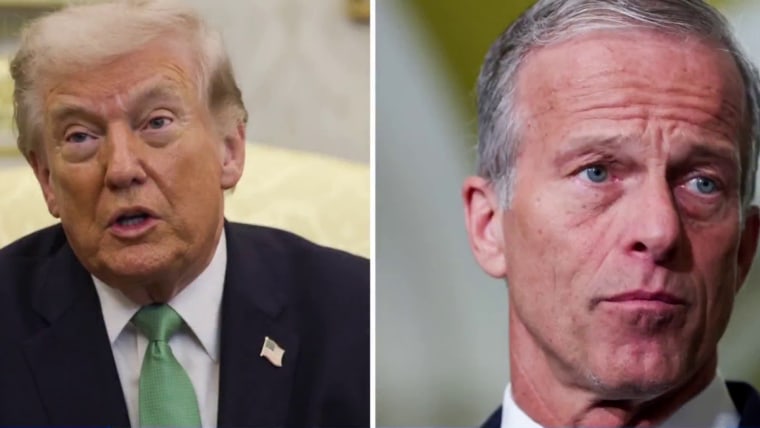
WASHINGTON — On Sunday, Senate Majority Leader John Thune, R-S.D., discussed an off-ramp with President Donald Trump to reopen TSA and end the long lines and delays at airports.

It would fund all of the Department of Homeland Security except for ICE, which Democrats have refused to support without new limitations on immigration enforcement operations, two sources with knowledge of the conversation told NBC News.

White House aides initially conveyed the idea to Trump and, after that briefing, Thune spoke with the president, the two sources said. Thune discussed the idea with Republicans on Capitol Hill, one of the sources said. The second source said it’s seen by numerous Republicans as a viable path to break the logjam.

ICE would be funded separately by Republicans in a party-line “reconciliation” bill that can pass without the need for any Democratic support later in the year.

The Department of Homeland Security has been shut down for more than a month, and while key operations, such as TSA and the Federal Emergency Management Agency, are still operating, many of those employees are working without pay. As NBC News reported this weekend, more than 400 TSA officers have quit since the shutdown began. Immigration and Customs Enforcement is also shut down, but its employees are being paid through Trump’s big beautiful bill passed last year.

Republicans believe that the off-ramp Trump and Thune discussed would win support from Democrats, who have offered to fund noncontroversial parts of the Department of Homeland Security on the Senate floor while the two parties continue to negotiate on immigration.

But Trump rejected it — as he made clear in a Truth Social post Sunday night.

“I don’t think we should make any deal with the Crazy, Country Destroying, Radical Left Democrats unless, and until, they Vote with Republicans to pass ‘THE SAVE AMERICA ACT,’” Trump wrote, while instead calling on Republicans to “Kill the Filibuster, and stay in D.C. for Easter, if necessary.”

Trump’s first two ideas aren’t viable. Democrats are determined to sink the SAVE America Act, which doesn’t have enough support to pass. And Republicans have made clear they lack the votes to nuke the filibuster. They may, however, cancel recess if there’s still no deal by the end of this week.

The conversation with Thune and Trump was first reported by Punchbowl News.

Speaking Monday in Memphis, Tennessee, the president doubled down on his demands to pair Homeland Security funding with the voting bill.

“You don’t have to take a fast vote. Don’t worry about Easter, going home. In fact, make this one for Jesus. OK, make this one for Jesus,” Trump said, adding: “The most important part of homeland security is voter ID and proof of citizenship. Nobody can vote on Homeland Security without voter ID or proof of citizenship.”

Senate Minority Leader Chuck Schumer’s office said that Democrats will again seek unanimous consent to fund just the TSA on the Senate floor Monday, for the eighth time.

Republicans have so far rejected those stand-alone bills.

If Trump were to change his mind and accept the Thune-GOP idea, it carries benefits for both parties. For Republicans, they could avoid giving into Democratic demands, such as requiring immigration enforcement officers to remove their masks and requiring judicial warrants to conduct raids. For Democrats, they could keep their fingerprints off ICE funding, which has become toxic with their base since Homeland Security agents killed protesters Alex Pretti and Renee Good in Minneapolis.

“We can be out of this shutdown by the end of the week,” Sen. John Kennedy, R-La., said Sunday. “Here’s what we do. The Democrats are amenable to opening up everything at DHS but ICE. We should accept that. The very next day, we should file a budget resolution through reconciliation that funds ICE as we deem appropriate. We don’t need Democratic votes to do that.”

Democrats are also planning to seize on the Trump social media post to argue that he owns the shutdown and travel chaos.

Reconciliation bills are arduous, requiring near-unanimous support among Republicans, especially given the tiny House majority. There has been deep skepticism that the party could pull it off, even if it tried. But needing to fund an agency like ICE would raise the impetus to use that path.

Under the “big, beautiful bill” passed by Republicans last year, ICE received a cash infusion of about $75 billion for the next four years to help carry out Trump’s mass deportation program.

The path comes with another possible upside for the White House: Some Trump allies have proposed reconciliation to approve supplemental funding for Trump’s war in Iran. It’s not clear that could win enough Democratic support.

The post Midnight Deal With Monument Could Drive Massive TVL Growth, Says Hoskinson appeared first on Coinpedia Fintech News

In a move that shows the growing convergence between traditional banking and blockchain technology, Monument Bank has announced plans to introduce tokenised retail deposits using blockchain infrastructure.

The initiative, developed in collaboration with the Midnight Foundation, aims to allow customers to hold digital versions of their bank deposits while maintaining the same protections and benefits as conventional savings accounts.

Unlike cryptocurrencies, these tokenised deposits are not separate assets. Instead, they act as digital representations of funds already held within the bank. Each token is backed one-to-one by traditional deposits, meaning customers can still redeem their holdings in pounds sterling while earning interest as usual.

The project is expected to begin with a rollout of up to £250 million in deposits. This marks an early step in what could become a broader transformation in how banks manage and deliver financial products using blockchain systems.

Beyond simple tokenisation, the bank is planning a phased expansion of services. Future stages may introduce access to tokenised investment products, including asset classes such as private equity and commodities. Traditionally, these opportunities have been limited to institutional investors or high-net-worth individuals, but tokenisation could make them more widely accessible.

Another planned feature includes the ability for customers to borrow against their tokenised assets. This approach would allow users to unlock liquidity without needing to sell their investments, reflecting services typically associated with private banking.

An important component of the initiative is the use of privacy-focused blockchain technology. The infrastructure is designed to ensure that sensitive financial data remains accessible only to authorised parties, addressing regulatory concerns around transparency and data protection in decentralised systems.

The development comes as financial institutions worldwide continue to explore tokenisation as a way to improve efficiency and expand access to financial markets. While many projects have focused on institutional use, this approach places retail customers at the centre, potentially marking a shift toward more mainstream adoption of blockchain-powered banking solutions.

The post Gold Veteran Allocates 10% of His Portfolio to XRP: ‘I Believed in It.’ appeared first on Coinpedia Fintech News

A fresh take on XRP has come from Andy Schectman, CEO of Miles Franklin Precious Metals, who, in a recent interview shared by InvestWithD, revealed he owns a small amount of the asset, calling it an “intriguing idea” with upside. His stance is important given his strong roots in gold, especially after last week’s sharp drop in the metals market. 

At the same time, rising institutional interest, including reports linking Goldman Sachs to a $154 million XRP exposure, adds weight to the narrative. 

Still, Schectman kept expectations in check, saying, “I believed in it enough to own a little bit,” making it clear this is a calculated, high-risk bet rather than a certainty.

Adoption Depends on Banks

Schectman tied XRP’s future to one connecting factor: bank involvement. He stated, “If it’s going to take, it’s going to be because the banks embrace it,” pointing to institutional use as the real driver behind any long-term value.

This aligns with XRP’s role in cross-border payments, where financial institutions are expected to play a central role. But it has its own challenges, he pointed out with digital assets is usability. Managing wallets, keys, and transfers can be too complex for average users. He said that wider adoption will only come when banks and financial institutions make crypto easier to access, similar to how people use traditional banking apps today.

XRP sits in the top 10% of his “pyramid” 

Schectman also broke down how he manages risk through a pyramid-style allocation. The base of his portfolio includes stable assets like paid-off real estate, physical gold, silver, and cash, focused on preserving wealth.

The middle layer holds income-generating investments such as treasury products and dividend stocks. At the top sits a small portion, around 10%, dedicated to higher-risk opportunities like mining stocks and cryptocurrencies, including XRP.

He explained that even if this top layer underperforms, the rest of the portfolio remains protected. At the same time, strong gains from this segment can significantly boost overall returns.

.article-inside-link {
margin-left: 0 !important;
border: 1px solid #0052CC4D;
border-left: 0;
border-right: 0;
padding: 10px 0;
text-align: left;
}

.entry ul.article-inside-link li {
font-size: 14px;
line-height: 21px;
font-weight: 600;
list-style-type: none;
margin-bottom: 0;
display: inline-block;
}

.entry ul.article-inside-link li:last-child {
display: none;
}

“I See the Logic… But It’s Speculative”

Schectman didn’t shy away from his doubts around crypto, saying the idea of “putting the ledger in the computer freaks me out.” 

Still, he added, “I see the wisdom in it. I see the logic in it. I see the speculation in it.”

He kept his stance clear, take the bet, but keep it small. Overloading on high-risk assets doesn’t make sense. His approach stays balanced: if XRP delivers, it adds strong upside; if not, the overall portfolio remains intact.

Don’t Act Too Fast

He compared gold to a “grandfather” with a long history, while crypto like XRP is still young with promise but less certainty. His stance blends both worlds, stability from traditional assets and growth potential from emerging technology, without relying entirely on either.

Never Miss a Beat in the Crypto World!

Stay ahead with breaking news, expert analysis, and real-time updates on the latest trends in Bitcoin, altcoins, DeFi, NFTs, and more.

FAQs

What is the XRP price prediction for 2026?

XRP could trade between $3 and $6 in 2026 if crypto market momentum strengthens and Ripple expands partnerships with banks using RippleNet and ODL.

How high will XRP go in 2030?

XRP could potentially reach $18–$30 by 2030 if the crypto market enters a strong bull cycle and Ripple expands global payment partnerships.

How much will 1 XRP be worth in 2040?

If adoption of blockchain payments grows and Ripple strengthens its financial network, XRP could trade between $97 and $179 by 2040.

Is XRP a good investment?

XRP may be a promising investment due to its role in cross-border payments and growing institutional adoption, but price volatility and regulation risks remain.

Shares of FS KKR Capital Corp fell sharply after Moody’s downgraded the private credit fund run by KKR to junk status, intensifying investor concerns over deteriorating asset quality and weak earnings. 

The stock has now dropped more than 31% this year, reflecting mounting pressure from rising non-accrual loans and broader stress in the private credit sector.

Downgrade driven by deteriorating asset quality

Moody’s Ratings has downgraded FS KKR Capital Corp to junk status.

Moody’s lowered the fund’s debt rating by one notch to Ba1 from Baa3, pushing it into non-investment-grade territory. 

The agency said the downgrade reflects a marked deterioration in asset quality compared with peers.

“The downgrade reflects FSK’s continued asset quality challenges, which have resulted in weaker profitability and greater net asset value erosion over time relative to business development company (BDC) peers,” Moody’s said.

A key concern is the sharp rise in non-accrual loans—those on which borrowers have stopped making payments—which climbed to 5.5% of total investments at the end of 2025. 

This is among the highest levels seen across rated business development companies.

The fund, which lends to private middle-market companies in the United States, has also been flagged for structural risks. 

Moody’s highlighted its relatively higher leverage, greater exposure to payment-in-kind loans, and a lower proportion of first-lien loans compared to peers, all of which could amplify losses in a downturn.

Weak earnings and market reaction

Financial performance has also come under pressure. 

FS KKR Capital reported a net loss of $114 million in the fourth quarter and generated just $11 million in net income for the full year 2025, according to Moody’s.

The deterioration in earnings, combined with asset quality concerns, has weighed heavily on investor confidence. 

Shares of the fund fell about 4% in Tuesday morning trading and have declined more than 31% so far this year.

Funds like FS KKR typically rely on debt issuance to enhance returns. 

As a result, a downgrade to junk status could raise borrowing costs, potentially compressing future returns and limiting financial flexibility.

Despite the downgrade, the company sought to reassure investors about its financial position.

“FSK remains well-positioned despite the decision,” a spokesperson for the fund said in a CNBC report. 

“It has a strong, well-laddered liability structure with no 2026 unsecured maturities and limited near-term maturities, enabling us to continue supporting our portfolio companies and navigate the current market environment.”

Private credit sector faces broader strain

The downgrade comes amid broader signs of stress across the rapidly growing private credit market. 

Rising concerns about potential loan losses—particularly in sectors such as software and related services—have triggered increased redemption requests from retail investors.

FS KKR itself has significant exposure to software loans, which accounted for 16.4% of its portfolio at the end of 2025, adding to investor concerns about concentration risk.

Asset managers across the industry, including major players such as Blackstone and Blue Owl, have faced elevated withdrawal requests, in some cases imposing limits on redemptions to manage liquidity pressures.

The developments suggest a potential turning point for a sector that has expanded rapidly over the past decade, fueled by investor demand for higher yields in a low-rate environment.

The post FS KKR stock slides as Moody’s downgrade flags rising credit stress appeared first on Invezz