Archive

April 1, 2026

Browsing

The post MORPHO Price Jumps 15% on pyUSD Vault Launch, But Resistance Looms appeared first on Coinpedia Fintech News

The MORPHO price today popped 15% intraday, and yeah it didn’t come out of nowhere. A fresh integration involving pyUSD vaults on a high-speed network lit the fuse, pulling traders back into a token that had already been quietly outperforming much of the altcoin pack this year.

But before anyone starts calling it a breakout, there’s a catch. There’s always a catch.

pyUSD Vault Launch Sparks Sudden Buying Interest

So, what triggered the move? New pyUSD vaults went live on a lending interface built on a network known for sub-second finality. Translation: faster settlement for lending, borrowing, and liquidations. That’s the kind of infrastructure upgrade markets love to front-run.

Add in extra stablecoin rewards and smoother liquidity routing, and suddenly the opportunity looks attractive enough to pull in fresh capital. The result? A sharp 15% spike in the MORPHO price. Simple story. Strong reaction

Derivatives Data Shows Speculation Driving Price Action

Well, what we saw on the chart didn’t happen solely on just spot demand stepping in.

Infact, Derivatives volume surged 91% to $43.62 million, while open interest climbed 7.5% to $26.11 million. That’s a clear sign traders weren’t just buying they were leveraging the move.

This kind of setup usually means momentum is being chased, not built organically. And when leverage piles in, things can get… unstable. That’s why a wick appeared. Still, for now, buyers seems to have the upper hand.

MORPHO Price Faces Resistance After Strong Rally Attempt

The intraday rally didn’t go unchecked, though. MORPHO Price ran straight into resistance around $1.69, and that’s where things slowed down. Not surprising, considering the broader structure. Since early February, the token had already surged 110% from $0.98 to $2.08 before macro pressure of iran war knocked it off balance.

So yeah, today’s move looks more like a counter-trend bounce at least for now. If buying pressure holds, it could attempt another push higher. If not, this turns into just another rejection at resistance.

On-Chain Signals Strong But Whale Activity Raises Concerns

Now here’s where it gets messy. On-chain metrics actually look… decent. The 365-day MVRV sits at +3.28%, suggesting room for further upside without immediate overheating. But zoom in, and the story shifts 30-day MVRV is at -11.39%, meaning short-term traders are still underwater.

And then there’s supply distribution. Large holders in the 100K–1M token range have been selling, while retail and mid-sized wallets are buying aggressively. Sounds bullish, right?

Maybe. Or maybe it’s something else. Because when bigger players distribute into retail strength, it raises one uncomfortable possibility of an possible “exit liquidity” strategy. Not guaranteed, but definitely not something to ignore.

Can MORPHO Price Sustain Momentum Beyond Resistance Levels?

So, what’s next? The MORPHO price has momentum, narrative, and participation all the right ingredients. But sustaining it? That depends entirely on whether real demand steps in beyond leveraged speculation.

If buyers keep pushing, this could evolve into a continuation move. If not, resistance at $1.69 might hold firm, and this spike fades just as quickly as it came.

For now, it’s a classic crypto setup promising on the surface, questionable underneath.
President Donald Trump said Sunday that he would like to “take the oil in Iran” and is considering seizing the export hub of Kharg Island, which is responsible for more than 90% of Iran’s oil exports.

In an interview with the Financial Times, Trump said his “preference would be to take the oil.”

“To be honest with you, my favorite thing is to take the oil in Iran but some stupid people back in the U.S. say: ‘Why are you doing that?’ But they’re stupid people,” he said.

The interview marks some of Trump’s most direct comments about his thinking on what to do with Iran’s oil.

In an interview with NBC News this month, Trump sidestepped answering whether he had plans to try to take Iran’s oil.

“You look at Venezuela,” he said. “People have thought about it, but it’s too soon to talk about that.”

In January, the U.S. captured Venezuelan leader Nicolás Maduro and proceeded to take more control over the country’s oil industry.

The White House did not immediately respond to a request for comment Sunday night.

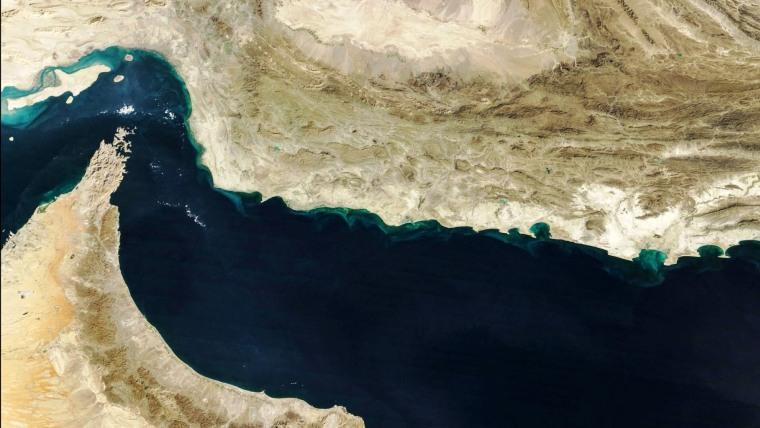
Trump told the Financial Times on Sunday that the U.S. has “a lot of options,” including potentially taking Kharg Island, a rare island made of hard coral off Iran.

“Maybe we take Kharg Island, maybe we don’t. We have a lot of options,” Trump said. “It would also mean we had to be there [in Kharg Island] for a while.”

Oil prices have skyrocketed around the globe as the war continues, with U.S. crude oil costing over $100 a barrel Sunday.

Thousands more U.S. troops are heading to the Middle East, with the USS Tripoli arriving on Saturday as part of a complement of 3,500 troops. But Trump and his administration continue to signal that they are working to negotiate a 15-point proposal to end the war.

Trump declined Sunday to offer specific details about whether a ceasefire deal could be reached in the coming days to reopen the Strait of Hormuz, a critical waterway used to move about 20% of the world’s oil exports.

“We’ve got about 3,000 targets left — we’ve bombed 13,000 targets — and another couple of thousand targets to go,” Trump said in the Financial Times interview. “A deal could be made fairly quickly.”

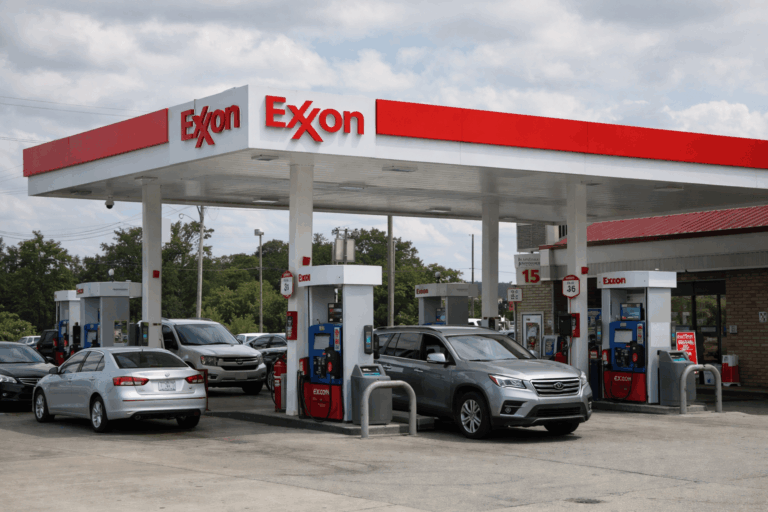
Shares of ExxonMobil declined on Wednesday, tracking a pullback in crude prices as investor optimism grew that the conflict between the United States and Iran could ease in the coming weeks.

Despite the near-term pressure, the broader outlook for the energy giant remains supported by strong fundamentals and elevated oil prices.

The stock fell 4.7% on Wednesday, mirroring declines across the energy sector.

Peers, including Chevron and several other oil producers, also traded lower, as crude retreated following comments from Donald Trump suggesting a potential de-escalation of the conflict.

Oil price pullback weighs on energy stocks

Oil prices, which had surged above $100 per barrel amid supply disruptions and geopolitical tensions, slipped as markets began pricing in a possible end to the war.

The prospect of restored flows through the Strait of Hormuz—a route that previously handled about 20% of global oil and natural gas—has reduced fears of prolonged supply constraints.

The decline in crude prices has put pressure on energy equities, which had been among the strongest performers in recent months.

ExxonMobil shares, along with Chevron, had rallied sharply in the first quarter, gaining more than 40% and 30%, respectively, as oil prices surged.

That momentum now faces a potential reversal if geopolitical risks ease.

Investors are increasingly weighing whether the rally in oil stocks has peaked, particularly as the market reassesses the likelihood of sustained supply disruptions.

Strong fundamentals support longer-term outlook

Despite the recent pullback, ExxonMobil’s underlying business remains robust.

The company continues to benefit from its integrated model, spanning upstream exploration and production, midstream transportation, and downstream refining and distribution.

This diversification provides resilience across different pricing environments, enabling the company to generate profits even when crude prices fluctuate.

With breakeven levels below $50 per barrel, ExxonMobil is positioned to generate substantial free cash flow at current price levels.

The company’s balance sheet also remains strong, with more than $10 billion in cash and total assets significantly exceeding liabilities.

This financial strength has allowed ExxonMobil to return substantial capital to shareholders, including more than $37.2 billion in dividends and share buybacks last year.

Strategic investments have further strengthened its growth outlook.

The integration of Pioneer Natural Resources has expanded its footprint in the Permian Basin, while international projects in Guyana continue to boost production visibility.

LNG expansion and global supply dynamics in focus

ExxonMobil’s long-term growth strategy is also supported by its investments in liquefied natural gas.

The company, alongside QatarEnergy, has completed the first LNG train at the Golden Pass project in Texas, with a capacity of 6 million metric tons per annum.

The timing of the project is notable, as global LNG markets face disruptions linked to the Iran conflict.

Damage to infrastructure in Qatar and constraints on shipping through the Persian Gulf have tightened supply, enhancing the strategic importance of new capacity.

Looking ahead, ExxonMobil expects significant growth in earnings and cash flow through the end of the decade.

The company has projected $25 billion in annual earnings growth and $35 billion in additional cash flow by 2030, supported by high-return, low-cost projects.

While the near-term trajectory of ExxonMobil’s stock will likely remain tied to oil price movements and geopolitical developments, its strong operational base and long-term investment pipeline suggest that the broader rally in energy stocks may not be over.

The post ExxonMobil stock slips as oil falls, but rally may not be over yet appeared first on Invezz