
Archive

April 15, 2026

Browsing

The post WLFI Proposes 4.5 Billion Token Burn in Major Governance Reset appeared first on Coinpedia Fintech News

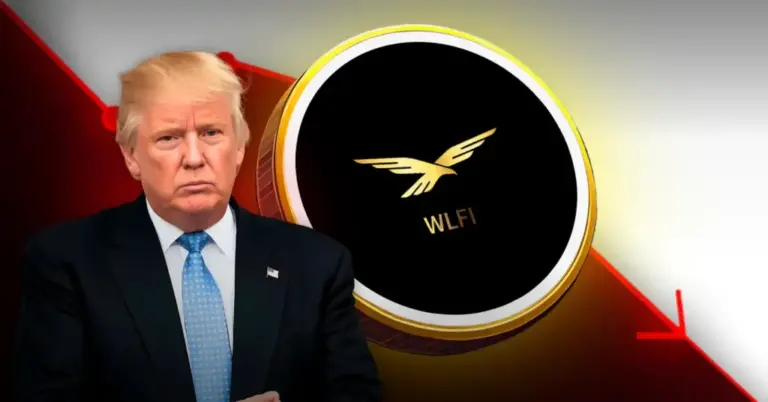
In a big move to rebuild trust and strengthen its long-term outlook, World Liberty Financial (WLFI) has introduced a new governance proposal that could change how its tokens are managed.

The plan covers a huge 62.28 billion WLFI tokens and includes stricter lockups, updated vesting schedules, and a potential burn of over 4.5 billion tokens.

Stronger Lockups for Founders and Team

The biggest change affects insiders like founders, team members, advisors, and partners.

If the proposal is approved:

  • Around 45.24 billion tokens will be locked for 2 years (cliff period)
  • After that, tokens will be released slowly over 3 years
  • A 10% token burn will apply when they opt in, removing up to 4.52 billion tokens permanently

This means insiders will have to stay committed to the project for the long run instead of exiting early.

Easier Terms for Early Supporters

For early supporters holding 17.04 billion tokens, the terms are slightly more flexible:

  • A 2-year lockup period
  • Followed by a 2-year gradual release
  • No token burn, so they keep all their tokens

However, holders must agree to these new terms. If they don’t opt in, their tokens will stay locked indefinitely.

Tensions Rise With Justin Sun

This proposal comes at a time when WLFI is already under pressure. A public dispute has emerged between the platform and Justin Sun, the founder of Tron and a former investor in WLFI. 

Sun claims that his accounts on WLFI have been frozen without proper explanation. He has made serious allegations against the platform, suggesting that users were not fully informed about how the system works.

According to Sun, WLFI included a hidden “backdoor” function in its smart contract that allows tokens to be locked.

“What was never disclosed to me or any other investor is that World Liberty built a backdoor locking function into the smart contract used to issue WLFI tokens. This is the opposite of decentralization. This is a trapdoor being marketed as an open door,” Sun said.

Both sides have now spoken publicly, and the dispute could move toward legal action.
Shares of Nvidia continued their upward momentum on Wednesday.

The stock is extending a recent rally that has brought the stock close to a key psychological level, though investors remain cautious about a sustained breakout.

The stock rose around 1.6% in early trading to $199.53, putting it on track for a 11th consecutive session of gains.

The rally has lifted Nvidia from recent lows near $165, marking a notable recovery in sentiment.

Despite the steady climb, the stock has yet to decisively break above the $200 level—a threshold it has struggled to surpass since retreating from highs above that mark late last year.

That level remains a focal point for investors, particularly as Wall Street price targets imply further upside.

Awaiting catalysts from Big Tech earnings

Market participants are now looking toward upcoming earnings from major technology companies as a potential trigger for Nvidia’s next move.

Investors are focused on whether large technology firms will continue to increase capital expenditures on artificial intelligence infrastructure.

More specifically, they are seeking confirmation that next-generation AI models are being trained on Nvidia’s current Blackwell architecture.

Such signals would reinforce demand visibility for Nvidia’s high-performance chips, which have been central to the buildout of AI systems globally.

Competitive pressures intensify

At the same time, Nvidia faces growing competition across the AI chip landscape, with several rivals announcing strategic developments.

Today, Broadcom extended its partnership with Meta Platforms to support the latter’s artificial intelligence infrastructure.

The agreement includes the deployment of Meta Training and Inference Accelerator (MTIA) chips, which are expected to underpin the company’s data centre expansion through 2029.

Broadcom said the rollout would begin with a commitment exceeding one gigawatt, forming part of a broader multi-gigawatt expansion.

As part of the arrangement, CEO Hock Tan will step down from Meta’s board and transition into an advisory role, where he will contribute to the company’s custom silicon roadmap.

Meanwhile, Amazon Chief Executive Officer Andy Jassy indicated that the company may expand sales of its internally developed AI chips to third parties, a move that could increase competition with Nvidia in the broader market.

Chinese technology company Huawei has also intensified its efforts, stating that its Ascend 950PR processor delivers nearly 2.87 times the performance of Nvidia’s H200 AI chip.

The competitive environment is further shaped by geopolitical and policy factors.

China has previously encouraged domestic firms to shift toward local chip suppliers, while US tariffs have introduced additional complexity into global semiconductor trade flows.

Nvidia has resumed production of its H200 chips for Chinese customers, though the company has not provided detailed guidance on its sales outlook in the region.

Despite the mounting competition, market sentiment remains broadly supportive of Nvidia’s long-term positioning.

Analysts generally expect the company to maintain its leadership in AI chips, particularly as the industry shifts its focus from training large models to inference—the process of generating outputs from trained systems.

The post Nvidia stock continues surge to 11th day: will it breach $200? appeared first on Invezz