

Archive

April 3, 2026

Browsing

The post BNB Price Rebounds From Key Support—But Bearish Pressure Still Lingers appeared first on Coinpedia Fintech News

BNB price has lost a key structural level at $600, triggering a shift in momentum as bearish pressure begins to take control. The breakdown raised expectations of a deeper correction, but the price is now stabilizing near a critical demand zone around $560–$580. While buyers are attempting to defend this base, the broader structure remains weak, with BNB still trading below key resistance levels. 

The current setup is not a confirmed recovery but a reaction within a weakening trend, where any rebound must reclaim higher levels to invalidate further downside risk.

In the broader perspective, the BNB price appears to have reached the crucial support of the expanding channel. In the times when a rebound is expected, a small pullback below $530 is expected as the indicators hint towards more downside action. This creates a critical setup where the market is no longer trending but deciding whether the current move is a continuation of weakness or the start of a recovery.

Price is consolidating near a strong support band, suggesting buyers are attempting to absorb selling pressure. However, momentum indicators remain weak, with MACD in a bearish crossover and RSI near lower levels, indicating limited buying strength. This keeps the structure fragile, where any rebound must reclaim higher levels to shift momentum back in favor of the bulls.

BNB is approaching a critical support region, with price likely to test the lower demand zone around $520–$525, while an extended dip toward $500 in the worst case. If bulls fail to defend the $500 level, the structure would weaken significantly, opening the door for a deeper correction. On the upside, a successful rebound could push the BNB price back toward $600, followed by a move toward $650, where stronger resistance is likely to emerge.

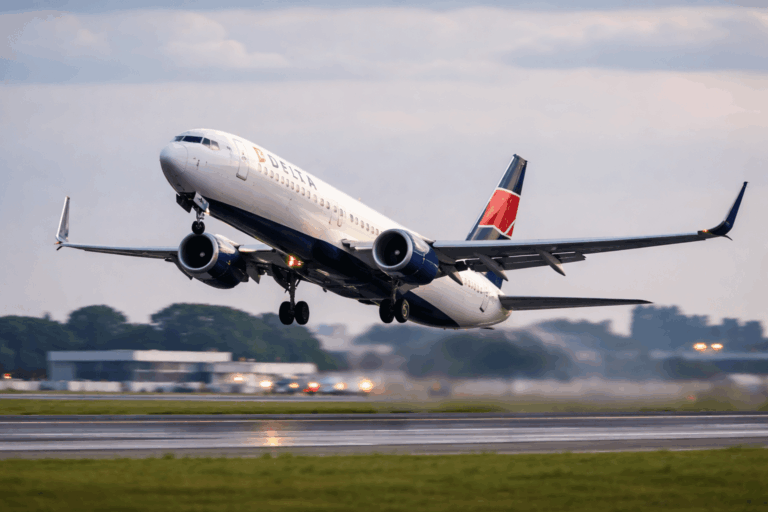
WASHINGTON — House and Senate Republican leaders jointly announced a plan Wednesday that they said would end the shutdown of the Department of Homeland Security that caused major airport delays.

“In the coming days, Republicans in the Senate and House will be following through on the President’s directive by fully funding the entire Department of Homeland Security on two parallel tracks: through the appropriations process and through the reconciliation process,” House Speaker Mike Johnson, R-La., and Senate Majority Leader John Thune, R-S.D., said in a statement.

The two leaders were vague about the exact plan, but it appears to closely resemble the Senate’s preferred path from Friday.

Johnson and Thune heavily implied that it would be for the Senate to, once again, pass a bill it approved unanimously last week, which it could try to do as early as Thursday.

It would fund all of DHS except ICE and Customs and Border Protection, which Democrats won’t agree to fund without reforms to immigration enforcement operations. Those two agencies already have separate funding.

House Republican leaders trashed that bill and rejected it Friday, but they now appear ready to back down and accept the Senate plan. They would have to vote to pass it through the House.

GOP leadership had no immediate comment on the timing for a vote. Both chambers are scheduled to be on recess until April 13.

Then Republicans would fund ICE and CBP in a separate party-line “budget reconciliation” bill that could bypass a filibuster and get approved without any Democratic votes. The timing for that is even less clear.

Johnson and Thune said the “two-track” plan would “fully reopen the Department, make sure all federal workers are paid, and specifically fund immigration enforcement and border security for the next three years so that those law-enforcement activities can continue uninhibited.”

A White House official told NBC News that the administration supports the Johnson-Thune plan.

Earlier Wednesday, President Donald Trump called on Republicans to pass the party-line bill “no later than June 1st.” He threw the earlier plans to reopen DHS into chaos last week when he declined to comment on the Senate bill, which led House Republicans to reject it.

DHS has been shut down for more than a month, with employees for the TSA, FEMA and other agencies going for weeks without pay. Trump signed an executive order last week to pay TSA employees, but the legality and length of that plan are murky. Thousands of civilian Coast Guard employees and other DHS workers are still not being paid.

Senate Minority Leader Chuck Schumer, D-N.Y., slammed Republicans for having “derailed a bipartisan agreement” for days, “making American families pay the price for their dysfunction.”

“Throughout this fight, Senate Democrats never wavered. We were clear from the start: fund critical security, protect Americans, and no blank check for reckless ICE and Border Patrol enforcement,” he said Wednesday. “We were united, held the line, and refused to let Republican chaos win.”

On Friday, House Minority Leader Hakeem Jeffries, D-N.Y., said, “House Democrats are prepared to support the bill to end the Trump-Republican shutdown of the Department of Homeland Security, make sure TSA agents are paid, stand up for FEMA and for the Coast Guard, for our cyber security professionals, and stop inconveniencing Americans.”

Delta Air Lines stock price has done better than other American airlines during the ongoing Iran war. It has jumped by 5% in the last 30 days, while other companies like Southwest, United Airlines, and American Airlines have dropped by over 10% in this period. 

DAL stock vs other top airlines | Source: TradingView

Delta Air Lines to publish earnings on April 8

The DAL stock price has done better than other airline companies during the ongoing Iran war that has pushed jet fuel prices higher. Data compiled by IATA shows that the average jet fuel price jumped to $195 a barrel, up by 103% from a month earlier.

Historically, many American airlines helped to deal with these price swings through hedging, a move that most of them ended recently. Delta does not hedge these fuel costs, meaning that it is now having to pay the full price, a move that will undoubtedly affect its margins.

The company will provide more information on how the war will impact its business this year. On the positive side, the company has navigated such shocks before, including in 2022 when Russia invaded Ukraine, leading to higher crude oil prices and flight disruptions.

Also, there is a possibility that jet fuel prices will crash once the war ends, which may happen in the coming weeks or months. Donald Trump has set a deadline for about 2 weeks although analysts believes that it will last for longer.

The most recent results showed that Delta’s business did well in the fourth quarter and last year despite the challenges in the civil aviation industry. Its fourth quarter revenue rose to $16 billion, while the operating profit jumped to $1.5 billion. The company made an operating cash flow of $2.3 billion.

For the year, Delta made over $63.4 billion in revenue, $5.8 billion in operating profit, and an operating cash flow of $14.1 billion. Its total debt and lease obligations ended the year at $14.1 billion.

The company’s business has done well because of its strong market share in key routes in the US and the emphasis on premium seats. It is also cutting the debt it accumulated during the pandemic.

Analysts expect the upcoming results to show that its revenue rose by 5.38% in the first quarter to $14.8 billion, while the earnings-per-share (EPS) rose from 46 cents to 62 cents. 

Chances are that the real numbers will be lower than these estimates because of the war and soaring fuel prices. The annual revenue is expected to grow to $67.2 billion this year followed by $70 billion next year.

DAL stock price technical analysis 

Delta Air Lines stock chart | Source: TradingView 

The daily chart shows that the DAL stock price has done well in the past few weeks, moving from a low of $55.20 in March to the current $66.7.

The stock has formed a harami candlestick pattern, which is made up of a small bullish candle that follows a bigger bearish one.

Delta Air Lines stock remains above the 50-day and 100-day Exponential Moving Averages (EMA) and the ascending trendline that links the lowest swings since June last year  

Therefore, the most likely scenario is where the stock continues rising, possibly to the year-to-date high of $76, which is up by 14% above the current level.

The post Delta Air Lines stock price analysis and earnings preview: buy or sell? appeared first on Invezz