
Archive

January 2026

Browsing

Oil prices face mounting fundamental pressure as potential shifts in global oversupply dynamics emerge, driven by China’s decelerating stockpiling, which is tied to the rise of electric vehicles curbing oil demand.

However, short-term supply risks are expected to provide a counteracting risk premium.

Analysts with ING Group believe that even as tensions in Iran and supply risks ease, these have not disappeared yet.

Immediate geopolitical impact and volatility

The oil market’s price is currently being dictated by developments in Iran, with a barrel of Brent crude oil climbing to nearly $67 earlier this week, marking its highest point since early October.

However, Brent oil prices fell by $3 on Thursday, following the recent statements from US President Donald Trump, which led to a reduced risk of immediate American intervention.

On Friday, prices had recouped some of those losses amid uncertainty surrounding Iran and supply.

The price drop occurred because the US refrained from immediate action against Iran, despite ongoing domestic protests.

Recent speculation about potential military intervention by the Trump administration had been increasing, which had raised fears not only about Iranian oil supply but also about wider risks to supply across the Persian Gulf region.

Escalation risks: Iran and the Strait of Hormuz

The situation still carries the significant risk of escalation, according to Commerzbank AG commodity analyst Barbara Lambrecht.

This concern is fueled not only by the potential loss of Iranian exports, which had reached nearly 1.9 million barrels per day this past fall, according to Bloomberg.

A major concern is the potential for an Iranian blockade of the Strait of Hormuz if tensions escalate, as this chokepoint handles approximately a quarter of the world’s seaborne oil supply.

“Any escalation with Iran will also raise concerns about potential disruption to oil flows through the Strait of Hormuz, a chokepoint where around 20m b/d passes,” Warren Patterson, head of commodities strategy at ING Group, said in a report.

While risks have eased somewhat, they remain significant, keeping the market nervous in the short term.

If signs of a sustained easing appear, attention will likely shift back to developments in Venezuela.

Oil that was recently sanctioned or blocked is expected to gradually re-enter the world market, Commerzbank’s Lambrecht said.

The International Energy Agency’s (IEA) monthly report is expected to refocus attention on the oil market’s fundamentals next week.

This follows a week where new forecasts from the US Energy Information Administration (EIA) and the Organization of the Petroleum Exporting Countries were largely overshadowed by the escalating situation in Iran.

The EIA and OPEC now share similar forecasts for global oil demand growth, both having provided an initial outlook for 2027.

However, the IEA is expected to maintain a more cautious stance, likely continuing to predict a significant oil market oversupply this year.

“However, the decisive factor for the oil price is the extent to which this oil flows into the world markets and becomes visible in swelling inventories,” Lambrecht said.

Long-term fundamentals and oversupply outlook

China appears to have significantly drawn down its reserves last year to accumulate stocks.

Conversely, stock levels in the Organization for Economic Cooperation and Development countries remain consistent with their typical range.

The fundamental outlook for oil prices could face increased downward pressure if a larger portion of overproduced oil is directed towards industrialized nations, according to Lambrecht.

This shift could occur if China reduces its stockpiling efforts, a likely consequence of rising electric vehicle adoption that simultaneously curbs overall oil demand, Lambrecht added.

Meanwhile, ING’s Patterson believes that the longer the rhetoric surrounding Iran goes on, oil prices may struggle eventually.

However, the longer this goes on without any US intervention, the risk premium will continue to fade, allowing more bearish fundamentals to dominate.

Despite ING’s bearish market outlook, the prompt ICE Brent timespread is showing strength.

“The spread held up relatively well yesterday despite weakness in the flat price,” Patterson said.

This suggests some tightness in the spot market, likely due to a decline in Kazakh oil flows from the CPC terminal.

At the time of writing, the price of West Texas Intermediate crude oil was at $59.91 per barrel, up 1.2%, while Brent was at $64.50 a barrel, also 1.2% higher from the previous close.

The post Easing Iran tensions erase oil’s risk premium, but analysts warn volatility ahead appeared first on Invezz


The post XRP Price Prediction January 2026: Onchain Signals Elevating XRP Rally Odds appeared first on Coinpedia Fintech News

The year 2025 has recently closed, and the XRP price prediction January 2026 is already in focus, as this blue-chip asset has become fundamentally very strong with time. 

As a result, it’s drawing immense attention, and its on-chain data points clearly reflect that, even hinting at a structural change beneath muted price action.

While XRP price today remains range-bound, whale accumulation, ETF inflows, and derivatives positioning suggest that the market may be transitioning from distribution into a prolonged compression phase with an upward bias.

Whale Accumulation Reshapes XRP Price Structure

On the daily technical chart, despite the XRP price chart facing resistance near its 200-day EMA, on-chain indicators suggest growing structural strength. Over the past 90 days, XRP/USD has remained in a taker buy dominant phase, meaning market buy orders have consistently outweighed sell orders. This prolonged imbalance highlights steady absorption of supply rather than speculative spikes.

The 90-day Cumulative Volume Delta (CVD) turning positive and trending higher reflects conviction-driven accumulation. Historically, such sustained CVD expansion often precedes volatility expansion, particularly after extended consolidation phases. 

Large Order Flow Signals Institutional Positioning

Alongside rising buy pressure, average spot order size data points to increasing dominance of larger trades. Frequent signals associated with higher-volume orders imply that whale participation is intensifying. 

At the same time, ETF-related flows have added to this narrative. Since November, XRP ETF accumulation has been heavily one-sided, with inflows vastly outweighing outflows. Such behavior typically reflects long-term allocation strategies rather than short-term speculation, tightening circulating supply and reinforcing the longer-term XRP price forecast narratives.

Funding Rates Suggest Asymmetric Risk

While spot accumulation remains strong, derivatives data paints a complementary picture, too. Current funding rates remain negative, with short positioning dominating leveraged markets. Historically, such conditions showcase the recent pessimistic sentiment rather than overall euphoria.

Moreover, the negative funding environments have often coincided with local bottoms, because excessive short exposure reduces the likelihood of aggressive downside continuation. 

That said, if funding rates gradually normalize or start to flip on the positive side, then XRP price action has a history of reacting towards the upside direction following periods of compression.

Technical Compression Builds for Expansion

From a technical perspective, the XRP price chart behavior shows a tightening range between $2.00 – $2.40. The recent rejection from the 200-day EMA confirms this range.

But given XRP’s sentiment and price action, the 200-day EMA band remains a short-term constraint, while on-chain data paints a bullish picture.

Now, if it flips $2.40 again, then it will aim for $2.75 and $3.00 targets, respectively. Failure to hold $2.00 would invalidate the bullish setup.

Artificial intelligence is reshaping cybersecurity faster than many companies can adjust their defences. It is helping organisations spot threats earlier, automate responses, and patch vulnerabilities more quickly.

But the same tools are also being used by cybercriminals to scale attacks, create smarter phishing, and exploit weaknesses at speed.

A new survey from corporate insurer Axis Capital highlights how this shift is creating a noticeable divide inside the leadership team.

The findings show CEOs and chief information security officers (CISOs) are increasingly approaching AI with different priorities, even though they are focused on the same business risk.

What Axis Capital’s survey found

Axis Capital surveyed 250 CEOs and CISOs across the US and UK on how AI is changing cyber risk.

The study found that CEOs tend to see AI as a pathway to productivity gains and competitive advantage, while CISOs are more likely to focus on the risks that come with deploying powerful new systems.

This includes rising exposure to data leaks, misuse of internal tools, and a wider set of attack opportunities created by rapid adoption. In simple terms, the technology that makes companies faster can also make a breach more damaging.

Why is confidence lower among CISOs

One of the clearest gaps is in confidence. Axis found that 19.5% of CEOs said they were not confident AI would strengthen their company’s cybersecurity. Among CISOs, that figure rose to 30%.

This difference is not surprising when you consider who lives closest to the day-to-day threat environment.

CISOs are often the first to see how new AI systems can create unknowns, such as sensitive data entering external models, weaker controls over employee use, or new vulnerabilities introduced by automation.

US versus UK preparedness is not the same

The survey also showed a sharp regional contrast. While 85% of US leaders said they felt prepared for AI-related threats, only 44% of UK leaders said they felt prepared.

Axis found AI is generally viewed positively on both sides of the Atlantic, but UK respondents were more cautious.

That may reflect differences in how businesses assess cyber risk, how quickly firms are adopting AI tools, or the level of internal readiness to secure them.

Why companies are raising cyber budgets now

Even with mixed confidence levels, cyber spending is moving higher.

The survey noted ransomware attacks have nearly doubled over the past two years, keeping cyber risk near the top of boardroom agendas.

Axis found that 82% of executives plan to increase their cybersecurity budgets over the next 12 months.

This suggests businesses see AI as part of the solution, but not a substitute for investment.

Tools may evolve rapidly, but companies still need stronger governance, better controls, and updated security strategies to keep up.

The post Why CEOs and CISOs are split on AI-driven cyber risk appeared first on Invezz

The post US Charges Venezuelan Man Over $1 Billion Crypto Laundering Operation appeared first on Coinpedia Fintech News

A Venezuelan national has been charged in the United States with running a large-scale money laundering operation that allegedly moved around $1 billion through cryptocurrency and traditional financial channels, U.S. authorities said on Friday.

According to the U.S. Attorney’s Office for the Eastern District of Virginia, the criminal complaint was filed in federal court in Alexandria, Virginia, accusing Jorge Figueira, 59, of conspiracy to launder money.

How prosecutors say the scheme worked

Court documents allege that Figueira used a complex network of bank accounts, cryptocurrency exchange accounts, private crypto wallets, and shell companies to move illicit funds into and out of the United States.

Investigators say the operation relied heavily on cryptocurrency to obscure the origin of the money. Funds were allegedly converted into digital assets, sent through multiple wallets, and then routed to liquidity providers who exchanged the crypto back into U.S. dollars. The dollars were then transferred to bank accounts controlled by Figueira or sent onward to other recipients.

Authorities say this multi-step process was designed to make the transactions harder to trace and to conceal the true source of the funds from law enforcement.

FBI flags large-scale crypto movement

The Federal Bureau of Investigation said it identified roughly $1 billion in cryptocurrency that passed through wallets allegedly linked to the laundering network.

Investigators claim the funds were moved through dozens of transfers involving individuals and businesses across multiple countries, suggesting the operation may have supported criminal activity beyond U.S. borders.

Funds sent to high-risk jurisdictions

According to prosecutors, most of the money entering Figueira’s accounts came from cryptocurrency trading platforms. The majority of outgoing transfers were sent to businesses and individuals in the United States and overseas.

Authorities pointed to several high-risk jurisdictions where funds were allegedly sent, including Colombia, China, Panama, and Mexico.

If convicted, Figueira faces a maximum sentence of up to 20 years in prison. Any sentence would be determined by a federal judge after considering U.S. sentencing guidelines and other legal factors.

US stocks rose on Friday as Wall Street attempted to close out a turbulent week on a positive note, with gains in technology and industrial shares helping lift the major averages despite lingering geopolitical and policy-related concerns.

The S&P 500 climbed 0.3%, while the Dow Jones Industrial Average added about 100 points, or 0.2%.

The Nasdaq Composite outperformed, gaining 0.5%, supported by renewed strength in large-cap technology stocks.

Tech and industrials lift markets

Technology names were among the session’s leaders.

Shares of Nvidia rose more than 1%, extending a rebound that began earlier in the week following strong earnings from Taiwan Semiconductor Manufacturing.

Tesla also traded more than 1% higher, contributing to the Nasdaq’s advance.

On the Dow, industrial heavyweights IBM and Honeywell led gains, rising 1.9% and 1.6%, respectively.

Their advance reflected continued investor interest in companies viewed as beneficiaries of longer-term trends in automation, digital infrastructure, and industrial modernisation.

Despite Friday’s gains, weekly performance across the major benchmarks was mixed.

The S&P 500 hovered just below breakeven for the week, while the Nasdaq Composite was on track for a modest 0.2% decline.

The Dow outperformed its peers, heading for a weekly gain of about 0.1%.

Chip rally follows TSMC results and trade deal

The major averages were coming off a winning session on Thursday, when semiconductor stocks surged.

Taiwan Semiconductor Manufacturing led the advance after delivering a strong fourth-quarter earnings report that reinforced confidence in sustained demand for advanced chips tied to artificial intelligence.

That optimism was further bolstered by news of a trade agreement between the United States and Taiwan, under which Taiwanese chip and technology companies committed to invest at least $250 billion in production capacity in the US.

The agreement was viewed as a positive step toward strengthening domestic supply chains and supporting long-term growth in the semiconductor sector.

The combination of robust earnings and supportive policy developments helped offset broader market anxiety that has dominated trading in recent sessions.

A week shaped by Washington headlines

Investors spent much of the week grappling with a steady stream of headlines from Washington.

Those ranged from heightened geopolitical tensions involving Iran and Greenland to renewed concerns over threats to the Federal Reserve’s independence.

The uncertainty weighed on sentiment earlier in the week, contributing to bouts of volatility as traders attempted to assess how political developments could affect monetary policy, trade relations, and global risk appetite.

Despite those headwinds, markets have remained resilient, supported by solid corporate earnings and continued enthusiasm around artificial intelligence and technology investment.

Morgan Stanley sees earnings-driven upside

Looking ahead, analysts at Morgan Stanley Wealth Management said corporate earnings strength could help propel further gains in equities.

In a note, the firm’s strategists, including Lisa Shalett, said expectations for corporate results are “already robust” and reflect assumptions of significant productivity gains, operating margin expansion, and record-high operating leverage.

The analysts cautioned, however, that the impact of stimulus measures in President Donald Trump’s signature budget bill on US consumers may be “overestimated versus overall sentiment.”

They also pointed to headwinds from elevated credit levels and affordability pressures that could temper consumer spending.

At the same time, Morgan Stanley said the widespread adoption of artificial intelligence, which helped power strong equity gains in 2025, is likely to proceed more slowly than many investors currently expect.

The firm argued that the Federal Reserve’s focus may shift away from cutting interest rates and toward “accommodating balance sheet growth” this year. That shift, they said, will shape the broader market backdrop.

The post US stocks open in the green: S&P 500 climbs 0.3%, Nasdaq up 0.5% appeared first on Invezz

The post Solana Slowly Surges Toward $150: Is $200 Next for SOL Price? appeared first on Coinpedia Fintech News

The crypto market sentiment has been positive for over the past few days as Bitcoin surges above $95K. Recent reports on CPI hint at cooling inflation, triggering strong buying demand across the market. As a result, several altcoins posted strong gains with the Solana price now heading toward resistance channels. However, analysts believe Solana could extend its gains due to strong ETF inflows in recent days and upcoming Alpenglow upgrade.

Solana Sees Strong ETF Inflows  

SOL price has done well in the past few weeks, and this trend could continue in the coming months as investors focus on the upcoming Alpenglow upgrade. Additionally, recent strong ETF inflows have strengthened Solana’s support levels, potentially pushing SOL price toward a bullish channel.

However, as sellers took control, Solana faced strong liquidation among buyers, as revealed by Coinglass data. Over the last 24 hours, Solana faced a total liquidation of $10.5 million. Of this, buyers liquidated significantly, amounting to nearly $7.7 million worth of position.

Despite this minor pullback, analysts believe Solana could be preparing for a bullish setup as investors accumulate due to strong ETF inflows. U.S. spot Solana ETFs brought in $23.57 million yesterday, marking the biggest inflow in the past four weeks, according to SoSoValue.

Also read: Solana (SOL) Price Tests $145 Resistance as Network Growth Signals a Shift—What Comes Next?

Additionally, the upcoming Alpenglow upgrade is fueling accumulation around recent dips. Alpenglow will be the biggest upgrade since the network was created, replacing the Proof-of-History and TowerBFT systems. This change will cut transaction finality from 12.8 seconds to about 100–150 milliseconds, making the network one of the fastest in crypto.

As a result, Solana’s open interest has seen a sharp increase over the last 30 days. The OI metric jumped from the low of $6.8 billion to a recent high of $8.8 billion. This surge in OI suggests that buyers are taking positions around Solana’s dips, strengthening the potential for a $200 bull run in the coming days.

What’s Next for SOL Price?

Solana climbed to $147, a level where sellers defended an upward push strongly. As a result, SOL price is now losing bullish momentum and is heading toward EMA trend lines. As of writing, SOL price trades at $142, declining over 3% in the last 24 hours.

SOL/USDT Chart

The rising 20-day EMA at $143 and an RSI close to the midline suggest momentum is still leaning upward, and a break above $147 could drive the SOL/USDT pair toward $173 or even $200.

On the downside, the moving averages are the key support levels to watch. If the price falls below them, it would signal weakening buying pressure and could keep Solana trading between $117 and $147 for a while longer.

Solana Long/Short Ratio

However, the current momentum is bearish and sellers are controlling the price trend. The long/short ratio has dropped significantly below the ratio of 1. Currently, it is at 0.7569, suggesting that traders are increasingly leaning toward short positions.

The company that owns the iconic luxury retailer Saks Fifth Avenue filed for bankruptcy late Tuesday.

The move comes after Saks Global struggled with debt it took on to buy rival Neiman Marcus, lagging department store sales and a rising online market.

It’s one of the largest retail collapses since the Covid pandemic, and casts further doubt over the future of luxury fashion.

The retailer, which also owns Bergdorf Goodman, said early Wednesday its stores would remain open for now after it finalized a $1.75 billion financing package and appointed a new CEO.

The court process is meant to give the luxury retailer room to negotiate a debt restructuring with creditors or sell itself to a new owner to stave off liquidation. Failing that, the company may be forced to shutter.

Former Neiman Marcus CEO Geoffroy van Raemdonck will replace Richard Baker, who was the architect of the acquisition strategy that left Saks Global saddled with debt.

The company also appointed former Neiman Marcus executives Darcy Penick and Lana Todorovich as chief commercial officer and chief of global brand partnerships at Saks Global, respectively.

Saks Fifth Avenue, the retail arm of Saks Global, listed $1 billion to $10 billion in assets and liabilities, according to court documents filed in U.S. Bankruptcy Court in Houston.

A retailer long loved by the rich and famous, from Gary Cooper to Grace Kelly, Saks fell on hard times after the pandemic, as competition from online outlets rose, and brands started more frequently selling items through their own stores.

The original Saks Fifth Avenue store, known for displaying the likes of Chanel, Cucinelli and Burberry, was opened by retail pioneer Andrew Saks in 1867.

The new financing deal would provide an immediate cash infusion of $1 billion through ‌a loan from an investor group, Saks Global said.

A host of luxury brands were among the unsecured creditors, led by Chanel and Gucci owner Kering at about $136 million and $60 million respectively, the court filing said. The world’s biggest luxury conglomerate, LVMH, was listed as an unsecured creditor at $26 million. In total, Saks Global estimated there were between 10,001 and 25,000 creditors.

In 2024, Baker had masterminded the takeover of Neiman Marcus by Canada’s Hudson’s Bay Co, which had owned Saks since 2013, and later spun off the U.S. luxury assets to create Saks Global, bringing together three names that have defined American high fashion for more than a century.

The deal was designed to create a luxury powerhouse, but it saddled Saks Global with debt at a time when global luxury sales were slowing, complicating an already difficult turnaround for CEO and veteran executive Marc Metrick.

Saks Global struggled last year to pay vendors, who began withholding inventory, disrupting the company’s supply chain and leaving it with insufficient stock.

The thinly stocked shelves may have driven shoppers away to rivals like Bloomingdale’s, which posted strong sales in 2025, compounding pressure on Saks Global.

“Rich people are still buying,” Morningstar analyst David Swartz said last month, “just not so much at Saks.”

Running out of cash, Saks Global last month sold the real estate of the Neiman Marcus Beverly Hills flagship store for an undisclosed amount. It had also been looking to sell a minority stake in exclusive department store Bergdorf Goodman to help cut debt.

On Dec. 30, it failed to make an interest payment of more than $100 million to bondholders.

This post appeared first on NBC NEWS

Shopify stock price has moved into a correction, falling by 13% from its highest point in October last year. It was trading at $157 and could be at risk of more downside as it forms several risky chart patterns on the daily chart.

Analysts are bullish on Shopify stock 

Wall Street analysts are still bullish on the Shopify stock despite its recent underperformance. RBC’s Paul Treiba recently boosted his target from $185 to $200, while Scotiabank’s Kevin Krishnaratne boosted the target to $200 from the previous $165.

Other analysts who boosted their targets for the stock were from companies like Wells Fargo, Bank of America, and Citigroup. The average estimate for the stock among analysts is $171, up by 9% from the current level. Last year, this target was $100.

Analysts point to Shopify’s strong market share in the e-commerce industry and the fact that it has more room to grow globally. Additionally, they note that it will grow as agentic growth continues.

SHOP analysts forecast | Source: MarketBeat

Potential risks remain 

Still, Shopify faces some major risks ahead. First, there is a risk that its business will slow down in the coming years as the industry matures. 

Data compiled by Yahoo Finance shows that the company’s revenue growth for 2025 was 30% to $11.47 billion. The growth will then decelerate this year, with its revenue coming in at $14.2 billion, up by 23% YoY.

Second, Shopify is still highly overvalued as it has always been. Data compiled by Seeking Alpha shows that it has a forward price-to-earnings ratio of 115, much higher than the sector median of 26.

This valuation metric is much higher than that of other companies that are growing faster than it. For example, Nvidia, which has a faster growth rate and margin, has a forward multiple of 40. 

Additionally, Amazon, which is a key competitor, has a forward PE ratio of less than 40. 

Shopify is also expensive based on the rule-of-40 multiple. Data shows that the company has a forward growth metric of 23% and a net profit margin of 16%, giving it a multiple of 39%.

Shopify share price technical analysis

SHOP stock chart | Source: TradingView

The other potential risk facing the SHOP stock price is its technicals. The chart above shows that it jumped to a high of $182.17 in October last year. It then pulled back to the current $157.

The stock has moved below the 50-day Exponential Moving Average (EMA), which is a bearish sign. It formed a rising wedge pattern, which is characterized by the rising and converging trendlines. This explains why the stock has moved downwards this year. 

The stock has also formed a head-and-shoulders pattern. This pattern is made up of a head, two shoulders, and a neckline. It also created a diamond reversal pattern

Therefore, the most likely scenario is where it continues falling as sellers target the key support at $150 followed by $136, its lowest level in November last year.

The bearish SHOP stock forecast will become invalid if it moves above the key resistance level at $172. Such a move will point to more gains to $200.

The post Wall Street experts are bullish on Shopify stock: should you? appeared first on Invezz

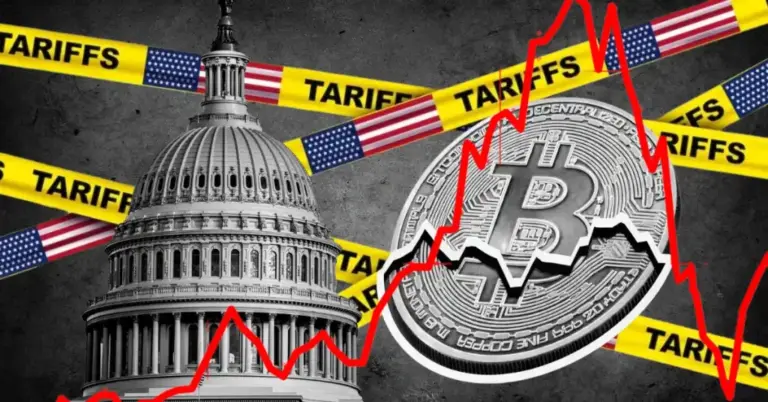
The post Bitcoin Surges After CPI — Here’s What The Tariff Ruling And Clarity Act Could Mean For Crypto Markets appeared first on Coinpedia Fintech News

Bitcoin price has broken out of a two-month consolidation after a steady, sideways phase, with the latest Core CPI print acting as a key trigger for the move. The breakout has revived bullish sentiment and shifted attention back to whether the crypto markets and BTC price can build follow-through above their former range.

Now, traders are bracing for a fresh volatility wave. The US Supreme Court is expected to deliver a ruling tied to tariffs imposed during President Trump’s administration, a headline that could quickly swing risk appetite across markets. With a major macro catalyst approaching, Bitcoin’s breakout is happening at a sensitive time—making the next few sessions crucial for confirming whether this move extends into a stronger trend or turns into a short-term spike.

How Could The Tariff Decision Impact Crypto Markets And BTC Price?

Markets are on edge ahead of the US Supreme Court’s decision on President Donald Trump’s global tariffs, a ruling that could trigger fresh volatility across risk assets. Trump has warned that striking down the tariffs could hurt the US economy, while many investors are positioned for the court to rule against them. 

Crypto has reacted sharply to tariff headlines before. In early April 2025, when sweeping tariffs were announced, global risk sentiment cracked. Bitcoin price also saw a steep pullback as markets priced in higher uncertainty and slower growth. 

If the court rules against the tariffs, it could initially support Bitcoin by reducing policy uncertainty and easing inflation fears—potentially improving the case for faster rate cuts. But there’s a catch: analysts also warn that unwinding tariffs could still shock traditional markets, and a sharp equity sell-off can spill into crypto in the short term. 

If tariffs are upheld, markets may react negatively to prolonged trade-policy uncertainty and inflation risk, keeping volatility elevated. 

Clarity Act Markup Puts Crypto Regulation Back In Focus

Alongside the tariff ruling, U.S. lawmakers are also moving on the Digital Asset Market Clarity Act, with the Senate set to debate amendments and vote during a markup session. If the bill advances, it would be a meaningful step toward clearer rules for crypto markets—especially around how exchanges and platforms are regulated and how different digital assets are classified under U.S. oversight. 

What does this suggest for crypto markets?

It signals that the near-term backdrop may not be purely “risk-off.” Regulatory progress can reduce uncertainty, which often supports sentiment, liquidity, and longer-term capital allocation into the sector. That said, claims like “wash trading will drop by 70%–80%” are hard to prove upfront—so it’s better to frame this as a push toward stronger compliance and market integrity, not an instant cleanup. 

In parallel, the Trump administration’s executive order on expanding access to alternative assets in 401(k) plans has already directed regulators, including the SEC, to explore ways to facilitate broader access—another headline that could keep bullish expectations alive if follow-through materializes. 

Conclusion: What To Expect Next

Bitcoin has already responded positively to the CPI-triggered breakout, but the next move is likely to be driven by headlines, not charts alone. Traders should expect higher volatility as markets react to two major U.S. developments: the Supreme Court’s decision linked to tariffs and the Senate’s progress on the Clarity Act. 

A risk-on reaction could support BTC’s push toward $100,000, especially if regulatory clarity improves confidence. However, a sudden shock to equities or a “sell-the-news” response could still trigger quick pullbacks across crypto. The key watchpoint now is follow-through: whether buyers keep stepping in after the first spike or whether the market fades into a choppy, headline-driven range.

More than 20 investors and the climate activist shareholder group Follow This have jointly filed resolutions with BP and Shell. 

The resolutions call for the oil and gas giants to disclose their strategies for generating value should global demand for their core products decline, the group announced on Wednesday.

The strategic shift in focus by the Dutch activist group is explicitly reflected in the newly proposed resolutions, according to a Reuters report

This move comes after the group announced in April a significant setback: the suspension of its high-profile, nearly decade-long campaign. 

Aim for more aggressive approach by oil and gas companies

The primary objective of this long-running campaign had been to pressure major global oil and gas producers into adopting more aggressive emissions reduction targets. 

The group cited a “lack of investor appetite”—meaning insufficient shareholder support for its proposals—as the key factor compelling this suspension.

The introduction of these new resolutions, therefore, represents a pivotal change in the group’s methodology and targets. 

Instead of persisting with the now-stalled emissions-focused campaign directly against the producers, the group was now pursuing a different, possibly complementary, avenue to achieve its overarching goal of accelerating the energy transition and tackling climate change. 

This signals a sophisticated re-evaluation of tactics, moving beyond direct demands for emissions cuts to potentially focusing on issues like corporate governance, financial risk disclosure related to climate change, or the pace of transitioning to renewable energy sources. 

The core context remains rooted in environmental activism and holding large energy companies accountable, but the mechanism for doing so has been strategically overhauled following the recent campaign’s disappointing lack of traction among the investor community.

Since 2016, Follow This has been submitting climate-related resolutions at shareholder meetings, achieving notable support in the following years. 

These votes peaked with an 80% majority at Phillips 66, 60% at Chevron, approximately one-third at Exxon and Shell, and 20% at BP.

The group announced its focus will be on pressuring BP and Shell to reveal their long-term strategies, particularly how they plan to operate under scenarios where the demand for oil and gas declines.

Renewable energy commitments retracted by companies

Focusing investment on oil and gas projects, the two companies, like other producers, have scaled back their commitments to renewable energy.

BP and Shell are being requested by the resolutions to publish comprehensive reports, spanning at least a decade. 

These reports must outline capital expenditure, production strategies, and projections for free cash flow under various scenarios of declining demand, including those modeled by the International Energy Agency.

A Shell spokesperson confirmed that the Board will evaluate the resolution, as it meets the procedural requirements. 

The Board’s recommendation to shareholders will be included in the Notice of Meeting for the Annual General Meeting (AGM), which is scheduled for mid-May.

Co-filing investors for the resolutions collectively manage approximately 1.5 trillion euros ($1.75 trillion) in assets. 

These investors include Achmea Investment Management, the Ethos Foundation, and several European local pension funds.

In November, the IEA (International Energy Agency) projected that oil demand would reach its highest point around 2030. This forecast is based on a scenario that incorporates proposed, but not yet finalised, policies.

In a scenario that is distinct from climate aspirations but is instead based on current government policies, the IEA has revised its outlook. 

Contrary to previous projections, the agency now forecasts that global demand for oil and gas could see growth extending all the way to 2050.

The post Climate activists press BP, Shell on post-peak oil finance strategy shift 2026 appeared first on Invezz