
Archive

January 2026

Browsing

Oklo stock (NYSE: OKLO) jumped over 15% on Friday after Meta announced an agreement to support development of a 1.2-gigawatt advanced nuclear campus in Pike County, southern Ohio.

The landmark deal that marks the small modular reactor maker’s first major commercial validation and signals growing corporate appetite for nuclear power to fuel artificial intelligence operations.​

The announcement underscores a critical inflection point: as AI data centers consume electricity at rates that strain aging power grids, major tech companies are pivoting toward nuclear energy.

For Oklo, a venture-backed startup that has operated as a pre-revenue technology company until now, the Meta partnership amounts to a proof-of-concept that corporate offtakes can actually work.​

Oklo stock: Why big tech is paying for nuclear power

Meta’s announcement Friday revealed an ambitious three-prong nuclear strategy designed to secure up to 6.6 gigawatts of power by 2035, equivalent to electricity for roughly 5 million homes.

The company signed 20-year power purchase agreements with Vistra for three existing nuclear plants in Ohio and Pennsylvania, while simultaneously investing in development partnerships with Oklo and TerraPower.

With these partnerships, the tech giant aims to bring next-generation small modular reactors online within the decade.​

The logic is straightforward: AI training and inference, the computation required to run large language models like Meta’s own AI systems, demand astronomical amounts of electricity.

Goldman Sachs forecasts global data center power demand could rise 165% by 2030 compared with 2023 levels, with AI workloads driving the surge.

Wedbush analyst Dan Ives notes that corporate offtakes materially reduce both financing and execution risk for nuclear developers, allowing companies like Oklo to lock in revenue streams before regulators approve their designs.

For hyperscalers like Meta, securing power today is no longer optional, it is a strategic necessity to remain competitive in the AI arms race.​

From pilot to pay-off

Under the Meta agreement, the tech giant will prepay for electricity and provide funding to advance Oklo’s Aurora powerhouse project, designed to produce up to 1.2 gigawatts in Pike County by 2034.

Pre-construction begins in 2026, with the first phase coming online by 2030.

Critically, Meta’s support de-risks early procurement, fuel acquisition and site infrastructure, allowing Oklo to move from vaporware status to a company with validated customer demand and partial project funding.​

The market’s enthusiasm, however, comes with caveats.

Small modular reactors (SMRs) remain unproven at commercial scale in the United States.

While NuScale achieved NRC design approval for its SMR technology in 2020 and again in May 2025 for an uprated design, regulatory timelines for actual construction permits and operating licenses still stretch 30 months or longer.

Oklo’s Aurora reactors, which use fast-neutron technology to burn recycled nuclear waste, have no NRC design certification yet, only Meta’s commercial commitment.​

The deal is a clear validation and near-term catalyst, but Oklo stock will need to clear regulatory milestones and hit project financing schedules to justify current valuations.

The post Oklo stock surges 15% after Meta deal: is OKLO next AI infrastructure winner? appeared first on Invezz

The post Does XRP Need the Clarity Act? Ripple Executive Gives Clear Answer appeared first on Coinpedia Fintech News

A senior Ripple executive said XRP already has clear regulatory status in the United States and does not need new legislation to function, even as broader crypto rules remain uncertain.

The comments came after a question on X asked whether XRP needs the proposed Clarity Act to “fully succeed.” The question followed a series of posts by RippleX, which outlined XRP’s role, supply limits, network structure, and growing use in real-world finance.

Reece Merrick, Ripple’s managing director for the Middle East and Africa, said XRP has already secured regulatory clarity in the U.S. through court rulings that determined it is not a security.

“To confirm, XRP has secured clear regulatory status as a non-security digital asset in the U.S.,” Merrick said, adding that this places XRP among a small group of cryptocurrencies with defined legal standing.

Broader crypto rules still missing

Merrick said that while XRP’s status is clear, the wider U.S. crypto industry still lacks comprehensive rules. He said this uncertainty continues to slow innovation and growth for U.S.-based companies.

Ripple, he said, is pushing for clearer frameworks to help the industry move forward and allow firms to compete on more equal terms.

Focus turns to the Clarity Act

Merrick said Ripple remains hopeful that proposed legislation such as the Clarity Act will bring clearer rules for the broader market, even if XRP itself does not depend on it.

Lawmakers have debated the bill for months, but its progress has been uneven. Congressman Warren Davidson said recent delays and political disagreements mean the bill still faces uncertainty, with no guarantee it will pass committee in the near term.

He warned that if the bill does not advance by mid-year, its chances could weaken as the U.S. approaches election season.

RippleX highlights XRP’s current role

Earlier this week, RippleX highlighted that XRP is designed as a settlement and liquidity asset, with a fixed supply of 100 billion tokens and no single entity able to change that limit. It also pointed to the decentralized nature of the XRP Ledger, which operates independently of Ripple and has processed billions of transactions since launch.

RippleX said XRP is increasingly used in areas such as tokenized assets, stablecoins, and institutional products, signaling a shift from a purely traded asset to one used in regulated financial activity.

Archer Aviation stock has moved into a bear market, moving from the October high of $14.60 to the current $8.42. This retreat happened as sentiment among investors in the eVTOL industry faded. This article explores whether the stock has more upside or downside this year.

Archer Aviation is gearing towards major milestones 

Archer Aviation is a top player in the electric vertical takeoff and landing (EVTOL) industry, where it is building products for commercial and defense solutions.

The company’s flagship product is Midnight, which will be able to carry four passengers, a payload of 1,000 pounds, and a range of above 100 miles.

Archer has achieved a lot of progress over the years as analysts predicted that the industry will continue doing well over time. One analyst estimated that the air taxi business will make over $30 billion annually in 2032, much higher than what it is making now.

Therefore, the industry will be dominated by a few key companies because of the lengthy and expensive process of launching an air taxi. In this case, the top companies to watch will be Archer Aviation and Joby Aviation, which will likely launch their commercial products in 2026 and 2027.

Archer Aviation has made major milestones in the past few years, with the Midnight plane reaching 55 miles and reaching an altitude of 10,000 ft. The certification by the Federal Aviation Authority (FAA) will likely be provided later this year or in 2026.

Archer Aviation is also working with other regulators, including the United Arab Emirates (UAE), one of the top players in the industry. It is also working with other countries like Japan, Indonesia, and South Korea.

Archer Aviation has also achieved other major milestones, including receiving millions of dollars from Stellantis, the parent company of Jeep and Chrysler. One approach for the funding is that it will provide it with manufacturing funds, which will be reimbursed through share issuances.

The company’s fundraising helped it end the third quarter with over $1.6 billion in cash and short-term investments. Its results showed that its net loss came in at $129.9 million, a $76 million improvement from the same period a year earlier.

Major risks and opportunities  ahead 

Archer Aviation stock price faces major risks and opportunities ahead. The most important opportunity is that it will receive authorization by the FAA, which will allow it to start making money in the United States and other countries.

Archer has also made major deals with other countries, including Saudi Arabia, one of the most important markets. At the same time, the company acquired control of Hawthorne Airport.

However, the company faces other potential risks, including the fact that the short interest has jumped to 12.35%, much higher than other companies, including Joby Aviation’s 6%.

Another risk is that it will likely continue diluting its shareholders. Its outstanding shares have jumped to 651 million, up sharply from 170 million in 2022. 

Archer Aviation stock price technical analysis 

ACHR stock chart | Source: TradingView

The three-day chart shows that the ACHR stock price rebounded from a low of $2.81 in September to a high of $14.65 in October last year. 

It is now consolidating at the 100-day Exponential Moving Average (EMA). On the positive side, it has formed a bullish flag pattern, which is made up of a vertical line and a channel.

It is now slightly above the lower side of the channel. Therefore, chances are that it will rebound and possibly retest the channel’s upper side of the channel at $14.70.

READ MORE: Archer Aviation stock warning: why experts call it ‘an invitation to your funeral’

The post Archer Aviation stock: Is this eVTOL giant a good buy this year? appeared first on Invezz

The post Chainlink Eyes Move Toward $20 After SEC Approval Signals Bullish Trend: What’s Next for LINK Price? appeared first on Coinpedia Fintech News

Chainlink has started this year on a bullish note as the SEC finally approved the Bitwise Chainlink ETF, allowing it to enter US equity markets. As a result, whales have been consistently withdrawing LINK from exchanges over the last few days, hinting at a quiet accumulation ahead of a breakout. Additionally, several on-chain metrics have turned positive, which might trigger a 50% surge on the LINK price chart.

Chainlink has seen heavy accumulation by large investors in recent days. Big holders pulled about 4.5 million LINK tokens, worth around $62 million, from exchanges this week.

This buying trend looks similar to late 2025, just before LINK jumped 20% in December. Exchange balances are now at multi-year lows, which could limit supply and push prices higher. Additionally, data from CryptoQuant shows this is one of the largest recent accumulations, suggesting smart investors may be preparing for a price rise.

Also read: Chainlink Price Prediction 2026, 2027 – 2030: Will LINK Price Reach $100?

The reason behind the strong accumulation is the strong ETF inflows and recent approval of Bitwise LINK ETF. Grayscale’s new LINK ETF has brought in about 42 million since launching in December. Hence, the SEC’s approval of spot LINK ETFs from Bitwise and Grayscale is a big step forward, even though trading activity is still much lower than Bitcoin and Ethereum ETFs. 

LINK OI

Data from Coinglass shows a sharp increase in Chainlink’s open interest in recent days. LINK’s OI jumped from the low of $510 million to a recent high above $700 million. This suggests that trading activity is increasing with a rise in volatility, which might help LINK breaking above immediate resistance levels.  

Additionally, Chainlink has crossed a major milestone, with total fees surpassing 6.9 million. This shows strong real usage across apps and enterprise projects. This means that more smart contracts rely on Chainlink’s data services, making it a key part of Web3. Rising fees highlight growing demand, preparing LINK price for a significant rally ahead.

Chainlink is trading near its short-term moving averages, suggesting the downtrend is losing strength. As of writing, LINK price trades at $13.3, declining over 5% in the last 24 hours.

LINK/USDT Chart

Though Chainlink is declining in recent hours, it is holding above the 20-day EMA around $13.28, while the 50-day and 100-day EMAs remain overhead, acting as resistance near the $13.6–$13.8 zone.

The RSI has declined sharply and is currently hovering below the midline at level 46, showing bearish momentum with strong pressure from sellers. A sustained move above the descending resistance line could open the door for a push toward higher levels. On the upside, LINK price might head toward $20 before facing any significant selling pressure.

However, if LINK slips below the 20-day EMA, the price may retest lower support areas near $13. Overall, the trend is bullish and slightly improving as buyers accumulate around the dip.

Nvidia stock (NASDAQ: NVDA) jumped nearly 2% on Wednesday, following reports that Chinese tech companies have placed orders for more than 2 million of its H200 chips.

NDVA extended gains as traders reassessed the profit opportunity from China’s reopened market.

The move reflects growing confidence that the licensing approvals, already underway at the Treasury Department, could unlock substantial near-term revenue.​

The $40 billion estimate is straightforward math: 2 million H200 units priced at $27,000 each, minus the 25% export surcharge that Nvidia must pay to the US Treasury.

It’s crucial to note, however, that orders do not equal shipped revenue. China must formally approve the imports, US licenses must clear final processing, and production capacity at Taiwan Semiconductor Manufacturing Company must ramp as planned.

Nvidia has already contracted with TSMC to boost H200 manufacturing in the second quarter, with a target to deliver additional units before the Lunar New Year in mid-February.​

Nvidia stock: What $40 billion number actually means

The headline math is compelling, but investors should understand what’s conditional here.

Reuters reporting reveals that Chinese firms, including ByteDance, Alibaba, and Tencent, have already signaled intent to purchase 2 million units.

But actual sales depend on three factors: first, final US export license approval (still in process); second, Beijing’s green light for imports (not yet formally granted); and third, TSMC’s ability to ramp 4nm production within months.​

CEO Jensen Huang deliberately tempered expectations at CES 2026 this week, stating he expects no formal announcement from either government and that purchase orders will be the only reliable signal of success.

“The customer demand is high. It’s quite high. It’s very high,” Huang said, yet he noted that Nvidia is “not expecting any press releases or large declarations.”

This caution reflects the political sensitivity as Washington controls the licenses, and Beijing has leverage over Chinese customer behavior.

History also matters here as Nvidia’s H20 chip won export approval last summer but was quietly discouraged by Beijing, leaving inventory stranded.

That experience explains why the market is hedging its bets even as it prices in optimism.​

Can orders, approvals and production make gains stick?

Nvidia’s supply chain has been “activated,” Huang confirmed, with H200s already flowing through production pipelines.

The real bottleneck now sits with regulators on both sides of the Pacific.

US Treasury approval is in the final stages, and Treasury sources tell Reuters the government is “working feverishly” to finalise licenses.

Yet the timing is fluid as Nvidia has flagged a potential mid-February start, but that assumes approvals land on schedule.

The analyst community has largely ignored this catalyst in their models.

Wall Street’s consensus estimates for fiscal 2027 revenue stand at $320 billion, nearly double current-year expectations, but few forecasters have folded in the $40 billion China scenario.

If the company does unlock full H200 demand, top-line growth could jump to 69%, to roughly $360 billion, according to Motley Fool analysis.

At Nvidia’s current 21x forward price-to-sales multiple, that math alone could support significantly higher valuations.

The post Nvidia stock soars nearly 2% today: is this $40B catalyst sending NVDA higher? appeared first on Invezz

The post Chainlink Is The Same Price It Was 5 Years Ago, While Remittix Is Up Over 800% In The Last 12 Months appeared first on Coinpedia Fintech News

Chainlink remains a DeFi project at the center of today’s market debate as traders note that the Chainlink price now mirrors levels last seen five years ago. That comparison has surfaced amid a volatile week for crypto, with Bitcoin range-bound, ETF flows mixed, and capital rotating toward assets that show clear product progress. 

Against that backdrop, investors are quietly tracking a payments-focused network that has compounded sharply over the past year. The contrast matters. Chainlink secures data for blockchains, yet price action has lagged. Meanwhile, a newer ERC-20 coin tied to real payments has delivered outsized gains, drawn private funding at scale, and shipped a live wallet. 

Chainlink headlines dominate again as analysts dissect why the token trades near levels from half a decade ago. Chainlink built the oracle standard and remains critical to DeFi, centralized exchanges, and cross-chain apps. 

Recent Chainlink news highlights continued integrations and CCIP pilots, yet price has struggled to break a long consolidation band. Market participants point to token supply dynamics, muted retail flows, and competition from alternative data layers.

Price forecasts for Chainlink vary. Conservative models suggest a grind higher if macro liquidity improves. Bullish takes a hinge on CCIP adoption translating into fees. Still, the market is impatient. Many holders expected faster upside after years of development. That impatience explains why Chainlink mentions now come paired with comparisons to faster movers. 

Remittix Draws Attention After an 800% Twelve-Month Run

Remittix enters this story as the counterweight. The network sits at the intersection of payments and crypto, framed as a low-gas-fee crypto option for everyday transfers. Over the last year, early buyers are already up more than 800%, a stat that fuels urgency talk across trading rooms. Analysts frame it as a high-growth crypto with real rails, not a concept deck.

Crucially, Remittix just shipped. The Remittix Wallet is live on Apple’s App Store, with Android next. Phase one works as a full wallet today. The crypto-to-fiat platform is set to launch on 9 February 2026, a date the market has been anticipating. Private funding has reached $28.6 million, a signal many top ICO investors cite as proof of demand. 

A limited 200% bonus is active, capped at five million tokens, with a quarter sold in the past day, which adds scarcity pressure. The team is verified by CertiK and ranked #1 on CertiK for pre-launch tokens, which calms risk concerns.

Why analysts are paying attention

  • Send crypto to bank accounts across 30+ countries
  • Built for real payments with transparent FX rates
  • Mobile wallet live now, fast and clean
  • Business API aimed at freelancers and merchants
  • CertiK-verified team with top ranking status

Why Now Is The Best Time To Act

Chainlink remains essential infrastructure, yet its price tells a slow story. Remittix tells a faster one, backed by shipped software, funding depth, and a clear payments roadmap. For investors weighing an undervalued crypto project against a proven but stagnant leader, the choice has become a live debate.

Discover the future of PayFi with Remittix by checking out their project here:

Website:https://remittix.io/?utm_source=coinpedia&utm_medium=link0612&utm_campaign=rtx        

Socials:https://linktr.ee/remittix  

Frequently Asked Questions

Why is Chainlink price compared to five years ago?
Because current levels resemble past ranges despite steady development, which frustrates short-term traders.

What is driving Remittix interest now?
A live wallet, a dated crypto-to-fiat launch, strong private funding, and verified security status.

Is Remittix considered an early stage crypto investment?
Yes. Many view it as early, with active products and upcoming milestones that shape demand.

Which fits a conservative profile today?
Chainlink suits infrastructure-focused holders. Remittix suits those seeking momentum tied to payments adoption.

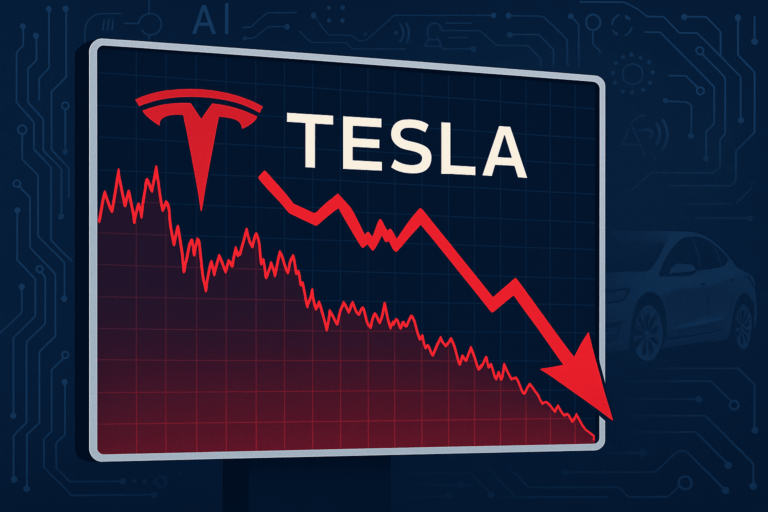
Tesla stock (NASDAQ: TSLA) fell sharply on Tuesday as investors digested Nvidia CEO Jensen Huang’s sweeping autonomous-driving push at CES 2026.

The chipmaker unveiled Alpamayo, an open-source AI model family designed to tackle the “long-tail” problems that have long been the hardest challenge in self-driving technology.

Mercedes-Benz seems set to deploy Alpamayo-powered systems in the first quarter, and Uber, Lucid, and Jaguar Land Rover are also signaling interest.

Tesla stock came under pressure as Wall Street is suddenly asking whether Nvidia’s well-capitalised approach could narrow Tesla’s autonomous advantage faster than expected.​

Why Nvidia’s announcement threatens Tesla’s narrative

Nvidia’s Alpamayo platform marks the company’s formal entry into the autonomous-vehicle software business, not just as a chip supplier, but as a full-stack solutions provider.

The Alpamayo 1 model, a 10-billion-parameter vision-language-action (VLA) system, uses what Huang called “chain-of-thought” reasoning to approach driving as a human would.

This explainability angle is crucial as it appeals directly to legacy automakers and regulators who worry about the opacity of Tesla’s end-to-end neural networks.​

Supporting Alpamayo is a full ecosystem: AlpaSim, an open simulation framework for testing rare scenarios; 1,700+ hours of real-world driving data covering 25 countries; and pre-trained models available freely on Hugging Face and GitHub.

Nvidia positioned this as a data-efficient alternative to Tesla’s fleet-learning approach, arguing that reasoning-based models can reach high accuracy without requiring millions of miles of live-car telemetry.​

The timeline matters to investors.

Mercedes’ CLA will ship with Alpamayo in the US this year, Lucid and JLR are onboarding, and Uber is actively exploring Level 4 robotaxi pilots with the platform.

For a company that has traded on near-monopoly control of autonomous driving for years, Tesla suddenly faces credible, well-funded competition, not from a startup, but from the GPU giant that powers its own AI chips.​

Tesla stock: Delivery crisis and the valuation time bomb

Tesla’s near-term business is crumbling. German car sales collapsed nearly 48% in December 2025 compared to December 2024, with full-year German registrations down 48.4% to just 19,390 units.

This is especially brutal because the German EV market itself grew 43.2% in 2025, and Tesla is losing share in an expanding market.

France saw registrations plunge 66% last month; Sweden fell 71%; Belgium dropped 53%.

Globally, Tesla delivered 1.64 million vehicles in 2025, a 9% drop from 2024, and surrendered its crown as the world’s largest EV maker to China’s BYD.​

For the fourth quarter, Tesla missed Wall Street delivery forecasts, and analysts now expect 3% revenue contraction and a nearly 40% earnings-per-share drop for 2025. ​

The valuation logic is straightforward: much of Tesla’s trillion-dollar market cap rests on the assumption that a robotaxi business built on autonomous driving will become the company’s dominant profit engine by 2027.

Elon Musk has repeatedly downplayed near-term vehicle sales as “less critical,” betting everything on FSD and humanoid robots.

But if Nvidia, Mercedes, and a coalition of traditional automakers can accelerate Level 4 deployment via Alpamayo, that future cash flow, the entire bull case is suddenly at risk.

The post Tesla stock down 3% today: is Wall Street rethinking Tesla’s AI advantage over Nvidia? appeared first on Invezz

The post Events This Week That Could Make or Break Bitcoin, Ethereum, and XRP Prices appeared first on Coinpedia Fintech News

This week could be crucial for the crypto market. Several US economic reports and Federal Reserve comments are lined up, and they may decide whether Bitcoin, Ethereum, and XRP among other tokens continue rising or face fresh pressure.

Right now, markets are not trading on hope or hype. They are reacting to economic data, what it means for the Federal Reserve, and how it affects liquidity. That makes this week especially important for crypto investors.

Monday Sets the Tone With Manufacturing Data

The week begins on Monday, January 5, with the release of the ISM Manufacturing report. This data gives an early signal about how strong or weak the US economy is. A stronger reading could support risk assets, while weak data may raise concerns about slowing growth.

Tuesday Shifts Focus to Services and the Fed

On Tuesday, January 6, attention turns to ISM Services, which is more important than manufacturing right now because services drive most of the US economy. The same day, comments from Fed official Tom Barkin will be closely watched. 

Wednesday Is the Most Important Midweek Test

Wednesday, January 7, is packed with events. The ADP jobs report and job openings data will give insight into the labor market. Strong jobs data could delay rate cuts, while weakness may support easier policy.

On the same day, Fed Vice Chair Michelle Bowman will speak. Her comments on regulation, liquidity, and the economy could heavily influence market sentiment. Many traders see Wednesday as the most important day before Friday’s big report.

Thursday Looks Quiet but Still Matters

On Thursday, January 8, the market gets jobless claims and consumer credit data. These reports usually don’t move markets much, but if they show rising stress, investors could quickly turn cautious.

Friday’s Jobs Report Could Decide the Week

Everything leads into Friday, January 9, when the Non-Farm Payrolls, unemployment rate, and wage data are released. This report often shapes expectations for interest rates and liquidity. A hot report could pressure crypto, while softer data may fuel another rally.

Where Bitcoin, Ethereum, and XRP Stand Now

Bitcoin has continued its steady recovery and is trading near $92,782. It is up 6.35% over the past week, showing strong confidence after recent volatility. However, Bitcoin is still about 26% below its October 2025 all-time high.

Ethereum is outperforming Bitcoin this week. ETH is trading around $3,157, up 7.86% in seven days. While still well below its 2025 peak, Ethereum’s momentum appears stronger, helped by increased activity in DeFi and NFTs.

XRP is the standout performer. The token has jumped 16.83% this week and is trading near $2.12. Although XRP remains far from its all-time high, recent price action shows new interest, possibly linked to the broader bullish sentiment.

Market Trend Remains Constructive

Overall, Bitcoin, Ethereum, and XRP are all moving higher going into the week. Technical indicators also support the bullish tone, with momentum improving and selling pressure fading. For now, bulls remain in control, but upcoming economic data could quickly change the picture.

This week’s events may not just move prices for a day or two. They could shape the direction of crypto markets for the rest of January.

Micron stock (NASDAQ: MU) surged after reporting record revenue of $13.64 billion and robust year-over-year earnings growth in its first fiscal quarter of 2026.

The analyst consensus now forecasts full-year earnings near $32.14 per share, a nearly fourfold jump from $8.29 a year earlier.

Strong data-center demand has pushed both DRAM and High-Bandwidth Memory (HBM) pricing to levels unseen in a decade.

Yet beneath the headlines lies a genuine tension: today’s supercycle may not last forever, and investors must weigh the opportunity against the company’s historical cyclicality.​

Micron stock: DRAM and HBM lift margins

The core of the bull case is deceptively simple: memory demand overwhelmingly exceeds supply.

Micron reported that DRAM (Dynamic Random Access Memory) prices surged approximately 20% sequentially in fiscal Q1 2026, driven by acute industry shortages.

That price increase translates directly to margin expansion.

In Q1, gross margin hit 56%, a record. For Q2, the company is guiding to 68% gross margin, a level that signals pricing power has reached nearly monopolistic proportions.​

The real story, however, centers on HBM (High Bandwidth Memory).

Micron’s entire 2026 HBM capacity is already sold out, but it is fully committed to customers through long-term supply agreements.

CEO Sanjay Mehrotra stated on the earnings call that the company can currently meet only 50–67% of customer demand because HBM production is physically constrained by cleanroom and equipment capacity.

This scarcity translates into margin leverage that ordinary memory suppliers never enjoy.

Bernstein analysts project DRAM prices will sustain 20–25% quarterly increases through the first half of 2026, implying $32–$40 in fiscal 2026 EPS across a range of analyst models.​

The addressable market for HBM itself is expanding faster than anyone anticipated.

Micron now expects the HBM market to reach $100 billion by 2028, a 40% compound annual growth rate through 2026–27.

That acceleration is driven by hyperscalers’ insatiable appetite for GPU memory.

Each AI data-center rack now demands six to eight times more DRAM than conventional enterprise servers.

For investors, this means the profit lift isn’t just a cyclical bounce-back; it reflects structural, multi-year tailwinds in AI infrastructure spending.​

Cyclical risk remains the chief caveat for investors

The counterargument is equally straightforward: memory is the semiconductor industry’s most cyclical segment.

History warns that today’s tight supply creates tomorrow’s capital expenditure binges.

Micron itself is raising capital expenditures (capex) to $20 billion in fiscal 2026, and competitors Samsung and SK Hynix will likely follow suit.

If all these new fabs come online simultaneously in 2027–28, precisely as AI hardware growth moderates, the industry could swing into oversupply.​

Additionally, valuation concerns loom. At current prices near $315 per share, Micron trades at elevated multiples to 2026 earnings, pricing in perpetually tight conditions.​

The near-term catalysts matter immensely.

The traders will likely keep a close eye on cloud capex guidance in Nvidia and Microsoft earnings, and watch weekly DRAM price indices from brokers.

If pricing flattens or inventory begins to rebuild, expect volatility.

The post Micron stock: here’s why it is still a buy despite mixed guidance appeared first on Invezz

The post Solana Whale Accumulation Signals 2026 Confidence, While Remittix Attracts A Huge New Wave Of Capital appeared first on Coinpedia Fintech News

Solana is once again at the center of the market conversation as fresh blockchain data shows large wallets increasing exposure ahead of 2026. This Solana activity comes during a week where Bitcoin steadied after volatility and traders began rotating into high growth crypto narratives tied to real usage. 

At the same time, Solana’s renewed momentum has pushed investors to scan for the next big altcoin in 2025 that mirrors early Solana price action. Quietly, a payments-focused network tied to cross-border settlement has been absorbing capital from early stage crypto investment circles. 

Solana Whales Signal Long-Term Confidence

Solana whale accumulation has increased over recent weeks, with multiple analytics firms pointing to sustained buying rather than short-term trades. Solana holders appear to be betting on the chain’s role as a low gas fee crypto that supports consumer-scale apps, DeFi platforms, and NFT rails. This is not retail noise. It reflects strategic positioning ahead of 2026.

Price action supports this view. Solana has held key levels during broader market pullbacks, which traders read as strength. Several analysts now frame Solana as a best crypto to buy now for investors who want exposure to a fast layer-1 that continues to pull activity from centralized exchanges into on-chain venues. 

Forward-looking models suggest Solana could revisit previous highs if network usage keeps rising. For many desks, Solana is no longer a speculative trade. It is a core holding that anchors portfolios while capital looks for asymmetric upside elsewhere.

Remittix Emerges as Capital Searches for Real Utility

Remittix enters this story from a different angle. While Solana reflects scale and throughput, Remittix targets payments, settlement, and everyday crypto use. Analysts describe it as a PayFi network built for people who actually move money across borders. Private funding of $28.6 million signals demand from top ICO investors who want exposure beyond trading tokens.

Market chatter compares Remittix to early payment networks that later dominated their niches. Some traders already label it “XRP 2.0” due to its focus on speed and real-world transfer rails. 

Others highlight its appeal as a next 100x crypto narrative tied to usage rather than memes. With a crypto-to-fiat platform launch set for February 9, urgency has started to build.

Why analysts are paying attention to Remittix:

  • Crypto-to-bank transfers designed for daily use
  • Coverage across dozens of countries and fiat currencies
  • Real-time FX rates with clear pricing
  • A deflation-based ERC-20 coin model
  • CertiK team verification and top pre-launch ranking

Recent updates have added fuel. A time-limited 200% token bonus is live, with only five million units allocated and a quarter taken within 24 hours. Holder counts have passed 25,000, while a large community giveaway has drawn over 300,000 entries. 

Now is The Best Time To Act

Solana remains a dominant force, and whale behavior suggests belief well beyond short-term cycles. Yet history shows that major returns often come from pairing leaders like Solana with focused platforms that solve clear problems. 

Remittix fits that profile. As Solana anchors portfolios, this PayFi contender is drawing capital from investors who do not want to look back in two years and say they missed it.

Discover the future of PayFi with Remittix by checking out their project here:

Website:https://remittix.io        

Socials:https://linktr.ee/remittix   

Frequently Asked Questions

  1. Why is Solana whale accumulation important for investors?

When large Solana holders increase their positions, it often signals long-term belief rather than short trades. These wallets usually have access to deeper market data and tend to buy months before broader sentiment shifts. Many traders view sustained Solana whale activity as a sign of confidence going into 2026.

  1. Is Solana still considered a strong investment after its past rallies?

Many analysts believe Solana remains attractive due to its speed, low fees, and rising on-chain activity. It continues to draw users away from centralized exchanges and supports a wide range of DeFi and consumer apps. This keeps Solana relevant even after major price moves.

  1. Why are investors comparing Remittix to early payment-focused crypto projects?

Remittix focuses on moving crypto into real bank accounts, which addresses a daily problem rather than speculation. Analysts often compare it to early-stage payment networks because of its clear use case and growing demand from private backers.

  1. What makes Remittix different from other DeFi projects?

Unlike many DeFi projects that focus on trading or yield, Remittix centers on payments and settlement. Its platform aims to connect crypto holders directly to fiat systems, which appeals to freelancers, businesses, and global users.