
Archive

April 2026

Browsing

Meta Platforms and Microsoft will give Wall Street its most important AI test of the quarter on Wednesday, April 29, when both companies report after the bell.

Meta’s Q1 2026 earnings call is set for 2:30 p.m. PT, while Microsoft has said it will publish fiscal Q3 2026 results after the close of the same day.

The numbers matter because the market is no longer rewarding AI spending on faith alone.

Investors are seeking proof that hyperscaler capex is translating into real revenue, stronger margins and durable monetization.

That debate has only intensified as Bridgewater estimates roughly $650 billion of Big Tech AI investment in 2026, up from about $410 billion in 2025.

Meta has guided 2026 capital expenditure to $115 billion to $135 billion.

Meta: Cleaner growth story

For Meta, the setup is still constructive as Wall Street expects another solid quarter from advertising, helped by AI-driven tools.

The analysts see Q1 2026 revenue at about $55.5 billion, with earnings of $6.65 a share, and the broader consensus remains Strong Buy with an average target of $855.60.

Guggenheim’s Michael Morris kept a Buy rating and an $850 target, saying ad growth remains strong and that AI tools such as Andromeda are helping engagement and performance.

UBS also raised its target to $908 from $872 and kept a Buy rating, pointing to continued GenAI-driven ad revenue growth and possible upside from AI chatbot monetization.

Meta is seen as the cleaner of the two stories, as its core business is still ads, and ads are still the cash engine funding the AI buildout.

The problem is that the bill keeps getting bigger.

Meta’s 2026 capex plan jumped to $115 billion to $135 billion, a sharp step-up that reflects data-center and AI infrastructure spending.

The company’s challenge on Wednesday is simple: show that revenue growth can absorb that investment without a sharp margin reset.

Also read: Cheapest ‘Magnificent 7’ stock revealed ahead of Big Tech earnings

Microsoft: Azure and Copilot must prove the payback

Microsoft faces a slightly different test.

The analysts expect earnings of about $4.05 a share on revenue of roughly $81.4 billion.

The Street remains broadly bullish, with a Strong Buy consensus and an average target of $573.99, but the debate has shifted from whether Microsoft can win AI demand to how much AI spending the stock can absorb before monetization catches up.

Azure is still the key number as investors will be watching closely for evidence that cloud growth is holding up even as Microsoft pours money into infrastructure.

Copilot is the other pressure point, as the upcoming report is being framed as a key catalyst because investors want to see whether Microsoft’s AI and cloud investments are producing tangible returns.

Both Azure growth and Copilot updates will likely draw investor scrutiny.

Some analysts remain constructive, but recent note traffic shows a more cautious tone on near-term upside as spending remains heavy.

Piper Sandler, for example, trimmed its target to $500 from $600 while keeping a Buy-equivalent stance.

What the market really wants to know

Meta and Microsoft are still winning the AI narrative, but Wednesday will decide whether the market is ready to keep paying for the buildout.

Meta has the more obvious near-term revenue story because advertising is already monetizing AI tools.

Microsoft has the broader platform story, but it also has the harder proof point.

Azure and Copilot must show that they can turn AI demand into faster earnings growth, not just bigger capital budgets.

The post Meta, Microsoft earnings due next week: here's what top analysts say appeared first on Invezz


The post Is ENJ Price Rally Signaling Real Trend Change? appeared first on Coinpedia Fintech News

The Enjin debate got a lot more louder today after CoinMarketCap amplified a brutal industry claim: roughly 93% of Web3 gaming projects are now “effectively dead,” with token values down 95% from 2022 peaks and studio funding collapsing 93% by 2025. That post landed hard because when a heavyweight speaks, markets listen. Then came the big pushback.

Enjin’s COO didn’t just disagree in fact he leaned into it, arguing most of those failed projects were “token first, game never,” while claiming Enjin belongs to the surviving 7%. The timing wasn’t random either. The comment came as “Enjium,” a game launched on Enjin, went live the same day.

Now, let’s be honest. Critics were quick to point out the obvious: ENJ itself is still down more than 95% from historical highs. That fact doesn’t disappear because a team posts bravado on X. But here’s where it gets interesting as the market isn’t treating Enjin price like a dead ticker right now.

ENJ Price Surge Changes The Conversation

On the daily chart, Enjin price has quietly staged something most “dead” projects haven’t managed which is movement with intent.

From roughly $0.020 in April 2026, ENJ ripped to $0.103, a gain north of 400%. That’s not a casual bounce. That’s the kind of move that forces traders to look twice.

Sure, the pullback from the spike cooled momentum, but it doesn’t necessarily scream weakness. If anything, it resembles a healthy retracement after an explosive run. And in crypto, structure matters more than headlines.

There’s a supply zone sitting around $0.103 to $0.130, and that’s where the real test lives. Clear that, and suddenly the broader structure that’s looked broken since 2022 starts looking… less broken. That’s a very different story than “effectively dead.”

Weekly Chart Still Tells Hard Truths

But let’s be real when you try to zoom out and the weekly chart still seems ugly, raises doubts in mind.

Because, ENJ token price remains buried deep below prior cycle levels. Long-term moving averages haven’t flipped decisively, and no one can seriously argue a full macro trend reversal has happened yet. Not from this structure.

That’s what makes this moment weirdly compelling. Because both things can be true: Enjin can still be down 95% historically, and it can also be showing signs of actual development-driven price response now.

Those aren’t contradictions. That’s markets. The bigger difference, perhaps, is activity. 

As in a sector accused of becoming a graveyard, “doing something” carries weight. Shipping products, launching games, generating token reaction, even if early that also separates a project from those merely surviving on nostalgia.

So, Can Enjin Escape The 93% Narrative?

So, what’s next? Since the 93% Web3 gaming collapse narrative may dominate sentiment, but Enjin is trying to trade against that script. If Enjin price reclaims and breaks through that $0.103–$0.130 supply wall, traders may start revisiting whether this is just another reflex rally or the first structural shift in years.

And that’s the nerve CoinMarketCap may have touched today without meaning to. Because sometimes the projects under fire respond by disappearing. Sometimes they respond by building. Right now, Enjin is trying to make the market decide which one it is.

Shares of Tesla traded unevenly on Friday, briefly rising as much as 1.3% before giving up gains to hover near flat, as investors continued to assess the company’s latest earnings and long-term strategy.

The muted performance came despite broader market strength.

The S&P 500 rose 0.2%, while the Nasdaq Composite gained 0.6%. The Dow Jones Industrial Average fell 182 points, or 0.4%.

Weekly decline extends pressure

Tesla shares are on track to end the week down around 6%, following a sharp 3.6% drop on Thursday after the company reported its first-quarter results.

Although Tesla delivered better-than-expected earnings, the market reaction was negative as the company raised its capital expenditure guidance to $25 billion from $20 billion.

The increased spending reflects Tesla’s push to expand its artificial intelligence initiatives, including robo-taxis and humanoid robots, but these segments have yet to generate meaningful revenue.

The latest decline follows a brief recovery last week, when Tesla snapped an eight-week losing streak.

Even so, the stock has fallen in 11 of the past 13 weeks and is down about 16% over that period.

AI progress remains central concern

Investor sentiment has increasingly centred on Tesla’s ability to deliver on its artificial intelligence ambitions.

While the company is investing heavily in AI-driven initiatives, including autonomous driving and robotics, progress has been slower than some investors had anticipated.

This has raised concerns about the timeline for monetising these technologies.

At the same time, Tesla’s core electric vehicle business continues to face headwinds.

US EV sales declined 27% year-on-year in the first quarter following the expiration of the federal $7,500 tax credit, adding pressure to demand.

Cybercab production begins

On Friday, Chief Executive Officer Elon Musk said the company has begun manufacturing its Cybercab robotaxi, marking a step forward in its autonomous mobility strategy.

The two-seat vehicle, unveiled without a steering wheel or pedals, is intended to form part of Tesla’s robotaxi network, which will include both fully autonomous vehicles and those with human safety monitors.

Tesla plans to expand its ride-hailing service to additional US cities, including Phoenix, Miami, Orlando, Tampa, and Las Vegas, in the first half of the year.

The company launched the service in Austin and has since expanded to San Francisco, Dallas and Houston.

Analyst views reflect caution

RBC Capital lowered its price target on Tesla to $475 from $480 while maintaining an Outperform rating.

The firm cited approximately $5 billion in additional capital expenditure and ongoing uncertainty around Tesla’s humanoid robot program as key factors behind the adjustment.

It noted that first-quarter gross margins remained relatively strong, even after excluding one-time benefits.

Tesla’s recent trading underscores a broader tension between its near-term financial performance and long-term growth narrative.

While earnings have shown resilience, investors appear increasingly focused on whether the company can translate its significant AI investments into tangible revenue streams.

The post Tesla stock jittery after earnings: why investors remain cautious appeared first on Invezz

The post Ripple’s Former CTO Says No Secret Government Plan Exists Around XRP, Warns Investors appeared first on Coinpedia Fintech News

XRP has one of the most passionate and, at times, most imaginative communities in crypto. Price predictions of $10,000 per token circulate regularly. Theories about secret government partnerships, backdoor deals with central banks, and XRP being quietly selected as the backbone of a new global financial order have become part of the ecosystem’s folklore. Some followers treat these not as speculation but as near-certainty.

David Schwartz, who served as Ripple’s Chief Technology Officer and remains one of the most technically credible voices in the XRP world, has had enough of it.

Setting the Record Straight

Asked directly about the conspiracy theories surrounding Ripple and XRP, Schwartz did not hold back. His message to investors making financial decisions based on secret government plans or hidden institutional arrangements was simple: those things do not exist, at least not as far as he knows, and he believes he would know.

“There is no conspiracy. There is no secret plan. There is nothing going on with the government and some big thing to do with XRP. Nothing like that, as far as I know,” Schwartz said.

He was careful to establish his credibility on the point. He noted that he has a solid understanding of what goes on inside Ripple, what the XRP community is doing, and what is happening at the foundation level. His visibility into the operation is not peripheral. He is not someone speaking from the outside looking in.

On the Agreements That Do Exist

Schwartz acknowledged that Ripple does have partnerships and agreements with various institutions, the kind of deals that sometimes fuel speculation when word gets out through unofficial channels. 

The agreements that exist, he said, are ordinary business arrangements. They come with standard disclosures. There is nothing buried inside them that the public is being kept from. When someone in the community hears something through what they consider inside sources and reads it as confirmation of a larger secret operation, they are almost always either getting false information or glimpsing something with a very short shelf life that amounts to far less than it appears.

“About 99% of what you see is what there is,” Schwartz said. “If you think there is something more because you heard it from moral sources, it is almost always going to be false.”

The Investment Warning

The sharpest part of Schwartz’s remarks was directed specifically at people whose XRP investment thesis rests on the belief that something big and secret is coming. His advice was direct and carried no ambiguity.

If your position in XRP is built on the assumption that governments are quietly working with Ripple on a hidden plan that will eventually detonate in the token’s favour, Schwartz wants you to reconsider. That foundation, he said, does not reflect reality as he understands it, and he understands it better than most.

Tesla delivered a stronger-than-expected first-quarter performance, but the market reaction underscored a growing disconnect between near-term results and longer-term expectations tied to its artificial intelligence ambitions.

The company reported earnings per share of 41 cents, beating Wall Street estimates of 34 cents, according to Bloomberg data.

Revenue also topped forecasts, coming in at $22.39 billion versus expectations of $21.9 billion, and rising from $19.34 billion a year earlier.

Despite the beat, shares fell about 2.12% in trading, extending a pattern seen in recent quarters where positive earnings surprises have failed to lift the stock.

Tesla shares had similarly dropped after its fourth-quarter results, even as they rose following a weaker-than-expected third quarter, highlighting how investor focus has shifted beyond traditional financial metrics.

Valuation hinges on future AI bets

At the core of the muted reaction is Tesla’s valuation, which remains heavily tied to future projects rather than current earnings.

The stock trades at roughly 185 times expected earnings over the next 12 months, reflecting investor expectations that initiatives such as robotaxis and humanoid robots will drive substantial profits.

However, those returns remain distant. Chief Executive Officer Elon Musk said that meaningful earnings from robotaxis are unlikely before 2027, even as the company operates services in four cities and plans expansion to additional locations in the first half of 2026.

The scale of investment is also rising.

Tesla now expects to spend about $25 billion on capital expenditure this year, up from prior guidance of $20 billion and significantly higher than less than $9 billion in 2025. Free cash flow is expected to turn negative as spending accelerates.

“Lots of bad news despite decent Q1,” wrote Wells Fargo analyst Colin Langan, citing higher capital expenditure, slower robotaxi rollout, and delays to the next-generation Optimus robot.

Execution concerns weigh on sentiment

Tesla’s strategic pivot toward becoming a multi-layered technology company—spanning AI, robotics and autonomy—has raised questions around execution timelines.

The company has flagged slower-than-expected progress in some of its most high-profile projects.

Optimus, Tesla’s humanoid robot, has faced delays, with production timelines described as uncertain.

Musk has said output this year is difficult to predict, while the unveiling of the third-generation Optimus has been pushed to mid-2026.

Similarly, the robotaxi roadmap has seen shifting timelines. While expansion plans have been outlined, the lack of consistency has added to investor caution.

Meanwhile, competition is intensifying, with Alphabet’s Waymo already operating fully autonomous systems across multiple cities.

Tesla has highlighted progress in its Full Self-Driving system, which has surpassed 9 billion cumulative miles, though these are driven under supervision and differ from fully autonomous operations.

Analysts divided as outlook remains intact

Despite the concerns, Tesla maintained its broader outlook, pointing to improving vehicle demand, stronger order backlogs and sequential margin gains.

Production of new models, including the Cybercab and Semitruck, is also underway, while Full Self-Driving adoption has reached nearly 1.3 million paid users globally.

Analyst views remain mixed. Baird analyst Ben Kallo reiterated a positive stance, writing: “No change in outlook,” and adding, “Our takeaway from [the first-quarter report] is that Musk is laser-focused on the laundry list of Tesla’s projects combined with the upcoming SpaceX IPO.”

At the same time, the average analyst price target has edged lower to around $402, reflecting tempered expectations following the results.

For investors, the takeaway is increasingly clear: while Tesla continues to deliver solid quarterly numbers, confidence in its long-term narrative will depend on whether ambitious AI-driven projects begin translating into tangible results.

The post Tesla beats earnings—so why is the stock falling appeared first on Invezz

The post XRP Could Become Default Institutional Pick by 2026, Analysts Say appeared first on Coinpedia Fintech News

XRP is drawing attention from institutional investors, not because of speculation, but because of what it does, according to analysts who appeared on The XRP Podcast.

Mickle, speaking alongside host Paul Barron, said large capital allocators are entering crypto through a fundamentally different channel than before. Rather than picking individual tokens, institutions are now coming in through ETFs and managed products, which has raised the bar for what gets considered.

For Mickle, XRP clears that bar. Cross-border payments remain slow and costly across the global banking infrastructure, and XRP addresses that problem directly. That clarity, he argued, is exactly what institutional decision-makers respond to.

“XRP is going to be a very obvious thing to them in terms of the potential use case. It plays perfectly into where these institutions understand the pain,” Mickle said. 

ETF Inflows Signal Shifting Appetite

XRP-linked ETFs recorded $1.28 billion in inflows over eight consecutive days, a run Mickle described as structurally meaningful rather than noise-driven.

Once an asset enters ETF frameworks, he said, it transitions from a speculative position to a portfolio allocation decision. That shift expands the pool of eligible buyers significantly, particularly among funds and institutions that cannot justify direct token exposure.

XRP ETFs are increasingly appearing alongside Bitcoin and Ethereum in institutional conversations, according to Mickle, suggesting the asset is moving into the mainstream of crypto portfolio construction.

Narrative Clarity as a Competitive Edge

Mickle also pointed to something less quantifiable but equally important in institutional finance: simplicity of narrative.

Bitcoin carries a digital gold framing. XRP is positioned to fix inefficiencies in how money moves globally. That operational framing, he argued, is easier to present internally, easier to justify to compliance teams, and easier to allocate around compared to more complex crypto ecosystems.

“Simplicity is what institutions actually buy,” he said.

2026 Outlook

If ETF adoption continues at its current pace and payment infrastructure inefficiencies remain unresolved, Mickle believes XRP may stop being an optional allocation and become a default consideration in institutional portfolios by 2026.

Shares of Strategy Inc. (previously known as Microstrategy) surged sharply on Wednesday, leading gains among crypto-linked equities as a rebound in Bitcoin prices lifted sentiment across the sector.

The stock, often seen as a leveraged proxy for the world’s largest cryptocurrency, rose nearly 9.4%, extending a strong run since the onset of the Iran conflict.

The rally comes as Bitcoin climbed to an 11-week high, buoyed by easing geopolitical tensions after Donald Trump extended a cease-fire between the United States and Iran.

The move helped restore risk appetite, driving flows back into digital assets and related equities.

Coinbase, Robinhood also move higher tracking Bitcoin

The broader rally in crypto-linked names followed Bitcoin’s advance to around $78,259 over the past 24 hours.

Analysts said the surge in equities tied to digital assets was largely a function of the cryptocurrency’s momentum.

“Gains for crypto-linked stocks were all down to Bitcoin,” Iliya Kalchev, an analyst at Nexo, told Barron’s.

He added that “savvy traders looking for alternatives to digital assets landed on crypto stocks.”

Alongside Strategy, shares of Coinbase rose 6.4%, while Robinhood gained about 3%.

The broader S&P 500 also moved higher, rising 0.7% in early trading, reflecting improved investor sentiment.

The rally underscores how closely crypto-linked equities track movements in Bitcoin, often amplifying gains during bullish phases due to their operational and balance-sheet exposure to the asset.

Geopolitics drives risk sentiment

The cease-fire extension by Trump followed uncertainty around diplomatic efforts, including the cancellation of Vice President JD Vance’s planned trip to Pakistan for talks related to Iran.

While the aborted visit highlighted lingering risks, the pause in hostilities was enough to lift risk assets.

Ryan Lee, chief analyst at Bitget, said markets could see further upside if tensions ease more decisively.

“Any positive diplomatic breakthrough could…catalyze a broad rally across crypto and equities,” he said, while cautioning that “near-term caution is warranted until clearer signals emerge.”

Why has Strategy outperformed Bitcoin and gold

Strategy’s recent performance has outpaced even Bitcoin itself.

Since the start of the Iran war, the company’s shares have risen about 33%, compared with a roughly 20% gain in Bitcoin.

The stock’s outsized move highlights its positioning as a high-beta play on the cryptocurrency.

The company, led by executive chairman Michael Saylor, holds approximately 815,000 bitcoins, making it the largest corporate holder of the digital asset.

Its valuation is therefore highly sensitive to price movements in Bitcoin.

Interestingly, both Bitcoin and Strategy have also outperformed Gold during the conflict period, challenging traditional assumptions about safe-haven assets.

A MarketWatch report suggested that shifting investor positioning may explain the trend.

According to the report, gold had been one of the most crowded trades among fund managers earlier this year.

However, as volatility increased following the outbreak of hostilities, investors began unwinding positions, including trades that paired long gold positions with short Bitcoin exposure.

Technical factors and investor positioning

Market participants have also pointed to technical dynamics supporting the rally.

In the MarketWatch report, Stephen Coltman, head of macro at 21Shares, noted that short interest in Strategy, while notable at around 11% of free float, is not unusually high by historical standards.

He added that earlier trading strategies, such as the so-called basis trade involving long Bitcoin and short Strategy positions, have become less prominent as valuation premiums narrowed.

Strategy’s shift toward issuing preferred shares to fund Bitcoin purchases has also altered its market dynamics.

Coltman suggested that Bitcoin’s ability to hold key price levels between $60,000 and $70,000 played a crucial role in restoring investor confidence.

With prices now moving decisively higher, sentiment toward both Bitcoin and Strategy has improved.

Profitability tied to Bitcoin levels

Strategy’s financial outlook remains closely linked to Bitcoin’s trajectory.

The company’s average acquisition cost is estimated at around $75,500 per coin, making its profitability highly sensitive to price movements.

As Bitcoin moves further above that threshold, the likelihood of unrealised gains increases, strengthening investor confidence in the stock.

Conversely, any sharp decline could quickly reverse sentiment.

The post MSTR stock leads crypto-linked rally as Bitcoin surges appeared first on Invezz

The post How to Trade Crypto Perps Safely: Understanding TradeView’s Risk Management and Execution System Explained appeared first on Coinpedia Fintech News

Most beginners enter crypto because price moves look exciting. The problem starts when they trade without understanding risk. Perpetuals can move fast, and small mistakes get expensive quickly.

That is why readers who scan the best crypto presales often start asking better questions. They want to know how execution works, how losses are managed, and whether the platform gives users more control. TradeView enters that discussion as a top presale crypto project tied to an actual trading system, not just presale crypto tokens alone.

How Crypto Perps Work When You Focus On Safety First

Crypto perps let traders take long or short positions without owning the asset directly. That sounds simple, but the real challenge is controlling risk once leverage enters the trade. Position size, margin, liquidation level, and stop placement all matter before a trade is opened.

Safe trading usually starts with smaller leverage, clear entry rules, and a plan for exit. That matters when readers compare best crypto presales and other crypto coins on presale. A platform becomes easier to judge when it explains how traders can manage exposure instead of just highlighting speed or access. That is where structure matters most.

What TradeView’s Risk Controls Try To Address

TradeView places attention on execution visibility and risk control. It presents trading activity on-chain, which helps users see more of what happens between placing an order and seeing it settle. That matters because many traders worry less about tools and more about hidden execution once markets turn volatile.

The platform also frames itself around reducing blind spots in trading. For readers comparing presale tokens crypto, that makes a practical difference. A platform with clearer execution flow, visible order handling, and user-controlled custody is easier to study than one that only sells the story of a next 100x presale cryptocurrency without showing how trading actually works.

Latest TVX Presale Data for Liquidity and Market Growth

TVX is priced at $0.015 per token right now. The next stage increases that price to $0.02. These price points matter because presale tokens crypto usually move through phases, and each phase gives readers a clearer sense of timing.

TradeView also reports $180,173 raised in USDT so far. During this stage, 12,011,533 TVX tokens have been sold. For readers asking where to buy presale crypto, that offers a direct snapshot. It helps place the project within the wider field of best crypto presales in 2026. Clear sale data does not answer every question, but it gives the round a visible pace.

That makes this presale ICO crypto project easier to compare with other crypto coins on presale and other top presale coin launches in the current market. It also helps new readers understand whether the sale is still early or already moving into a later phase now.

How Risk Management And Execution Fit Together

Safe perp trading depends on more than a stop-loss. It depends on how clearly a platform shows exposure, how quickly orders move, and whether users keep control of their own assets. TradeView tries to frame all three together through on-chain settlement, visible trade flow, and non-custodial design.

That matters because many traders lose money through avoidable confusion, not just bad market calls. If margin levels, liquidation points, and order handling are easier to follow, the user has a better chance of making calm decisions. 

It also gives more context than broad marketing language. In a market filled with presale crypto tokens and crypto coins on presale, useful execution details often say more than hype. They show how the platform behaves when pressure rises.

Final Thoughts On Safer Perp Trading

Trading crypto perps safely starts with understanding the system, not chasing speed. TradeView becomes easier to assess when readers focus on its execution model, visible trade flow, and risk-related structure. That matters when comparing best crypto presales, top presale crypto launches, presale tokens crypto, and other crypto coins on presale.

For users building a crypto presale list or researching a next big crypto presale, safety usually begins with transparency. In that sense, TradeView is most useful when studied as a platform first and a token second for new users.

Learn more about the project:

Website: https://tradeview.com/ 

X: https://x.com/Tradeview_Perps 

Shares of Intel gained on Tuesday after falling on Monday as a rare upgrade from a previously bearish analyst added fresh momentum to the stock’s strong run in 2026.

The chipmaker’s shares rose in early trading, building on a year-to-date surge driven largely by rising demand for central processing units (CPUs) from artificial intelligence hyperscalers.

Intel stock has climbed sharply this year, supported by expectations that AI infrastructure spending will remain a key growth driver.

Analyst upgrades boost sentiment

The latest leg of the rally was triggered after BNP Paribas analyst David O’Connor upgraded Intel to Neutral from Underperform, while raising his price target to $60 from $34.

“Agentic AI is driving very strong demand for server CPU’s with hyperscalers scrambling to secure supply,” O’Connor said in a research note.

The upgrade is notable given that only a small number of analysts maintain bearish ratings on Intel. According to FactSet data, just five out of 49 analysts covering the stock have a Sell or equivalent rating.

Meanwhile, analysts at KeyBanc maintained a bullish stance, reiterating an Overweight rating and a $70 price target.

“The real cyclical recovery has yet to begin,” KeyBanc analysts, led by John Vinh, wrote in a note Monday.

They added that they favor Intel alongside Micron Technology and Nvidia as key beneficiaries of the AI cycle.

“Given the… added durability of AI infra build-out as a sustained demand driver, we believe this recovery can extend at least through 2027,” Vinh added.

AI demand and server CPUs drive outlook

Investor optimism around Intel has been fueled by expectations that AI-related demand will continue to support growth, particularly in the company’s server CPU segment.

HSBC analyst Frank Lee recently upgraded Intel to Buy with a $95 price target, the highest on the Street.

Lee argued that while foundry-related developments have contributed to the stock’s rally, the company’s server CPU business remains underappreciated by the market.

He expects Intel to reallocate advanced manufacturing capacity toward server CPUs, which could drive significant growth starting in 2026.

His forecasts include 20% year-over-year shipment growth and a similar increase in average selling prices, with supply shortages potentially extending into 2027.

The report also highlighted advanced packaging technologies such as EMIB as potential near-term revenue drivers, while noting continued uncertainty around the timing and scale of foundry-related contributions.

Rally builds but valuation concerns linger

Intel’s shares have delivered outsized gains, rising sharply over recent months and posting triple-digit gains over the past year.

The stock has also surged significantly since the start of 2026, supported by strong momentum in AI-driven demand.

Consensus ratings on Intel currently stand at Hold, with an average 12-month price target below recent trading levels, suggesting some concern about valuation following the rapid rally.

The stock had paused on Monday after a multi-session winning streak, potentially reflecting investor repositioning ahead of the company’s upcoming earnings report.

Despite the near-term volatility, the outlook for Intel continues to hinge on the durability of AI infrastructure spending and the company’s ability to capitalize on rising demand for high-performance computing.

Intel is set to announce its quarterly results on April 23, and investors will be watching closely for further confirmation that Intel’s AI-driven growth narrative can translate into sustained financial performance.

The post Intel stock resumes rally as AI demand fuels fresh analyst upgrades appeared first on Invezz

The post Is ZEC Price Heading for Another Breakout Soon? Or Fall Inevitable? appeared first on Coinpedia Fintech News

ZEC price isn’t quietly trending but it’s stepping into a full-blown liquidity war. After months of suffocating under a descending triangle, ZEC price finally snapped the structure in early April, and yeah, it didn’t tiptoe either. The breakout shoved price action toward $400, effectively flipping the script on a long-term bearish trend that had been in control since late 2025.

But don’t get too comfortable on this rally. This isn’t a clean rally it’s messy, crowded, and very clearly dominated by whales.

ZEC Breakout Ends Months of Downtrend Pressure

The daily chart tells a straightforward story at first glance: a decisive breakout from a descending triangle, followed by a strong push higher. That move alone was enough to neutralize months of downward pressure. Easy narrative, right?

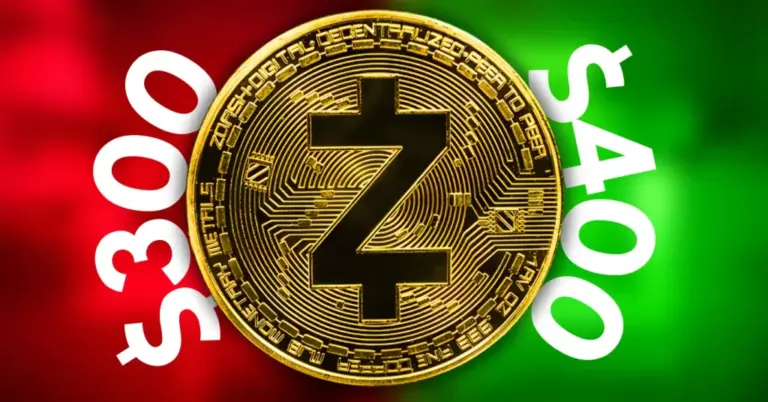
Well, price didn’t just keep running. It stalled. Instead of continuation, ZEC/USD slipped into a choppy range between $300 and $400. That’s not random. That’s where the real players showed up.

Whale Clusters Define Critical Support and Resistance

Zoom into the data, and things get interesting fast. Around the $300 level, there’s a heavy concentration of large buy orders with massive green clusters showing consistent whale accumulation. These aren’t casual trades. They’re deliberate, repeated entries, signaling that big players see $300 as a key re-entry zone.

In other words, it’s not just support it’s defended territory, at least it looks intact for now.

Now flip the script. Up near $400, the tone changes completely. Red clusters dominate, showing aggressive sell-side activity. Add to that the presence of large, persistent sell orders sitting at $410 and $430 for over ten days, and it’s clear: whales aren’t just taking profits they’re building a wall.

Order Book Reveals Where Next Volatility Hits

And then there’s the deeper layer the order book. Multiple pending orders exceeding $500,000 are scattered across key levels, with notable buy interest sitting around $290 and even as low as $175. These aren’t decorative numbers; they’re potential magnets for price.

So, what does that mean? If ZEC price dips and fills those $290 buy orders while open interest climbs, it likely signals fresh long positioning. That’s fuel. Real fuel. The kind that could drive a second leg higher, possibly toward the $636 macro target marked on the chart.

But let’s be real none of that matters if $300 support zone breaks cleanly.

ZEC Price Hinges on Whale Commitment at $300

Right now, Zcash price is hovering just above short-term moving averages, sitting dangerously close to that $300 cluster. This is where conviction gets tested. If the buy-side pressure holds and absorbs the sell orders stacked above, the structure leans bullish.

If not? Those lower liquidity pockets start looking very attractive. So, what’s next? Watch the whales. Not the headlines, not the hype but the actual orders. Because in this ZEC price setup, they’re not just participating in the market… they’re controlling it.