Archive

April 2026

Browsing

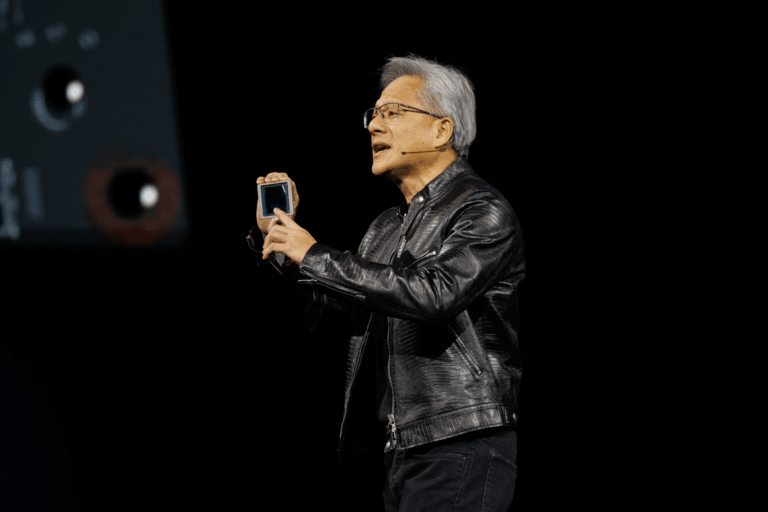
Nvidia shares pulled back below the $200 mark in early Monday trading, giving up recent gains as competitive pressures in the artificial intelligence chip sector showed no signs of easing.

The stock fell 1.5% to $198.51, declining more steeply than major benchmarks.

The S&P 500 was down 0.4%, the Nasdaq Composite shed 0.7%, and the Dow Jones Industrial Average dipped 0.2%.

The move reversed part of a 15% advance recorded over the past month, during which Nvidia had briefly cleared the $200 level — a threshold that has so far proved difficult to sustain.

Google steps up chip ambitions

Alphabet’s Google is reportedly preparing to unveil a new generation of its tensor processing units, or TPUs, at the Google Cloud Next conference in Las Vegas this week.

The launch is expected to include chips built specifically for inference — the computational work involved in deploying trained AI models — a segment that is drawing increasing investment across the semiconductor industry.

Google Chief Scientist Jeff Dean said demand for faster AI query processing was reshaping how chips should be designed.

“It now becomes sensible to specialise chips more for training or more for inference workloads,” he said in an interview with Bloomberg, adding that the company is examining “a whole bunch of different things,” including output speed.

Google’s push into this space is underpinned by a decade of in-house chip development, deep capital resources from its search business, and direct experience building and running large AI models.

It is the only major AI developer manufacturing custom silicon at a meaningful scale, enabling close coordination between its hardware and software teams.

Nvidia’s GPUs remain the benchmark for AI model training.

The company has also moved to strengthen its inference offering — last month, it began shipping a chip for faster inference built on technology acquired from Groq through a reported $20 billion licensing deal.

Nvidia stock is underperforming peers

The stock’s recent underperformance relative to other chipmakers has been hard to ignore.

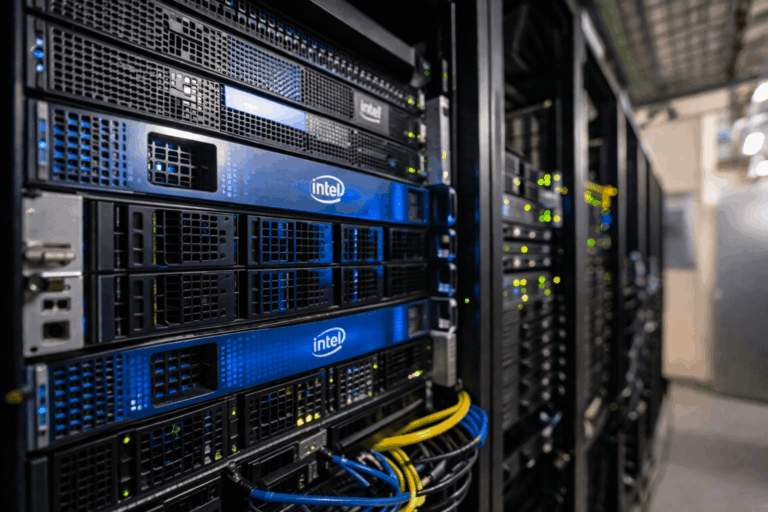
Advanced Micro Devices has gained roughly around 40% over the past month, while Intel has climbed approximately 50% over the same period.

A key overhang for the stock remains uncertainty around artificial intelligence spending.

Large technology companies—often referred to as hyperscalers—have driven demand for Nvidia’s chips through aggressive investment in data centres and infrastructure.

However, investors are increasingly questioning how long this pace can be sustained and when it will translate into meaningful returns.

Major customers, including Microsoft, Alphabet, and Amazon, continue to spend heavily, but confidence in near-term monetisation has weakened.

Wall Street has not turned cautious on Nvidia despite the short-term noise.

Bernstein last week reiterated a Buy rating with a $300 price target.

Oppenheimer’s Rick Schafer kept an Outperform rating and a $265 target, while holding more neutral views on AMD and Intel.

The post Why Nvidia stock slipped below $200 on Monday appeared first on Invezz

The post What Is ASTEROID Crypto and Why Did Elon Musk’s Reply Send It Up 68,000% appeared first on Coinpedia Fintech News

A memecoin called ASTEROID surged more than 68,000% in a week, crossing a $100 million market cap and generating over $100 million in 24-hour trading volume, driven by one of the most emotionally charged stories the crypto market has seen in years.

The token is not based on a dog or a cartoon. It is based on a Shiba Inu plush toy designed by Liv Perrotto, a 15-year-old who died after battling cancer. Her design flew as a zero-gravity indicator on a space mission. Before she passed, she had one request for Elon Musk.

“Can you make Asteroid the mascot for SpaceX?”

How Two Words From Musk Moved the Market

The story resurfaced online earlier this week and spread rapidly across social media. When it reached Musk, he replied publicly: “Will answer shortly.”

That single response was enough. ASTEROID’s market cap jumped from approximately $50,000 to over $20 million within hours as traders rushed to position themselves ahead of whatever came next.

Musk then followed up with a single word: “Ok.”

The confirmation sent the token parabolic. Traders interpreted the response as Musk agreeing to the mascot request, and the narrative had enough emotional weight to sustain buying pressure far beyond what most meme tokens ever see.

Millionaires Made Overnight

According to on-chain data shown by Lookonchain:

  • One trader flipped 1 ETH into $470K within hours
  • Another held through 580 days of near-zero value and saw $21K turn into ~$392K
  • Some traders even turned a few hundred dollars into $1M+ in days

What the Numbers Show

The scale of the move is difficult to contextualise within normal crypto market activity:

  • 68,000% gain in a single week according to CoinGecko data
  • Market cap climbed from $50,000 to over $100 million at peak
  • $100 million in 24-hour trading volume at the height of activity
  • The move created significant returns for early holders and significant losses for those who entered near the top

The Broader Context

ASTEROID sits at the intersection of grief, internet culture, and financial speculation, a combination that has proven repeatedly capable of generating extreme short-term market movements regardless of underlying fundamentals.

The token has no formal connection to SpaceX, no confirmed endorsement beyond two informal social media replies and no guarantee that Musk’s response translates into any official action.

What it does have is a story that resonated widely and a market that priced that resonance in real time. Whether the price holds, fades, or collapses entirely now depends entirely on what happens next in a narrative that nobody fully controls.

The post Ethereum Price Prediction 2026: Can ETH Hit $5,000 This Year? appeared first on Coinpedia Fintech News

Ethereum price has been one of the stronger performers among the top 10, holding above the $2,000 level since March. However, the price has slipped nearly 3.5% in the past 24 hours, underperforming the broader market amid macro-driven selling pressure. Despite this short-term weakness, the larger structure remains intact, with three key indicators signaling a potential bullish shift that could drive the ETH price toward new highs.

Ethereum On-Chain Activity Surges to Multi-Year Highs

After a prolonged period of decline, chain transactions have rebounded sharply, reaching over 200 million in Q1 2026. This marks one of the strongest recoveries in network activity in recent years, breaking the previous downtrend that persisted through 2022–2024. This isn’t just a small uptick—it’s a structural reversal in usage.

Source: X

Rising transaction count typically signals increasing demand for the network, whether through DeFi activity, user growth, or broader ecosystem participation. More importantly, it suggests that fundamental usage is catching up with price, rather than price moving purely on speculation.

10% Volatility Haunts the Ethereum Price Rally

Ethereum’s liquidation map is starting to show a clear imbalance, and it’s not subtle. A large cluster of short liquidations is building above the current price, while long-side liquidity below has already been cleared to a large extent. This shift suggests that the market has already flushed weaker longs, leaving short positions exposed on the upside.

With price hovering near $2,350, the path of least resistance appears tilted upward. If ETH begins to push higher, it could trigger a cascade of short liquidations, effectively fueling the move toward higher levels. If ETH price surges by 10%, the token may face $800M in short liquidation, while a 10% pullback could trigger $2.3B in long liquidations. 

Ethereum Price Prediction: Can ETH Price Hit $5000?

Ethereum’s higher timeframe structure is starting to mirror a familiar cycle, and that’s where things get interesting. Each major rally has followed the same pattern: impulse → consolidation → expansion. Right now, ETH appears to be sitting in that consolidation phase again, holding within a defined range after its last move higher.

The current structure between roughly $2,000–$4,000 looks similar to previous accumulation zones that eventually led to strong upside expansions. Price is compressing, volatility is cooling, and the market is building a base rather than trending aggressively. If this pattern continues, the next phase would be a breakout from this range, potentially leading to a new expansion leg. The projected move, based on previous cycles, points toward a gradual climb rather than a straight rally, likely forming higher highs along the way.

Ethereum isn’t trending; it’s preparing. And historically, this kind of consolidation has preceded some of the strongest moves, not the weakest. As long as the ETH price holds above the lower range (~$2,000), the structure remains intact. A breakdown below this level would invalidate the pattern and shift the outlook.

The global race to dominate artificial intelligence is increasingly defined not just by capital investment or computing power, but by a fierce, escalating battle for a small pool of elite talent.

As Big Tech companies pour billions into AI development, they are aggressively poaching top researchers and engineers from startups and rivals alike, reshaping the competitive landscape and raising questions about the sustainability of emerging “neo labs” that have attracted record funding but struggle to retain key personnel.

Meta deepens hiring push from Murati’s startup

In the latest sign of intensifying competition, Thinking Machines Lab, the startup founded by former OpenAI chief technology officer Mira Murati, has lost another founding member to Meta.

Joshua Gross, a veteran software engineer who built and shipped the company’s flagship product Tinker from “zero-to-one,” recently joined Meta Superintelligence Labs, where he now leads engineering teams, according to his LinkedIn profile.

Gross’s move marks the fifth founding member from the startup to be hired by Meta, which has been aggressively expanding its artificial intelligence capabilities.

Among those who have already departed is cofounder Andrew Tulloch, highlighting the scale of talent attrition at the high-profile startup.

Thinking Machines Lab, despite raising about $2 billion in a record-breaking seed round last year at a valuation of roughly $12 billion, has increasingly become a target for talent poaching rather than a stable hub for innovation.

The company has reportedly been in discussions to raise further funding at a valuation of up to $50 billion, underscoring investor confidence even as it grapples with internal churn.

Talent exodus reflects broader industry trend

The departures from Thinking Machines Lab are part of a wider pattern across the artificial intelligence sector, where newly formed startups are struggling to compete with the financial muscle of established technology giants.

Several founding team members have already left Murati’s venture to return to OpenAI, including Barret Zoph, Luke Metz, and Sam Schoenholz.

OpenAI has also recruited other key employees from the startup, including cybersecurity specialist Jolene Parish.

Similarly, Safe Super Intelligence (SSI), the startup founded by former OpenAI chief scientist Ilya Sutskever, has faced talent losses, with Meta successfully poaching cofounder Daniel Gross to support its “superintelligence” initiatives.

These moves reflect the growing dominance of a handful of major players—Meta, Microsoft, Google, and OpenAI—in the race to build advanced AI systems, as they leverage their financial resources to secure the industry’s most sought-after expertise.

Compensation gap widens between startups and Big Tech

Industry observers say compensation is a key factor driving the talent shift.

While startups such as Thinking Machines Lab can offer equity stakes that may eventually be worth billions, they often struggle to match the immediate financial incentives provided by larger firms.

According to reports, companies including Meta, Google DeepMind, and OpenAI are offering compensation packages in the high six- and seven-figure range, with some deals reportedly reaching hundreds of millions or even billions of dollars for top-tier researchers.

The structure of these packages also gives established firms an advantage.

Public companies can offer stock options with accelerated vesting schedules, allowing employees to convert equity into cash within months.

In contrast, stock options from early-stage startups are seen as riskier, as their long-term value depends on future performance and market conditions.

This imbalance has made it increasingly difficult for “neo labs” to retain talent, even after securing significant funding.

Big Tech strikes unconventional talent deals

The scramble for AI expertise has also led to unconventional hiring arrangements, with major technology companies effectively acquiring talent through strategic partnerships and licensing deals.

In 2024, Microsoft hired Mustafa Suleyman and Karén Simonyan, co-founders of Inflection AI, along with several members of their team.

The deal, which included a reported $650 million payment to the startup, allowed Microsoft to integrate Inflection’s technology while absorbing much of its workforce.

Amazon has pursued a similar strategy, reaching an agreement with AI startup Adept to license its technology and bring in key members of its team, including co-founder and chief executive David Luan.

Although Luan later left Amazon, the deal highlighted the extent to which companies are willing to go to secure both talent and intellectual property.

Companies such as Google and Microsoft have intensified their hiring efforts in recent times.

Google last year secured a deal worth around $2.4 billion to bring in Varun Mohan, co-founder of AI coding startup Windsurf, in what was called a “reverse acquihire” where the company did not buy Windsurf, nor scooped up a stake in it, but paid a hefty fee to license its technology and bring key talent on board.

Microsoft AI also recruited dozens of researchers from Google DeepMind.

Meta has been particularly aggressive, with chief executive Mark Zuckerberg spearheading a major hiring drive to build out the company’s Superintelligence Labs.

The push included a $14 billion investment in Scale AI and the recruitment of its co-founder, Alexander Wang.

Intensifying competition for scarce expertise

At the heart of the talent war is a relatively small group of highly specialised researchers capable of developing advanced large language models and other cutting-edge AI systems.

Estimates suggest there are fewer than 1,000 such individuals globally, making them among the most valuable assets in the technology industry.

The competition for this talent pool has driven compensation to unprecedented levels.

OpenAI chief executive Sam Altman has said that the rivalry has escalated to the point where signing bonuses of up to $100 million have been offered to lure top researchers.

The broader compensation landscape reflects similar trends.

OpenAI’s average stock-based compensation reached about $1.5 million per employee in 2025, one of the highest levels ever recorded for a technology startup.

Challenges for emerging AI labs

For startups like Thinking Machines Lab, the ongoing talent drain poses significant challenges.

While large funding rounds provide the capital needed to build infrastructure and develop products, they do not necessarily guarantee the ability to retain the human expertise required to execute those plans.

The situation underscores a broader tension in the AI ecosystem.

On one hand, venture capital continues to flow into new entrants, reflecting optimism about the transformative potential of artificial intelligence.

On the other hand, the concentration of talent within a handful of dominant firms raises concerns about competition and innovation.

As the industry evolves, the ability to attract and retain top researchers is likely to remain a decisive factor in determining which companies emerge as leaders.

The post Inside the great AI talent war draining startups, powering Big Tech's ambitions appeared first on Invezz

The post Morpho Price Surges 20% After DeFi Unicorn Status And $2 Breakout appeared first on Coinpedia Fintech News

Morpho price didn’t just wake up bullish, it kicked the door open. A sharp 20% intraday surge pushed Morpho price cleanly above the $2.0 resistance, and suddenly, a protocol once quietly building is now sitting in the spotlight with a “DeFi unicorn” badge stamped by France’s Ministry of Finance.

Morpho Declared France’s First DeFi Unicorn Project

Well, this isn’t just another price pump story because of some broader market optimism. But, Morpho has officially been recognized as France’s first DeFi unicorn, a milestone that carries more weight than the usual crypto hype cycle. Even more eyebrow-raising? It’s now the most valuable French startup per employee at $26 million, outpacing even Mistral AI’s $17 million. That kind of efficiency tends to get attention.

And just as the headlines hit, Morpho doubled down with another move as it is going live on LI.FI Earn. The integration means any app, wallet, or fintech platform can now tap directly into Morpho’s on-chain yield strategies across multiple chains. In simpler terms: accessibility just went mainstream.

Morpho Price Breakout Above $2 Gains Momentum

But markets don’t care about narratives unless price confirms them. And right now, Morpho price is doing exactly that.

The breakout above $2.0 wasn’t subtle. It came with a 20% intraday move, backed by broader altcoin strength as Bitcoin’s rally continues to lift the market. Momentum is clearly leaning bullish, and if it sticks, the next psychological level sits around $3.0.

Still, nothing moves in a straight line. If price fails to hold above $2.0, a round of profit booking could drag it back down. That level now acts as the line in the sand now lose it, and the breakout starts looking shaky.

Technical Indicators Suggest Bullish Momentum Building Up

So, what’s under the hood? Surprisingly solid. The CMF has pushed above zero, signaling capital inflows rather than exits. The Awesome Oscillator has just flipped into positive territory, and not in an exhausted way infact it’s early, meaning momentum might just be getting started.

Then there’s MACD, which has crossed above the zero line with a bullish crossover. That’s not noise; that’s structure. And RSI? Sitting at 66. Not overheated, not sleepy but shows that price has just enough room to push higher before things get uncomfortable. Put it all together, and the indicators don’t exactly scream “imminent dump” at least for now.

Macro And Market Risks Still Lurking Beneath

Of course, here’s where reality taps you on the shoulder. This entire setup leans heavily on broader market stability. A sudden geopolitical shift something that’s already been driving volatility in 2026 could flip sentiment fast. And when sentiment flips, altcoins don’t ask questions; they react.

But for now, momentum is intact thanks to open strait of hormuz during the 10-days ceasefire period.

Morpho price has the narrative, the breakout, and the indicators backing it. Whether it holds above $2.0 or not will decide if this is just another spike or the beginning of something a bit more sustained for Morpho price.

Shares of Nvidia continued their upward momentum, rising about 1.2% on Friday to move back above the $200 mark, as the chipmaker’s recent rally gathered pace.

The stock has gained roughly 10% over the past 30 days, rebounding from lows near $175 and approaching its all-time closing high of $207.04, reached in late October.

While the rally has been notable, Nvidia has struggled to consistently hold above the $200 level, which remains a key threshold for investors.

Rally lags some chip rivals

Despite its recent gains, Nvidia’s performance has lagged behind some competitors in the semiconductor sector.

Shares of Advanced Micro Devices have surged around 41% over the past month, while Intel has climbed approximately 60% over the same period.

The divergence has been driven in part by growing enthusiasm for central processing units (CPUs) used in AI servers, compared with Nvidia’s focus on graphics processing units (GPUs).

However, analysts suggest that relative underperformance should not deter investors from Nvidia.

Wall Street analysts remain bullish on Nvidia stock

Oppenheimer analyst Rick Schafer reiterated an Outperform rating on Nvidia with a $265 price target, while maintaining more neutral views on AMD and Intel.

“[Nvidia’s] Best-in-class Blackwell Ultra (GB300) NVL racks lead the market by two generations, in our view,” Schafer said.

“The AI castle on a hill boasts best performance/watt training and inference.”

He added that Nvidia is currently trading at around 17 times his projected 2027 earnings, below the semiconductor sector average of roughly 20 times, suggesting relative valuation support.

Analysts at Bernstein also maintained a bullish stance, reiterating a Buy rating with a $300 price target.

Led by David Dai, the firm highlighted Nvidia’s upcoming Vera Rubin platform, expected to begin shipping in the second half of 2026.

Bernstein described the platform as “a monster,” projecting that it will deliver five times more inference performance and 3.5 times more training performance compared with current models.

The firm noted that these performance gains are being achieved with only 1.6 times more transistors, indicating improvements in design efficiency.

Valuation seen as attractive

Despite the stock’s recent rally, analysts argue that Nvidia’s valuation remains relatively attractive given its growth trajectory.

Bernstein said the stock is trading at a price-to-earnings-growth (PEG) ratio of 0.77, suggesting that the share price has not fully reflected expected earnings expansion.

The firm estimates Nvidia could generate more than $12 in earnings per share by 2027, a figure it described as “very plausible.”

According to the analysis, Nvidia is trading at approximately 15 times its projected 2027 earnings, below the sector average of around 20 times.

While competitors continue to invest heavily in AI hardware, analysts believe Nvidia maintains a significant technological lead.

Bernstein said the company’s next-generation offerings “ought to cement” its position in the AI chip market, creating a gap that rivals such as AMD and Intel may find difficult to close.

Although the stock has yet to establish a firm breakout above $200, continued demand for AI chips, upcoming product cycles, and supportive analyst views suggest the company remains a key focus for investors heading into semiconductor earnings season.

The post Nvidia stock breaches $200: analysts see more upside ahead appeared first on Invezz

The post Dogecoin Breakout Confirmed After Third Attempt Flips Resistance appeared first on Coinpedia Fintech News

Dogecoin breakout chatter is back but this time, it’s not just noise. After multiple failed attempts, the meme coin has finally pushed through its descending triangle resistance, and the way it happened tells a story traders know all too well: persistence pays… eventually.

Three Attempts That Changed Market Control Dynamics

Let’s break it down, because the sequence matters more than the breakout itself.

First attempt? Rejected. Clean and simple. The candle body didn’t even make it into the resistance zone that means that sellers were firmly in control, no debate there.

Second attempt? Slightly better, but still no cigar. Price managed to close right at the resistance zone. Buyers showed up, sure, but couldn’t push through. Sellers still had the final word.

Then came the third attempt. And this is where things flipped, per analyst TATrader_Alan.

The entire candle closed above resistance. Not a wick, not a tease thats a full-bodied move. That’s not hesitation. That’s conviction. And in technical terms, that’s your confirmation.

Descending Triangle Finally Breaks After Multiple Rejections

Moreover, the Descending triangles are usually bearish structures. Lower highs, flat support and it’s a setup that often resolves downward as trend continuation. But markets don’t always follow the textbook.

This time, Dogecoin price breakout seems to have went the other way. Instead of breaking down, it broke up and not on the first try, but after gradually weakening seller control. Each rejection wasn’t just failure; it was pressure building underneath. By the third attempt, that pressure cracked the ceiling.

Resistance Flip Signals Shift in Buyer Strength

Well, once resistance breaks, it doesn’t just disappear. It flips. That same zone that rejected price twice is now expected to act as support. And that shift from resistance to support is where the real narrative changes.

It’s not just about price moving up. It’s about control changing hands. Buyers aren’t just participating anymore instead they’re kind of dictating.

Shares of Intel continued their strong upward momentum on Thursday, extending gains after a two-week rally that has pushed the stock near multi-decade highs. The chipmaker’s stock rose 4.5% to $67.93, following a brief pause after a nine-day winning streak that helped deliver its best monthly performance since 1987.

The rally has been fueled by optimism around Intel’s positioning in artificial intelligence infrastructure, even as questions around valuation and execution persist.

AI-driven server demand boosts outlook

The core of Intel’s recent strength lies in its server central processing unit (CPU) business, which is benefiting from growing demand tied to AI workloads. Analysts point to the rise of “agentic AI” as a key driver, supporting higher volumes and pricing power in the data center segment.

According to Mizuho, server CPU demand could push average selling prices up by 10% to 15% this year, with the trend expected to persist through 2026 and potentially as far out as 2030.

This strength is helping offset continued weakness in the personal computer (PC) market. Intel may also benefit from this imbalance, as it can redirect manufacturing capacity from PC chips toward higher-margin server products, providing additional near-term upside.

Meanwhile, Bernstein SocGen Group has raised its assumptions for Intel’s Xeon server business, now forecasting 36% year-over-year revenue growth in 2026 alongside improved gross margins.

Analysts lift targets but remain cautious

Despite the stock’s rally, analysts have largely maintained neutral stances. Mizuho reiterated a Neutral rating while raising its price target to $59 from $48. Bernstein followed with a Market Perform rating and lifted its target to $60 from $36.

The upgrades reflect improved earnings expectations rather than a shift in overall conviction. Both firms have increased their forecasts for 2026 and 2027, citing stronger server demand and margin expansion.

Bernstein now expects Intel to report 2026 revenue of $53.3 billion and earnings per share of $0.82, with 2027 projections rising to $57.5 billion in revenue and $1.33 in EPS. While revenue estimates remain slightly below consensus due to weaker PC demand, earnings projections are higher on improved profitability.

At the same time, valuation concerns are becoming more prominent. Intel shares are trading at roughly 95 times forward earnings, a level that some analysts view as stretched given the company’s execution risks and competitive positioning.

Less than a quarter of Wall Street analysts currently rate the stock as a Buy, reflecting a cautious stance despite the recent momentum.

Execution risks and competition remain key

Intel’s long-term outlook continues to hinge on its ability to execute on multiple fronts, including its foundry expansion strategy and efforts to close the gap with competitors such as Advanced Micro Devices and Nvidia, both of which have established strong leads in AI chips.

While improving demand dynamics offers support, challenges remain in scaling operations and navigating a highly competitive landscape.

Looking ahead, investors will gain further clarity when Intel reports its first-quarter results next Thursday, offering insight into whether the company is on track to meet its upgraded forecasts.

“This is likely to be a messy quarter for Intel, but on balance we are feeling somewhat more positive as the agentic server CPU surge increasingly seems real,” wrote Bernstein analyst Stacy A. Rasgon. “We continue to struggle with both fundamentals and valuation especially after the recent run.”

The post Intel stock continues its surge; is valuation too expensive? appeared first on Invezz

The post WLFI Proposes 4.5 Billion Token Burn in Major Governance Reset appeared first on Coinpedia Fintech News

In a big move to rebuild trust and strengthen its long-term outlook, World Liberty Financial (WLFI) has introduced a new governance proposal that could change how its tokens are managed.

The plan covers a huge 62.28 billion WLFI tokens and includes stricter lockups, updated vesting schedules, and a potential burn of over 4.5 billion tokens.

Stronger Lockups for Founders and Team

The biggest change affects insiders like founders, team members, advisors, and partners.

If the proposal is approved:

  • Around 45.24 billion tokens will be locked for 2 years (cliff period)
  • After that, tokens will be released slowly over 3 years
  • A 10% token burn will apply when they opt in, removing up to 4.52 billion tokens permanently

This means insiders will have to stay committed to the project for the long run instead of exiting early.

Easier Terms for Early Supporters

For early supporters holding 17.04 billion tokens, the terms are slightly more flexible:

  • A 2-year lockup period
  • Followed by a 2-year gradual release
  • No token burn, so they keep all their tokens

However, holders must agree to these new terms. If they don’t opt in, their tokens will stay locked indefinitely.

Tensions Rise With Justin Sun

This proposal comes at a time when WLFI is already under pressure. A public dispute has emerged between the platform and Justin Sun, the founder of Tron and a former investor in WLFI. 

Sun claims that his accounts on WLFI have been frozen without proper explanation. He has made serious allegations against the platform, suggesting that users were not fully informed about how the system works.

According to Sun, WLFI included a hidden “backdoor” function in its smart contract that allows tokens to be locked.

“What was never disclosed to me or any other investor is that World Liberty built a backdoor locking function into the smart contract used to issue WLFI tokens. This is the opposite of decentralization. This is a trapdoor being marketed as an open door,” Sun said.

Both sides have now spoken publicly, and the dispute could move toward legal action.

Shares of Nvidia continued their upward momentum on Wednesday.

The stock is extending a recent rally that has brought the stock close to a key psychological level, though investors remain cautious about a sustained breakout.

The stock rose around 1.6% in early trading to $199.53, putting it on track for a 11th consecutive session of gains.

The rally has lifted Nvidia from recent lows near $165, marking a notable recovery in sentiment.

Despite the steady climb, the stock has yet to decisively break above the $200 level—a threshold it has struggled to surpass since retreating from highs above that mark late last year.

That level remains a focal point for investors, particularly as Wall Street price targets imply further upside.

Awaiting catalysts from Big Tech earnings

Market participants are now looking toward upcoming earnings from major technology companies as a potential trigger for Nvidia’s next move.

Investors are focused on whether large technology firms will continue to increase capital expenditures on artificial intelligence infrastructure.

More specifically, they are seeking confirmation that next-generation AI models are being trained on Nvidia’s current Blackwell architecture.

Such signals would reinforce demand visibility for Nvidia’s high-performance chips, which have been central to the buildout of AI systems globally.

Competitive pressures intensify

At the same time, Nvidia faces growing competition across the AI chip landscape, with several rivals announcing strategic developments.

Today, Broadcom extended its partnership with Meta Platforms to support the latter’s artificial intelligence infrastructure.

The agreement includes the deployment of Meta Training and Inference Accelerator (MTIA) chips, which are expected to underpin the company’s data centre expansion through 2029.

Broadcom said the rollout would begin with a commitment exceeding one gigawatt, forming part of a broader multi-gigawatt expansion.

As part of the arrangement, CEO Hock Tan will step down from Meta’s board and transition into an advisory role, where he will contribute to the company’s custom silicon roadmap.

Meanwhile, Amazon Chief Executive Officer Andy Jassy indicated that the company may expand sales of its internally developed AI chips to third parties, a move that could increase competition with Nvidia in the broader market.

Chinese technology company Huawei has also intensified its efforts, stating that its Ascend 950PR processor delivers nearly 2.87 times the performance of Nvidia’s H200 AI chip.

The competitive environment is further shaped by geopolitical and policy factors.

China has previously encouraged domestic firms to shift toward local chip suppliers, while US tariffs have introduced additional complexity into global semiconductor trade flows.

Nvidia has resumed production of its H200 chips for Chinese customers, though the company has not provided detailed guidance on its sales outlook in the region.

Despite the mounting competition, market sentiment remains broadly supportive of Nvidia’s long-term positioning.

Analysts generally expect the company to maintain its leadership in AI chips, particularly as the industry shifts its focus from training large models to inference—the process of generating outputs from trained systems.

The post Nvidia stock continues surge to 11th day: will it breach $200? appeared first on Invezz