
Archive

April 2026

Browsing

The post XRP News: Iran’s Hormuz Fees in Crypto? PetroDollar Architect Says ‘Could Be Ripple’ appeared first on Coinpedia Fintech News

Jim Rickards has spent decades at the intersection of intelligence, finance and geopolitical strategy. He was involved in the construction of the PetroDollar system in the 1970s. 

Which makes what he said this week particularly interesting.

Discussing which currencies Iran might be using to collect its reported Bitcoin toll from oil tankers passing through the Strait of Hormuz, Rickards paused before answering. “Could be Bitcoin. Could be Tether. Could be, I mean, you know, Ripple.”

He listed Ripple alongside Bitcoin and Tether as a plausible medium for sovereign energy settlement. 

The Context Matters

Rickards was discussing breaking news from the Financial Times reporting that Iran had begun charging vessels a toll to transit the Strait of Hormuz, with payment demanded in cryptocurrency. The exact currency was not specified in the original report. Rickards was working through the logical candidates in real time.

His analysis went further than just naming currencies. He pointed out that regardless of which cryptocurrency Iran uses, it is still pricing the toll in dollars. One dollar per barrel of oil is a dollar-denominated transaction settled in crypto, not an escape from the dollar system.

“You can hit on the dollar but you can’t get away from it,” he said. “Cryptocurrencies have a dollar equivalent. So you’re always back to the dollar no matter how hard people try to get away from it.”

He also raised a pointed question about Tether specifically. The largest stablecoin by market cap counts Howard Lutnik, the US Secretary of Commerce, as a significant investor. If Iran is settling oil tolls in Tether, it is arguably routing payments through an instrument with direct ties to the US government it is trying to circumvent.

“Iran is going to use Tether? They’re going to charge a toll on the oil in Tether?” he said, letting the irony speak for itself.

Why Ripple Matters in This Conversation

According to supporters, Ripple’s inclusion in Rickards’ list was not random. XRP and the XRP Ledger are specifically designed for fast, low-cost cross-border settlement between institutional counterparties. Transactions settle in three to five seconds. The network has over 300 financial institutions using its payment infrastructure. 

Whether Iran is actually using Ripple is unknown. Rickards was speculating, not confirming. But the fact that a former CIA contractor and one of the architects of the PetroDollar system reached for Ripple as a natural answer to the question of what replaces dollar-denominated oil settlement is a data point worth noting.

Palantir Technologies (NASDAQ: PLTR) fell 6% on April 9 as the market grappled with a fresh wave of skepticism from “Big Short” investor Michael Burry.

Investors seem to be cutting exposure to PLTR after Burry’s latest critique specifically questioned the company’s enterprise dominance.

Further weighing on shares – a Pakistan-brokered ceasefire between the US and Iran has cooled geopolitical tensions, eroding the “war premium” that historically bolsters defense-linked stocks.

Palantir stock has been a major disappointment for investors in 2026, currently down roughly 22% versus the start of this year.

Palantir stock sinks as Burry targets its competitive moat

While Burry has previously attacked PLTR shares using technical “Head and Shoulders” patterns and accounting critiques, this latest warning represents a more fundamental shift in his bearish call.

Instead of focusing on math or charts, Burry is now targeting Palantir’s competitive moat, claiming AI powerhouse Anthropic is effectively “eating its lunch”.

By arguing that Anthropic offers a more intuitive, cost-effective, and functional alternative for the enterprise sector, Burry is dismantling the long-standing narrative that PLTR is the “only” viable choice for complex data integration.

This pivot suggests that Palantir’s biggest threat may not be its high price tag – but a more nimble breed of specialized AI competitors.

Three structural risks facing PLTR shares in 2026

Beyond Burry’s skepticism, three distinct structural risks are beginning to cloud Palantir shares.

First, it’s now facing a huge bundling threat from hyperscalers like Microsoft, AWS, and Google. These titans are increasingly embedding AI workflow tools directly into their existing cloud contracts, often at a marginal cost that makes Palantir’s bespoke, high-touch model look expensive.

Second, geopolitical friction is creating a “growth ceiling” abroad. While domestic demand remains white-hot, international commercial growth has stalled as European and UK regulators favor “sovereign AI” frameworks and local vendors over Western-aligned platforms.

Finally, a shift in government spending toward physical military hardware and industrial capacity, driven by the need to replenish stockpiles, may divert funding away from the high-margin software contracts that Palantir relies on for its federal bedrock.

Palantir Technologies: a bet on flawless execution

The aforementioned risks are particularly pronounced for PLTR stock as it’s priced for perfection at a forward earnings multiple of about 147x, leaving zero margin for error.

This extreme multiple is particularly vulnerable in a “higher-for-longer” interest rate environment.

With the 10-year Treasury yield hovering near 4.3%, the opportunity cost of holding expensive growth stocks is high; investors can secure guaranteed returns elsewhere while avoiding equity volatility.

Furthermore, persistent energy-driven inflation – linked to lingering Middle East instability – suggests the Federal Reserve is unlikely to pivot toward cuts anytime soon – and as interest rates remain elevated, the present value of Palantir’s future cash flows is aggressively discounted.

All in all, if the company fails to deliver an absolute “beat and raise” in upcoming quarters, the market may no longer find its astronomical valuation justifiable, leading to a swift and painful repricing.

The post Michael Burry takes aim at Palantir stock – 'again' appeared first on Invezz

The post Coinbase Stock Price Faces Resistance Despite Securing Crypto AFSL appeared first on Coinpedia Fintech News

Coinbase stock price teased a bullish spike but then hesitated at the worst possible moment. The recent move up toward $189 looked promising, especially coming off that February support zone around $140–$160. That area isn’t random either as it lines up with a two-year-old demand zone. So naturally, buyers showed up.

But let’s not get carried away. The top crypto exchange company’s stock is still restricted by the 50-day EMA as it is still acting like a ceiling, and until that flips, this isn’t a breakout as it’s just another test, because in today’s attempt it didn’t break through. Also, Multiple attempts have already been rejected at this dynamic level, which tells that there’s still supply sitting overhead.

Still, the structure isn’t completely bearish in the short term. Price has been grinding higher with small resets, which usually signals some level of accumulation. The question is whether that’s enough.

Death Cross Still Dominates The Bigger Trend

Now for the uncomfortable part. Back in mid-December 2025, Coinbase stock printed a death cross and it hasn’t exactly invalidated it since. The gap between the moving averages remains wide, which basically screams that bearish momentum hasn’t gone anywhere.

So even though the recent bounce looks nice on the surface, zoom out and the trend still leans heavy to the downside.

Indicators aren’t doing bulls any favors either. OBV is sitting at -45.58 million, well below the zero line. CMF? Negative 0.19. That’s not exactly a flood of capital rushing in but it’s more like cautious dipping of toes.

Accumulation Zone Builds Quietly Below Resistance Levels

But interesting part is that $140–$160 range isn’t just support but it’s turning into an accumulation zone. Price keeps revisiting it, bouncing, and then pushing higher. That kind of behavior usually means someone’s buying… just not loudly.

If COIN price can finally flip the 50-day EMA, there’s a clear path toward $240. That’s roughly a 30% move from the current ~$182 range. Not guaranteed, obviously, but technically clean.

Until then? It’s a waiting game.

Coinbase Expands Globally With New License Approval

Meanwhile, on the fundamentals side, Coinbase isn’t exactly sitting still. The exchange just secured an Australian Financial Services Licence with retail derivatives authorization. Translation: it can now roll out crypto and equity perpetuals in Australia, with options expected later.

That’s a big step toward its “Everything Exchange” ambition. And let’s not forget that Coinbase still holds 15,876 BTC, making it one of the largest corporate holders out there. So yeah, it’s not just a trading platform. It’s deeply tied into the broader crypto ecosystem.

So, if Coinbase stock can reclaim that EMA level, momentum could flip fast. But if it keeps getting rejected, that accumulation zone might get tested again and harder.

Why Coinbase’s Recovery Matters for Ethereum

Investors often look for a “Coinbase token,” but the exchange remains uniquely tied to the Ethereum ecosystem. While Coinbase’s Layer 2 network, Base, is a massive growth driver, it does not have a native token; instead, it utilizes ETH for all gas fees.

Technically, this creates a symbiotic relationship: if the Coinbase stock breaks its 50-day EMA resistance due to increased on-chain activity, it likely signals a surge in Base network usage. Because Base settles on Ethereum, a bullish breakout for COIN often serves as a fundamental tailwind for ETH, driving utility and demand for the asset as the underlying “gas” of Coinbase’s global expansion.

Americans are getting smaller pay raises while tariffs and higher gas prices are threatening to make everything more expensive.

Translation: The affordability problem isn’t improving.

New government data released Friday showed non-supervisory workers getting a 3.4% pay raise on average hourly earnings over the last year. That’s the slowest pace of wage gains since 2021, and a downshift from the last two years, when pay bumps were closer to 4%.

The slowdown comes as economists worry about rising inflation, with the Iran war choking off oil tankers and pushing gas prices up over $1 per gallon in just a month, to a national average of $4.09 on Friday.

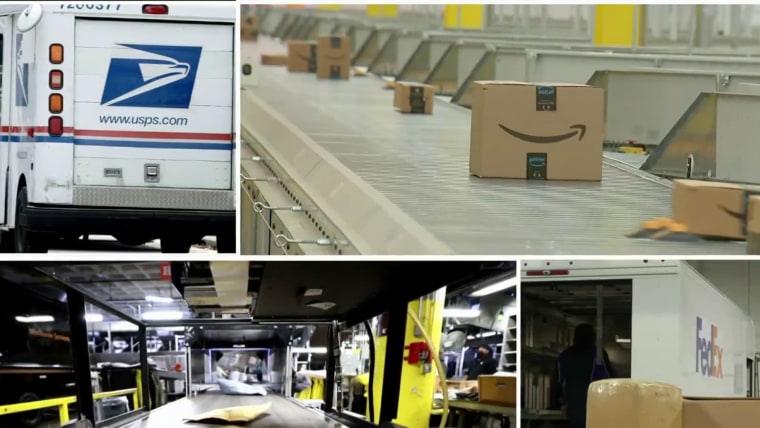
As diesel costs break $5.50 a gallon (compared to just $3.89 a month ago), retailers and grocers are now contending with higher transportation costs. Amazon said Thursday it will begin charging sellers a 3.5% “fuel and logistics-related surcharge” beginning on April 17.

Airlines like United and JetBlue are raising bag fees in an effort to offset sky-high jet fuel costs. The International Air Transport Association says the price of jet fuel is up 104% in the past month.

“With the recent uptick in inflation driven by energy prices, real wage growth is likely to decelerate further, putting increased pressure on consumers,” said Thrivent’s chief financial and investment officer, David Royal.

For now, Americans are still seeing their earnings rise at a faster pace than the increase in price tags at the store. As pay rose by 3.4%, the most recent inflation data showed prices rising by 2.4% year-over-year.

Wage gains for non-supervisory employees — a category that includes roughly four out of every five non-farm workers — have been outpacing price increases since March 2023, when post-pandemic inflation finally began to cool.

But the concern is that the story could change soon. Because of the bump from oil prices, Navy Federal Credit Union Chief Economist Heather Long said it’s possible inflation could pace at 4% this month.

“Four percent is above that 3.5 percent annual wage gain, and that’s where you see a lot of squeeze on workers, particularly middle-class and moderate-income workers,” Long said.

Warning signs are flashing that slowing wage growth could ripple beyond the gas station and prices at the grocery store. Higher mortgage rates now have some worried about icing out even more potential homebuyers.

The average 30-year fixed mortgage rate rose from 5.99% at the start of the war to 6.45% on April 3, according to Mortgage News Daily. The rise is due in part to concerns that the Federal Reserve will have to raise interest rates to tamp down on war-driven inflation.

“With choppy job growth, weaker labor-force attachment and rising uncertainty, many households — especially renters and first-time buyers — could become more cautious as weaker inflation-adjusted wages erode recent affordability improvements,” said Zillow senior economist Orphe Divounguy.

If wages can’t keep up with rising costs across the board, it’s likely that affordability will become a larger issue than it already was prior to the war. An NBC News poll conducted during the first week of the war with Iran found that, for a plurality of respondents, inflation and the cost of living was the most important issue facing the country.

Economists feel the same way.

Responding to a question from NBC News at a March 18 news conference, Federal Reserve Chair Jerome Powell noted that “real” wage gains — a measure of wages adjusted for inflation — need to be positive in order for Americans to feel better about affordability.

“it will take some years of positive real earning gains for people to feel good again, we think. But you’re right — when you talk to people, they do feel squeezed,” Powell said.

Cybersecurity stocks could have more room to run, according to JPMorgan, which sees recent developments in artificial intelligence as a tailwind rather than a threat for leading players like Palo Alto Networks and CrowdStrike.

The bank reiterated its overweight ratings on both companies following Anthropic’s rollout of its advanced AI model, Claude Mythos Preview, as part of its Project Glasswing initiative.

Rather than disrupting incumbents, JPMorgan argues the move reinforces their role in the evolving cybersecurity ecosystem.

Partnership with Anthropic strengthens positioning

Anthropic’s Project Glasswing brings together more than 40 companies, including major technology firms, to deploy AI tools aimed at detecting and fixing software vulnerabilities.

Palo Alto Networks and CrowdStrike are among the founding partners, positioning them at the center of this initiative.

JPMorgan analyst Brian Essex said the collaboration is a positive signal for the sector.

“The near-term read from Glasswing is constructive for Security, particularly for CRWD and PANW which were named founding partners and essential layers in the defensive stack, rather than competitive targets,” Essex wrote.

“We view the partnership as a logical step and an indication that Security vendors are essential partners in the effort to fight AI with AI.”

The announcement helped lift investor sentiment, with shares of both companies rising following the news, reversing some of their earlier declines this year.

Palo Alto stock gained 2% on Wednesday, extending from 4% gain on Tuesday. Meanwhile, CrowdStrike surged 1.9% in the session, adding on from 6% gain from the previous session.

AI seen as a demand driver, not a disruption risk

Concerns had emerged in recent weeks that increasingly sophisticated AI models could replace traditional cybersecurity tools.

Those fears intensified after reports of Anthropic’s Mythos model surfaced, pressuring sector valuations.

However, JPMorgan believes the latest partnership changes that narrative. By limiting access to vetted defensive use cases and collaborating with established vendors, Anthropic is positioning itself as an enabler rather than a competitor.

“Anthropic was entering the security tool space as a potential disruptor; today it is partnering with incumbents and restricting model access to vetted defensive use,” Essex noted.

At the same time, AI is expanding the attack surface for enterprises, increasing the need for advanced protection. Essex highlighted that AI is “compounding the security challenge,” with “over 50% of enterprise AI usage [happens] through personal instances outside IT visibility.”

This so-called “shadow AI” trend is expected to drive incremental spending on cybersecurity solutions.

Strong fundamentals support further upside

Beyond the near-term catalyst, JPMorgan points to structural advantages that continue to support both companies’ long-term outlook.

“Security vendors are beginning to capture portions of budgets outside of traditional security as enterprises begin to bring shadow AI under control or CISOs are asked to secure AI-driven projects for business groups outside of IT,” Essex said.

He added that “the data moats, network effects, and switching costs across PANW, CRWD … remain intact with these vendors positioned to benefit from AI-related demand.”

JPMorgan set a 12-month price target of $200 for Palo Alto Networks and $475 for CrowdStrike, implying further upside from current levels.

Despite recent volatility and concerns about AI disruption, the bank’s view suggests that the shift toward AI-driven security could ultimately strengthen, rather than weaken, the position of leading cybersecurity firms.

The post Why JPMorgan sees further upside in Palo Alto and CrowdStrike stocks appeared first on Invezz

The post How JBStrategy AI-Powered Quantitative Trading Is Changing Cryptocurrency Investing appeared first on Coinpedia Fintech News

From human-driven to AI-driven, jbstrategy AI-powered quantitative approach is reshaping the logic of cryptocurrency asset investment.

In the context of highly volatile cryptocurrency markets and significant information asymmetry, traditional investment methods relying on human judgment are facing unprecedented challenges. With the rapid development of artificial intelligence technology, intelligent quantitative trading platforms, such as jbstrategy, are providing investors with a completely new solution—using data to replace emotion and algorithms to overcome human nature.

JbStrategy’s AI-Powered Quantitative Trading: Redefining Investment Decisions

For a long time, cryptocurrency investment has been influenced by market sentiment, breaking news, and personal experience. Investors oscillate between greed and fear, leading to frequent decision-making errors. jbstrategy’s core advantage lies in its 24/7 market monitoring and prediction through machine learning models and big data analytics.

The platform integrates on-chain data, trading depth, market sentiment indicators, and macroeconomic variables to build a multi-dimensional analysis system, enabling accurate judgment of market trends. This data-driven decision-making mechanism significantly reduces human interference, making investment more rational and systematic.

AI-driven Alpha capture

In traditional trading, most investors are in a passive state of “information lag,” while jbstrategy’s intelligent algorithm can capture market anomalies at the millisecond level and identify potential opportunities in advance.

Its AI-driven strategies can not only identify trending markets but also continuously generate alpha returns in volatile markets through high-frequency arbitrage and hedging strategies. This capability allows ordinary investors to access trading strategies that were originally reserved for institutional investors.

How can JBStrategy make returns more stable?

High returns are often accompanied by high risks, and JBStrategy incorporated risk control as a core module from its inception. The platform monitors and adjusts each trade in real time through dynamic stop-loss orders, position management, and risk diversification mechanisms.

Furthermore, JBStrategy offers a variety of profitable strategies to achieve specific financial goals. Whether someone is looking for short-term gains or long-term returns, they have something for everyone.

Strategy Name               Unit price              time                 income    

Momentum-Q2112            $600                  5 days               $643.8      

Horizon-Q311                   $1,500              10 days              $1728

Advantage-Q4117           $5000.00           15 days              $6192.5

Vanguard-Q5114           $10000.00           20 days              $13380

Quantum-Q6113            $30,000.00          25 days             $43350

Apex-Q7115                  $60,000.00           30 days             $93840  

24/7 Uninterrupted Operation: Automated Systems Push Human Limits

The cryptocurrency market operates 24/7, posing a significant challenge to manual trading. jbstrategy’s automated system, however, can execute strategies continuously 24/7 without human intervention.

This not only improves trading efficiency but also avoids decision-making biases caused by fatigue, emotional fluctuations, and other factors, making investments more stable and sustainable.

Conclusion

With the continuous integration of artificial intelligence and blockchain technology, cryptocurrency investment is entering a new era. AI-powered quantitative platforms, such as jbstrategy, are not only changing trading methods but also reshaping investment logic.

In the future, those who can utilize data and algorithms more efficiently will be more likely to stand out in the fierce market competition. For investors, this is not only a technological revolution but also a cognitive upgrade.

For more information, please visit our official website: http://jbstrategy.com/

Email: support@jbstrategy.com

Savannah Guthrie returned to the “TODAY” anchor desk Monday, more than two months after her mother disappeared.

“We are so glad you started your week with us, and it is good to be home,” Guthrie said at the start of the show. She wore a bright yellow dress, echoing the yellow ribbons and flowers left at her mother’s home.

“TODAY” co-anchor Craig Melvin, wearing a yellow tie, patted Guthrie’s hand and replied: “Yes, it is good to have you at home.”

The two anchors then turned to the morning’s top headlines, including an opening segment about the U.S.-Israeli war with Iran. “Well, here we go, ready or not,” Guthrie said. “Let’s do the news.”

Savannah Guthrie on Monday’s “TODAY.”TODAY

Guthrie, who has co-anchored “TODAY” since 2012, stepped away from her role in early February after Nancy Guthrie, 84, went missing from her home near Tucson, Arizona. Authorities have described the case as a possible kidnapping or abduction.

Guthrie told Hoda Kotb last month that she believed returning to the “TODAY” anchor desk is “part of my purpose right now,” even though it was difficult to imagine going back to a workplace she associates with “joy and lightness.”

“I can’t come back and try to be something that I’m not. But I can’t not come back because it’s my family,” Guthrie said in the interview, her first since the start of the ordeal. “I don’t know if I can do it. I don’t know if I’ll belong anymore, but I would like to try.”

Savannah Guthrie greets fans Monday in Rockefeller Plaza.TODAY

In the second hour of Monday’s show, Guthrie greeted “TODAY” fans gathered outside on Rockefeller Plaza, some wearing yellow pins and holding signs with her mother’s photo. Guthrie fought back tears as she held co-host Jenna Bush Hager’s hand and thanked her supporters for their prayers and letters.

“You guys have been so beautiful,” she said. “I’ve received so many letters, so much kindness to me and my whole family. We feel it. We feel your prayers.”

Savannah Guthrie walks with Jenna Bush Hager outside the “TODAY” studios.TODAY

Nancy Guthrie’s family reported her missing around noon Feb. 1 after she did not show up at a friend’s house for virtual church services, according to the Pima County Sheriff’s Office. She was last seen the previous night around 9:45 p.m. after having dinner at her daughter Annie Guthrie’s home, according to authorities.

The investigation into her disappearance gripped the nation and put an intense spotlight on the quiet Catalina Foothills area of Tucson. Authorities have not identified a suspect or motive, though the FBI released chilling doorbell camera video of an armed and masked man outside Nancy Guthrie’s home on the morning she was reported missing.

The bureau described him as a man of average build, 5 feet, 9 inches to 5 feet, 10 inches tall, wearing a black Ozark Trail Hiker Pack 25-liter backpack.

Guthrie and her siblings, Camron Guthrie and Annie Guthrie, have provided updates on the case via social media. In emotionally wrenching videos on Instagram, they have thanked members of the public for their prayers and made direct appeals to Nancy Guthrie’s possible abductor.

“Someone knows how to find our mom and bring her home,” Guthrie wrote in the caption to a Feb. 24 video post.

The family is offering up to $1 million for information that leads to the 84-year-old’s recovery. The FBI is offering a reward of up to $100,000 for “information leading to the recovery of Nancy Guthrie and/or the arrest and conviction of anyone involved in her disappearance.”

Kotb, a “TODAY” contributor, substituted for Guthrie. In that period, Guthrie withdrew from NBC’s coverage of the Milan Cortina Winter Olympics; Mary Carillo stepped in to co-host the opening ceremony alongside NBC Sports’ Terry Gannon.

Guthrie visited the “TODAY” set March 5. In photos taken from outside the studio by a photographer for The Associated Press, Guthrie could be seen wiping tears and embracing her colleagues. The visit was not televised.

Savannah Guthrie hugs Al Roker during a visit to “TODAY” on March 5.Charles Sykes / Invision / AP

“I really wanted to come and see everybody. I just love this beautiful place that we call home, where we get to come and be every day,” Guthrie told Kotb, adding: “When times are hard, you want to be with your family.”

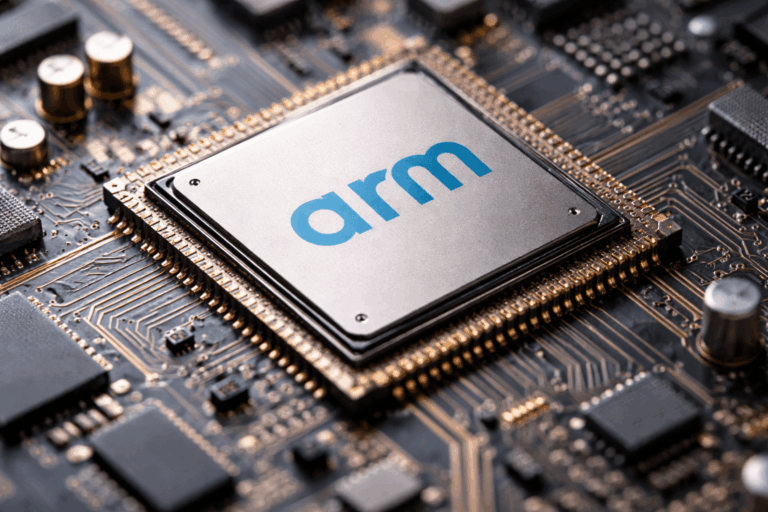
Shares of Arm Holdings came under pressure after a sharp rally last month, as investor enthusiasm over its entry into chip manufacturing was tempered by a cautious assessment from Morgan Stanley.

Arm Holding’s stock fell 5.4% on Tuesday’s trading session.

The brokerage downgraded the stock to Equalweight from Overweight, sending it down more than 7% in early trading and prompting a reassessment of the company’s near-term prospects.

While Morgan Stanley raised its price target modestly to $150 from $135, the move signalled that recent gains may have run ahead of fundamentals, particularly as the company embarks on a complex and capital-intensive strategic shift.

Strategic pivot gains support but raises risks

Arm’s decision to design and sell its own chips marks a significant departure from its long-standing model of licensing semiconductor blueprints.

The company’s upcoming AGI CPU, aimed at artificial intelligence workloads in data centres, is expected to open up a multi-billion-dollar market opportunity.

“Arm’s move into chip making is strategically sound and aligns with the rise of agentic AI,” analysts led by Lee Simpson said, noting that AI systems increasingly rely on central processing units to coordinate complex tasks.

The initiative has already attracted major industry backing.

Meta Platforms has collaborated on the chip and signed on as its first customer, while OpenAI is also among the early adopters.

The company has forecasted that its AI chips will generate [MONEY value=”15000000000″ currency=”usd” notation=”long” replace=”false”] in sales and account for a major chunk of its business within five years.

However, analysts caution that executing such a pivot will not be straightforward.

Morgan Stanley cautioned that building a [MONEY value=”15000000000″ currency=”usd” notation=”long” replace=”false”] chip business isn’t easy, particularly at a time when Arm’s core smartphone-linked business is under pressure due to a memory chip supply crunch, which could weigh on the company’s short-term growth.

Tensions with existing customers emerge

Another key concern is the potential conflict with ARM’s existing licensing customers, many of whom develop their own data-centre processors.

Analysts warn that the company’s move into direct competition could strain relationships.

Some clients may seek to reduce reliance on Arm’s designs over time, though Morgan Stanley noted that switching costs and a lack of viable alternatives would likely make any transition gradual.

“Arm’s talent acquisition, strategic positioning, and early design delivery have been exemplary,” Simpson said.

“However, the commercial ramp will take time, and near-term risks temper enthusiasm.”

The brokerage expects Arm to report earnings of $1.60 per share for fiscal 2026 and $2.05 in 2027, both below market expectations.

However, it sees a sharp acceleration to $4.16 per share by 2028 as the chip business scales.

Morgan Stanley’s action in contrast to Mizuho’s

Despite Morgan Stanley’s cautious stance, other brokerages remain bullish on Arm’s long-term prospects.

Mizuho recently raised its price target to $230, citing significant upside from AI-driven demand.

The firm expects a 4-10x increase in CPU content in AI data centres as technologies such as ChatGPT and other agentic AI systems proliferate.

It also anticipates Arm gaining market share from traditional x86 processors due to better performance and cost efficiency.

Mizuho projects that Arm’s revenues could reach [MONEY value=”12000000000″ currency=”usd” notation=”long” replace=”false”] by fiscal 2031, with total addressable markets expanding sharply.

Its estimates suggest substantial earnings upside, supported by potential future announcements in AI-specific chips.

UBS maintains a Buy rating on the stock with a $175 price target, while Needham & Company has recently upgraded it to Buy with a $200 target.

Barclays also remains constructive, assigning an Overweight rating with a $200 price objective.

The post Arm stock falls as Morgan Stanley gives reality check on chip plans appeared first on Invezz

The post Will Bitcoin Price Drop Below $60000? appeared first on Coinpedia Fintech News

Bitcoin investors hoping for a quick recovery may need to be patient. That is the message from Katie Stockton, founder and managing partner of Fairlead Strategies, who appeared on CNBC’s Squawk Box this week.

Bitcoin Is Boring Right Now and That Is the Point

Stockton’s Bitcoin read was measured but clear. She sees the current price action as a prolonged basing phase with support sitting in the $58,000 to $59,000 range, and she expects multiple retests of that level before any sustained move higher becomes possible.

“It’s a cyclical downtrend and that’s the dominant feature on the chart right now,” she said. “I think we can assume there are going to be retests of support, maybe more than one.”

For crypto investors watching for a bottom signal, Stockton said the charts are not there yet. There are no oversold upturns, no breadth extremes and no sentiment readings that would typically confirm a durable low. Her advice was: do not chase brief relief rallies and wait for the weight of evidence before adding exposure aggressively.

At the time of writing, Bitcoin is trading near $70,000 and is up by more than 3% in the last 24 hours.

Why the Macro Picture Matters for Crypto

Bitcoin does not move in isolation and Stockton’s broader market outlook adds important context for crypto traders.

The S&P 500 recovery last week, which clawed back roughly 4% from recent lows, does not look sustainable in her view.  For risk assets including crypto, a continued equity correction and widening credit spreads create an unfavourable backdrop. Stockton added that even a ceasefire in the Strait of Hormuz may not be enough to fully reverse the damage already building in financial markets.

“I think it needs to be more than just reopening the Strait to fix the market at this point.”

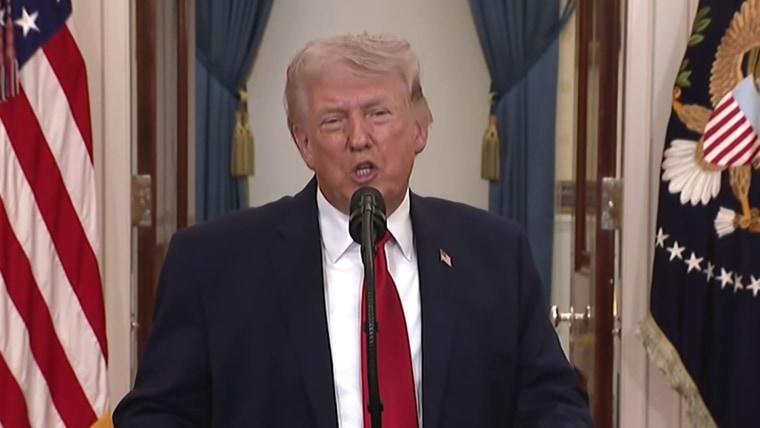
Oil prices surged Thursday, threatening to further drive up the price of gas as hopes for a near-term resolution to the Iran war faded following President Donald Trump’s address to the nation.

Stocks were volatile, with major indexes plunging early in the day before moving higher at the close on shifting headlines about the war in the Middle East.

U.S. indexes recovered their early losses on news that Iran’s deputy foreign minister said his country would outline a “new navigation regime” in the Strait of Hormuz after the war ended, injecting fresh optimism into markets over the future of the key waterway.

At the closing bell at 4 p.m. ET, the S&P 500 closed up 0.11%, the Nasdaq Composite ended higher by 0.18%, and the Dow Jones Industrial Average fell 61 points. The Russell 2000 index, which tracks smaller companies, rose 0.7%.